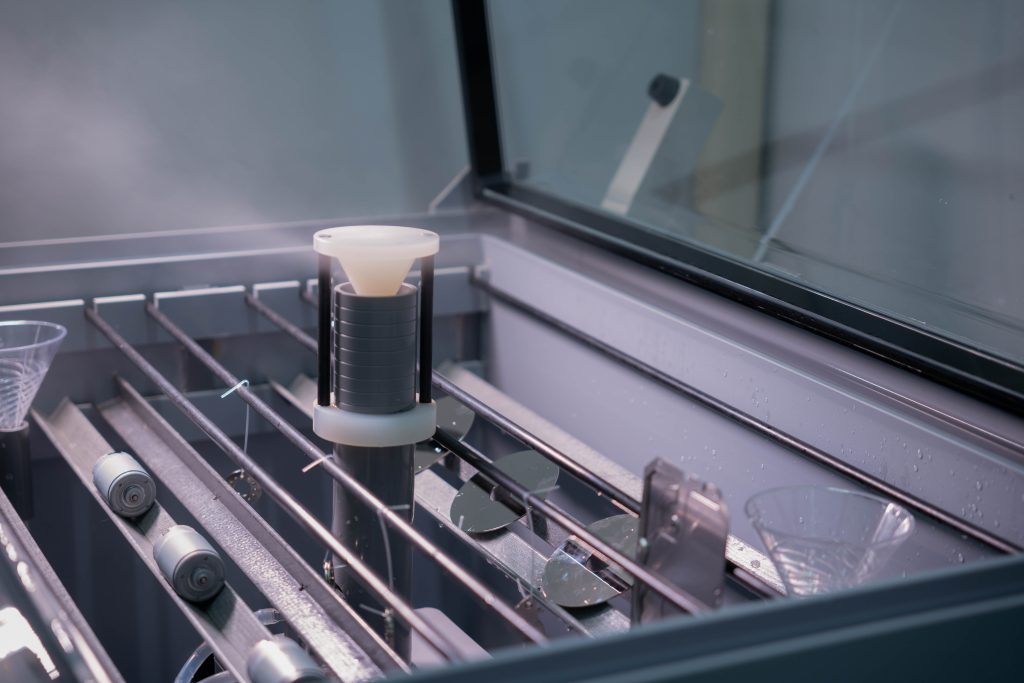
การทดสอบการกัดกร่อน (Corrosion Test)
- โชว์สินค้าทั้งหมด
- No categories
May 13, 2026
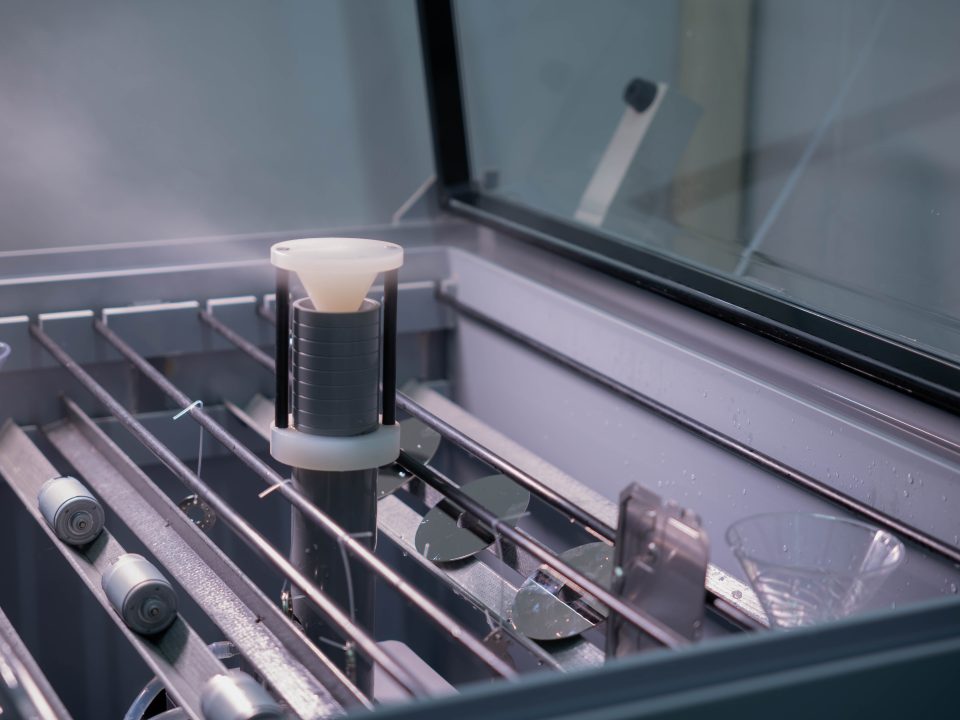
Corrosion Testing & Salt Spray Test: How Strong Is Your Material Against the Elements?
When Rust Is More Than Just Ugly — It’s a Safety Risk
Every material degrades over time. But in industries where structural integrity is non-negotiable — construction, transportation, energy, aerospace, and marine — corrosion isn’t just a cosmetic issue. It’s a safety and business liability.
Corrosion testing gives manufacturers, engineers, and quality managers the data they need to answer a critical question before it becomes a costly problem: How long will this material last — and what will make it fail?
What Is Corrosion Testing?
Corrosion occurs when materials — particularly metals — react chemically with their environment. Water, oxygen, exhaust gases, acids, and alkalis are all common culprits. Corrosion testing is the systematic process of evaluating how well a material resists these reactions under controlled conditions.
The Four Goals of Corrosion Testing
Table
Objective
Why It Matters
⏳ Predict service life
Know how long a material will perform before it degrades
Select the right material
Match materials to specific environmental conditions — humidity, acidity, temperature
Improve production processes
Refine surface coatings or switch to more durable material options
️ Enhance safety
Prevent degradation that could lead to structural failure or hazardous conditions
The Gold Standard: Salt Spray Testing
Among all corrosion tests, the Salt Spray Test — also known as the Salt Fog Test — is one of the most widely used and internationally recognized methods for evaluating corrosion resistance.
By recreating a salt-laden, high-humidity atmosphere inside a controlled test chamber, the Salt Spray Test simulates the kind of corrosive environment that materials face in coastal regions, marine applications, and harsh outdoor settings — in a matter of hours or days, rather than months or years.
It’s the go-to test for industries including automotive manufacturing, aerospace, marine engineering, and construction — anywhere that materials must stand up to salt exposure over time.
How Does the Salt Spray Test Work?
The test follows a clear, standardized process designed to deliver consistent, reproducible results:
Step-by-Step Process
Step 1: Sample Preparation Test specimens are thoroughly cleaned and prepared to remove any surface contaminants that could interfere with accuracy. A clean baseline is essential for meaningful results.
⚙️ Step 2: Chamber Setup The test chamber is calibrated to precise environmental conditions as specified by the relevant standard — typically 35°C with controlled humidity — creating a uniform corrosive atmosphere for every test.
Step 3: Salt Fog Exposure A sodium chloride (NaCl) solution is atomized into a continuous fine mist within the sealed chamber. Specimens are exposed to this salt fog for a defined period — commonly 48, 96, or 240+ hours — depending on the standard and application requirements.
Step 4: Inspection and Evaluation Once the test period ends, each specimen is carefully examined for signs of corrosion damage, including:
Rust formation
Surface discoloration
Blistering or swelling
Cracking or delamination of coatings
International Standards: Testing You Can Trust Globally
Salt Spray Testing is governed by internationally recognized standards that ensure results are accurate, comparable, and credible across borders:
Table
Standard
Scope
Primary Industries
ASTM B117
The most widely adopted Salt Spray standard worldwide
Automotive, metal components
ISO 9227
International standard for salt corrosion testing
Construction materials, industrial equipment
JIS Z 2371
Japanese standard for Salt Spray testing
Machinery, industrial devices
Testing to these standards means your results are recognized by international buyers, regulatory bodies, and certification authorities — a critical advantage in export markets.
Reading the Results: What Does Your Material’s Performance Tell You?
Salt Spray Test outcomes provide clear, actionable insights into a material’s corrosion resistance:
Rust Formation
The appearance of rust is a direct indicator that the material’s protective barrier has been compromised. The earlier rust appears, the weaker the corrosion resistance.
Surface Discoloration
A material with strong corrosion resistance maintains its original color and appearance. Discoloration signals chemical breakdown at the surface.
Blistering or Cracking
Coating failure often appears as bubbling, peeling, or cracking — indicating that the protective layer has lost adhesion and can no longer shield the base material.
Where Salt Spray Testing Makes a Difference: Industry Applications
Automotive
Steel frames, alloy components, and exterior body parts are routinely tested to ensure they can withstand road salt, rain, and coastal driving conditions over the vehicle’s lifespan.
✈️ Aerospace
Aircraft components are exposed to high-altitude humidity and condensation. Salt Spray testing validates that critical parts maintain structural integrity in these demanding environments.
⚓ Marine
For vessels, offshore structures, and port infrastructure, resistance to saltwater corrosion isn’t optional — it’s essential. Salt Spray testing confirms that marine-grade materials live up to their name.
️ Construction
Structural fasteners, reinforcement materials, and cladding systems used in coastal or high-humidity environments must be rigorously tested before they’re trusted with long-term structural loads.
Maintaining Test Equipment: The Overlooked Key to Reliable Results
Even the best-designed test is only as good as the equipment running it. To ensure consistent, trustworthy results, Salt Spray test chambers require:
Regular cleaning — to prevent residue buildup that alters test conditions
Routine calibration — to verify that temperature, humidity, and spray concentration remain within specification
Periodic chamber inspection — to confirm structural integrity and seal performance
Skipping maintenance doesn’t just affect results — it can compromise the credibility of your entire testing program.
Summary: Why Salt Spray Testing Belongs in Your Quality Process
The Salt Spray Test is one of the most practical and cost-effective tools available for evaluating corrosion resistance. It delivers fast, standardized, internationally recognized results that help manufacturers:
✅ Validate material and coating performance before production
✅ Meet international quality and export requirements
✅ Identify weaknesses early — before they reach your customers
✅ Build products that genuinely last in the real world
Whether you’re developing a new coating system, qualifying a supplier’s materials, or troubleshooting a corrosion complaint from the field, Salt Spray testing gives you the answers you need — backed by science and international standards.
ALS Testing Services (Thailand) Co., Ltd. — Your Partner in Corrosion Testing
ALS Testing Services (Thailand) Co., Ltd. provides comprehensive chemical analysis and material testing services, powered by advanced technology and a team of experienced analytical specialists.
We offer Salt Spray Testing in full compliance with ASTM B117, ISO 9227, and JIS Z 2371, conducted within our ISO/IEC 17025 accredited laboratory — delivering results you can rely on and present with confidence to clients and regulators worldwide.
Tel: +(66) 2700 9665 Email: pathumthani@alsglobal.com
Ready to put your materials to the test? Contact us today and let our experts guide you toward the right testing solution for your product and industry.
Read moreMay 7, 2026
In the manufacturing world, surface quality can make or break a product. Salt Spray Testing — also known as Salt Fog Testing — is one of the most widely used methods for evaluating a product’s resistance to corrosion. From metal components and steel parts to automotive hardware, electronics, and medical devices, this test simulates harsh real-world conditions inside a controlled chamber by continuously spraying a sodium chloride (NaCl) solution as a fine mist onto test samples.
The result? A clear, reliable picture of how long your product can withstand corrosive environments — before it ever leaves the factory.
Which Industries Need Salt Spray Testing?
Salt Spray Testing is versatile enough to serve a wide range of manufacturing sectors:
1. Automotive Industry
Car frames, bumpers, bolts, and screws must be evaluated for long-term durability in high-pollution, high-salt environments. Salt Spray Testing helps confirm that these components can handle real-world conditions throughout their intended service life.
️ 2. Construction Industry
Structural metal components used in buildings and bridges need to demonstrate both strength and corrosion resistance. Salt Spray Testing validates the safety and longevity of these critical materials.
⚡ 3. Electrical & Electronics Industry
Electrical and electronic components installed outdoors or in fluctuating weather conditions are constantly exposed to corrosion risk. Testing ensures they can withstand the elements without performance degradation.
⚓ 4. Marine Industry
Ship components and marine engines operate in one of the most corrosive environments on Earth. Salt Spray Testing closely simulates actual sea conditions, making it the ideal quality check for marine-grade materials.
️ 5. Metal Coating Industry
For coatings such as zinc, chromium, and paint finishes, the test verifies how effectively the coating prevents corrosion — revealing any weaknesses in the protective layer.
6. Outdoor Furniture & Equipment
Products like iron fences, ornamental gates, garden tables, and outdoor chairs face constant exposure to moisture and salt in the air. Salt Spray Testing helps prevent premature rusting and structural failure that can quickly damage a brand’s reputation.
3 Key Benefits of Salt Spray Testing
1. Catch Problems Before Delivery
Salt Spray Testing acts as a final quality checkpoint — revealing corrosion weaknesses before products reach the customer. If a product corrodes faster than expected, the engineering team can use that data to improve coating formulas, material selection, or packaging — preventing field failures in automotive parts, electrical equipment, and industrial tools.
2. Drive Continuous Product Improvement
The data generated by Salt Spray Testing provides actionable insights for ongoing product development — refining coating formulas, switching to more durable materials, or redesigning manufacturing processes — resulting in products with a longer service life that perform reliably in real customer environments.
3. Strengthen Brand Credibility
In today’s competitive market, customers and partners make decisions based on trust and verified quality. Test results from an internationally accredited laboratory demonstrate your commitment to excellence and give your brand a measurable, credible quality advantage.
How ALS Testing Delivers Salt Spray Results You Can Rely On
While some factories have basic in-house testing equipment, only a professional, accredited laboratory can provide results that are internationally recognized, referenceable for export, and accepted by global partners.
Here’s what makes ALS Testing’s approach stand out:
✅ ISO/IEC 17025 Accredited Laboratory
All Salt Spray Testing at ALS is conducted under full ISO/IEC 17025 accreditation, covering two key pillars:
Technical Competence — Tests are performed using calibrated instruments, by trained specialists, following standardized processes — ensuring every result is accurate, consistent, and traceable.
Quality Management System — Unlike general ISO 9001 certification, ISO/IEC 17025 is specifically designed for testing and calibration laboratories, ensuring every step of the workflow is systematic, transparent, and quality-controlled.
️ Strict Parameter Control with Calibrated Equipment
Every parameter in the Salt Spray process — concentration, temperature, spray rate, and duration — is rigorously controlled using calibrated instruments operated by experienced technicians. This ensures results that are scientifically defensible and reproducible.
Clear Reports with Expert Scientific Interpretation
Test reports include detailed records of observations, photographs, and environmental conditions at each testing interval. Results are analyzed and interpreted by qualified scientists, providing a direct pass/fail assessment against industry standards or customer-specific requirements.
Technical Consultation & Root Cause Solutions
When a product fails to meet the standard, our expert scientists don’t just report the result — they investigate the root cause. Whether it’s inadequate surface preparation, inconsistent coating application, or material-related vulnerabilities, we provide clear, actionable recommendations to resolve the issue.
Elevate Your Product Standards with ALS Testing
In an increasingly competitive manufacturing landscape, having internationally accredited, reliable test results is no longer optional — it’s essential for market access and customer confidence.
ALS Testing offers a complete, high-precision Salt Spray Testing service that helps you:
Detect problems before products are delivered
Reduce the risk of market failures and warranty claims
Use test findings to drive product improvement
Build stronger trust with customers and OEM partners
Choose ALS Testing for your Salt Spray needs — and take a confident step toward world-class product quality.
Read more