News & Promotion
October 12, 2026
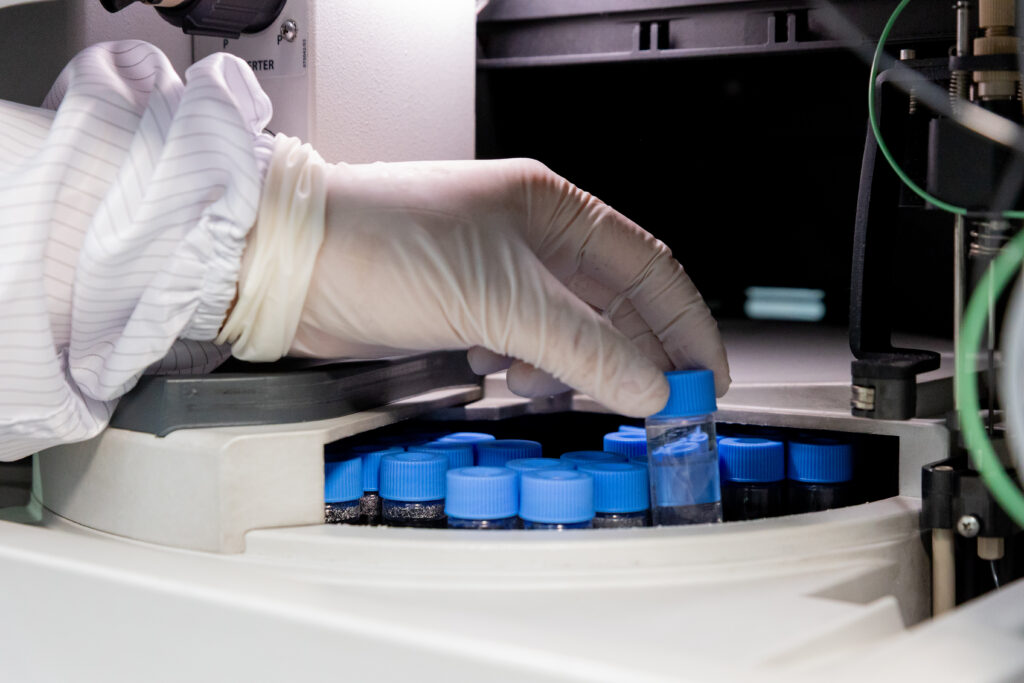
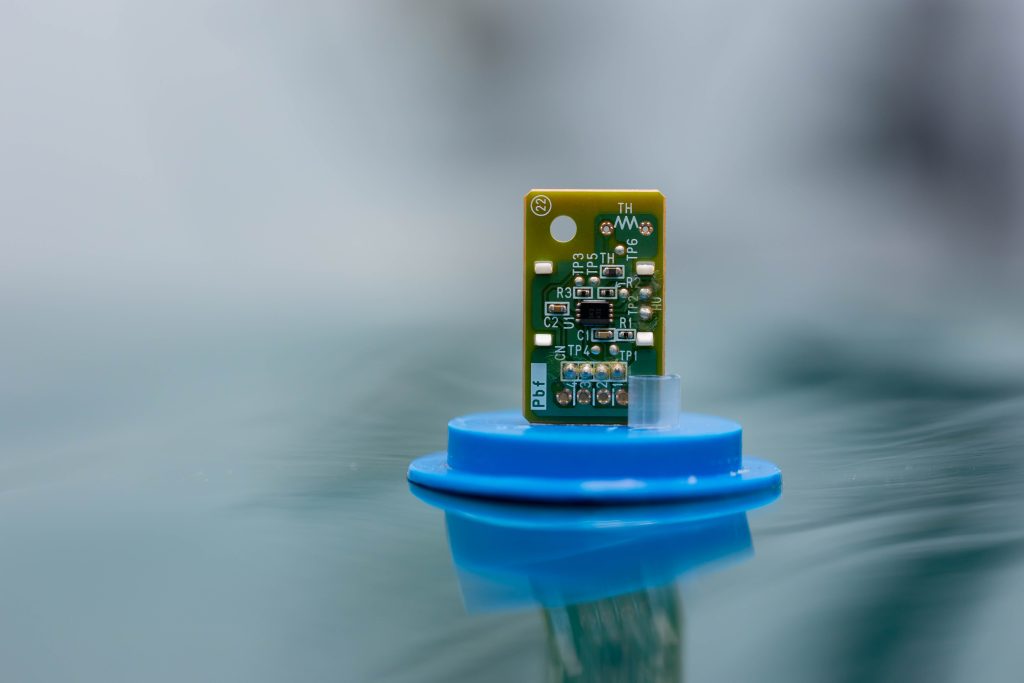
Ionic Contamination Testing, Protecting Automotive PCBs in Harsh Environments
READ MOREIon Chromatography · Anion Test · IPC-TM-650 2.3.28 · Humidity and Tropical Climate · Automotive Electronics Reliability
ISO/IEC 17025 Accredited Testing Where Applicable | Anion and Cation Analysis | Chemical and Electronics Testing Malaysia
Automotive electronics assemblies are designed to operate reliably across a defined range of environmental conditions for the full service life of the vehicle. In markets with high ambient humidity and temperature, including Malaysia and the broader Southeast Asia region, the environmental stresses on automotive PCBs are more demanding than in temperate climates. Ionic contamination that might remain inert in a dry continental environment can become electrochemically active within months in a tropical climate.
Ionic contamination testing by ion chromatography, commonly known as the anion test in electronics manufacturing, is the analytical method that identifies and quantifies the ionic residues on a PCB assembly before it is installed in a vehicle. It is the test that finds contamination invisible to optical inspection and undetectable by functional testing under dry conditions, before it causes failures in the field.
Why Harsh Environments Increase Ionic Contamination Risk
The mechanism by which ionic contamination causes PCB failures depends on moisture. Ionic residues on a PCB surface are typically insoluble and electrochemically inactive under dry conditions. When humidity rises above a threshold level, typically around 65 to 75 percent relative humidity depending on the specific ionic species, the residues absorb moisture and dissolve into a thin electrolytic film on the board surface. This film becomes conductive, creating leakage paths between adjacent conductors and, under applied voltage, driving electrochemical reactions that corrode conductors and grow metallic dendrites between circuit nodes.
In Malaysia and across Southeast Asia, ambient relative humidity regularly exceeds 80 percent and can approach 90 percent or higher in coastal and low-lying areas. Vehicle interiors in these markets experience sustained humidity exposure even with air conditioning, particularly during parking periods and at night. The combination of high ambient humidity, temperature cycling between day and night, and the presence of ionic residues creates conditions where failures can develop significantly faster than in temperate climate markets.
This is why automotive OEMs supplying vehicles to Southeast Asian markets, and the component manufacturers in Malaysia supplying their electronics assemblies, increasingly require ionic contamination testing as a standard qualification step, regardless of whether it was required for the same component being supplied to European or North American programmes.
What Ionic Contamination Testing Measures
Ionic contamination testing by ion chromatography analyses an extract from the PCB surface and identifies every ionic species present, quantifying each one individually. The test covers three categories of ionic species defined in IPC-TM-650 2.3.28.
Anions
Including fluoride, chloride, bromide, nitrite, nitrate, phosphate, and sulfate. Chloride is the most significant from a corrosion risk perspective, as it is highly mobile, highly soluble, and a known aggressive initiator of pitting corrosion and dendritic growth even at low concentrations.
Cations
Including lithium, sodium, ammonium, potassium, magnesium, and calcium. Ammonium is the most diagnostically significant cation in electronics failure investigations, as elevated ammonium indicates the presence of incompletely deactivated no-clean flux activator residues that retain corrosion-promoting and hygroscopic properties.
Weak organic acids (WOA)
Including acetate, formate, citrate, malate, succinate, methanesulfonate, and phthalate. WOA species are characteristic markers of flux chemistry residues, particularly from no-clean flux formulations, and their presence indicates residues that can promote leakage current and under-board corrosion in humid conditions.
The result for each species is expressed in micrograms per square centimetre of board surface, and each result is compared against the acceptance limits defined in the applicable cleanliness specification.
Typical Acceptance Limits for Automotive PCBs
Ionic Species
Typical Limit (μg/cm²)
Notes
Chloride (Cl⁻)
0.5 – 1.5
Most critical for corrosion risk
Sulfate (SO₄²⁻)
1.5 – 3.0
Common from plating chemistries
Sodium (Na⁺)
1.5 – 3.0
Indicates handling contamination
Ammonium (NH₄⁺)
5.0 – 10.0
No-clean flux activator residue
Total WOA
10.0 – 20.0
Flux chemistry marker
Limits vary by OEM specification. Tropical market programmes may apply tighter limits than global defaults.
Tropical Climate Considerations for Malaysian Automotive Electronics Manufacturers
For electronics manufacturers in Malaysia supplying automotive programmes, several factors specific to the regional environment are relevant to ionic contamination testing and specification.
Higher humidity baseline means tighter effective limits.
A contamination level that falls within a standard acceptance limit defined for a temperate-market application may still drive failures in a tropical market application where board surfaces are exposed to higher average humidity. Automotive OEMs with specific tropical or Southeast Asian market programmes sometimes apply tighter ionic contamination limits than their global default specifications to account for the higher humidity baseline.
No-clean flux residues are more of a concern.
No-clean flux formulations are widely used in electronics assembly because they eliminate the cleaning step. In dry environments, the residues from no-clean fluxes are generally benign. In high-humidity environments, certain no-clean flux residues, particularly those with elevated ammonium and WOA species, absorb moisture and become electrochemically active. IC analysis that includes WOA testing alongside standard anion and cation analysis provides a more complete picture of contamination risk for assemblies destined for tropical market use.
Conformal coating cannot substitute for cleanliness.
Conformal coating is applied to many automotive PCBs to provide a barrier against environmental exposure. However, conformal coating applied over ionic contamination traps the residues beneath the coating in an environment where moisture can still migrate through or around the coating over time. The industry consensus and most OEM specifications require ionic contamination limits to be met before conformal coating application, not after.
How the Test Is Performed
Ionic contamination testing follows the extraction and analysis procedure defined in IPC-TM-650 2.3.28. The PCB assembly is placed in a clean vessel and covered with a defined volume of extraction solvent, a mixture of 75 percent isopropyl alcohol and 25 percent deionised water. The extraction is conducted at 80°C for one hour under agitation, dissolving ionic species from the board surface including flux residues not fully soluble in water alone.
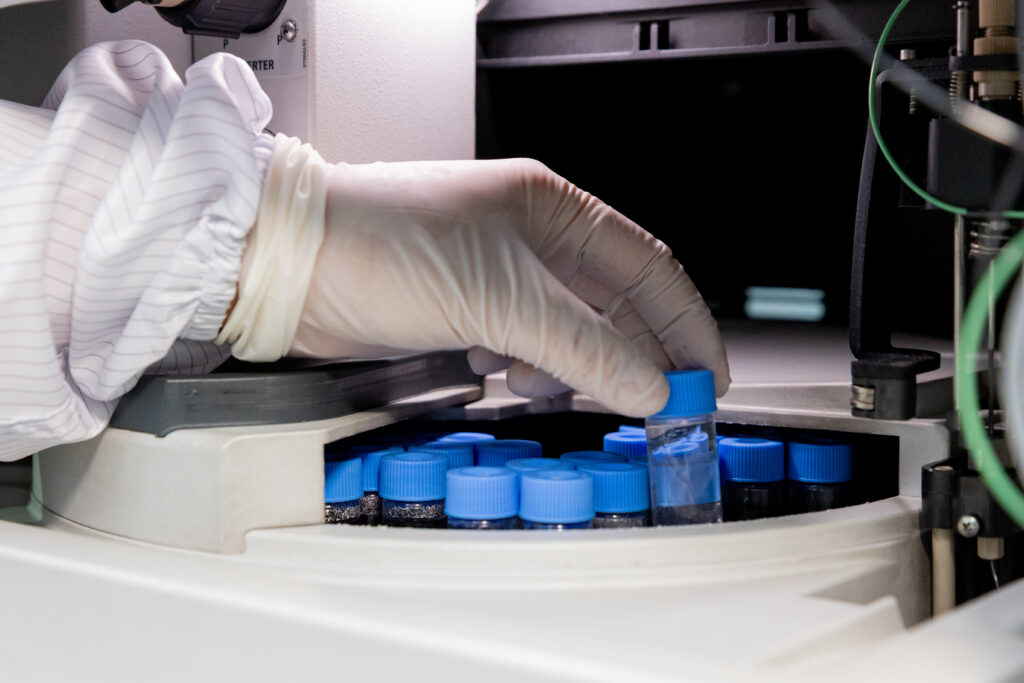
The extract is filtered and injected into the ion chromatography system. Anion and cation analysis are performed on separate chromatographic columns using the appropriate separation conditions for each ion class. WOA analysis uses a dedicated low-capacity column optimised for organic acid separation. Results are reported with individual species concentrations in micrograms per square centimetre alongside the applicable specification limits and pass or fail designation for each species.
Sample Preparation and Turnaround
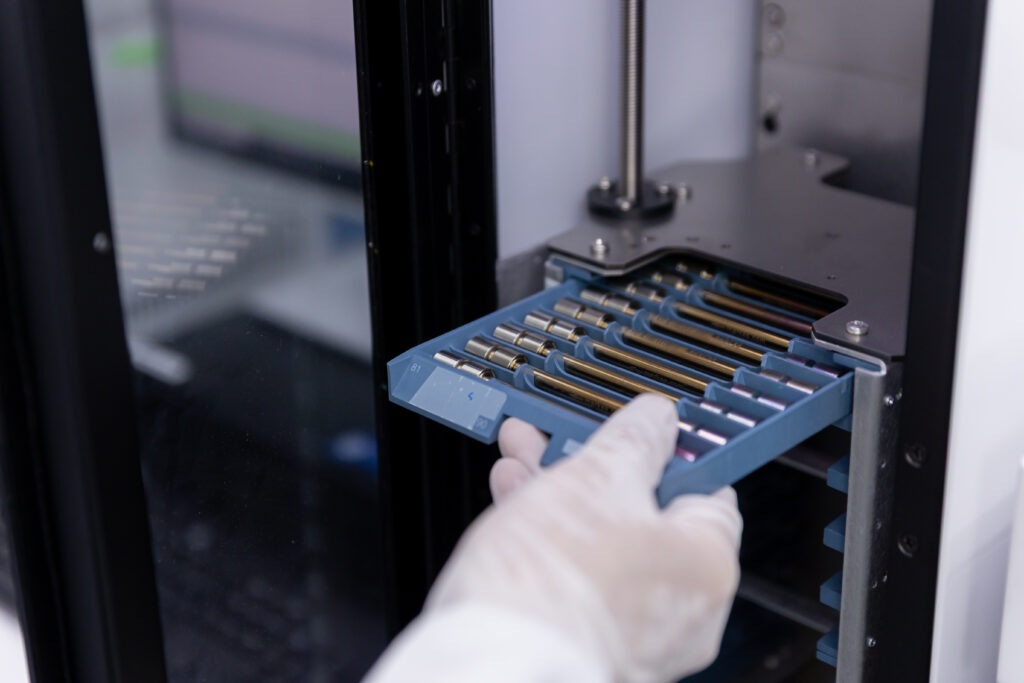
Specimens should be sealed in clean polyethylene bags immediately after assembly
Handle only with powder-free gloves to prevent handling contamination
Complete extraction and analysis within four days of assembly to minimise ionic species migration or degradation
Typical turnaround time: three to five working days from sample receipt, depending on species analysed and laboratory workload
Ionic Contamination Testing in the Qualification Workflow
For automotive electronics manufacturers in Malaysia, ionic contamination testing most commonly enters the production workflow at two points.
Process qualification and PPAP.
When establishing or validating the assembly process, IC testing confirms that the combination of flux type, soldering process, and cleaning or no-clean process produces ionic contamination levels within the OEM-specified limit. This data is typically submitted as part of the production part approval process (PPAP) package.
Production monitoring.
Periodic IC testing of production samples provides ongoing process monitoring data, confirming that contamination levels remain within the qualified range as production continues. Where periodic testing identifies a drift toward the specification limit, it triggers investigation before the limit is exceeded and before affected assemblies reach the customer.
Failure investigation.
When a field return or qualification test failure involves corrosion, leakage current, or intermittent electrical behaviour, IC testing of the affected assembly is typically the first analytical step in characterising the ionic contamination profile. For a detailed explanation of how IC is used in PCB failure analysis, see our guide on ion chromatography for PCB failure analysis.
Frequently Asked Questions
What is an anion test for automotive PCBs?
An anion test is a common shorthand for ionic contamination testing by ion chromatography. It identifies and quantifies the anionic species (negatively charged ions) present on a PCB surface, including chloride, fluoride, bromide, sulfate, and other anions. A complete ionic contamination test also covers cations and weak organic acids. The method is defined in IPC-TM-650 2.3.28. Why is ionic contamination more of a concern in Malaysia than in Europe? The higher average ambient humidity in Malaysia and Southeast Asia means that ionic residues on PCB surfaces are exposed to moisture activation more frequently and for longer periods than in temperate markets. Residues that remain inert in a dry European environment can become electrochemically active and drive corrosion or dendritic growth in the Malaysian climate. Automotive OEMs with Southeast Asian market programmes sometimes specify tighter ionic contamination limits to account for this. Does conformal coating eliminate the need for ionic contamination testing? No. Conformal coating provides a barrier against direct moisture contact but does not remove ionic residues from the board surface. Ionic species trapped beneath conformal coating can still activate over time as moisture migrates through the coating. Most OEM specifications require ionic contamination limits to be met before conformal coating is applied. What ionic species are most significant for automotive PCBs in tropical climates? Chloride is the most significant anion due to its aggressive corrosion behaviour at low concentrations. Ammonium and weak organic acid species are significant because they indicate active no-clean flux residues that absorb moisture and promote leakage current, which is particularly problematic in high-humidity environments. A complete IC test covering anions, cations, and WOA provides the most relevant picture for tropical market applications. What is the difference between ROSE testing and ion chromatography? ROSE testing (IPC-TM-650 2.3.25) measures bulk ionic cleanliness by conductivity and reports total ionic contamination as an equivalent amount of sodium chloride. It does not identify which ionic species are present. Ion chromatography (IPC-TM-650 2.3.28) identifies and quantifies each individual ionic species. For automotive applications, especially in tropical climates, ion chromatography provides more diagnostic information because it distinguishes between benign residues and aggressive corrosion promoters such as chloride and ammonium. Next Steps See our full Chemical and Electronics Testing services including ionic contamination analysis Read our guide on PCB cleanliness testing and ion chromatography See our Technical Cleanliness Testing services for precision component cleanliness Contact our team for an ionic contamination testing quotation or technical discussion ISO/IEC 17025 Accredited Testing Where Applicable | Anion and Cation Analysis for Automotive Electronics | Chemical and Electronics Testing Malaysia
An anion test is a common shorthand for ionic contamination testing by ion chromatography. It identifies and quantifies the anionic species (negatively charged ions) present on a PCB surface, including chloride, fluoride, bromide, sulfate, and other anions. A complete ionic contamination test also covers cations and weak organic acids. The method is defined in IPC-TM-650 2.3.28. Why is ionic contamination more of a concern in Malaysia than in Europe? The higher average ambient humidity in Malaysia and Southeast Asia means that ionic residues on PCB surfaces are exposed to moisture activation more frequently and for longer periods than in temperate markets. Residues that remain inert in a dry European environment can become electrochemically active and drive corrosion or dendritic growth in the Malaysian climate. Automotive OEMs with Southeast Asian market programmes sometimes specify tighter ionic contamination limits to account for this. Does conformal coating eliminate the need for ionic contamination testing? No. Conformal coating provides a barrier against direct moisture contact but does not remove ionic residues from the board surface. Ionic species trapped beneath conformal coating can still activate over time as moisture migrates through the coating. Most OEM specifications require ionic contamination limits to be met before conformal coating is applied. What ionic species are most significant for automotive PCBs in tropical climates? Chloride is the most significant anion due to its aggressive corrosion behaviour at low concentrations. Ammonium and weak organic acid species are significant because they indicate active no-clean flux residues that absorb moisture and promote leakage current, which is particularly problematic in high-humidity environments. A complete IC test covering anions, cations, and WOA provides the most relevant picture for tropical market applications. What is the difference between ROSE testing and ion chromatography? ROSE testing (IPC-TM-650 2.3.25) measures bulk ionic cleanliness by conductivity and reports total ionic contamination as an equivalent amount of sodium chloride. It does not identify which ionic species are present. Ion chromatography (IPC-TM-650 2.3.28) identifies and quantifies each individual ionic species. For automotive applications, especially in tropical climates, ion chromatography provides more diagnostic information because it distinguishes between benign residues and aggressive corrosion promoters such as chloride and ammonium. Next Steps See our full Chemical and Electronics Testing services including ionic contamination analysis Read our guide on PCB cleanliness testing and ion chromatography See our Technical Cleanliness Testing services for precision component cleanliness Contact our team for an ionic contamination testing quotation or technical discussion ISO/IEC 17025 Accredited Testing Where Applicable | Anion and Cation Analysis for Automotive Electronics | Chemical and Electronics Testing Malaysia
October 12, 2026
Cross-Section Analysis, Technique, Applications and Automotive Use Cases
READ MOREMicrosection Preparation · Coating Thickness · Interface Analysis · SEM-EDX · Failure Investigation
ISO/IEC 17025 Accredited Testing Where Applicable | Cross-Section and Microsection Analysis | Failure Analysis Services Malaysia
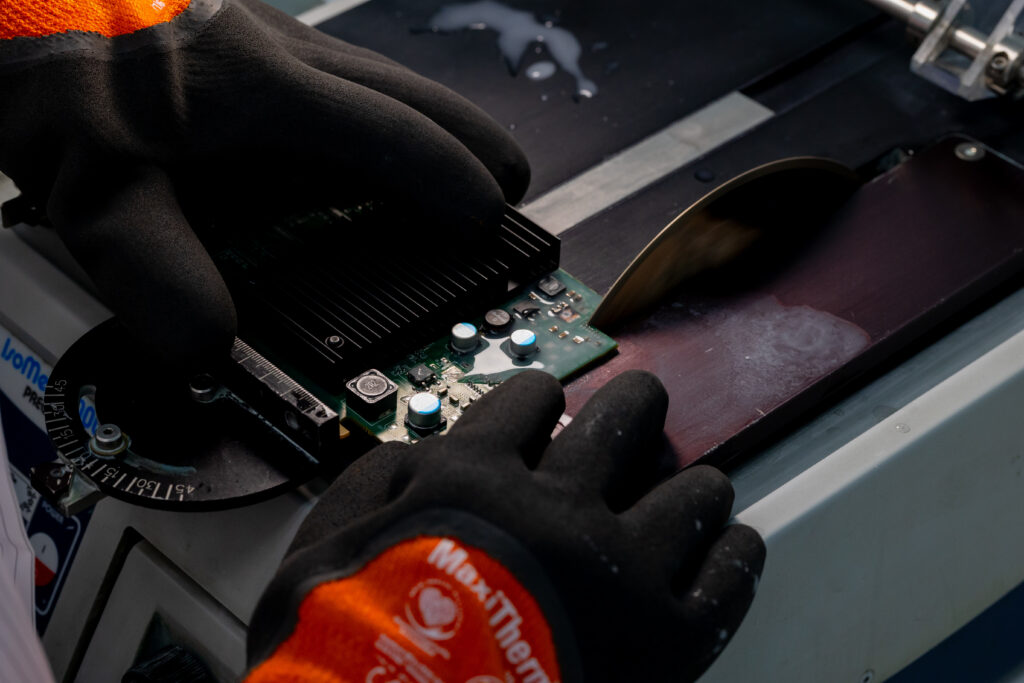
Most failures in automotive components originate beneath the surface. A coating that looks intact under optical inspection may have already debonded from its substrate at the interface. A solder joint that passes visual inspection may contain cracks propagating through the intermetallic layer. A plated surface may have voids or inclusions in the deposit that act as initiation sites for corrosion. Cross-section analysis makes these subsurface features visible.
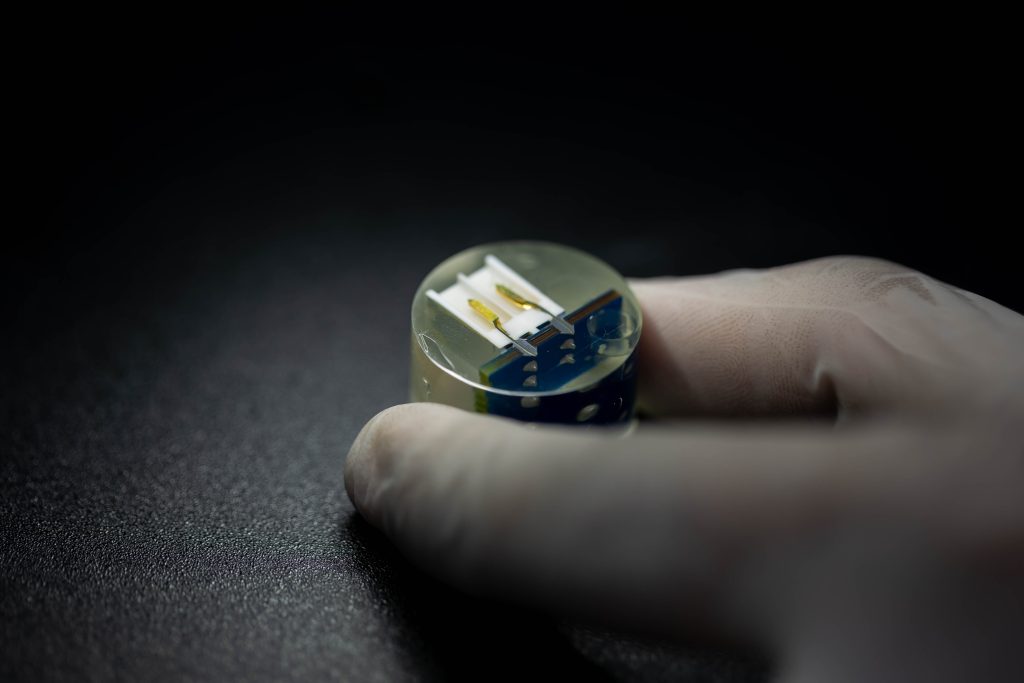
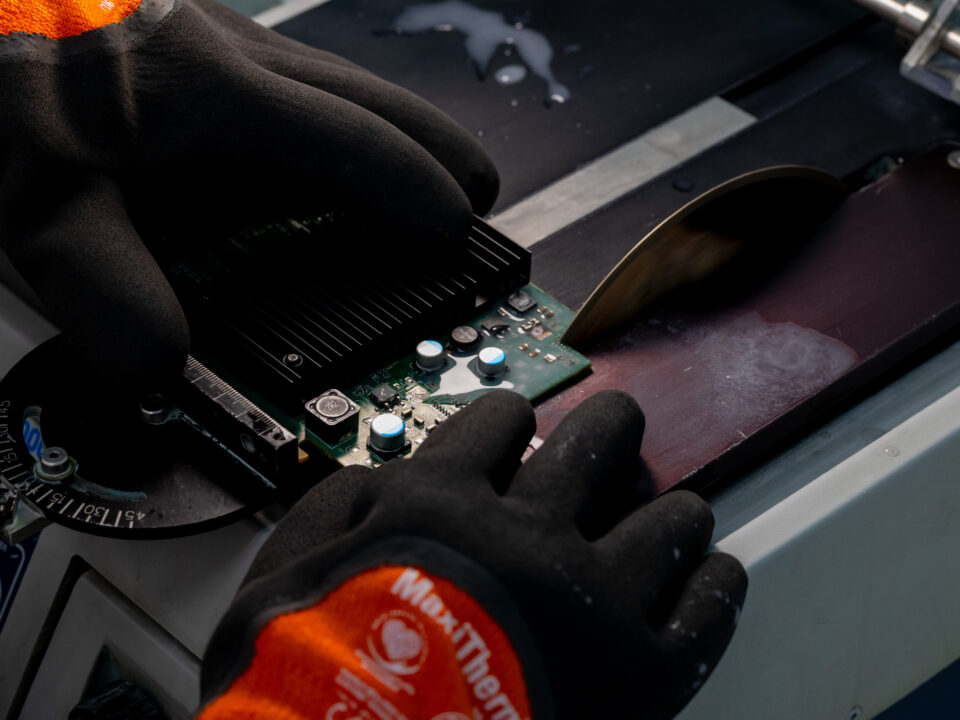
Cross-section analysis, also called microsection analysis or metallographic sectioning, involves cutting through a component at the site of interest, mounting the cut face in resin, and preparing the surface by grinding and polishing to a metallographic finish. What is revealed at the cut face is a two-dimensional view of the component’s internal structure at that location, at a scale and resolution that other analytical techniques cannot access without destructive preparation.
What Is Cross-Section Analysis
Cross-section analysis is a destructive preparation technique used to expose the internal microstructure of a component at a defined location. The process begins with selecting the exact cut location based on the failure site or the feature of interest identified during prior non-destructive examination. The component is then embedded in a low-shrinkage resin that fills any internal voids and supports the sample during subsequent preparation.
After the resin has cured, the embedded sample is cut through the area of interest using a precision saw or a slow-speed cutting wheel. The cut face is then ground through a series of progressively finer abrasive grades and finally polished to a mirror-like metallographic finish. Optional chemical or electrochemical etching of the polished surface reveals grain boundaries and phase structures that are not visible in the unetched condition.
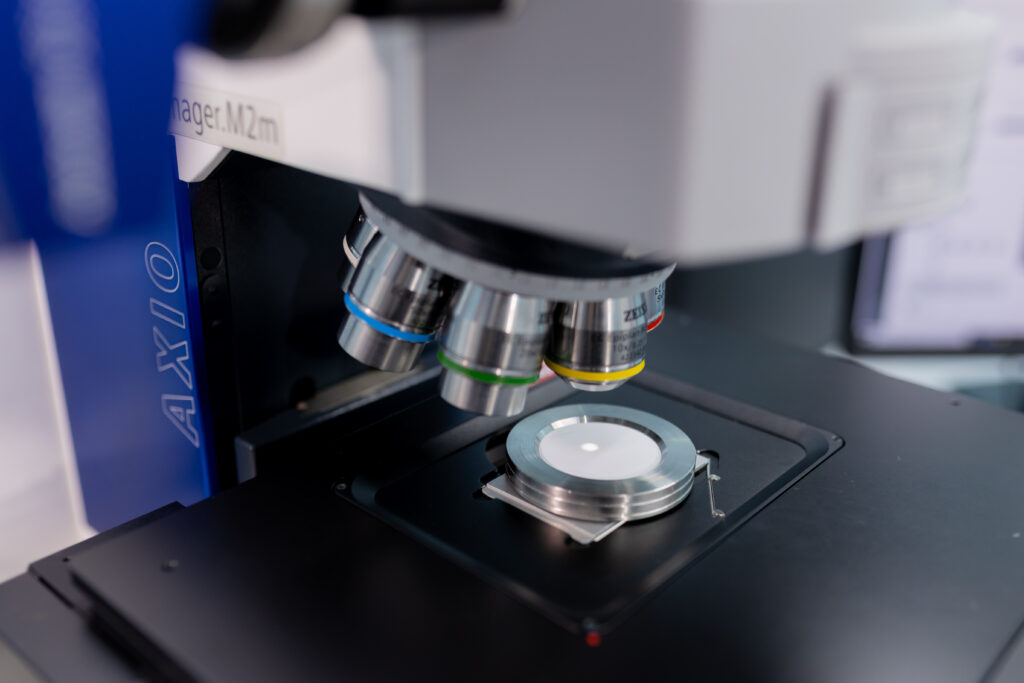
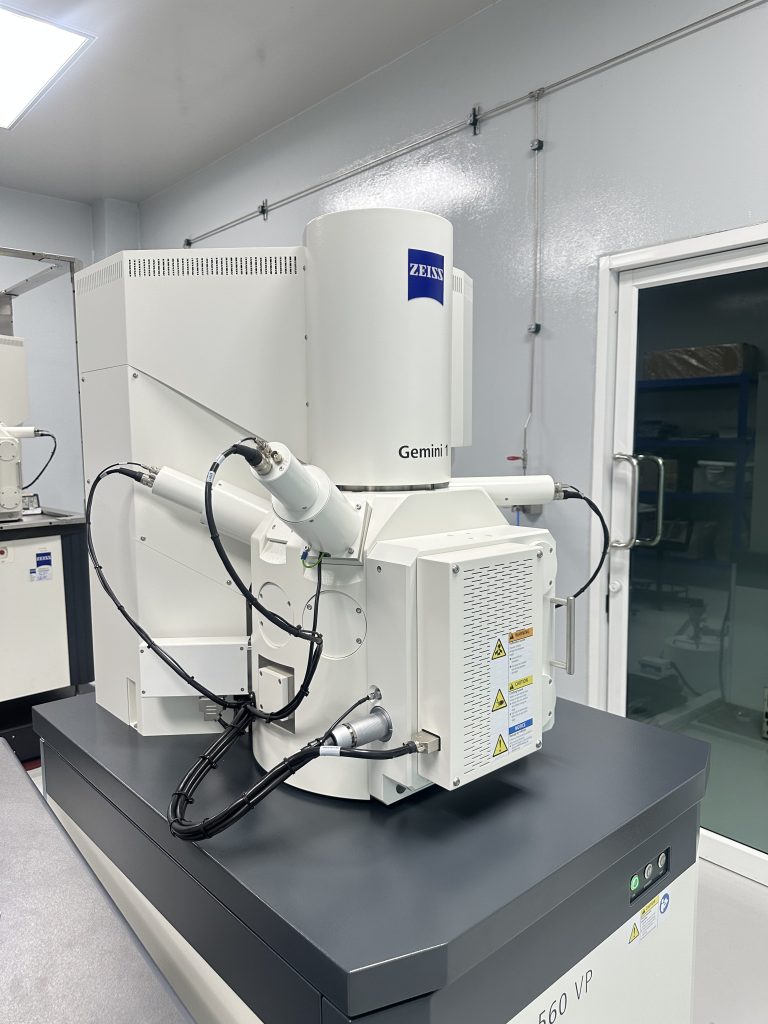
The prepared cross-section can then be examined by optical microscopy, scanning electron microscopy (SEM), and energy-dispersive X-ray spectroscopy (EDX). The combination of cross-section preparation with SEM-EDX is particularly powerful, as it allows elemental composition analysis at specific points, lines, and areas across the cross-section, revealing coating composition, interface chemistry, and the elemental distribution within individual microstructural features.
Key Preparation Parameters
Mounting resin: low-shrinkage epoxy or acrylic to preserve edge definition and prevent pull-out of brittle phases
Grinding sequence: progressively finer abrasives from 30-micron down to 1-micron diamond suspension
Polishing finish: colloidal silica (0.05-micron) for mirror-like surface free of scratches and smearing
Etching (optional): chemical or electrochemical etchants selected based on material system to reveal grain boundaries and phase structures
What Cross-Section Analysis Reveals
Cross-section analysis is applied to answer specific questions about a component’s internal structure that cannot be answered by surface examination alone.
Coating and plating thickness.
The physical thickness of a coating, plating, or surface treatment layer is directly measurable from the polished cross-section. This is important for quality control of surface treatment processes and for confirming that specified coating thickness requirements have been met. Multiple measurement points across the cross-section reveal thickness uniformity.
Coating adhesion and interface integrity.
The interface between a coating and its substrate, between a plating layer and the base material, or between bonded surfaces can be examined for evidence of voiding, delamination planes, or contaminating films. The locus of a coating adhesion failure, whether the fracture occurred within the coating, at the coating-substrate interface, or within the substrate itself, determines whether the failure was caused by a coating process problem, a surface preparation problem, or a design problem.
Solder joint quality and intermetallic structure.
In PCB and electronics assembly, cross-section analysis reveals the internal structure of solder joints including voids, cracks, the thickness and continuity of intermetallic compound layers, and any evidence of dewetting or non-wetting. For automotive electronics assemblies in Malaysia and Southeast Asia where humid tropical conditions accelerate solder joint degradation, cross-section analysis is a standard tool in reliability assessment and failure investigation.
Crack initiation and propagation paths.
Where a component has fractured or cracked, cross-section through the crack region reveals the crack path through the microstructure. Whether the crack propagates through grains (transgranular) or along grain boundaries (intergranular) provides information about the failure mechanism. The relationship between the crack path and specific microstructural features, such as inclusions, pores, or phase boundaries, identifies the initiation site.
Grain structure and heat treatment effects.
The grain size, grain morphology, and phase distribution visible in an etched cross-section reflect the material’s processing history. Abnormal grain structures, decarburised surface layers, or incorrect phase distributions indicate manufacturing process problems that may contribute to premature failure.
Voids, inclusions, and porosity. Internal defects such as gas porosity, shrinkage voids, and non-metallic inclusions are visible in cross-section even when they do not intersect the surface. The size, distribution, and morphology of these defects provide information about the casting or solidification conditions and can identify initiation sites for fatigue cracks or corrosion. Cross-Section Analysis in Automotive Applications In automotive manufacturing and failure analysis, cross-section analysis is applied across a wide range of component types and failure modes. The following are the most significant application areas. Coated fasteners and body components. Cross-section analysis confirms coating thickness and uniformity for zinc plating, phosphate coating, organic coatings, and multi-layer protective systems on fasteners, brackets, and body components. It identifies delamination planes and contaminating films at coating interfaces where corrosion has initiated. PCB and electronic assembly failure investigation. Solder joint cross-sections reveal the root cause of joint failures in automotive ECUs, sensors, and power modules. For electronics destined for humid tropical markets like Malaysia, cross-section examination of solder joints after accelerated humidity testing is a standard reliability verification step. Hydraulic and powertrain components. Cross-section through precision-machined surfaces reveals surface roughness, residual stress-related features, and the condition of any surface treatment applied to sliding or sealing surfaces. For components that have failed by wear or seizure, cross-section examination of the failed surface reveals the mechanism. Adhesive and bonded joints. Cross-section through a bonded joint or an overmoulded polymer-metal interface reveals the adhesive layer thickness, void content, and the interface condition. For automotive structural adhesives and electronics encapsulation, cross-section analysis is the primary tool for validating bond quality and investigating adhesion failures. Plated and coated component quality. Cross-section analysis confirms plating thickness and uniformity for decorative and functional coatings including zinc, nickel, chromium, and electroless nickel-phosphorus. For multi-layer coating systems, cross-section reveals the thickness of each individual layer and the condition of interfaces between layers. This is critical for components where coating thickness directly affects corrosion resistance or wear performance. How Cross-Section Analysis Fits into a Failure Investigation Cross-section analysis is a destructive technique and is therefore always applied after non-destructive examination is complete. The typical sequence in a failure investigation is as follows. Visual and stereo optical examination first documents the overall condition of the component and identifies the failure site and any obvious features of interest. SEM imaging of the failure site at appropriate magnification characterises the surface morphology and documents the features that will guide cross-section placement. Once the exact cut location is selected based on the surface examination evidence, the cross-section is prepared and examined. Because the act of cutting and polishing permanently alters the sample, the location of the cut must be chosen carefully. A cross-section placed slightly away from the critical feature may miss the most important microstructural evidence. This is why experienced failure analysis teams use the surface examination data to guide cut placement precisely rather than sectioning through the approximate area of interest. For a full explanation of how SEM analysis and EDX contribute to failure investigation before and after cross-section preparation, see our guide on scanning electron microscopy analysis for failure investigation. Integration with other analytical techniques. Cross-section analysis is most powerful when combined with complementary techniques. SEM imaging of the fracture surface before sectioning identifies the failure origin and guides cut placement. EDX analysis of the polished cross-section reveals elemental composition at specific features including coating layers, intermetallic compounds, corrosion products, and contaminating films. For organic materials and polymers, FTIR or Raman spectroscopy identifies resin chemistry and degradation products. Frequently Asked Questions What is the difference between cross-section analysis and microsection analysis?
The two terms describe the same technique. Microsection is the term more commonly used in electronics and PCB analysis contexts, while cross-section is more common in general materials and failure analysis. The preparation process, involving embedding, cutting, grinding, and polishing, is identical. Is cross-section analysis destructive? Yes. Cross-section analysis permanently modifies the sample by cutting through it. This is why it is always performed after non-destructive examination methods have been exhausted and after the analysis team has a clear hypothesis about where to cut and what they are looking for. Can cross-section analysis be combined with SEM and EDX? Yes. The polished cross-section surface is well suited to SEM imaging and EDX elemental analysis. SEM provides high-magnification imaging of microstructural features, coating layers, interfaces, and crack paths. EDX identifies the elemental composition at specific points or areas across the cross-section, including coating composition, contaminating films at interfaces, and corrosion product chemistry. How long does cross-section preparation and analysis take? Sample preparation for a standard cross-section typically takes one to two days. Examination by optical microscopy and SEM-EDX adds additional time depending on the analytical scope. For investigation programmes combining cross-section with other failure analysis techniques, turnaround depends on the full programme. Discuss timing requirements with the laboratory at the enquiry stage. For urgent investigations, some laboratories offer expedited preparation with 24-hour turnaround for standard cross-sections, though this depends on sample complexity and laboratory capacity. Is cross-section analysis used in cleanliness testing? Cross-section preparation is not a standard part of automotive component cleanliness testing under ISO 16232 or VDA 19. However, in cleanliness testing follow-up investigations where particles of unknown origin have been found on filter membranes, cross-section of specific particles can provide information about internal structure and material composition that supports source identification. What standards govern cross-section analysis for PCBs and electronics? IPC-TM-650 2.1.1 defines the standard method for microsectioning of printed boards and electronics assemblies. The standard specifies mounting, grinding, polishing, and etching procedures to produce cross-sections suitable for evaluating plated through-holes, vias, solder joints, and laminate quality. For solder joint assessment, IPC-TM-650 2.4.11 and IPC-A-610 provide acceptance criteria for intermetallic layer thickness, void content, and wetting quality. Next Steps See our full Failure Analysis services including cross-section and microsection analysis Read our guide on scanning electron microscopy analysis for failure investigation Read our guide on PCB cross-section analysis: /blog/pcb-cross-section-analysis/ Contact our team to discuss a cross-section analysis investigation ISO/IEC 17025 Accredited Testing Where Applicable | Cross-Section and Microsection Analysis | Failure Analysis Services Malaysia
Voids, inclusions, and porosity. Internal defects such as gas porosity, shrinkage voids, and non-metallic inclusions are visible in cross-section even when they do not intersect the surface. The size, distribution, and morphology of these defects provide information about the casting or solidification conditions and can identify initiation sites for fatigue cracks or corrosion. Cross-Section Analysis in Automotive Applications In automotive manufacturing and failure analysis, cross-section analysis is applied across a wide range of component types and failure modes. The following are the most significant application areas. Coated fasteners and body components. Cross-section analysis confirms coating thickness and uniformity for zinc plating, phosphate coating, organic coatings, and multi-layer protective systems on fasteners, brackets, and body components. It identifies delamination planes and contaminating films at coating interfaces where corrosion has initiated. PCB and electronic assembly failure investigation. Solder joint cross-sections reveal the root cause of joint failures in automotive ECUs, sensors, and power modules. For electronics destined for humid tropical markets like Malaysia, cross-section examination of solder joints after accelerated humidity testing is a standard reliability verification step. Hydraulic and powertrain components. Cross-section through precision-machined surfaces reveals surface roughness, residual stress-related features, and the condition of any surface treatment applied to sliding or sealing surfaces. For components that have failed by wear or seizure, cross-section examination of the failed surface reveals the mechanism. Adhesive and bonded joints. Cross-section through a bonded joint or an overmoulded polymer-metal interface reveals the adhesive layer thickness, void content, and the interface condition. For automotive structural adhesives and electronics encapsulation, cross-section analysis is the primary tool for validating bond quality and investigating adhesion failures. Plated and coated component quality. Cross-section analysis confirms plating thickness and uniformity for decorative and functional coatings including zinc, nickel, chromium, and electroless nickel-phosphorus. For multi-layer coating systems, cross-section reveals the thickness of each individual layer and the condition of interfaces between layers. This is critical for components where coating thickness directly affects corrosion resistance or wear performance. How Cross-Section Analysis Fits into a Failure Investigation Cross-section analysis is a destructive technique and is therefore always applied after non-destructive examination is complete. The typical sequence in a failure investigation is as follows. Visual and stereo optical examination first documents the overall condition of the component and identifies the failure site and any obvious features of interest. SEM imaging of the failure site at appropriate magnification characterises the surface morphology and documents the features that will guide cross-section placement. Once the exact cut location is selected based on the surface examination evidence, the cross-section is prepared and examined. Because the act of cutting and polishing permanently alters the sample, the location of the cut must be chosen carefully. A cross-section placed slightly away from the critical feature may miss the most important microstructural evidence. This is why experienced failure analysis teams use the surface examination data to guide cut placement precisely rather than sectioning through the approximate area of interest. For a full explanation of how SEM analysis and EDX contribute to failure investigation before and after cross-section preparation, see our guide on scanning electron microscopy analysis for failure investigation. Integration with other analytical techniques. Cross-section analysis is most powerful when combined with complementary techniques. SEM imaging of the fracture surface before sectioning identifies the failure origin and guides cut placement. EDX analysis of the polished cross-section reveals elemental composition at specific features including coating layers, intermetallic compounds, corrosion products, and contaminating films. For organic materials and polymers, FTIR or Raman spectroscopy identifies resin chemistry and degradation products. Frequently Asked Questions What is the difference between cross-section analysis and microsection analysis?
The two terms describe the same technique. Microsection is the term more commonly used in electronics and PCB analysis contexts, while cross-section is more common in general materials and failure analysis. The preparation process, involving embedding, cutting, grinding, and polishing, is identical. Is cross-section analysis destructive? Yes. Cross-section analysis permanently modifies the sample by cutting through it. This is why it is always performed after non-destructive examination methods have been exhausted and after the analysis team has a clear hypothesis about where to cut and what they are looking for. Can cross-section analysis be combined with SEM and EDX? Yes. The polished cross-section surface is well suited to SEM imaging and EDX elemental analysis. SEM provides high-magnification imaging of microstructural features, coating layers, interfaces, and crack paths. EDX identifies the elemental composition at specific points or areas across the cross-section, including coating composition, contaminating films at interfaces, and corrosion product chemistry. How long does cross-section preparation and analysis take? Sample preparation for a standard cross-section typically takes one to two days. Examination by optical microscopy and SEM-EDX adds additional time depending on the analytical scope. For investigation programmes combining cross-section with other failure analysis techniques, turnaround depends on the full programme. Discuss timing requirements with the laboratory at the enquiry stage. For urgent investigations, some laboratories offer expedited preparation with 24-hour turnaround for standard cross-sections, though this depends on sample complexity and laboratory capacity. Is cross-section analysis used in cleanliness testing? Cross-section preparation is not a standard part of automotive component cleanliness testing under ISO 16232 or VDA 19. However, in cleanliness testing follow-up investigations where particles of unknown origin have been found on filter membranes, cross-section of specific particles can provide information about internal structure and material composition that supports source identification. What standards govern cross-section analysis for PCBs and electronics? IPC-TM-650 2.1.1 defines the standard method for microsectioning of printed boards and electronics assemblies. The standard specifies mounting, grinding, polishing, and etching procedures to produce cross-sections suitable for evaluating plated through-holes, vias, solder joints, and laminate quality. For solder joint assessment, IPC-TM-650 2.4.11 and IPC-A-610 provide acceptance criteria for intermetallic layer thickness, void content, and wetting quality. Next Steps See our full Failure Analysis services including cross-section and microsection analysis Read our guide on scanning electron microscopy analysis for failure investigation Read our guide on PCB cross-section analysis: /blog/pcb-cross-section-analysis/ Contact our team to discuss a cross-section analysis investigation ISO/IEC 17025 Accredited Testing Where Applicable | Cross-Section and Microsection Analysis | Failure Analysis Services Malaysia
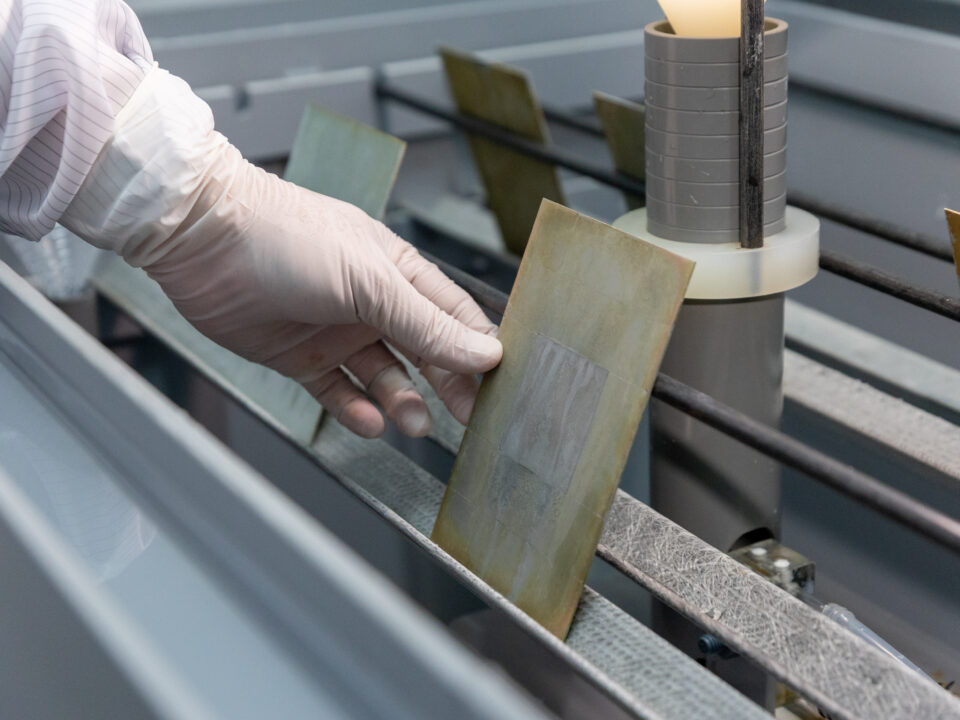
October 12, 2026
Salt Spray Test Standards Compared, ISO 9227, ASTM B117, JASO M609 and DIN 50021
READ MORENeutral Salt Spray · Acetic Acid Salt Spray · CASS · Cyclic Corrosion · Standard Selection Guide
ISO/IEC 17025 Accredited Testing Where Applicable | Salt Spray and Corrosion Testing Capability | Automotive Materials Testing Malaysia
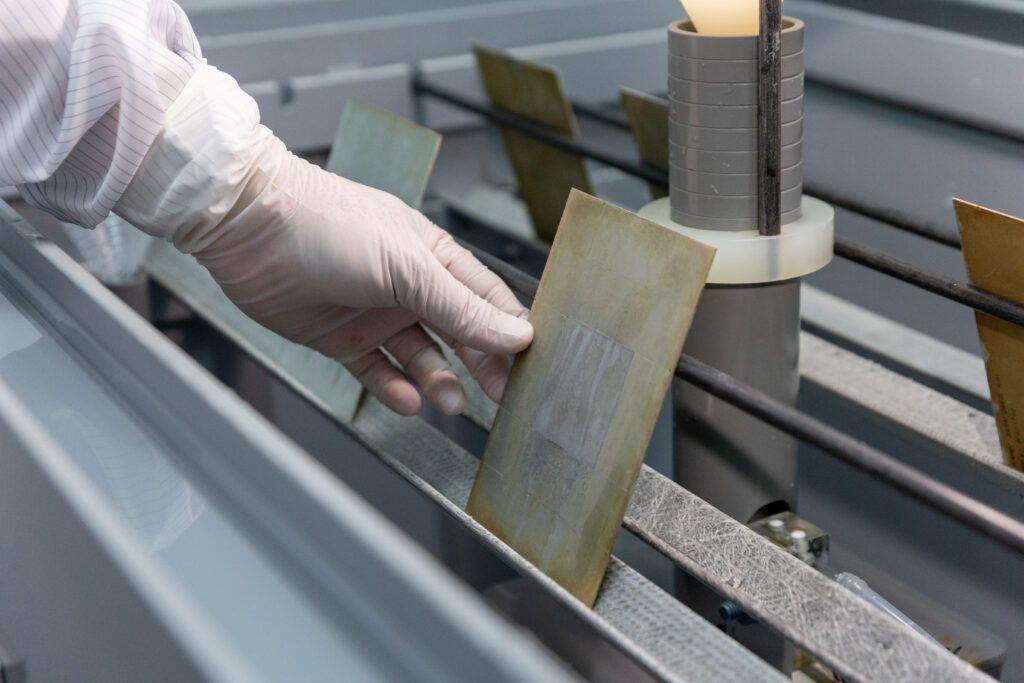
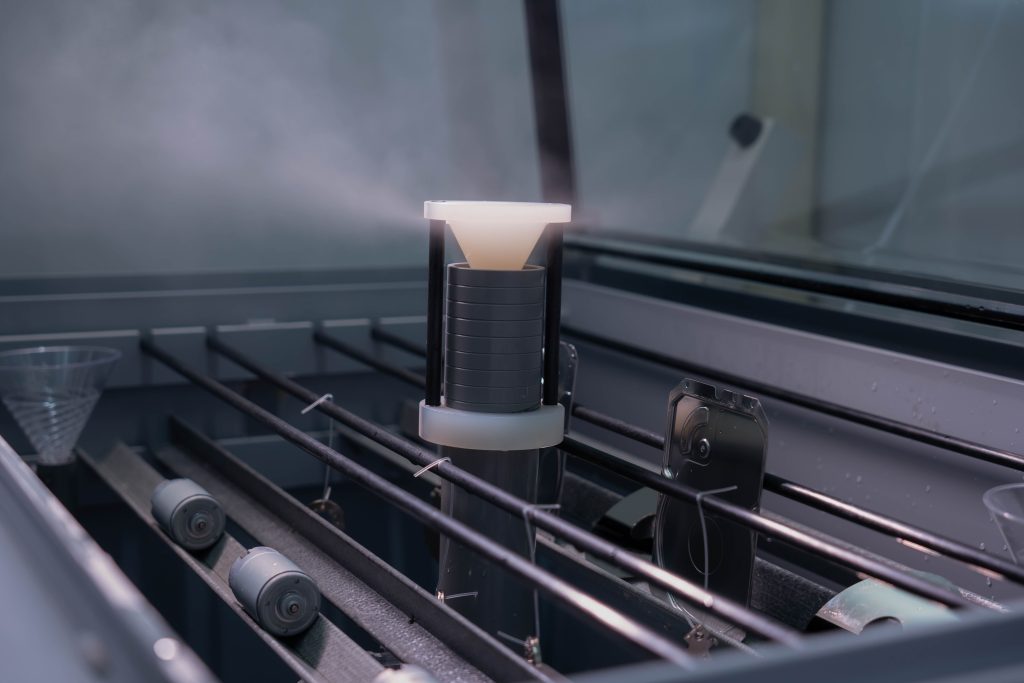
Salt spray testing is one of the most widely specified corrosion tests in automotive manufacturing. It provides a controlled, accelerated corrosive environment that allows coatings, platings, and surface treatments to be evaluated against defined acceptance criteria within days rather than years. What is less straightforward is which standard to test to, because several different standards govern salt spray testing, and they are not all equivalent.
For automotive manufacturers and component suppliers in Malaysia and Southeast Asia working across Japanese, European, American, and global supply chains, knowing the difference between ISO 9227, ASTM B117, JASO M609, and DIN 50021 is practical knowledge that prevents mistakes at the specification stage and avoids retesting when a submission is rejected for referencing the wrong standard.
What Is a Salt Spray Test
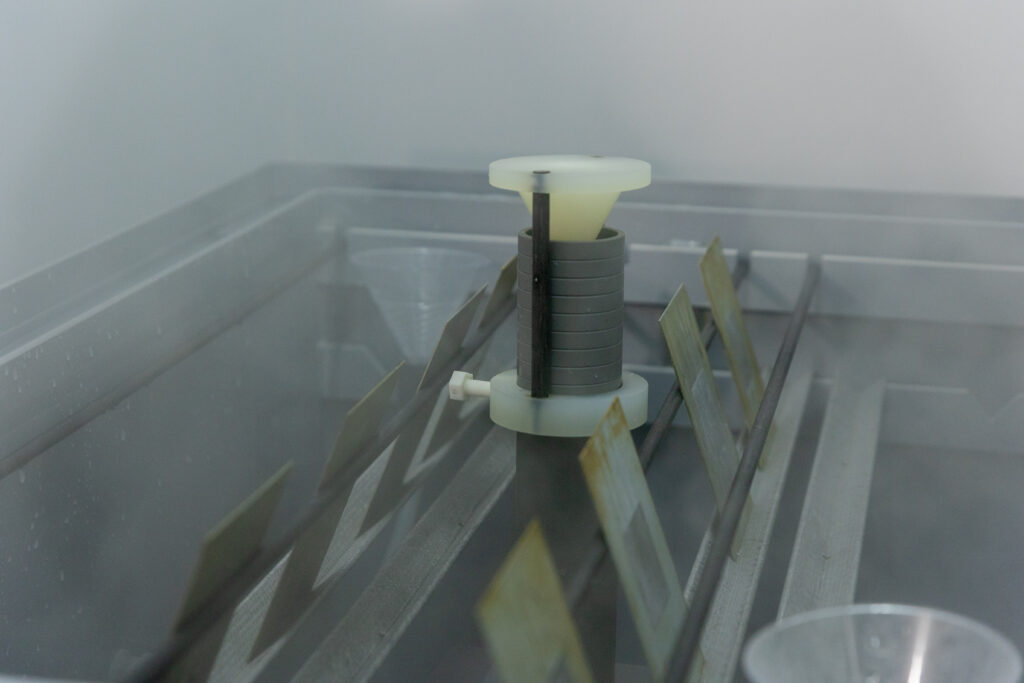
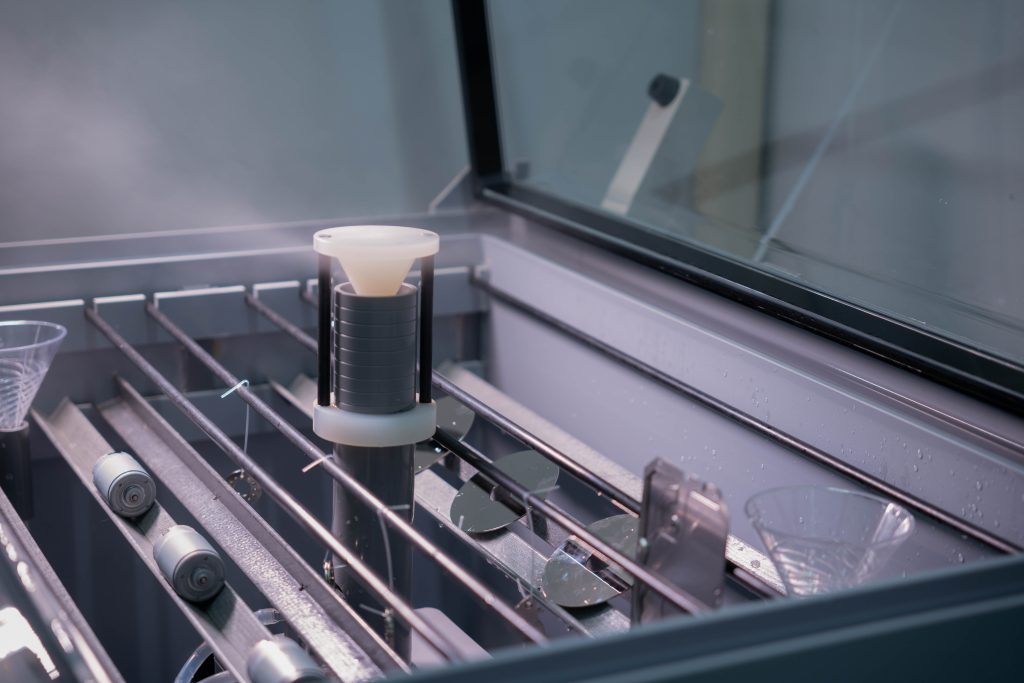
A salt spray test, also called a salt fog test, exposes a specimen to a continuously atomised salt solution inside a controlled chamber under defined temperature conditions. The purpose is to accelerate the corrosion processes that would develop over much longer periods under real environmental exposure, allowing manufacturers to evaluate corrosion protection performance in a practical timeframe.
The result of a salt spray test is an assessment of the specimen’s condition after a defined exposure period, typically evaluated by visual inspection for corrosion products, blistering, coating breakdown, and corrosion creep from any scribed lines cut into the coating before exposure. The result is compared against the acceptance criteria defined in the applicable specification.
Salt spray testing does not directly simulate specific years of real-world service life. Test hours should not be converted to service years. The test is a comparative and qualification tool, not a life prediction method.
ISO 9227, The International Standard
ISO 9227 is the primary international standard for salt spray corrosion testing. It defines three test atmospheres, each suited to different material and coating types.
Atmosphere
Abbreviation
Test conditions
Typical application
Neutral Salt Spray
NSS
5% NaCl solution, 35°C
General corrosion testing for metallic materials with or without corrosion protection
Acetic Acid Salt Spray
AASS
5% NaCl with acetic acid, 35°C
Decorative coatings, anodised aluminium, specific plating systems where specified
Copper Accelerated Acetic Acid Salt Spray
CASS
5% NaCl with acetic acid and copper chloride, 50°C
Decorative copper-nickel-chromium or nickel-chromium coating systems where specified
ISO 9227 is referenced by European OEM specifications and most global OEM material standards. It is the standard most commonly encountered by automotive suppliers in Malaysia serving European or broadly international supply chains.
The NSS atmosphere is by far the most widely used. AASS and CASS are applied only when the applicable specification specifically calls for them. Using AASS or CASS when NSS is required, or vice versa, is a test method non-conformance that invalidates the result.
ISO 9227:2022 Revision
The most recent revision of ISO 9227 was published in 2022, updating the previous 2017 version. The 2022 revision clarifies requirements for chamber calibration, fog collection measurement, and specimen positioning, but the fundamental test conditions for NSS, AASS, and CASS remain unchanged. Laboratories accredited to ISO/IEC 17025 should ensure their procedures reference the current version unless the customer specification explicitly names an earlier edition.
ASTM B117, The American Standard
ASTM B117 is published by ASTM International and is titled Standard Practice for Operating Salt Spray (Fog) Apparatus. It specifies the neutral salt spray atmosphere using a 5% sodium chloride solution at 35°C, which is directly comparable to the NSS atmosphere defined in ISO 9227.
The important distinction is that ASTM B117 covers only the neutral salt spray atmosphere. It does not include AASS or CASS equivalents within the same standard. When a North American OEM specification references ASTM B117, it is specifying neutral salt spray only.
For automotive suppliers in Malaysia receiving drawings from North American OEMs or their Tier-1 suppliers, ASTM B117 is the corrosion test reference most commonly encountered. The underlying test conditions match ISO 9227 NSS, but the report must reference the correct standard as named in the specification.
ASTM B117 vs ISO 9227 NSS: Key Parameters
Parameter
ASTM B117
ISO 9227 NSS
Salt solution
5% NaCl by mass
50 ± 5 g/L (approximately 5%)
Temperature
35 ± 2°C
35 ± 2°C
Solution pH
6.5 – 7.2
6.5 – 7.2
Fog collection rate
1 – 2 mL per 80 cm² per hour
1 – 2 mL per 80 cm² per hour
Chamber volume
Not specified
Minimum 0.4 m³ recommended
The test conditions are functionally equivalent for neutral salt spray. The report must reference the standard named in the specification, even though the underlying conditions match.
Related Standard: ASTM G85
While ASTM B117 covers neutral salt spray only, ASTM G85 (Standard Practice for Modified Salt Spray Testing) defines additional corrosive environments including acetic acid salt spray and copper-accelerated tests that are broadly comparable to ISO 9227 AASS and CASS. Some North American OEM specifications reference ASTM G85 annexes rather than ASTM B117 when acidic or accelerated atmospheres are required.
JASO M609, The Japanese Automotive Standard
JASO M609 is published by the Society of Automotive Engineers of Japan (JSAE) and defines a cyclic corrosion test method widely used by Japanese OEMs including Toyota, Honda, and Nissan.
Unlike ISO 9227 and ASTM B117, which specify continuous salt spray exposure, JASO M609 defines a cyclic test protocol that alternates between salt spray exposure, drying at elevated temperature, and humid conditions. This cyclic approach is designed to better represent the wet-dry cycle experienced by vehicle components in real service conditions, particularly in the Japanese and East Asian markets where vehicle corrosion performance was historically a key quality differentiator.
JASO M609 is not a direct substitute for ISO 9227 NSS or ASTM B117. Continuous salt spray and cyclic corrosion produce different corrosion morphologies and cannot be directly compared in terms of hours of exposure. Suppliers serving Japanese OEM supply chains in Malaysia should confirm whether JASO M609 or a derivative Japanese OEM protocol is specified before selecting a test method.
JASO M609:2024 Update
JASO M609 was comprehensively revised in 2024, replacing the 1991 version that had been in use for over three decades. The 2024 revision defines three test methods: Method A for cosmetic corrosion evaluation, Method B for perforation corrosion assessment, and Method C for combined evaluation. The cyclic protocol typically alternates between salt spray, controlled drying at elevated temperature, and high-humidity conditioning over a repeating cycle. Because the 2024 revision is a major update, suppliers should confirm with Japanese OEMs which version applies to their programme.
DIN 50021, The German Standard and Its Relationship to ISO 9227
DIN 50021 is a German standard that historically specified salt spray testing before the equivalent ISO standard was established. It is now largely superseded by ISO 9227 for most applications, and most German OEM specifications that previously referenced DIN 50021 have transitioned to ISO 9227.
Where DIN 50021 still appears in older component drawings or legacy specifications that have not been updated, it is generally treated as equivalent to ISO 9227 NSS for the neutral salt spray atmosphere. However, if a specification explicitly references DIN 50021, the laboratory should document the applicable standard correctly on the test report. Substituting ISO 9227 without confirming equivalence with the customer is not recommended.
How to Choose the Right Standard
The correct standard for a salt spray test is always determined by the component drawing, material specification, or OEM quality requirement, not by the laboratory or the supplier. The decision tree is straightforward.
If the specification references ISO 9227, identify which atmosphere is required: NSS, AASS, or CASS
If the specification references ASTM B117, the test is neutral salt spray to the American standard
If the specification references JASO M609 or a Japanese OEM cyclic protocol, the test is a cyclic corrosion test, not continuous salt spray
If the specification references DIN 50021, confirm with the customer whether ISO 9227 NSS is accepted as equivalent before testing
For suppliers in Malaysia receiving components from multiple OEM relationships, it is common to encounter two or more of these standards across different programmes. Each specification must be addressed individually. Do not assume that meeting one standard automatically satisfies another.
What the Standards Have in Common
Despite their differences in origin, scope, and test atmosphere, all four standards share certain fundamental characteristics.
Test duration is defined by the specification.
Exposure periods ranging from 96 hours for basic coating qualification to 1,000 hours or more for demanding exterior and underbody applications are all valid, depending on what the specification requires. Acceptance criteria are defined by the specification.
Results are interpreted against a specific pass or fail criterion, whether that is maximum corrosion creep from a scribe line, maximum percentage of surface showing corrosion, or a visual rating against a defined photographic standard. Specimen preparation and positioning affect results.
All four standards specify requirements for cleaning before testing, positioning in the chamber (typically at 15 to 30 degrees from vertical), and handling to prevent contamination. Deviations can invalidate the test result. Test reports must state key parameters.
All four standards require the report to state the standard used, the test atmosphere, the exposure duration, and the chamber conditions, alongside the specimen description, inspection observations, and pass or fail conclusion. Frequently Asked Questions What is the difference between ISO 9227 and ASTM B117?
ISO 9227 defines three test atmospheres: NSS, AASS, and CASS. ASTM B117 covers neutral salt spray only. The NSS conditions in both standards are equivalent in terms of salt concentration and test temperature. The report must reference the standard named in the specification. What is JASO M609 and how does it differ from ISO 9227?
JASO M609 is a Japanese automotive cyclic corrosion test that alternates between salt spray, drying, and humidity phases. ISO 9227 specifies continuous salt spray exposure. The two methods produce different corrosion patterns and are not interchangeable. Cyclic corrosion test results and continuous salt spray results should not be compared directly. Is DIN 50021 still used in automotive specifications in Malaysia?
DIN 50021 appears occasionally in older drawings and legacy specifications that have not been updated to reference ISO 9227. For most practical purposes it is treated as equivalent to ISO 9227 NSS, but confirm equivalence with the customer before substituting one for the other on a test report. How many hours of salt spray testing does my component need?
The required exposure duration is defined by the component specification, not by the laboratory. Basic coating qualification tests may run from 96 to 240 hours. More demanding exterior or underbody requirements typically specify 500 to 1,000 hours or more. Confirm the required duration with the specification before testing begins. Can salt spray test hours be converted into years of service life?
No. Salt spray testing is an accelerated comparative method, not a direct simulation of field exposure. The relationship between test hours and service life depends on the specific coating, the operating environment, and other factors that salt spray testing does not replicate. What acceptance criteria are commonly used for salt spray testing in automotive applications? Acceptance criteria are defined by the component specification. Common criteria include maximum corrosion creep from a scribed line (typically 1 mm to 5 mm), maximum percentage surface corrosion (often 5% to 10% for exterior components), or rating against photographic standards such as ISO 10289 or ASTM D1654. Basic coating qualification tests typically run 96 to 240 hours. Exterior body panels and trim commonly require 500 to 1,000 hours. Underbody and chassis components may specify 1,000 hours or more. Next Steps See our full Materials and Environmental Testing services for automotive corrosion testing Read our detailed guide on ISO 9227 vs ASTM B117 salt spray testing Read our guide on accelerated aging and environmental simulation testing: /blog/accelerated-aging-environmental-simulation/ Contact our team for a corrosion testing quotation or technical discussion ISO/IEC 17025 Accredited Testing Where Applicable | Salt Spray and Cyclic Corrosion Testing | Automotive Corrosion Testing Malaysia
Exposure periods ranging from 96 hours for basic coating qualification to 1,000 hours or more for demanding exterior and underbody applications are all valid, depending on what the specification requires. Acceptance criteria are defined by the specification.
Results are interpreted against a specific pass or fail criterion, whether that is maximum corrosion creep from a scribe line, maximum percentage of surface showing corrosion, or a visual rating against a defined photographic standard. Specimen preparation and positioning affect results.
All four standards specify requirements for cleaning before testing, positioning in the chamber (typically at 15 to 30 degrees from vertical), and handling to prevent contamination. Deviations can invalidate the test result. Test reports must state key parameters.
All four standards require the report to state the standard used, the test atmosphere, the exposure duration, and the chamber conditions, alongside the specimen description, inspection observations, and pass or fail conclusion. Frequently Asked Questions What is the difference between ISO 9227 and ASTM B117?
ISO 9227 defines three test atmospheres: NSS, AASS, and CASS. ASTM B117 covers neutral salt spray only. The NSS conditions in both standards are equivalent in terms of salt concentration and test temperature. The report must reference the standard named in the specification. What is JASO M609 and how does it differ from ISO 9227?
JASO M609 is a Japanese automotive cyclic corrosion test that alternates between salt spray, drying, and humidity phases. ISO 9227 specifies continuous salt spray exposure. The two methods produce different corrosion patterns and are not interchangeable. Cyclic corrosion test results and continuous salt spray results should not be compared directly. Is DIN 50021 still used in automotive specifications in Malaysia?
DIN 50021 appears occasionally in older drawings and legacy specifications that have not been updated to reference ISO 9227. For most practical purposes it is treated as equivalent to ISO 9227 NSS, but confirm equivalence with the customer before substituting one for the other on a test report. How many hours of salt spray testing does my component need?
The required exposure duration is defined by the component specification, not by the laboratory. Basic coating qualification tests may run from 96 to 240 hours. More demanding exterior or underbody requirements typically specify 500 to 1,000 hours or more. Confirm the required duration with the specification before testing begins. Can salt spray test hours be converted into years of service life?
No. Salt spray testing is an accelerated comparative method, not a direct simulation of field exposure. The relationship between test hours and service life depends on the specific coating, the operating environment, and other factors that salt spray testing does not replicate. What acceptance criteria are commonly used for salt spray testing in automotive applications? Acceptance criteria are defined by the component specification. Common criteria include maximum corrosion creep from a scribed line (typically 1 mm to 5 mm), maximum percentage surface corrosion (often 5% to 10% for exterior components), or rating against photographic standards such as ISO 10289 or ASTM D1654. Basic coating qualification tests typically run 96 to 240 hours. Exterior body panels and trim commonly require 500 to 1,000 hours. Underbody and chassis components may specify 1,000 hours or more. Next Steps See our full Materials and Environmental Testing services for automotive corrosion testing Read our detailed guide on ISO 9227 vs ASTM B117 salt spray testing Read our guide on accelerated aging and environmental simulation testing: /blog/accelerated-aging-environmental-simulation/ Contact our team for a corrosion testing quotation or technical discussion ISO/IEC 17025 Accredited Testing Where Applicable | Salt Spray and Cyclic Corrosion Testing | Automotive Corrosion Testing Malaysia
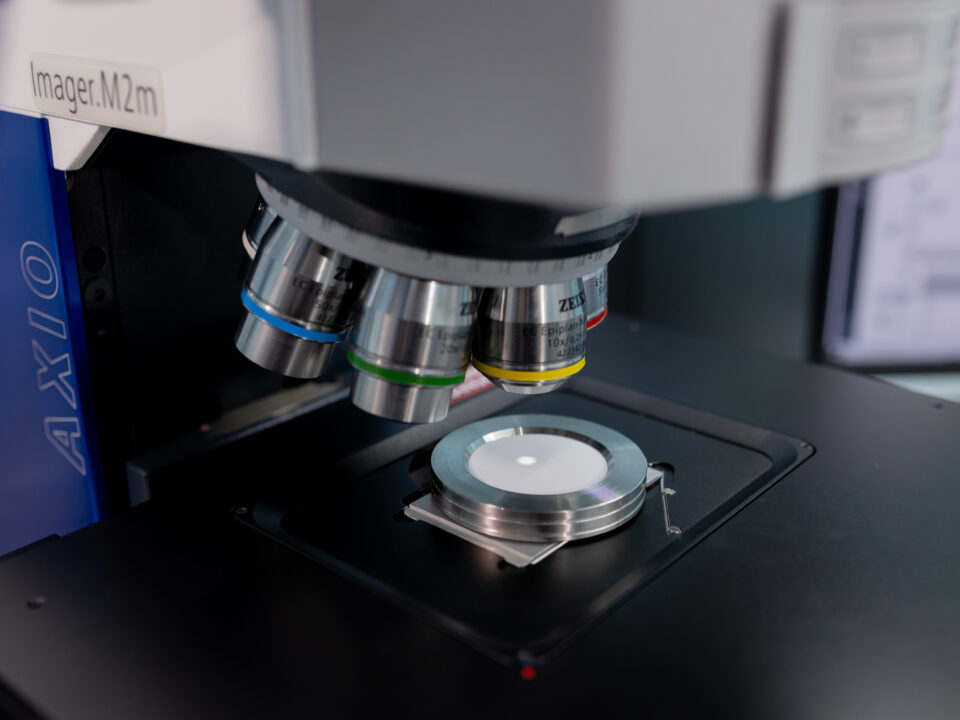
October 12, 2026
Gravimetric vs Microscopic Particle Analysis
READ MOREGravimetric vs Microscopic Particle Analysis, Which Method Is Right for Your Application
Gravimetric Analysis · Microscopic Particle Count · LPC · ISO 16232 · VDA 19 · Cleanliness Classification
ISO/IEC 17025 Accredited Testing Where Applicable | Full Particle Analysis Capability | Technical Cleanliness Specialist Malaysia
When a component is submitted for cleanliness testing under ISO 16232 or VDA 19, the test programme does not choose between gravimetric analysis and microscopic particle analysis. Both are required. But understanding what each method measures, why each exists, and what each one can and cannot tell you helps manufacturers in Malaysia and across Southeast Asia prepare better samples, interpret results more accurately, and make better decisions when a component is close to its specification limit.
What Is Gravimetric Analysis
Gravimetric analysis is the measurement of total particle mass collected from a component surface during cleanliness testing. After particles are extracted from the component using a validated extraction method and filtered onto a membrane, the membrane is dried and weighed on a calibrated analytical balance before and after filtration. The difference in mass is the gravimetric result, expressed in milligrams per defined surface area of the component, typically milligrams per 1,000 square centimetres.
Gravimetric analysis gives a single number representing the total mass of all extracted contamination. It does not distinguish between one large particle and thousands of small ones of equivalent total mass. It does not identify particle types or measure individual particle sizes. What it provides is a fast, reproducible, and defensible measure of overall contamination load that can be compared directly against a gravimetric cleanliness limit where one is specified.
Key Characteristics
Fast and reproducible: results available within hours of filtration
Integral measurement: cannot distinguish between one large particle and thousands of small ones of equivalent mass
Minimum detectable mass: typically 1 mg under controlled conditions; 3 mg or more recommended under non-climate-controlled environments per VDA 19 and ISO 16232 guidance
Expressed as: mg per component or mg per 1,000 cm² of wetted surface area
What Is Microscopic Particle Analysis
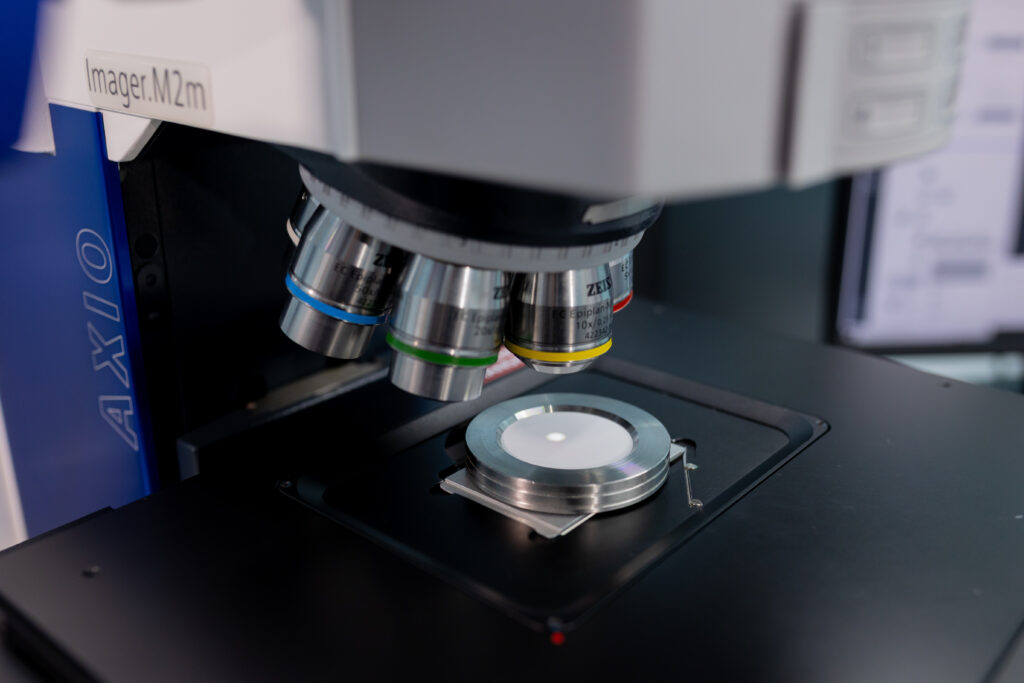
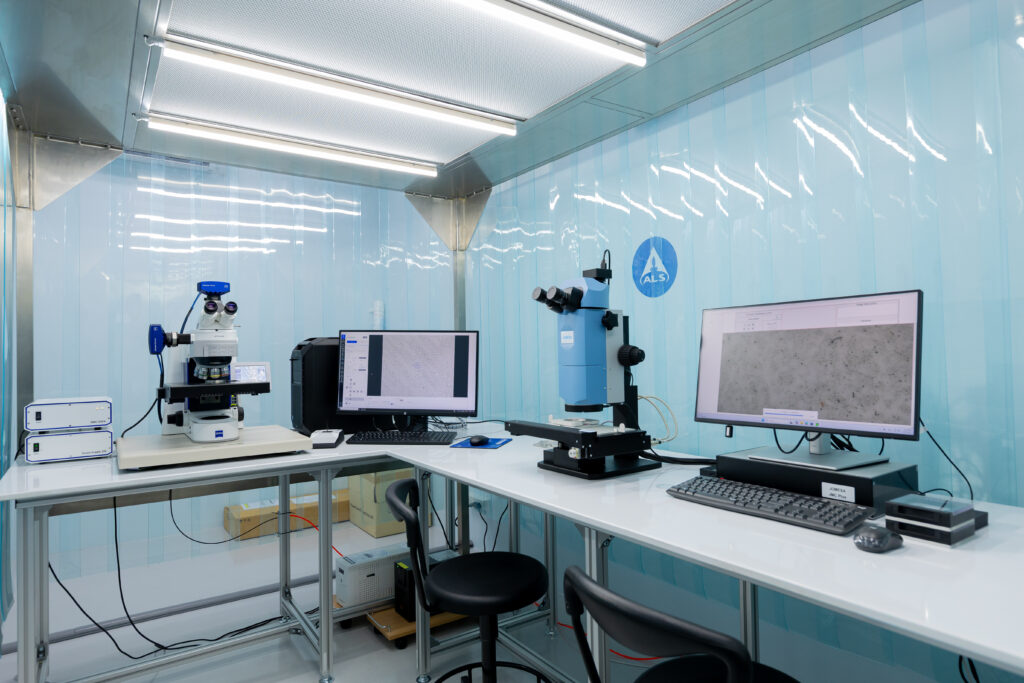
Microscopic particle analysis examines the particles collected on the filter membrane under a calibrated microscope, counting and measuring each particle individually and classifying it by type. The analysis produces a particle size distribution: how many particles were found in each defined size range, from the smallest detectable size up to particles larger than 1,000 micrometres. It also classifies each particle into one of the categories defined by ISO 16232 and VDA 19.
Particle category
Description
Metallic shiny
Highly reflective particles consistent with machined metal debris or wear particles
Metallic non-shiny
Oxide-coated or corroded metal particles
Fibre
Elongated particles with length-to-width ratio greater than ten
Other non-metallic
Rubber, polymer, ceramic, mineral debris
This classification matters because OEM cleanliness specifications often apply different limits to different particle types. A single metallic shiny particle above a critical size threshold is often treated as a non-conformance regardless of the total count, because metallic debris carries a higher risk of causing mechanical damage in precision assemblies.
Automated vs Manual Classification
Microscopic analysis can be performed manually by an operator viewing the filter membrane under an optical microscope, or by automated image analysis systems that capture and classify particles using software algorithms. Automated systems improve throughput and reduce operator variability, but manual review is still required for borderline cases and for confirming particle classification when the specification applies different limits to different particle types.
How Gravimetric and Microscopic Analysis Compare
Dimension
Gravimetric Analysis
Microscopic Particle Analysis
What it measures
Total mass of all extracted particles
Individual particle count by size class and type
Output
mg per 1,000 cm²
Particles per size class per 1,000 cm²
Speed
Fast
Slower, especially for high particle counts
Particle type information
None
Yes, by visual classification
Size distribution
None
Full distribution across defined size classes
Identifies single large particles
No
Yes
Required by ISO 16232 and VDA 19
Yes
Yes
The key limitation of gravimetric analysis is that it cannot identify a single oversized particle. A component could show a very low gravimetric result while still containing one metallic shiny particle large enough to jam a hydraulic valve or score a fuel injector. Microscopic analysis catches this scenario. The key limitation of microscopic analysis is that it does not capture particles smaller than the lower size threshold of the analysis, and the total contamination mass is not directly available from a particle count alone.
Light Obscuration Particle Counting (LPC) and Its Role
In addition to manual or automated microscopic analysis, ISO 16232 and VDA 19 include light obscuration particle counting (LPC) as the method used to generate the formal cleanliness classification. LPC re-suspends the extracted particles in a clean solvent and passes the suspension through a laser-based counting instrument, which counts and sizes each particle automatically as it passes through the measurement cell.
LPC is faster and more statistically representative than manual microscopic counting for high particle counts, and it is the method that generates the Component Cleanliness Code (CCC) used in formal OEM reporting. For a detailed explanation of how LPC works and where it fits in the cleanliness testing workflow, see our guide on Liquid-Borne Particle Count testing.
LPC vs Optical Microscopy
LPC measures particle size based on the shadow cast by each particle as it passes through the laser beam, reporting an equivalent spherical diameter. Optical microscopy measures the actual two-dimensional dimensions of each particle on the filter membrane. For irregularly shaped particles, the two methods may report different sizes for the same particle. LPC is the method that generates the Component Cleanliness Code (CCC) for formal reporting under ISO 16232-10, while optical microscopy provides particle type classification that LPC cannot deliver.
When Both Methods Are Needed Together
Under ISO 16232 and VDA 19, gravimetric analysis and microscopic particle analysis (including LPC) are not alternatives. They are complementary and both are required as part of a complete cleanliness test.
Gravimetric analysis provides the overall contamination mass, which is compared against the gravimetric limit where one is specified. Microscopic analysis and LPC provide the size distribution and type classification, which are compared against the size-class particle count limits defined in the OEM specification. A component that passes the gravimetric limit may still fail the particle count limit in a specific size class, and vice versa. A complete cleanliness test result requires both.
For automotive suppliers in Malaysia and Southeast Asia submitting components for OEM qualification, the test report must include both gravimetric and particle count results in the format required by the applicable standard, whether ISO 16232 or VDA 19, and formatted to the specific OEM reporting template where one is defined.
Reporting Format
Under ISO 16232-10, the complete test result includes the gravimetric residue weight (mg), the particle count distribution by size class (particles per 1,000 cm²), and the Component Cleanliness Code (CCC) derived from the LPC data. The CCC is written as a sequence of alphanumerical pairs enclosed in parentheses and separated by slashes, specifying the contamination level for each size class. VDA 19 uses a similar reporting structure with minor differences in notation.
Practical Guidance for Manufacturers in Malaysia
Automotive component manufacturers in Malaysia working with Japanese, European, or American OEM supply chains frequently encounter cleanliness requirements referencing ISO 16232 or VDA 19. Understanding how these two measurement methods work helps in several practical ways.
When a component is close to its particle count limit in a specific size class
The microscopic classification results often provide clues about the contamination source. A high count of metallic shiny particles in the 50 to 100 micrometre size class is more likely to point toward a machining or grinding process than toward packaging or handling. When gravimetric results are inconsistent with particle counts
Investigate the particle size distribution and morphology. A high gravimetric result with low particle counts may indicate a large mass of very fine particles below the LPC lower size threshold, or soluble residues that contribute to mass but not to particle count. A low gravimetric result with high particle counts suggests many small particles with low individual mass. When a component shows an elevated gravimetric result but passes all particle count limits
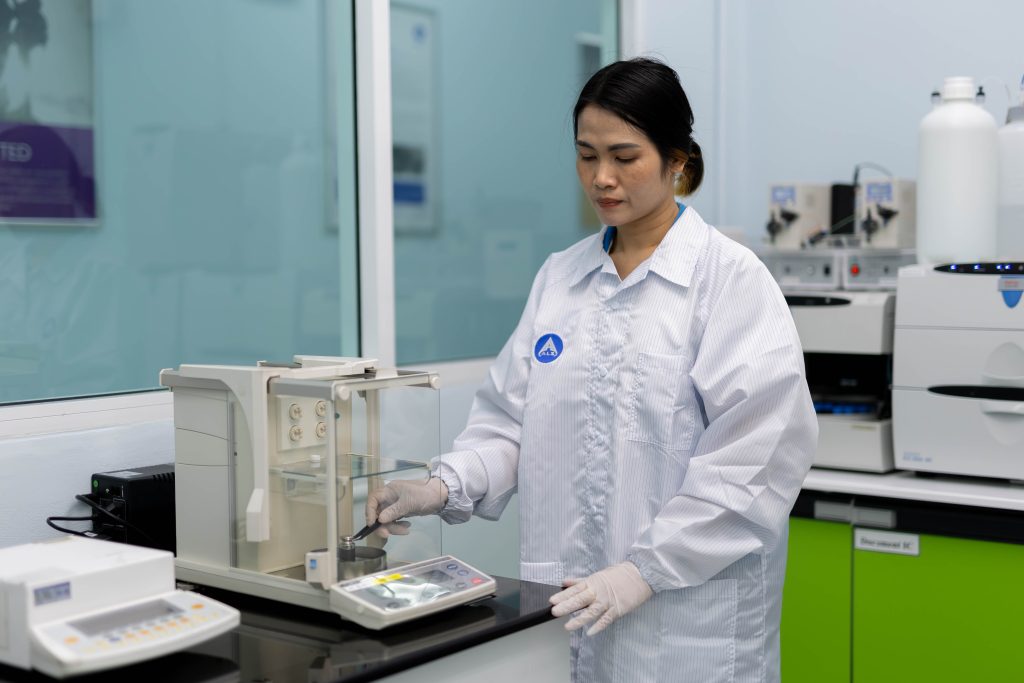
The discrepancy may indicate particles that dissolve partially into the extraction solvent and contribute to the gravimetric mass without appearing in the microscopic count. This scenario has different implications for corrective action than a high particle count with low gravimetric mass. Frequently Asked Questions What is the difference between gravimetric analysis and particle counting in cleanliness testing? Gravimetric analysis measures the total mass of all extracted particles. Particle counting measures the number of individual particles in each size class. Both are required under ISO 16232 and VDA 19 and answer different questions about the same contamination. Can gravimetric analysis alone determine whether a component passes its cleanliness specification? Not in most cases. Most OEM cleanliness specifications define both a gravimetric limit and particle count limits by size class. A component must meet both to pass. Gravimetric analysis alone cannot confirm compliance with the particle count limits. What is particle size analysis in the context of automotive cleanliness testing? Particle size analysis refers to the process of counting and sizing individual particles extracted from a component, producing a size distribution that shows how many particles were found in each defined size range. In automotive cleanliness testing, this is performed by automated microscopic analysis or LPC and is the basis for the cleanliness classification reported in the test result. Is accredited testing required for OEM cleanliness submissions in Malaysia? For formal OEM qualification and supply chain submissions, test results are typically required from a laboratory accredited to ISO/IEC 17025 by an ILAC MRA recognised accreditation body. ALS Testing in Malaysia provides cleanliness testing under ISO/IEC 17025 accreditation. Confirm the specific accreditation requirement with your OEM or customer before submitting. What is the minimum gravimetric residue that can be reliably measured? Under climate-controlled laboratory conditions, gravimetric analysis can reliably detect residue masses down to approximately 1 mg. VDA 19 and ISO 16232 guidance recommends a minimum of 3 mg for non-climate-controlled environments to account for environmental variability. For components with very low expected contamination, the gravimetric result may be reported as “below detection limit” or “< 1 mg” depending on the laboratory’s balance sensitivity and environmental controls. Next Steps See our full Technical Cleanliness Testing services for ISO 16232 and VDA 19 Read our guide on particle analysis methods, standards and applications Read our guide on Liquid-Borne Particle Count testing Contact our team for a cleanliness testing quotation or technical discussion ISO/IEC 17025 Accredited Testing Where Applicable | Gravimetric and Microscopic Particle Analysis | Technical Cleanliness Testing Malaysia
The microscopic classification results often provide clues about the contamination source. A high count of metallic shiny particles in the 50 to 100 micrometre size class is more likely to point toward a machining or grinding process than toward packaging or handling. When gravimetric results are inconsistent with particle counts
Investigate the particle size distribution and morphology. A high gravimetric result with low particle counts may indicate a large mass of very fine particles below the LPC lower size threshold, or soluble residues that contribute to mass but not to particle count. A low gravimetric result with high particle counts suggests many small particles with low individual mass. When a component shows an elevated gravimetric result but passes all particle count limits
The discrepancy may indicate particles that dissolve partially into the extraction solvent and contribute to the gravimetric mass without appearing in the microscopic count. This scenario has different implications for corrective action than a high particle count with low gravimetric mass. Frequently Asked Questions What is the difference between gravimetric analysis and particle counting in cleanliness testing? Gravimetric analysis measures the total mass of all extracted particles. Particle counting measures the number of individual particles in each size class. Both are required under ISO 16232 and VDA 19 and answer different questions about the same contamination. Can gravimetric analysis alone determine whether a component passes its cleanliness specification? Not in most cases. Most OEM cleanliness specifications define both a gravimetric limit and particle count limits by size class. A component must meet both to pass. Gravimetric analysis alone cannot confirm compliance with the particle count limits. What is particle size analysis in the context of automotive cleanliness testing? Particle size analysis refers to the process of counting and sizing individual particles extracted from a component, producing a size distribution that shows how many particles were found in each defined size range. In automotive cleanliness testing, this is performed by automated microscopic analysis or LPC and is the basis for the cleanliness classification reported in the test result. Is accredited testing required for OEM cleanliness submissions in Malaysia? For formal OEM qualification and supply chain submissions, test results are typically required from a laboratory accredited to ISO/IEC 17025 by an ILAC MRA recognised accreditation body. ALS Testing in Malaysia provides cleanliness testing under ISO/IEC 17025 accreditation. Confirm the specific accreditation requirement with your OEM or customer before submitting. What is the minimum gravimetric residue that can be reliably measured? Under climate-controlled laboratory conditions, gravimetric analysis can reliably detect residue masses down to approximately 1 mg. VDA 19 and ISO 16232 guidance recommends a minimum of 3 mg for non-climate-controlled environments to account for environmental variability. For components with very low expected contamination, the gravimetric result may be reported as “below detection limit” or “< 1 mg” depending on the laboratory’s balance sensitivity and environmental controls. Next Steps See our full Technical Cleanliness Testing services for ISO 16232 and VDA 19 Read our guide on particle analysis methods, standards and applications Read our guide on Liquid-Borne Particle Count testing Contact our team for a cleanliness testing quotation or technical discussion ISO/IEC 17025 Accredited Testing Where Applicable | Gravimetric and Microscopic Particle Analysis | Technical Cleanliness Testing Malaysia
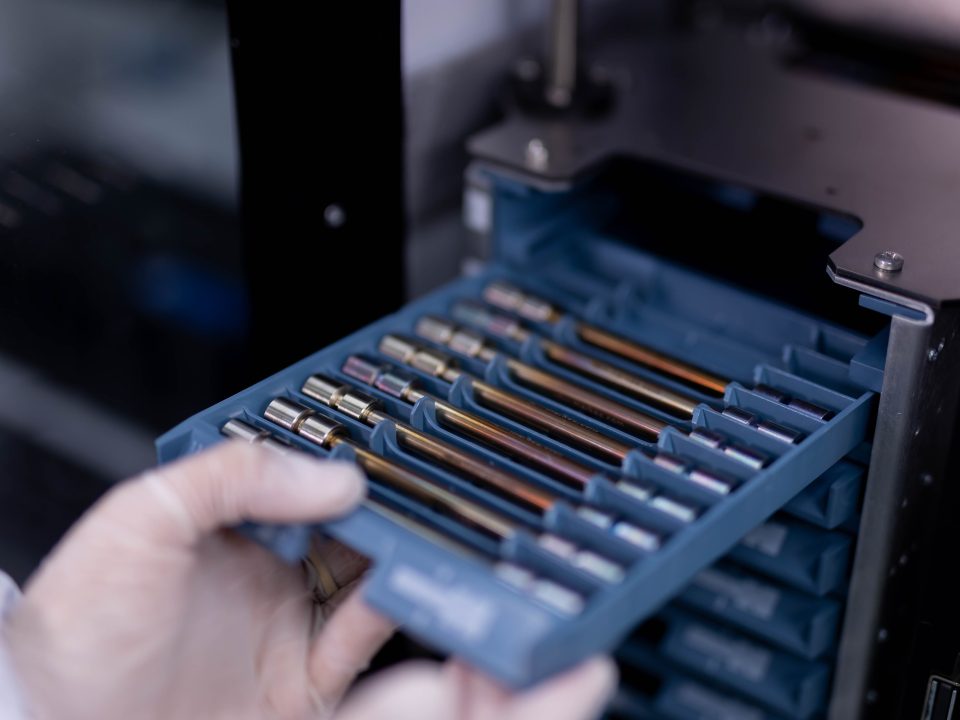
October 8, 2026
ESG and Volatile Organic Compound (VOC) Analysis: The Importance of Verifiable Data
READ MOREESG—Environmental, Social, and Governance—is a framework for assessing an organisation’s sustainability performance, with increasing emphasis on environmental, social, and governance data. Many industrial organisations are therefore required to prepare reports and disclose information that can be independently verified.
One important environmental indicator is volatile organic compounds (VOCs), which are directly associated with air quality, worker health, and emissions control.
The Role of Volatile Organic Compounds (VOCs) in the ESG Context
Volatile organic compounds (VOCs) are a group of chemicals that evaporate readily at room temperature. They can be found in manufacturing processes, fuel combustion, and a wide range of industrial activities.
VOC emissions may affect both air quality and workers’ health. In the context of ESG, VOCs are relevant to all three dimensions:
Environmental: Monitoring VOC levels reflects the effectiveness of an organisation’s emissions-control measures.
Social: VOC management is associated with occupational health and worker safety.
Governance: Accurate and verifiable VOC reporting demonstrates organisational transparency.
VOC data therefore represents more than technical concentration measurements. It forms part of the overall assessment of an organisation’s sustainability and corporate responsibility.
The Importance of Accuracy in VOC Analysis
Assessing VOC levels requires both appropriate sampling and accurate analysis. Portable instruments such as photoionisation detectors (PIDs) can rapidly screen overall VOC levels. However, identifying specific compounds and producing formal analytical reports requires laboratory analysis.
Technologies commonly used for VOC analysis include:
GC-MS (Gas Chromatography–Mass Spectrometry): Used to separate and accurately identify individual compounds.
HSGC (Headspace Gas Chromatography): Used to analyse VOCs in water.
SPE (Solid-Phase Extraction): Used to prepare soil and water samples before analysis.
The accuracy of analytical results does not depend solely on the instruments used. It also depends on sampling and sample-preservation procedures, as well as the laboratory’s quality-control system. If these processes are inappropriate, the results may be inaccurate and could affect risk assessments.
In the ESG context, data used in reporting should be traceable and sufficiently reliable to be accepted both domestically and internationally.
VOC Analysis in Air, Water, and Soil
VOCs can be present in various environmental media. The analytical approach must therefore be selected according to the characteristics of each sample type.
VOC Analysis in Air
Air samples may be collected using sorbent-based methods or continuous sampling techniques. The samples are subsequently analysed using GC-MS to identify and quantify the compounds present.
Assessing VOC levels in air is important for controlling air quality in workplaces and industrial areas.
VOC Analysis in Water
Because VOCs evaporate easily, water samples must be collected in tightly sealed containers, with precautions taken to minimise losses during transportation.
HSGC may be used in combination with GC-MS to obtain accurate results. The data is important for assessing water quality and determining whether water is safe for consumption or other intended uses.
VOC Analysis in Soil
At sites with a history of contamination from industrial activities, collecting soil samples from multiple locations helps provide comprehensive information.
Soil samples are commonly prepared using SPE before being analysed by GC-MS. The analytical results can be used to assess long-term environmental and health risks.
Verifiable Data and the Laboratory’s Role in the ESG Context
Under the ESG framework—particularly the Environmental and Governance dimensions—environmental data must be accurate and traceable. Laboratories therefore play an important role in ensuring that VOC analysis results are reliable.
Quality control, instrument calibration, and systematic documentation help ensure that analytical results can be used transparently for:
ESG and sustainability reporting
Submissions to regulatory authorities
Communication with stakeholders
In the ESG context, analytical figures are therefore more than concentration values. They are evidence of an organisation’s responsibility, transparency, and commitment to sustainability.
For more information: https://www.alstesting.co.th/volatile-organic-compounds-vocs/
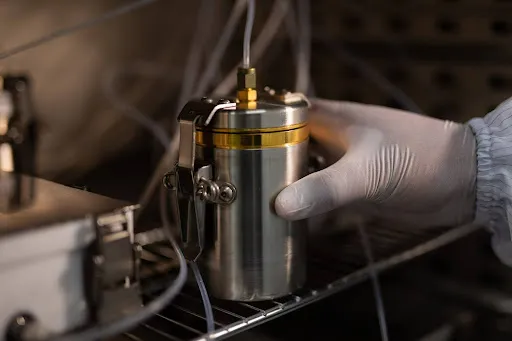
October 8, 2026
Product Quality and Safety Through GC-MS Analysis
READ MOREEnsuring Product Quality and Safety Through GC-MS Analysis
In an era when quality control and product safety are essential for every business, accurate and comprehensive chemical analysis techniques such as GC-MS (Gas Chromatography–Mass Spectrometry) have become important tools that help businesses ensure the quality and safety of their products.
In this article, we introduce GC-MS and explain why businesses across various industries—particularly the food industry—should place importance on this type of testing. We also introduce GC-MS testing services from ALS Testing Services (Thailand), which supports businesses with advanced technology and internationally recognised expertise.
The Four-Step GC-MS Testing Process for Product Quality and Safety
GC-MS is a chemical analysis technique that combines two analytical instruments:
GC (Gas Chromatography): Separates the different compounds in a sample into individual components
MS (Mass Spectrometry): Analyses and identifies each compound by measuring its mass and chemical structure
This technique enables compounds in a sample to be identified and quantified in a detailed, accurate, and rapid manner.
1. Sample Injection
The first step is to prepare and inject the sample into the GC instrument. In general, the sample is prepared in liquid or gaseous form and then injected into the system using an automated injector that precisely controls the sample volume.
The carrier gas transports the sample into the separation column. Temperature and pressure are carefully controlled during this stage to preserve the integrity of the sample and ensure accurate analytical results.
2. Separation of Compounds
Once the sample enters the separation column, it passes through a specialised coating inside a very long and narrow tube. A carrier gas helps move the compounds through the column.
Because different compounds interact differently with the column surface and have different boiling points, they travel through the column at different rates and are separated from one another.
This process is similar to filtering a mixture into its individual components, allowing each substance to be accurately analysed in the next stage.
3. Detection of Compounds
After the compounds have been separated in the GC column, they are transferred to the MS instrument. The MS converts the molecules into ions through an ionisation process using electrical energy or light.
The instrument then measures the mass of each ion by separating them according to their mass-to-charge ratio.
4. Data Analysis and Compound Identification
The results from the MS instrument are converted into a mass spectrum, which shows the distribution of ions according to their mass and signal intensity.
Data-analysis software compares this spectrum with standard databases containing the mass signatures of numerous chemical substances. This enables the compounds present in the sample to be identified.
The concentration of each compound can also be accurately calculated based on the intensity of the detected signal. This information is essential for evaluating product quality and safety.
The Importance of GC-MS Analysis
GC-MS plays an important role in many industries, including food and beverages, pharmaceuticals, environmental testing, and chemical manufacturing.
It enables businesses to effectively monitor and control product quality, prevent risks associated with residues or hazardous substances, and comply with stringent legal requirements and international standards.
Detailed Analysis of Chemicals and Contaminants
GC-MS can detect a wide range of complex organic compounds at very low concentrations, including:
Chemical residues in food
Environmental toxins
Contaminants in medical products
Residual solvents and other unwanted substances
Supporting Product Quality and Safety
Businesses that manufacture products requiring high safety standards—such as food, cosmetics, pharmaceuticals, and medical devices—must ensure that their products are free from hazardous substances and contamination.
Accurate GC-MS testing provides confidence that products meet the required standards and are safe for consumers.
Supporting Compliance with Legal and International Standards
Many countries and industries require testing for chemical residues and contaminants in accordance with strict standards.
GC-MS is a key analytical tool that helps businesses meet these requirements, reducing the risk of regulatory penalties, product rejection, or product recalls.
Strengthening Competitive Advantage
Accurate and clear analytical data enables businesses to communicate the safety and quality of their products to customers and business partners with confidence.
This helps build trust, strengthen business relationships, and support sustainable market expansion.
Key Features of ALS Testing’s GC-MS Services
High Accuracy Through Advanced Equipment and International Standards
ALS Testing uses advanced and high-performance GC-MS technology, together with strict quality-control systems that comply with ISO/IEC 17025, the international standard for testing and calibration laboratories.
This ensures that test results are accurate, reliable, traceable, and internationally recognised.
Comprehensive Services from Sample Receipt to Final Report
We provide an end-to-end service covering every stage of the testing process, including:
Professional sample receipt and preparation
Analysis using advanced instrumentation
Preparation of detailed, clear, and easy-to-understand reports
This enables customers to apply the results immediately to their quality-control and production-improvement processes.
Supports a Wide Range of Sample Types
Our GC-MS services support the analysis of a wide variety of samples, including:
Food
Water
Soil
Air
Cosmetics
Industrial products
Other materials from a wide range of business sectors
This allows us to meet the testing requirements of customers across diverse industries.
In-Depth Technical Consultation
The ALS Testing expert team provides consultation and detailed explanations of analytical results. This helps customers understand the data and apply the findings to improve manufacturing processes and quality-control systems.
As a result, businesses can raise product standards and strengthen their competitiveness in the market.
Test Your Products with Internationally Standardised GC-MS Services from ALS Testing
GC-MS is an important and highly accurate chemical analysis technique that enables businesses to effectively verify product quality and safety.
Prioritising this type of testing helps reduce production risks and increase confidence in the marketplace.
With extensive experience and advanced technology, ALS Testing Services (Thailand) is a trusted partner for comprehensive GC-MS testing services that comply with international standards.
Work with ALS Testing to advance your business towards excellence in product quality and safety—and establish a new standard of confidence for your organisation.
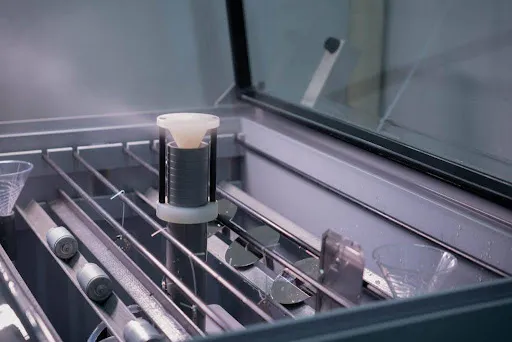
October 8, 2026
Understanding Salt Spray Testing
READ MORESalt Spray Testing, also known as Salt Fog Testing, is one of the most widely used methods for evaluating the surface quality and corrosion resistance of products in the manufacturing industry. It is particularly suitable for metals, steel products, automotive components, electronic equipment, and medical devices. The test helps determine whether these products meet the required quality standards.
Salt Spray Testing is designed to simulate a harsh, corrosive environment inside a controlled test chamber. During the test, a sodium chloride (NaCl) solution is continuously sprayed onto test specimens as a fine mist.
Which Industries Is Salt Spray Testing Suitable For?
Most industrial manufacturers produce products for specific applications. Maintaining production standards and consistent product quality requires careful control of materials and manufacturing processes. As a comprehensive corrosion-testing method, Salt Spray Testing is suitable for the following industries:
1. Automotive Industry
Vehicle frames, bumpers, nuts, screws, and other automotive components should undergo testing to evaluate their expected service life in highly polluted or corrosive environments, such as areas where the atmosphere contains high concentrations of salt.
2. Construction Industry
Salt Spray Testing is also suitable for evaluating metal materials and components used in buildings, bridges, and other structures. It supports effective construction and helps ensure the safety, strength, and durability of materials used in the industry.
3. Electrical and Electronics Industry
Electrical and electronic components installed outdoors or in locations exposed to changing weather conditions may face an increased risk of corrosion. Salt Spray Testing can help assess whether these components offer adequate corrosion resistance.
4. Marine Industry
Components and engines used in shipbuilding and marine operations are well suited to Salt Spray Testing. The test can simulate conditions similar to actual marine environments, helping manufacturers evaluate the quality and suitability of selected materials.
5. Metal Finishing and Coating Industry
Salt Spray Testing can be used to evaluate the quality of protective coatings, including zinc plating, chrome plating, paint coatings, and other surface treatments, and determine how effectively they protect the underlying material against corrosion.
6. Furniture and Outdoor Equipment Industry
Products in this category are commonly installed or used outdoors, where they are exposed to factors that accelerate corrosion. Examples include metal fences, security grilles, front gates, outdoor tables, and outdoor chairs.
Testing helps prevent products from rusting prematurely or experiencing early structural failure caused by corrosion. Such problems may adversely affect product performance and the manufacturer’s brand image.
Benefits of Salt Spray Testing for Product Quality
1. Detect Problems Before Delivery
Salt Spray Testing serves as a final quality-control checkpoint, helping manufacturers identify product defects or weaknesses before delivery.
If the test shows that a product corrodes faster than expected, the engineering team can use the results to improve processes such as surface treatment, material selection, or packaging. This helps prevent products from becoming damaged before reaching customers or developing rust shortly after entering service.
This is particularly important for automotive components, electrical equipment, and industrial products.
2. Improve Product Quality
Salt Spray Testing is an important tool that provides valuable insights for continuous product development. Manufacturers can use the results to modify coating formulations, select more durable materials, or improve manufacturing processes.
These improvements can extend product service life and enhance its resistance to actual operating conditions in the customer’s environment, ensuring that the materials used are more suitable for their intended applications.
3. Strengthen Confidence in the Brand
Conducting Salt Spray Testing through a laboratory accredited to an internationally recognised standard such as ISO/IEC 17025 demonstrates attention to detail and a commitment to producing high-quality products.
In an era when quality and reliability play an increasingly important role in customers’ purchasing decisions, testing by an internationally accredited laboratory can strengthen confidence in the brand among customers and business partners.
Salt Spray Testing Services from ALS Testing
Although some factories may already have basic Salt Spray Testing equipment, businesses requiring reliable results supported by international standards—and results that can be presented to trading partners or used for export purposes—should consider using a professional laboratory such as ALS.
ALS Testing provides the following services and capabilities:
Testing in an ISO/IEC 17025-Accredited Laboratory
Testing conducted in an ISO/IEC 17025-accredited laboratory helps ensure that the laboratory’s activities comply with internationally recognised requirements and that the results are reliable and technically valid.
ISO/IEC 17025 covers two main areas:
1. Technical Competence
Technical competence refers to a laboratory’s ability to conduct testing correctly and reliably. This includes using calibrated equipment, employing knowledgeable and experienced personnel, and following standardised procedures.
These requirements help ensure that every test result is accurate, consistent, traceable, and verifiable.
2. Quality Management System
A quality management system in an ISO/IEC 17025-accredited laboratory establishes the internal structure and procedures required to ensure that every stage of work is systematic, transparent, traceable, and subject to continuous quality control.
ISO/IEC 17025 focuses specifically on testing and calibration activities, unlike ISO 9001, which applies to general quality management systems across a broader range of organisations.
Control of All Parameters Using Calibrated Equipment and an Experienced Team
Every stage of the Salt Spray Testing process is strictly controlled. The laboratory uses calibrated equipment, while testing is performed by knowledgeable and experienced personnel.
This ensures that the results are accurate, reliable, and scientifically explainable.
Clear Reports with Interpretation by Technical Experts
Test reports contain detailed records of the testing process, including data, photographs, and environmental conditions at different stages of the test.
The results are analysed and interpreted by qualified technical experts, enabling customers to compare the findings directly with industry standards or specific customer requirements. This helps determine whether the product passes or fails the specified quality criteria.
Technical Consultation and Corrective Recommendations
If a tested product fails to meet the required standard, our technical experts can conduct a detailed root-cause analysis to identify the actual source of the problem.
Potential causes may include improper surface preparation, inconsistent coating application, or material-related factors affecting corrosion resistance. The findings can then be used to develop appropriate corrective actions and product improvements.
Raise Product Standards with Salt Spray Testing from ALS
In an era of intense competition in industrial product quality, reliable test results supported by internationally recognised standards are essential. They help ensure that your products can fully meet market requirements and customer expectations.
ALS Testing provides comprehensive and highly accurate Salt Spray Testing services to help you identify problems before product delivery and reduce the risk of product failure after entering the market. Test results can also support product development, improve overall quality, and strengthen confidence among customers and business partners.
Choose Salt Spray Testing from ALS’s professional laboratory today to enhance your product quality and standards.

October 6, 2026
Free Webinar “Cleanliness of Components and Systems for Road Vehicles – VDA 19.1”
READ MOREFree Webinar 📣📣📣
ALS invites you to join our free online seminar :
“Cleanliness of Components and Systems for Road Vehicles — VDA 19.1”
📅 Friday, 16 October 2026
⏰ Time: 8:30 a.m.–12:00 p.m. 👩⚖️ Speaker Ms. Warunee Pusatjapong, Business Manager
Business Unit Manager and Laboratory Testing Expert Webinar Objectives This webinar will provide participants with a fundamental understanding of “Cleanliness of Components and Systems for Road Vehicles — VDA 19.1,” including testing methods and the application of test results in the automotive industry. (The webinar will be conducted in Thai language) Webinar Content : 1. Introduction and selection 2. Extraction methods
2.1) Liquid extraction: Pressure rinsing, agitation, ultrasonic extraction, and internal rinsing
2.2) Air extraction: Air-jet extraction and air-throughflow extraction 3. Filtration and analysis 4. Declining curve 5. Routine inspection 6. Evaluation of results ✅✅How to Receive the Webinar Link and Certificate ✅✅ Simply complete these 3️⃣ easy steps:⬇️ 1️⃣ Follow the ALS Facebook page by scanning the QR code below. 2️⃣ Share the VDA 19 online seminar post. 3️⃣ Comment “Interested/สนใจ” under the VDA 19 online seminar post and wait to receive the webinar link via Messenger. https://www.facebook.com/share/p/19bEVMuQkP/?mibextid=wwXIfr For More Information Marketing Department : 1.Kamonworanee Theptaranonth (Jib) Tel.: +66 94 480 4705
Email: K.Theptaranonth@ALSGlobal.com 2.Hathaikan Israngkur (A) Tel.: +66 94 480 4706
Email: hathaikan.israngkur@alsglobal.com 3.Rata Nora-anankul (Jin) Tel.: +66 83 858 1323
Email: rata.noraanankul@alsglobal.com ALS Testing Services (Thailand) Co., Ltd. 34/13 Moo 15, Klong Song Sub-district
Klong Luang District, Pathum Thani 12120, Thailand Tel.: +66 2 700 9665
Website: www.alstestng.co.th
Email: pathumthani@alsglobal.com
⏰ Time: 8:30 a.m.–12:00 p.m. 👩⚖️ Speaker Ms. Warunee Pusatjapong, Business Manager
Business Unit Manager and Laboratory Testing Expert Webinar Objectives This webinar will provide participants with a fundamental understanding of “Cleanliness of Components and Systems for Road Vehicles — VDA 19.1,” including testing methods and the application of test results in the automotive industry. (The webinar will be conducted in Thai language) Webinar Content : 1. Introduction and selection 2. Extraction methods
2.1) Liquid extraction: Pressure rinsing, agitation, ultrasonic extraction, and internal rinsing
2.2) Air extraction: Air-jet extraction and air-throughflow extraction 3. Filtration and analysis 4. Declining curve 5. Routine inspection 6. Evaluation of results ✅✅How to Receive the Webinar Link and Certificate ✅✅ Simply complete these 3️⃣ easy steps:⬇️ 1️⃣ Follow the ALS Facebook page by scanning the QR code below. 2️⃣ Share the VDA 19 online seminar post. 3️⃣ Comment “Interested/สนใจ” under the VDA 19 online seminar post and wait to receive the webinar link via Messenger. https://www.facebook.com/share/p/19bEVMuQkP/?mibextid=wwXIfr For More Information Marketing Department : 1.Kamonworanee Theptaranonth (Jib) Tel.: +66 94 480 4705
Email: K.Theptaranonth@ALSGlobal.com 2.Hathaikan Israngkur (A) Tel.: +66 94 480 4706
Email: hathaikan.israngkur@alsglobal.com 3.Rata Nora-anankul (Jin) Tel.: +66 83 858 1323
Email: rata.noraanankul@alsglobal.com ALS Testing Services (Thailand) Co., Ltd. 34/13 Moo 15, Klong Song Sub-district
Klong Luang District, Pathum Thani 12120, Thailand Tel.: +66 2 700 9665
Website: www.alstestng.co.th
Email: pathumthani@alsglobal.com
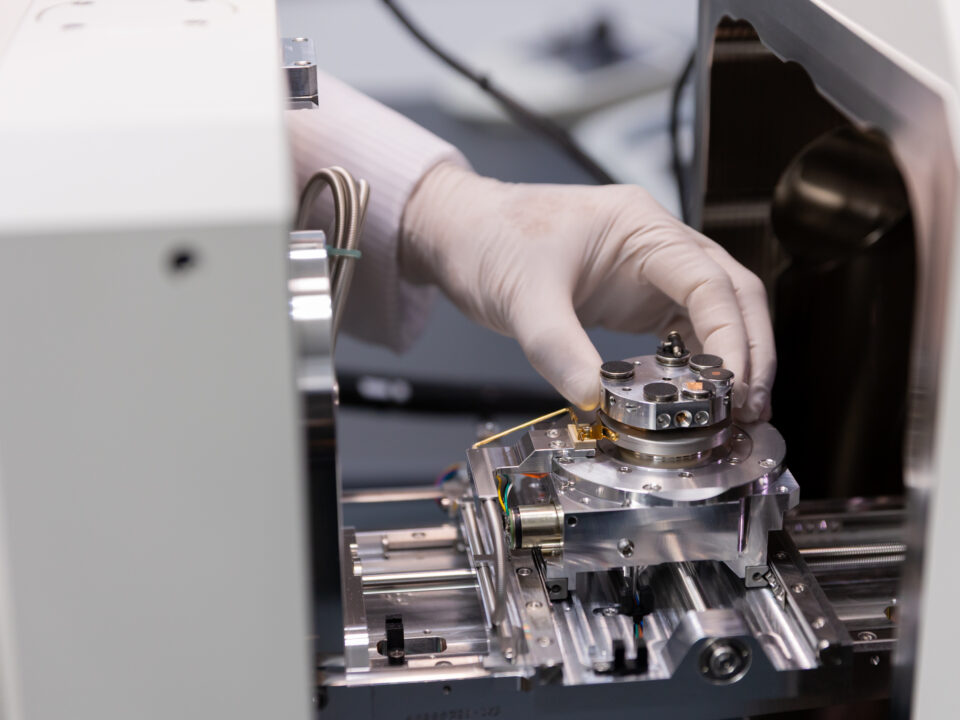
September 1, 2026
Case Study, Cleanliness Testing for EV Battery Components Using ISO 16232
READ MORETechnical Cleanliness · ISO 16232 · EV Battery Thermal Management · Particle Extraction · Cleanliness Classification
ISO/IEC 17025 Accredited Testing Where Applicable | ISO 16232 and VDA 19 Capability | EV Component Testing Support
Background
[PLACEHOLDER: Insert 2-3 sentences describing the client. Example structure below — to be replaced with real data]
A [Tier-1 supplier / OEM / component manufacturer] producing [component type, e.g. battery cooling manifolds / thermal management plates / coolant distribution components] for [EV platform / programme type] required cleanliness testing of [component description] before delivery to [customer / assembly plant].
The cleanliness requirement was defined by [OEM specification / internal quality requirement / customer purchase specification], specifying [cleanliness class or particle limits] for components destined for [application, e.g. battery thermal management circuits / high-voltage cooling systems].
Why Cleanliness Matters for EV Battery Components
Electric vehicle battery systems introduce cleanliness requirements that go beyond those applied to conventional powertrain components. The reasons are specific to the thermal management architecture of lithium-ion battery packs.
Battery thermal management systems circulate a cooling fluid through a network of channels machined or formed into battery modules, cell holders, and cooling plates. These channels are often narrow, the fluid flow rates are precisely controlled, and the thermal performance of the system depends on consistent, unrestricted flow. A particle that would cause no functional problem in a large-bore hydraulic circuit can restrict flow, create a hotspot, or damage a pump seal in a battery cooling circuit.
Beyond thermal management, cleanliness is increasingly relevant to high-voltage battery assemblies where conductive particles, particularly metallic particles, can bridge insulation gaps and create safety-critical short circuit risks. This is why some EV OEMs are extending cleanliness requirements from hydraulic and fuel system components to battery assembly components, applying ISO 16232 or VDA 19 particle limits to components that had no cleanliness specification requirement in conventional powertrain programmes.
The Testing Requirement
[PLACEHOLDER: Insert specific requirement details]
The applicable standard was [ISO 16232 / VDA 19 / both].
The specified cleanliness requirement was [insert cleanliness class or particle count limits, e.g. maximum X particles above Y µm per 1,000 cm²].
The components submitted for testing were [insert component description, e.g. aluminium coolant manifolds / extruded cooling plates / injection-moulded coolant distribution components], with a functional surface area of approximately [X cm²] per component.
[Number] components were submitted from [production lot / qualification batch / process validation run].
Approach
Extraction Method Selection
[PLACEHOLDER: Insert actual extraction method used and rationale]
The geometry of the component determined the extraction method. [Insert one of: Pressure rinsing was selected because the component contained internal channels with defined inlet and outlet ports, allowing a controlled solvent flow path. / Ultrasonic extraction was selected because the component had complex surface geometry and recesses that pressure rinsing could not reach effectively. / Agitation was selected based on component size and the accessible nature of the relevant surfaces.]
A blank test was performed before component extraction to confirm that the extraction equipment, solvent, and filtration setup contributed particle counts below the defined blank acceptance level.
Analysis
After extraction, the solvent was filtered through a [5 µm] nylon membrane. The membrane was dried and weighed for gravimetric analysis. The extracted particles were re-suspended and run through the LPC instrument for size distribution counting. The membrane was then examined under the calibrated microscope for particle classification by type: metallic shiny, metallic non-shiny, fibre, and other non-metallic.
[PLACEHOLDER: Add SEM-EDX step if applicable] [SEM-EDX analysis was applied to [X] particles above [Y µm] as required by the specification, to provide elemental identification of the largest metallic shiny particles found.]
Results
[PLACEHOLDER: Insert actual test results — requires real data]
Gravimetric result: [X mg / 1,000 cm²]
LPC size distribution
Size class
Particles per 1,000 cm²
Specification limit
[B: 5–15 µm]
[result]
[limit or N/A]
[C: 15–25 µm]
[result]
[limit or N/A]
[D: 25–50 µm]
[result]
[limit or N/A]
[E: 50–100 µm]
[result]
[limit or N/A]
[F: 100–150 µm]
[result]
[limit or N/A]
[G: 150–200 µm]
[result]
[limit or N/A]
[H: 200–400 µm]
[result]
[limit or N/A]
Largest metallic shiny particle: [X µm] Largest non-metallic particle: [X µm] Longest fibre: [X µm]
Component Cleanliness Code: [CCC result]
Overall result: [Pass / Fail / Conditional pass with comment]
[PLACEHOLDER: Add 2-3 sentences on what the results showed, e.g. whether the components passed, whether any size class was close to the limit, and any notable finding from particle classification]
What the Results Showed
[PLACEHOLDER: Insert 2-3 sentences summarising findings and outcome]
[Example structure: The results confirmed that all [X] components met the specified cleanliness class in all size ranges above [Y µm]. The largest metallic shiny particle measured [X µm], below the [Y µm] critical particle threshold defined in the specification. The components were released for [delivery / assembly / customer submission].]
[OR if there was a finding: The initial results identified [describe finding]. This was traced to [source — e.g. a specific machining step / packaging material / handling practice], and the supplier implemented [corrective action]. Retesting after corrective action confirmed that the component met the specified cleanliness class.]
Relevance to EV Cleanliness Testing
This type of investigation reflects a broader trend in EV component qualification. As battery thermal management system designs become more complex and cleanliness requirements extend from conventional powertrain components to EV-specific parts, the analytical workflow developed for ISO 16232 and VDA 19 testing is being applied to component geometries and material types that were not part of traditional cleanliness testing programmes.
ALS has been providing technical cleanliness testing to ISO 16232 and VDA 19 since 2014, with ISO/IEC 17025 accreditation since 2019. As EV production scales across Malaysia and Southeast Asia, the cleanliness testing capability developed for conventional automotive components is directly applicable to EV battery system components, providing Tier-1 suppliers and OEM assembly programmes with the accredited cleanliness data they need for qualification and process validation.
Frequently Asked Questions
Does ISO 16232 apply to EV battery components or only to conventional powertrain parts?
ISO 16232 is applicable to any automotive component where particulate contamination poses a functional risk. The standard does not restrict application to conventional powertrain components. As EV OEMs define cleanliness specifications for battery thermal management and high-voltage assembly components, ISO 16232 provides the established test framework for demonstrating compliance. In practice, the specific cleanliness limits for EV components are defined by the OEM or customer specification, not by ISO 16232 itself.
What extraction method is typically used for EV battery cooling components?
The extraction method depends on the geometry of the specific component. Cooling manifolds and plates with internal channels and defined flow paths are typically tested by pressure rinsing, which forces solvent through the internal channels under controlled pressure. Components with more complex external geometry or recessed features may be tested by ultrasonic extraction. The extraction method is validated for each component type before production testing begins.
Can ALS test EV battery components for cleanliness under ISO/IEC 17025 accreditation?
Yes. ALS Testing provides technical cleanliness testing to ISO 16232 and VDA 19 under ISO/IEC 17025 accreditation. For testing where accredited results are specifically required, confirm the exact method and scope with the laboratory at the enquiry stage.
Next Steps
See our full Automotive Testing services including EV component testing
See our Technical Cleanliness Testing services for ISO 16232 and VDA 19
Contact our team to discuss EV component cleanliness testing requirements
ISO/IEC 17025 Accredited Testing Where Applicable | ISO 16232 and VDA 19 Capability | EV Component Cleanliness Testing Support
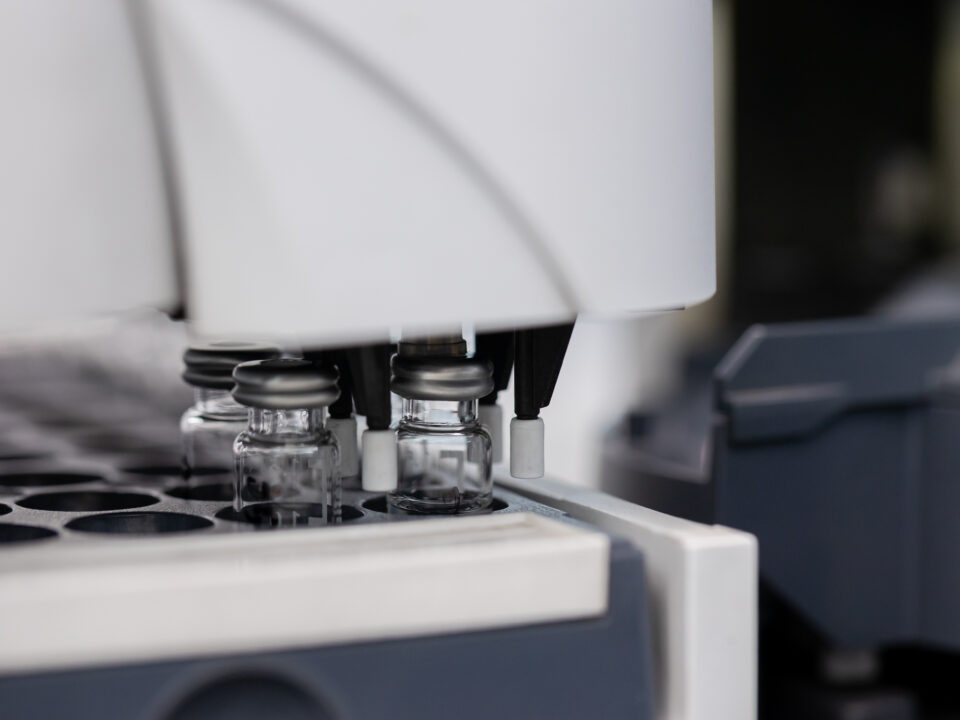
September 1, 2026
VOC Emissions in Automotive Interiors, Health Impacts, Standards and Testing Methods
READ MOREInterior Air Quality · Health and Regulatory Context · OEM Qualification · VDA 278 · ISO 12219
ISO/IEC 17025 Accredited Testing Where Applicable | VDA 278 and ISO 12219 Capability | Automotive Materials Specialist
The smell of a new vehicle is one of the most recognisable sensory experiences in the automotive market. What produces that smell is less well understood. It is the combined off-gassing of dozens of organic compounds released by interior materials: adhesives, foam components, trim polymers, coatings, and carpet binders, all emitting volatile compounds into the confined air space of the cabin.
Most of these compounds dissipate quickly and are present at concentrations that raise no immediate health concern. A smaller number, including formaldehyde, benzene, toluene, and certain carbonyl compounds, are associated with health effects at elevated concentrations, and it is these compounds that have driven the development of automotive VOC emission standards and the testing requirements that OEMs impose on their material suppliers.
This guide explains what VOCs are, which compounds matter most from a health perspective, and how automotive testing standards address them.
What Are VOCs and Where Do They Come From in Automotive Interiors
VOC stands for volatile organic compound. The term describes carbon-based chemicals that evaporate readily at room or slightly elevated temperatures, releasing into the surrounding air. In a vehicle cabin, the materials that contribute most significantly to VOC concentrations include the following.
Material
Primary VOC contributors
Instrument panels and dashboard covers
Aromatic hydrocarbons, plasticisers
Seat foam (polyurethane)
Amine compounds, aldehydes, TDI residues
Headliners and roof lining
Formaldehyde from binder resins, aldehyde compounds
Floor carpets and underfelt
Formaldehyde from latex binders, styrene
Adhesives and sealants
Residual solvents, monomers
Door trim panels
Aromatic hydrocarbons, plasticisers
Wire insulation
Plasticisers, flame retardant emissions
VOC emissions are highest immediately after manufacture, when residual processing chemicals and unreacted monomers are still volatilising. Concentrations decrease significantly over the first weeks and months of vehicle use as the materials off-gas and the residual compounds are depleted. This pattern, sometimes described as the new car smell diminishing with time, reflects the natural decline in VOC emission rates as materials approach equilibrium.
Health Context, Which Compounds Are of Concern
Not all VOCs carry the same health significance. At the concentrations typically found in vehicle cabins, most compounds are not associated with acute health effects. A smaller number are subject to regulatory limits or OEM-specified thresholds because of their established health associations.
Compound
Health association
Why it matters in automotive
Formaldehyde
Known human carcinogen at high concentrations, irritation at lower levels
Emitted by adhesive resins, textile binders, and foam systems. Subject to dedicated test method VDA 275 alongside VDA 278
Benzene
Known human carcinogen
Present as residual impurity in aromatic solvents and some polymer processing materials
Toluene and xylene
Neurological effects at high occupational concentrations
Tracked as part of total aromatic hydrocarbon group limits in OEM specifications
Acetaldehyde
Irritation effects, possible human carcinogen
Emitted by some adhesive systems and polyurethane foam formulations
Amine compounds
Hygroscopic and irritation-promoting properties
Indicate insufficiently deactivated catalyst residues in polyurethane foam
OEM limits applied in automotive material testing are precautionary thresholds set to ensure that even sensitive individuals, including children and those who spend significant time in vehicles, are not exposed to compounds of concern at levels that could cause harm over a vehicle service life of ten years or more.
Regulatory Context in Key Markets
Market
Regulatory status
Key standard or framework
China
Legally binding
GB/T 27630, limits benzene, toluene, xylene, ethylbenzene, styrene, formaldehyde, acetaldehyde, and acrolein
European Union
No single binding regulation
German OEMs impose limits through material specifications referencing VDA 278
Malaysia and Southeast Asia
No direct regulatory requirement
Suppliers serving global OEM supply chains face OEM-imposed specifications regardless of manufacturing location
How VOC Testing Standards Address These Concerns
OEMs define maximum permissible emission limits for specific compounds and compound groups, requiring material suppliers to test against these limits before production approval. The primary standards used for material qualification are:
VDA 278 uses thermal desorption GC-MS to measure VOC and FOG emissions from a material sample, producing a compound-by-compound profile for pass or fail assessment against OEM-specified limits
VDA 275 addresses formaldehyde specifically using a bottle method that provides better sensitivity and specificity than the general thermal desorption approach
ISO 12219-1 covers vehicle-level cabin air testing using the bag method, conducted by the OEM rather than the material supplier
ISO 12219-2 to 12219-7 cover component-level chamber methods used for material qualification at the supplier stage
For aldehyde-specific determination at higher sensitivity, DNPH-HPLC is applied where the specification requires it, providing individual aldehyde quantification beyond the practical range of thermal desorption GC-MS. For a detailed guide to VDA 278 and related standards, see our VOC testing guide.
Common Failure Causes and How to Address Them
Understanding why materials fail VOC tests is as useful as understanding what the tests measure.
Residual processing solvents from adhesives, coatings, and laminates that have not been fully cured or dried before testing are among the most common causes. The corrective action is process optimisation to ensure adequate drying or curing conditions before material dispatch.
Plasticiser migration contributes to the FOG fraction at the 120°C stage in VDA 278. PVC-based and plasticised polymer materials release high-boiling compounds during this stage. Reformulation with lower-emission plasticisers or reduction of plasticiser loading is the typical response.
Formaldehyde from binder resins is a recurring issue in headliners, floor carpets, and foam materials using formaldehyde-based chemistry. Low-emission or formaldehyde-free binder alternatives are available for most applications.
Amine compounds from polyurethane foam indicate incomplete urethane reaction chemistry. Catalyst selection and foam curing conditions affect amine emission levels significantly.
Background contamination from conditioning environments or packaging can elevate results independently of the material itself. Clean conditioning in VOC-free environments using clean packaging materials is essential preparation.
Frequently Asked Questions
Why do OEMs impose VOC limits on materials rather than testing the complete vehicle?
Testing at the material level allows problems to be identified and corrected early in the supply chain, before materials are incorporated into a vehicle. If a trim material fails its VOC qualification, the supplier can reformulate and retest before the material reaches the assembly plant. Vehicle-level testing, such as the GB/T 27630 method in China, occurs at a much later stage and is not a substitute for material-level qualification in OEM supply chains.
Does VOC testing apply to all materials in the vehicle cabin?
In principle, any non-metallic material in the cabin is a candidate. In practice, the materials subject to mandatory VOC testing are defined by the OEM material specification or supplier quality manual for each programme. Materials with high emission potential or large surface area in the cabin, such as instrument panels, seat foams, headliners, and floor carpets, are typically subject to the most stringent requirements.
Is the new car smell itself harmful?
At the concentrations normally found in new vehicles from manufacturers who apply OEM VOC specifications, the compounds responsible for the new car smell are present at levels that are not considered acutely harmful. The health concern relates to prolonged exposure to elevated concentrations of specific compounds, which is why OEM material limits are set conservatively with a long service life in mind. The decline in the smell over time reflects the natural reduction in VOC emission rates as residual compounds are depleted.
What is the difference between VOC testing and fogging testing?
VOC testing measures the volatile organic compounds that evaporate into cabin air and affect air quality. Fogging testing measures the condensable semi-volatile compounds that deposit as a visible film on the windscreen. Both are emission tests on interior materials, but they address different fractions of the emission profile, different health and safety concerns, and use different test methods. Most German OEM specifications require both.
Next Steps
See our full Materials and Environmental Testing services for automotive interior materials
Read our detailed guide on VOC testing for automotive interiors including VDA 278, ISO 12219, and fogging
Read our detailed VDA 278 testing guide: /blog/vda-278-thermal-desorption-testing/
Contact our team for a VOC testing quotation or technical discussion
ISO/IEC 17025 Accredited Testing Where Applicable | VDA 278 and ISO 12219 Capability | Automotive Interior Materials Specialist
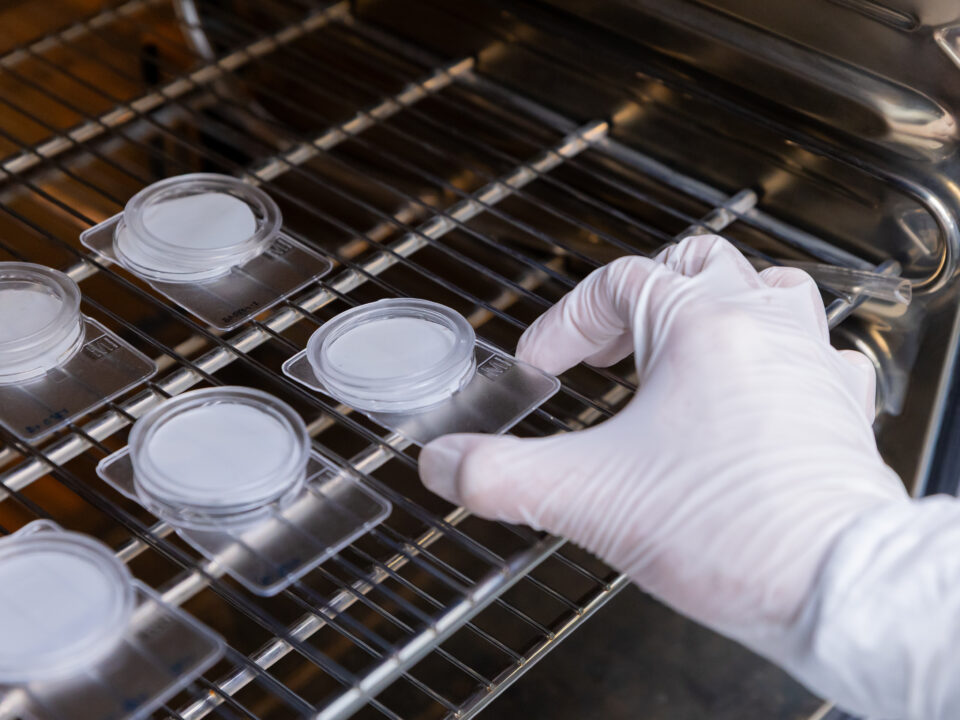
September 1, 2026
Liquid-Borne Particle Count (LPC), Particle Analysis Method and Automotive Applications
READ MOREParticle Size Distribution · Cleanliness Classification · ISO 16232 · VDA 19 · Light Obscuration Counting
ISO/IEC 17025 Accredited Testing Where Applicable | LPC and Full Particle Analysis Capability | Automotive Cleanliness Specialist
Gravimetric analysis tells you how much particle contamination is present by total mass. Liquid-borne particle counting tells you how that contamination is distributed across size ranges. In most automotive cleanliness specifications, it is the size distribution data, not the total mass, that determines whether a component passes or fails.
Liquid-borne particle count (LPC) is the analytical step that generates this size distribution. It is a required element of technical cleanliness testing under ISO 16232 and VDA 19, and it is the method that translates extracted particle contamination into the cleanliness classification your OEM specification requires.
What Liquid-Borne Particle Counting Measures
LPC measures the number of particles present in a liquid suspension within defined size ranges. In automotive cleanliness testing, the liquid is the extraction solvent that has been used to remove particles from a component, filtered onto a membrane to collect the particles, and then re-suspended in clean solvent for analysis.
The instrument passes this particle suspension through a measurement cell where a laser beam intersects the flow path. As each particle passes through the beam, it obstructs a portion of the light, causing a brief reduction in the light signal detected on the far side. The instrument measures the magnitude of this light reduction, which correlates with particle size, and records the event as a count in the appropriate size class.
The result is a particle size distribution: the number of particles counted in each defined size range, expressed as particles per unit surface area of the component tested. This distribution is the core data used to assign the cleanliness classification under ISO 16232 or VDA 19.
Why LPC and Gravimetric Analysis Are Used Together
Gravimetric analysis and LPC are complementary measurements that answer different questions about the same particle contamination.
Measurement
What it shows
Limitation
Gravimetric analysis
Total mass of all extracted particles
Cannot distinguish size distribution or individual large particles
Liquid-borne particle count (LPC)
Number of particles in each size class
Does not show total mass or particle material
A component may pass the gravimetric mass limit while still containing one or two oversized particles that exceed the size class limit and trigger a cleanliness failure. A component may show a high total particle count in the smallest size class while all larger size classes are within specification, which may be entirely acceptable depending on the OEM requirement.
Neither measurement alone gives the complete picture that a cleanliness specification requires. ISO 16232 and VDA 19 require both, and the LPC size distribution data is what generates the cleanliness class that appears on the test report.
How LPC Fits into the ISO 16232 and VDA 19 Workflow
LPC is performed after particle extraction and filtration, and before or alongside microscopic particle classification.
The sequence is as follows. Particles are extracted from the component using the validated extraction method for that component type. The extraction solvent is filtered through a membrane with a defined pore size, collecting the particles. The membrane is dried and weighed for gravimetric analysis. The particles on the membrane are then re-suspended in a defined volume of clean solvent and the resulting suspension is run through the LPC instrument.
The LPC result, combined with the gravimetric mass and the microscopic classification data, forms the basis of the Component Cleanliness Code (CCC) that is reported to the OEM or customer. The size classes defined in ISO 16232 and VDA 19 cover a range from particles above 5 or 50 micrometres at the lower end, depending on the analysis type specified, up through multiple ranges to particles above 1,000 micrometres.
For a detailed explanation of the full cleanliness testing workflow, see our guide on particle analysis in automotive manufacturing.
LPC in Fluid Cleanliness Testing
LPC is also applied to fluid cleanliness monitoring in hydraulic systems, fuel systems, and cooling circuits, where the liquid tested is the operating fluid itself rather than an extraction solvent.
Category
Component Cleanliness Testing
Fluid Cleanliness Monitoring
Standard
ISO 16232, VDA 19
ISO 4406 and equivalent
Sample
Extraction solvent from component
Operating fluid drawn from system
Purpose
Characterises particles a component releases into a system on first assembly
Characterises ongoing contamination level during service
When applied
Qualification and production testing
Commissioning, service monitoring
Result format
Cleanliness classification (CCC)
Three-number code per ISO 4406
Both use LPC as the core measurement, but the sample preparation, reference standards, and acceptance criteria are different.
What Affects LPC Result Accuracy
LPC results are sensitive to several factors that must be controlled during sample preparation and analysis.
Re-suspension quality. Particles on the membrane must be fully and uniformly re-suspended. If re-suspension is incomplete, the count will be lower than the actual contamination level.
Background particle counts. Solvent, glassware, and instrument must be verified clean. A blank count is performed before or alongside the sample to confirm the analysis environment is not contributing particles that would distort the result.
Analysis volume accuracy. The volume of suspension analysed must be recorded and used correctly in calculating the final result per unit surface area. Errors in volume translate directly into errors in the reported count.
Sample stability. Agglomeration of particles during any delay between extraction and analysis can shift the apparent size distribution toward larger sizes, reducing the count in smaller size classes.
Frequently Asked Questions
What is the difference between LPC and optical microscopy for particle counting?
LPC counts particles automatically using light obscuration as they pass through the measurement cell in liquid suspension, providing fast, statistically representative counts across the full size distribution. Optical microscopy examines particles on the filter membrane directly, allowing visual classification by type (metallic shiny, non-metallic, fibre) and morphology, but typically covers a smaller sample area. Both methods are required under ISO 16232 and VDA 19: LPC for the size distribution count and microscopic analysis for particle type classification.
Can LPC identify the type of particles counted?
No. LPC counts and sizes particles based on light obscuration but cannot identify whether a particle is metallic, non-metallic, a fibre, or any specific material type. Particle type classification requires microscopic examination of the filter membrane. Material identification of specific particles requires SEM-EDX or FTIR analysis.
What size particles does LPC detect in cleanliness testing?
The lower detection threshold in standard automotive cleanliness testing is typically 5 or 50 micrometres, depending on the analysis type specified by the applicable standard edition or OEM requirement. Particles smaller than the lower threshold are not individually counted and do not contribute to the cleanliness classification. The upper size limit is set by the largest size class defined in the specification, typically particles above 1,000 micrometres.
Does LPC replace gravimetric analysis in cleanliness testing?
No. Both are required under ISO 16232 and VDA 19 for a complete cleanliness test. Gravimetric analysis provides the total contamination mass, and LPC provides the size distribution. They answer different questions and neither substitutes for the other.
Next Steps
See our full Technical Cleanliness Testing services including LPC and particle analysis
Read our guide on particle analysis methods, standards and applications
Read our guide comparing ISO 16232 and VDA 19
Contact our team for a particle analysis or cleanliness testing quotation
ISO/IEC 17025 Accredited Testing Where Applicable | LPC and Particle Analysis Capability | Automotive Cleanliness Specialist
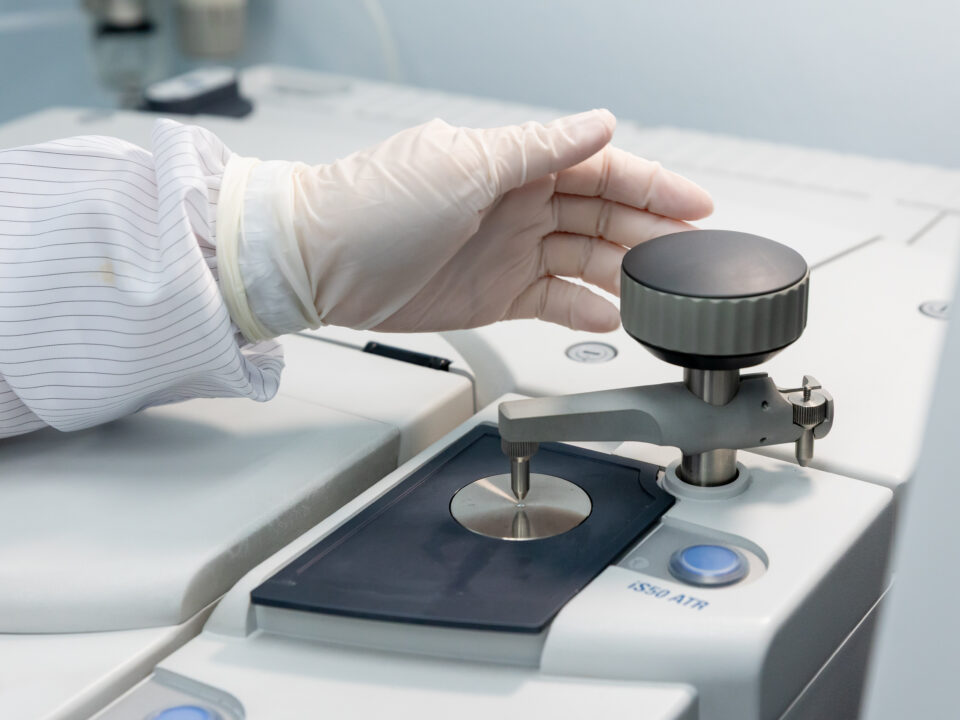
September 1, 2026
FTIR and Microscope FTIR Analysis, Identifying Organic Contamination in Automotive Parts
READ MOREFourier Transform Infrared Spectroscopy · Microscope FTIR · Organic Contamination · Polymer Identification · Residue Analysis
ISO/IEC 17025 Accredited Testing Where Applicable | FTIR and Microscope FTIR Capability | Automotive Failure Analysis
A fracture surface has been imaged by SEM. EDX has identified the elements present. But the contaminating film on the contact surface, the residue beneath a delaminating coating, or the foreign particle on the filter membrane still cannot be identified by imaging or elemental analysis alone. The material is organic, and organic materials require a different analytical technique.
FTIR spectroscopy is that technique. It identifies organic materials by measuring how they absorb infrared light and comparing the resulting spectrum against reference data, producing a material identification that SEM and EDX cannot provide. In automotive failure analysis and contamination investigation, FTIR is not a replacement for SEM. It is the complementary technique that closes the gap SEM leaves open.
How FTIR Works
Fourier transform infrared spectroscopy exposes a sample to infrared radiation across a defined wavelength range. Different chemical bonds within the sample absorb infrared energy at characteristic wavelengths. The instrument measures which wavelengths are absorbed and which pass through, producing a spectrum that represents the molecular fingerprint of the material.
This fingerprint is compared against a reference library of known spectra. When a match is found, the material is identified. When an exact match is not found, the spectrum can still characterise the chemical class of the material, distinguishing, for example, a polyamide from a polyester, or an epoxy from a silicone.
FTIR is a non-destructive technique for most sample types. The measurement does not consume or alter the sample, which means other analytical techniques can be applied to the same sample after FTIR analysis. This is particularly important in failure analysis, where the available sample may be small and every analysis step needs to be planned in sequence.
Bulk FTIR and Microscope FTIR, Two Distinct Capabilities
Bulk FTIR and Microscope FTIR, Two Distinct Capabilities. FTIR is available in two configurations, each suited to different sample types and analytical objectives.
Bulk FTIR analyses a macroscopic sample across the entire exposed surface or a defined area. It suits material characterisation of solid samples, films, coatings, and extracted residues where the material is relatively homogeneous. Common applications include:
Identifying the polymer type of a seal, gasket, or housing material
Characterising an adhesive or sealant
Identifying a contaminating film extracted from a component surface
Microscope FTIR focuses the infrared beam onto a specific, localised area using a coupled microscope, allowing identification of organic contaminants as small as 20 micrometres. It is used when:
Contamination is spatially localised
A single particle or small residue area needs to be identified without contribution from surrounding material
Contamination is embedded within a larger sample and must be characterised in place
What FTIR Can Identify in Automotive Applications
FTIR is applicable across a wide range of organic material types encountered in automotive components and failure investigations.
Material category
Typical FTIR application
Polymers and plastics
Identifying seal materials, housing resins, trim polymers, and polymer contaminants
Elastomers and rubber
Characterising gaskets, O-rings, and sealing elements by polymer type
Adhesives and sealants
Identifying adhesive type and cure state in bonded assemblies
Coatings and paint
Characterising coating chemistry and identifying delamination-related residues
Oils and lubricants
Identifying lubricant type, degradation products, and oil contamination
Organic residues and films
Identifying flux residues, processing chemical residues, and organic contamination films
Fibres
Identifying synthetic and natural fibre types in contamination investigations
Particles on filter membranes
Identifying organic particles extracted during cleanliness testing
FTIR is not suitable for elemental or inorganic material identification. It does not identify metals, metal oxides, or inorganic minerals with the same specificity as EDX. Where a sample contains both organic and inorganic components, FTIR and SEM-EDX are applied together, each contributing the information the other cannot provide.
FTIR in Automotive Failure Analysis
In a structured failure analysis investigation, FTIR typically follows visual and optical examination and SEM-EDX analysis. By the time FTIR is applied, the analyst usually has a clear hypothesis about what the organic material might be, and FTIR provides the confirmation or identifies an unexpected material that changes the direction of the investigation.
FTIR in Automotive Failure Analysis, Common Scenarios
Coating delamination and adhesion failures. When a coating or bonded layer separates from its substrate, the locus of failure often involves an organic residue or film at the interface. FTIR can identify whether this film is a processing chemical, a lubricant, a mould release agent, or an incompatible primer that prevented adhesion.
Seal and gasket failures. When a seal fails to contain fluid pressure, the seal material may have degraded, swollen, or hardened due to chemical incompatibility with the fluid it is sealing. FTIR identifies the seal polymer type and, in conjunction with comparison samples, can detect chemical degradation through changes in the infrared spectrum.
Contamination source investigation. When organic particles are found on precision component surfaces, on filter membranes from cleanliness testing, or on electrical contact surfaces, FTIR identifies the material. A fibre identified as a specific synthetic polymer type can be traced to a known packaging or cleaning material. A particle identified as an epoxy resin can be traced to an assembly process. This material identification guides corrective action by pointing toward a specific source rather than leaving the contamination origin unresolved.
PCB and electronics failure analysis. Organic residues and films on PCB assemblies, connector contacts, or electronic component surfaces are a common cause of reliability problems. FTIR identifies whether the residue is flux-related, lubricant contamination, or an organic film from handling or packaging, complementing IC analysis of ionic species and SEM-EDX elemental data.
FTIR and SEM, Using Both Techniques Together
FTIR and SEM are complementary techniques that address different questions about the same sample.
Technique
What it provides
SEM
High-magnification surface imaging and morphology
EDX
Elemental composition at specific points, lines, or areas
FTIR
Molecular identity of organic materials
Microscope FTIR
Molecular identity of localised organic contaminants down to 20 µm
Together, they cover both the inorganic and organic dimensions of a contamination or failure problem. A typical combined workflow proceeds as follows: SEM imaging locates a residue or particle at the failure site. EDX confirms the particle is carbon-rich, consistent with an organic material, but cannot identify what type. Microscope FTIR is then applied to the same particle, identifying it as, for example, a polyurethane foam fragment consistent with packaging contamination.
This combination is particularly valuable in cleanliness testing follow-up investigations, where organic particles identified on filter membranes by microscopic classification require material identification to support contamination source tracing. For a detailed explanation of SEM and EDX analysis, see our guide on scanning electron microscopy analysis for failure analysis.
Frequently Asked Questions
What is the smallest particle or feature that Microscope FTIR can identify?
Microscope FTIR at ALS can identify organic contaminants down to approximately 20 micrometres in size. Below this size, the infrared signal from the feature of interest may be insufficient for reliable library matching. For particles smaller than this threshold, alternative techniques such as SEM-EDX for elemental analysis or Raman spectroscopy at specialist facilities may be more appropriate.
Can FTIR identify inorganic contamination?
FTIR is primarily a technique for organic material identification. It can detect some inorganic compounds, particularly those with strong infrared absorption bands such as carbonates, sulfates, and silicates, but it is not the primary technique for inorganic identification. SEM-EDX is the appropriate method for elemental and inorganic material characterisation.
Do I need to send a separate sample for FTIR analysis, or can it be performed on the same sample used for SEM?
In most cases, FTIR can be performed on the same sample used for SEM analysis, provided the sample has not been coated with a conductive layer for SEM. Where a conductive coating has been applied, it may interfere with FTIR analysis depending on coating thickness and material. Discuss the planned analytical sequence with the laboratory before any sample preparation begins.
How long does FTIR analysis take? Bulk FTIR analysis of a prepared sample typically takes less than a day. Microscope FTIR analysis of localised contaminants or particles takes longer, depending on the number of features to be analysed and the complexity of the spectral interpretation. For investigations combining FTIR with SEM and other techniques, turnaround depends on the full analytical programme. Discuss timing requirements at the enquiry stage.
Next Steps
See our full Failure Analysis services including FTIR and Microscope FTIR capability
Read our guide on scanning electron microscopy analysis for failure investigation
See our Chemical and Electronics Testing services for organic residue analysis on PCBs
Contact our team to discuss a failure analysis investigation
ISO/IEC 17025 Accredited Testing Where Applicable | FTIR and Microscope FTIR Analysis | Automotive Failure Analysis Support
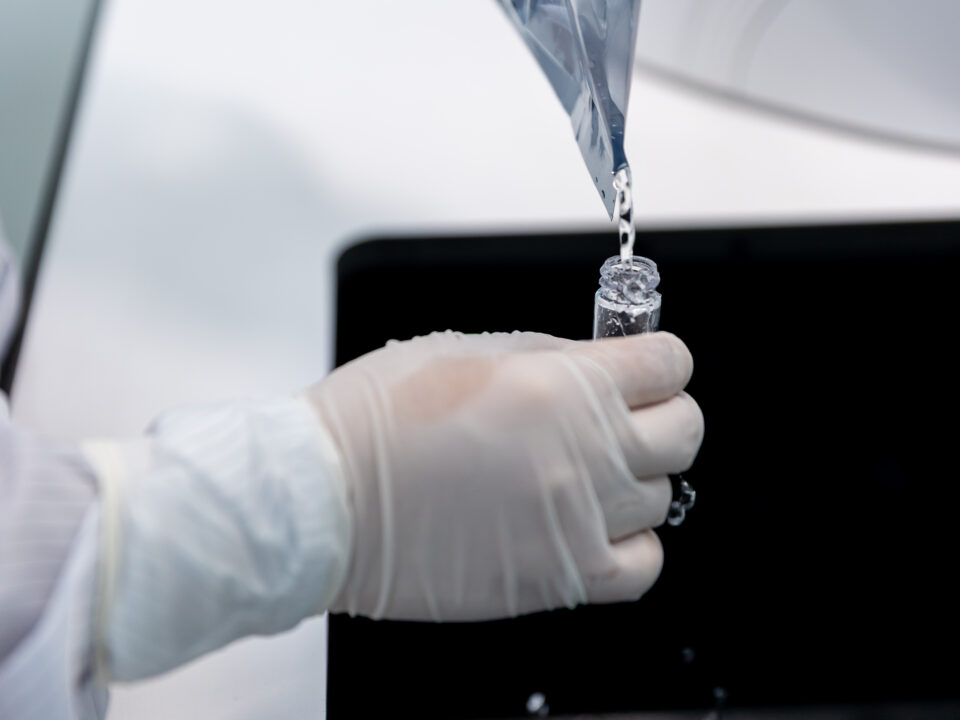
September 1, 2026
Ion Chromatography for PCB Failure Analysis, Detecting Ionic Contamination
READ MOREAnion and Cation Analysis · Anion Test · IPC-TM-650 2.3.28 · Root Cause Investigation · Chloride and Ammonium Identification · Failure Evidence
ISO/IEC 17025 Accredited Testing Where Applicable | Anion and Cation Analysis | Chemical and Electronics Testing
A PCB assembly has been returned from the field with intermittent electrical failure. SEM examination shows corrosion on conductor surfaces. The failure mode suggests ionic contamination-driven electrochemical attack. The question that determines corrective action is not whether ionic contamination is present but which ionic species are responsible and where they came from.
Ion chromatography, commonly referred to as the anion test in electronics manufacturing, answers that question. It separates and quantifies individual ionic species in the extract from a PCB surface, providing species-level identification that points directly toward the contamination source and the process step that should be investigated. In PCB failure analysis, IC is not a routine quality check. It is a diagnostic tool.
The Role of IC in PCB Failure Investigation
Ion chromatography for PCB failure analysis differs from IC used in production quality monitoring in one important respect: the objective. In production monitoring, IC confirms that ionic contamination levels are within the specified cleanliness limit. In failure analysis, IC is used to understand what happened after a failure has already occurred.
When a PCB assembly fails in service and ionic contamination is suspected as a contributing factor, IC provides three things that other analytical techniques cannot.
Species identification. IC identifies which ionic species are present and in what quantities across three categories: anions including chloride, fluoride, bromide, sulfate, and phosphate; cations including ammonium, sodium, and potassium; and weak organic acids (WOA) including acetate, formate, and citrate, which are characteristic markers of no-clean flux residue activity. Without species identification, corrective action is guesswork.
Quantification at failure-relevant levels. Modern IC systems detect ionic species at concentrations of parts per billion in the extract solution, translating to nanograms per square centimetre on the board surface. These detection limits allow meaningful measurement even when contamination levels are low, as is often the case with field failures where the original contamination may have been borderline or where the board has experienced some self-remediation during service.
Evidence for the investigation record. A failure analysis report supported by IC data includes objective, quantitative evidence of contamination levels and species distribution. This supports decisions about corrective action, supplier responsibility, and process qualification in a way that qualitative observations cannot.
What the Key Ionic Species Indicate
The diagnostic value of IC in failure analysis comes from understanding what each ionic species indicates about its origin.
Ionic species Type Primary implication in PCB failure analysis Chloride Anion Flux activator residue, environmental chloride exposure, halogenated material contamination Fluoride Anion Specific flux formulations, etching process residues Bromide Anion Halogenated flux systems, flame retardant materials Nitrate Anion Environmental sources, cleaning chemistry Nitrite Anion Environmental sources, some process chemistry Phosphate Anion Some flux formulations, process chemical residues Sulfate Anion Environmental deposition, some flux chemistry, atmospheric contamination during storage Sodium, potassium Cation Handling contamination, process water, environmental sources Ammonium Cation No-clean flux amine activators, incompletely deactivated flux residue Calcium, magnesium Cation Process water, environmental contamination Lithium Cation Specific process chemistry, battery-related contamination Acetate, formate WOA No-clean flux activator decomposition products Citrate, malate, succinate WOA Flux chemistry residues, organic acid activators Methanesulfonate WOA Specific flux formulations Phthalate WOA Plasticiser migration, packaging contamination
Chloride is the most significant anion in PCB failure analysis. Even at low concentrations, it initiates pitting corrosion and supports dendritic growth between conductors under voltage bias. Elevated ammonium, organic amines, or WOA species such as acetate and formate indicate no-clean flux residue that has not been fully deactivated and retains corrosion-promoting properties despite a nominally clean process.
ALS Testing analyses all three ionic categories under IPC-TM-650 2.3.28: anions (chloride, fluoride, bromide, nitrate, nitrite, phosphate, sulfate), cations (ammonium, sodium, potassium, calcium, magnesium, lithium), and weak organic acids or WOA (acetate, formate, citrate, malate, succinate, methanesulfonate, phthalate). A full species profile across all three categories provides the most complete picture of contamination source and corrosion risk. IC and SEM-EDX Together in Failure Investigation Ion chromatography and SEM-EDX analysis are complementary in PCB failure investigation. Each provides information the other cannot. SEM imaging characterises the morphology of corrosion damage at the failure site: the distribution of corrosion products, the pattern of dendritic growth, the condition of solder joint surfaces, and any visible residues or contamination. EDX analysis at specific points within the corrosion zone identifies the elemental composition, which can support or question the hypothesis generated by IC results. Detecting chlorine by EDX at a corrosion site is consistent with chloride-driven corrosion. Detecting sulfur is consistent with sulfate-related attack. What EDX cannot do is quantify the contamination level across the board surface or distinguish between the many possible ionic species that contain chlorine or sulfur. IC provides that quantification and speciation, working across the full board surface rather than at specific isolated points. A complete PCB failure investigation typically uses IC to characterise the overall ionic contamination profile and identify the dominant species, and SEM-EDX to characterise the specific failure site morphology and elemental composition. Together, they provide the evidence base needed for a defensible root cause conclusion. For a broader explanation of how SEM, EDX, and FTIR contribute to failure analysis, see our guide on scanning electron microscopy analysis for failure investigation. The Extraction Method Matters The reliability of IC results in failure analysis depends on how the extraction is performed. The method must be consistent, validated, and appropriate for the investigative objective, since errors or deviations at the extraction stage propagate directly into the analytical results and can obscure or misrepresent the actual contamination state of the board. Standard procedure. IPC-TM-650 2.3.28 defines the extraction method: the board is placed in a clean vessel with 75% isopropyl alcohol and 25% deionised water, extracted at 80°C for one hour under agitation, then filtered and injected into the IC system. This dissolves ionic species from the board surface including flux residues not fully soluble in water alone. Extract as received. For failure analysis, the extraction must be performed on the assembly without prior cleaning or alteration to preserve the contamination evidence in its original state. Area-specific extraction. Where the investigation requires spatial information, a controlled volume of extraction solvent applied to a defined surface area allows IC to map where contamination is most concentrated, which can be decisive in identifying the contamination source. Limitations of IC Results in Failure Investigation IC results are powerful evidence but require careful interpretation. Three limitations apply in most failure analysis contexts. IC does not identify the responsible process step or supplier. Species identification points toward contamination sources, for example chloride toward flux residue or environmental exposure, and ammonium toward no-clean flux deactivation failure. But identifying which specific process step, supplier, or handling event introduced the contamination requires interpreting IC data in the context of the full assembly process history, materials used, handling conditions, and failure pattern. IC reflects contamination at the time of testing, not necessarily at the time of failure. In boards returned from extended service, some ionic species may have been consumed by the corrosion reactions they initiated, reducing the measured concentration below the original level. Others may have been introduced by service environment exposure after the original failure mechanism was already underway. Interpreting IC results from aged field returns requires judgement about what the data represents and what may have changed since manufacture. A single IC result has limited diagnostic power without comparison data. A contamination level that looks elevated in isolation may be normal for the process, or it may indicate a process excursion if compared against qualification data. Results from non-failed assemblies from the same production lot, or from process qualification records, provide the reference point that makes species level differences meaningful and points toward the contamination source. Frequently Asked Questions When should IC be included in a PCB failure analysis investigation? IC should be included when ionic contamination is a plausible contributor to the failure mechanism, covering most cases of corrosion, leakage current, dendritic growth, or intermittent electrical behaviour associated with humidity exposure. It should also be included when the investigation needs to differentiate between flux residue contamination and environmental contamination, since anion test species profiles typically distinguish between these sources. Can IC analysis be performed on a board that has already been through SEM examination? In most cases yes, provided the SEM examination was performed without sputter coating the board surface, and provided the board has not been cleaned or altered during the SEM investigation. Discuss the planned analytical sequence with the laboratory before any step that might affect the surface chemistry of the board. What information should I provide when submitting a failed PCB for IC analysis? The most useful information includes the assembly process description (flux type, cleaning or no-clean process), service history including environment and duration, visual or functional observations from the failure, the OEM cleanliness specification if one applies, and whether comparison samples from the same production lot are available. For no-clean assemblies, note whether WOA analysis is required alongside standard anion and cation testing, as WOA species are particularly relevant to no-clean flux residue characterisation. How does IC for failure analysis differ from routine production anion testing? The analytical method is the same. The difference is in the objective and interpretation. Production anion testing confirms ionic contamination is within the specified limit. Failure analysis IC characterises the contamination profile of a failed assembly and generates hypotheses about the source and mechanism of failure, interpreted against the full failure evidence rather than a pass or fail threshold alone. Next Steps See our full Chemical and Electronics Testing services including IC for PCB failure analysis See our Failure Analysis services including SEM-EDX for corrosion and contamination investigation Read our guide on PCB cleanliness testing and ion chromatography for production quality control context Contact our team to discuss a PCB failure analysis investigation ISO/IEC 17025 Accredited Testing Where Applicable | Anion and Cation Analysis for PCB Failure Investigation | Electronics Testing Support
Ionic species Type Primary implication in PCB failure analysis Chloride Anion Flux activator residue, environmental chloride exposure, halogenated material contamination Fluoride Anion Specific flux formulations, etching process residues Bromide Anion Halogenated flux systems, flame retardant materials Nitrate Anion Environmental sources, cleaning chemistry Nitrite Anion Environmental sources, some process chemistry Phosphate Anion Some flux formulations, process chemical residues Sulfate Anion Environmental deposition, some flux chemistry, atmospheric contamination during storage Sodium, potassium Cation Handling contamination, process water, environmental sources Ammonium Cation No-clean flux amine activators, incompletely deactivated flux residue Calcium, magnesium Cation Process water, environmental contamination Lithium Cation Specific process chemistry, battery-related contamination Acetate, formate WOA No-clean flux activator decomposition products Citrate, malate, succinate WOA Flux chemistry residues, organic acid activators Methanesulfonate WOA Specific flux formulations Phthalate WOA Plasticiser migration, packaging contamination
Chloride is the most significant anion in PCB failure analysis. Even at low concentrations, it initiates pitting corrosion and supports dendritic growth between conductors under voltage bias. Elevated ammonium, organic amines, or WOA species such as acetate and formate indicate no-clean flux residue that has not been fully deactivated and retains corrosion-promoting properties despite a nominally clean process.
ALS Testing analyses all three ionic categories under IPC-TM-650 2.3.28: anions (chloride, fluoride, bromide, nitrate, nitrite, phosphate, sulfate), cations (ammonium, sodium, potassium, calcium, magnesium, lithium), and weak organic acids or WOA (acetate, formate, citrate, malate, succinate, methanesulfonate, phthalate). A full species profile across all three categories provides the most complete picture of contamination source and corrosion risk. IC and SEM-EDX Together in Failure Investigation Ion chromatography and SEM-EDX analysis are complementary in PCB failure investigation. Each provides information the other cannot. SEM imaging characterises the morphology of corrosion damage at the failure site: the distribution of corrosion products, the pattern of dendritic growth, the condition of solder joint surfaces, and any visible residues or contamination. EDX analysis at specific points within the corrosion zone identifies the elemental composition, which can support or question the hypothesis generated by IC results. Detecting chlorine by EDX at a corrosion site is consistent with chloride-driven corrosion. Detecting sulfur is consistent with sulfate-related attack. What EDX cannot do is quantify the contamination level across the board surface or distinguish between the many possible ionic species that contain chlorine or sulfur. IC provides that quantification and speciation, working across the full board surface rather than at specific isolated points. A complete PCB failure investigation typically uses IC to characterise the overall ionic contamination profile and identify the dominant species, and SEM-EDX to characterise the specific failure site morphology and elemental composition. Together, they provide the evidence base needed for a defensible root cause conclusion. For a broader explanation of how SEM, EDX, and FTIR contribute to failure analysis, see our guide on scanning electron microscopy analysis for failure investigation. The Extraction Method Matters The reliability of IC results in failure analysis depends on how the extraction is performed. The method must be consistent, validated, and appropriate for the investigative objective, since errors or deviations at the extraction stage propagate directly into the analytical results and can obscure or misrepresent the actual contamination state of the board. Standard procedure. IPC-TM-650 2.3.28 defines the extraction method: the board is placed in a clean vessel with 75% isopropyl alcohol and 25% deionised water, extracted at 80°C for one hour under agitation, then filtered and injected into the IC system. This dissolves ionic species from the board surface including flux residues not fully soluble in water alone. Extract as received. For failure analysis, the extraction must be performed on the assembly without prior cleaning or alteration to preserve the contamination evidence in its original state. Area-specific extraction. Where the investigation requires spatial information, a controlled volume of extraction solvent applied to a defined surface area allows IC to map where contamination is most concentrated, which can be decisive in identifying the contamination source. Limitations of IC Results in Failure Investigation IC results are powerful evidence but require careful interpretation. Three limitations apply in most failure analysis contexts. IC does not identify the responsible process step or supplier. Species identification points toward contamination sources, for example chloride toward flux residue or environmental exposure, and ammonium toward no-clean flux deactivation failure. But identifying which specific process step, supplier, or handling event introduced the contamination requires interpreting IC data in the context of the full assembly process history, materials used, handling conditions, and failure pattern. IC reflects contamination at the time of testing, not necessarily at the time of failure. In boards returned from extended service, some ionic species may have been consumed by the corrosion reactions they initiated, reducing the measured concentration below the original level. Others may have been introduced by service environment exposure after the original failure mechanism was already underway. Interpreting IC results from aged field returns requires judgement about what the data represents and what may have changed since manufacture. A single IC result has limited diagnostic power without comparison data. A contamination level that looks elevated in isolation may be normal for the process, or it may indicate a process excursion if compared against qualification data. Results from non-failed assemblies from the same production lot, or from process qualification records, provide the reference point that makes species level differences meaningful and points toward the contamination source. Frequently Asked Questions When should IC be included in a PCB failure analysis investigation? IC should be included when ionic contamination is a plausible contributor to the failure mechanism, covering most cases of corrosion, leakage current, dendritic growth, or intermittent electrical behaviour associated with humidity exposure. It should also be included when the investigation needs to differentiate between flux residue contamination and environmental contamination, since anion test species profiles typically distinguish between these sources. Can IC analysis be performed on a board that has already been through SEM examination? In most cases yes, provided the SEM examination was performed without sputter coating the board surface, and provided the board has not been cleaned or altered during the SEM investigation. Discuss the planned analytical sequence with the laboratory before any step that might affect the surface chemistry of the board. What information should I provide when submitting a failed PCB for IC analysis? The most useful information includes the assembly process description (flux type, cleaning or no-clean process), service history including environment and duration, visual or functional observations from the failure, the OEM cleanliness specification if one applies, and whether comparison samples from the same production lot are available. For no-clean assemblies, note whether WOA analysis is required alongside standard anion and cation testing, as WOA species are particularly relevant to no-clean flux residue characterisation. How does IC for failure analysis differ from routine production anion testing? The analytical method is the same. The difference is in the objective and interpretation. Production anion testing confirms ionic contamination is within the specified limit. Failure analysis IC characterises the contamination profile of a failed assembly and generates hypotheses about the source and mechanism of failure, interpreted against the full failure evidence rather than a pass or fail threshold alone. Next Steps See our full Chemical and Electronics Testing services including IC for PCB failure analysis See our Failure Analysis services including SEM-EDX for corrosion and contamination investigation Read our guide on PCB cleanliness testing and ion chromatography for production quality control context Contact our team to discuss a PCB failure analysis investigation ISO/IEC 17025 Accredited Testing Where Applicable | Anion and Cation Analysis for PCB Failure Investigation | Electronics Testing Support
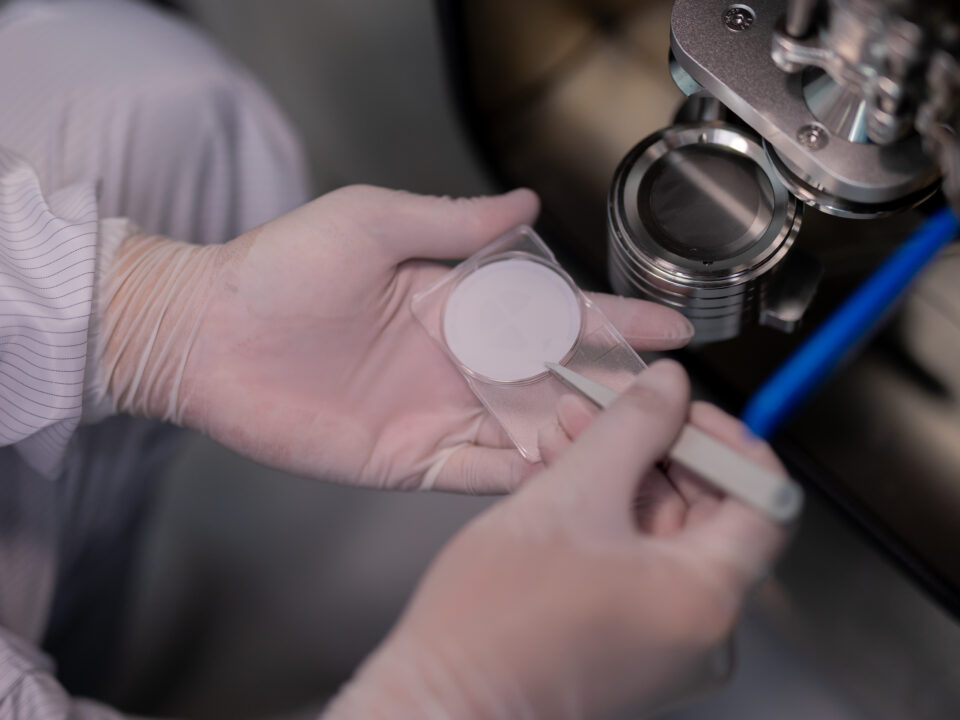
August 11, 2026
Why Outsource Automotive Testing? Benefits for OEMs and Tier-1 Suppliers
READ MOREISO/IEC 17025 Accreditation · OEM Acceptance · Analytical Breadth · Liability Protection
ISO/IEC 17025 Accredited Testing Where Applicable | Independent Third-Party Laboratory | Serving Malaysia and Southeast Asia
Outsourcing automotive testing means sending components, materials or assemblies to an accredited independent laboratory for testing that meets OEM qualification, type approval or regulatory submission requirements. In-house quality checks support production monitoring, but they cannot replace accredited third-party results where formal compliance evidence is required.
The OEM Acceptance Problem with In-House Testing
Global OEMs require test results from ISO/IEC 17025 accredited laboratories for formal qualification submissions. In-house results are not accepted as compliance evidence for OEM approval processes, type approvals or regulatory submissions. This is not a matter of trust. It is a matter of what the quality framework requires.
ISO/IEC 17025 accreditation means the laboratory has been independently assessed for technical competence, measurement traceability, equipment calibration, and quality management. ILAC MRA recognition means results are accepted by OEMs and regulatory bodies in more than 100 countries without re-validation when they cross borders or change hands in a supply chain.
For Malaysian and Southeast Asian suppliers, test reports must carry ILAC MRA recognition to be accepted by European, Japanese, or American OEMs without question.
Objectivity and Conflict of Interest
A laboratory that tests its own products has an inherent interest in the result. The structural conflict of interest is recognised by OEMs, regulators, and courts. Third-party testing removes this ambiguity. An independent laboratory has no stake in whether a result passes or fails, giving the test report its value as documentary evidence in warranty claims, liability disputes, and regulatory investigations.
Access to Analytical Breadth
Maintaining broad analytical capability in-house is expensive. An accredited contract laboratory spreads these costs across many clients, giving suppliers access to a full analytical suite through a single laboratory relationship.
SEM-EDX for failure analysis
ICP-MS and ICP-OES for chemical compliance
GC-MS for VOC testing
Ion chromatography for ionic contamination
Salt spray and environmental simulation
Particle analysis to ISO 16232 and VDA 19
When In-House Testing Still Makes Sense
In-house testing suits routine production monitoring where speed and low cost matter more than formal accreditation. The effective approach for most suppliers combines in-house methods for production monitoring with accredited third-party testing for OEM submissions, qualification programmes, and regulatory compliance.
When to Start Thinking About Third-Party Testing
A few situations signal that third-party accredited testing should be part of the plan.
New OEM relationship: qualification submissions almost always require accredited results from the outset
First PPAP submission: third-party data is typically required as part of the package
Entering a new market: EU, Japanese or American OEM supply chains each have specific accreditation requirements
Specification change: when an OEM revises a material or component specification, re-qualification with accredited data is usually triggered
Field failure or warranty claim: independent test evidence becomes critical when liability is in question
Expanding product scope: new component types may require test capabilities not available in-house
In-House vs Third-Party Testing
Testing Context
In-House
Third-Party Accredited
OEM qualification
Not accepted
Required
Regulatory submission
Not accepted
Required
Production monitoring
Suitable
Not required
Conflict of interest
Present
None
Analytical breadth
Limited
Full suite
Cost per test
Lower
Higher
The Liability Argument
An accredited third-party test report is a contemporaneous, independent record of a component’s condition at the time of manufacture. It demonstrates the product was tested against defined requirements by an independent organisation. An internal record carries less weight in a dispute because the party that produced it had an interest in the outcome.
Choosing the Right Laboratory Partner
Not all accredited laboratories are equal in scope or capability. ISO/IEC 17025 accreditation covers only the specific methods formally assessed, so confirm the exact method and scope before testing begins.
ALS Testing is an independent, ISO/IEC 17025 accredited laboratory serving OEMs, Tier-1 and Tier-2 suppliers in Malaysia and Southeast Asia. Accredited results are accepted by OEMs and regulatory authorities in more than 100 countries under the ILAC MRA.
Frequently Asked Questions
When does my OEM actually require results from an accredited laboratory?
For formal qualification, type approval and regulatory compliance declarations, most global OEMs require ISO/IEC 17025 accredited results with ILAC MRA recognition. For routine production monitoring, accredited results are generally not required. Review your OEM specification or PPAP requirements to confirm.
Can we use our in-house results for any formal OEM submission?
In most cases, no. OEM qualification and formal approval submissions require independently accredited test data. If your specification is not explicit on this point, confirm with your OEM customer quality team before preparing the submission.
How do we manage the turnaround time for third-party testing against production schedules?
Build testing into the programme schedule from the outset rather than treating it as a final step. For urgent requirements, discuss expedited service options with your laboratory at the enquiry stage.
Is there a cost saving from consolidating testing with one laboratory?
In most cases, yes. A single laboratory covering multiple disciplines reduces logistics complexity, simplifies sample management and often results in volume-based cost efficiencies.
Next Steps
Back to Automotive Testing for the full service overview
Review our laboratory accreditation scope
Contact our team to discuss your testing requirements and receive a quotation at /contact/
ISO/IEC 17025 Accredited Testing Where Applicable | ILAC MRA Recognised | Independent Third-Party Automotive Testing
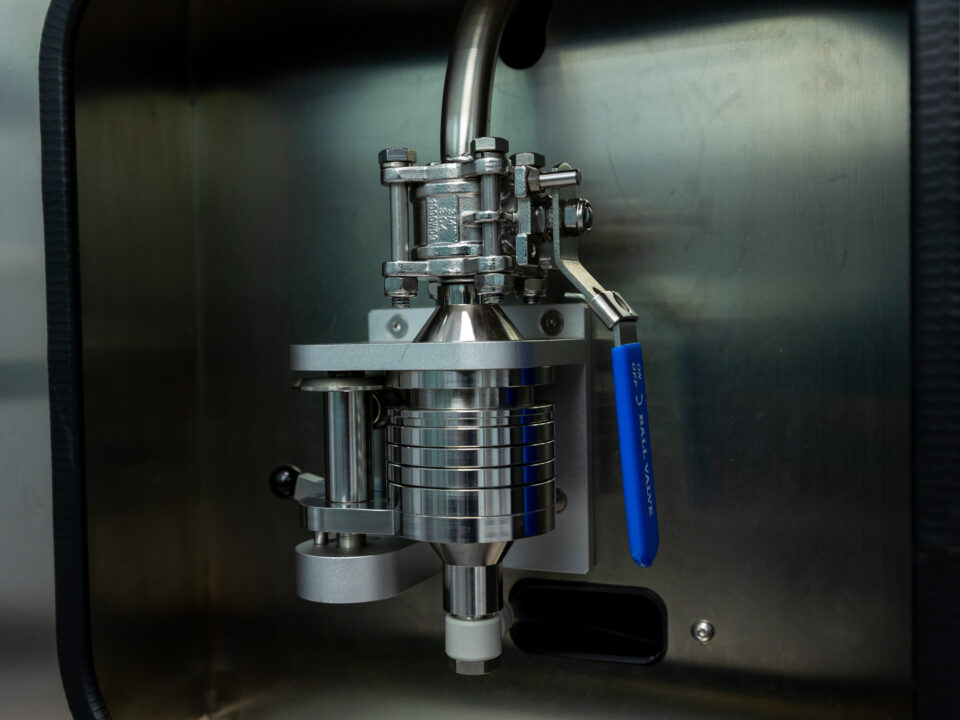
August 11, 2026
VDA 19 Cleanliness Testing, Step-by-Step Process Guide (VDA 19.1 and 19.2)
READ MOREParticle Extraction · Gravimetric Analysis · LPC Counting · Microscopic Classification · SEM-EDX Particle Identification
ISO/IEC 17025 Accredited Testing Where Applicable | VDA 19 and ISO 16232 Capability | Automotive Cleanliness Specialist
An OEM drawing specifies a cleanliness class. A customer’s purchase order references VDA 19. This guide walks through the VDA 19.1 test process step by step, from the first blank test to the final cleanliness report, and explains where VDA 19.2 fits.
VDA 19 and What It Covers
VDA 19 is the German automotive industry standard for technical cleanliness testing, published by the VDA (Verband der Automobilindustrie). It is required by German OEMs including BMW, Volkswagen Group and Mercedes-Benz, and by the Tier-1 suppliers that serve them.
VDA 19 Part 1 covers particle contamination analysis of automotive components: extraction, counting, classification and reporting. This is the part that applies when a customer or OEM specifies VDA 19 for a laboratory submission.
VDA 19 Part 2 covers technical cleanliness requirements for assembly environments. It is applied in the production facility, not the testing laboratory.
The step-by-step process in this guide covers VDA 19 Part 1. For a comparison with ISO 16232, which is technically harmonised with VDA 19 Part 1 for most applications, see our guide on ISO 16232 vs VDA 19.
The VDA 19.1 Test Process
Blank test and environment verification
Component inspection and documentation
Extraction method selection and validation
Filtration onto a membrane
Gravimetric analysis
Light obscuration particle counting (LPC)
Microscopic particle classification
Cleanliness classification and reporting
Where an OEM specification requires it, SEM-EDX particle identification is applied to specific particles on the membrane before the final report is issued.
Blank Test and Environment Verification
No component is extracted until the test environment and all extraction equipment are verified to be clean.
The blank test runs the complete extraction process, covering solvents, vessels and filtration equipment, without a component present. The result establishes the background contamination level. VDA 19 requires that blank contamination stays below defined limits before component testing proceeds. If the blank level is too high, the contamination source must be identified and eliminated before the test is valid.
Step 1 Component Inspection and Documentation
Before extraction begins, the component is inspected and documented as received. Sample condition, including any visible contamination, damage or packaging concerns, is recorded photographically and in writing.
This provides a baseline if questions arise about whether the result reflects manufacturing cleanliness or contamination introduced during handling or shipping. Samples showing evidence of post-manufacture contamination may require discussion with the client before testing proceeds.
Step 2 Extraction Method Selection and Validation
Extraction method
How it works
Best suited for
Pressure rinsing
Filtered solvent forced through internal channels under controlled pressure
Bores, galleries and flow paths, such as hydraulic valves and fuel rails
Ultrasonic extraction
Component submerged in solvent bath, ultrasonic energy dislodges particles
Complex surfaces and recesses inaccessible by direct rinsing
Agitation
Component immersed in solvent and agitated mechanically
Simple geometry with open, accessible internal spaces
Air jet extraction
Directed air stream dislodges particles, captured for analysis
Components that must not contact liquid
Where the method is not specified, the laboratory selects and documents the most appropriate option. Efficiency is validated by repeated cycles until the particle count confirms a declining curve, demonstrating substantially complete contamination removal.
Step 3 Filtration
After extraction, the solvent carrying the extracted particles passes through a membrane filter with a defined pore size, typically 5 micrometres. Particles are collected on the membrane surface.
The membrane is then conditioned, dried and equilibrated to stable temperature and humidity, in preparation for weighing and optical examination. Membrane type, pore size and filtration conditions are documented as part of the test record.
Step 4 Gravimetric Analysis
The dried membrane is weighed on a calibrated analytical balance before and after filtration. The mass difference is the total gravimetric contamination.
Gravimetric analysis is fast and is a required element of the VDA 19 test programme. Its limitation is functional: a component can carry a single oversized particle posing significant risk while still showing a low gravimetric result. This is why it is used alongside, not instead of, particle counting and classification.
Step 5 Light Obscuration Particle Counting (LPC)
The extracted particles are re-suspended in clean solvent and passed through a laser-based particle counter, which counts and sizes each particle individually.
LPC produces a count distributed across defined size classes, from the lower threshold up through multiple ranges to particles above 1,000 micrometres. LPC is the method that determines whether a component meets its specified cleanliness class. A component with low total particle mass may still exceed the limit in a specific size class if a small number of large particles are present. The size distribution, not just the total count, is what the specification controls.
Step 6 Microscopic Particle Classification
After LPC, particles on the membrane are examined under a calibrated microscope and classified into the categories defined by VDA 19.
Particle category
Appearance
Typical source
Why it matters
Shiny (metallic)
Reflective under incident light
Machined metal debris
Wear particles
Casting residue
Highest mechanical damage risk, often a critical specification limit
Non-shiny
Not reflective
Rubber
Polymer
Ceramic
Mineral debris
Oxidised metal
Risk depends on size, hardness and application
Fibres
Elongated, per the standard’s length-to-width criterion
Packaging
Cleaning materials
Textile components
Assessed separately from hard particles
A shiny metallic particle above a defined size is often a non-conformance regardless of total count, and some OEM specifications subdivide these categories further per the cited edition and specification. Significant particles are recorded with images alongside the count data.
Step 7 SEM-EDX Particle Identification (Where Required)
SEM-EDX identifies specific particles on the membrane when particle identity must be confirmed or an OEM specification requires elemental identification above a defined size. SEM images particle morphology, EDX identifies elemental composition, distinguishing materials such as iron from aluminium, or ceramic, glass and polymer particles.
This supports contamination source investigation and is required by some OEM specifications for certain particle types or sizes. Confirm with your laboratory at the enquiry stage if SEM-EDX is required.
Step 8 Cleanliness Classification and Reporting
Gravimetric, LPC, and microscopic results combine into the Component Cleanliness Code (CCC), VDA 19’s standardised output. The CCC is expressed as letter-number pairs covering size range and count level, with lower numbers indicating fewer particles, and is assessed against OEM or customer limits for pass or fail determination.
Notation and size classes follow the applicable standard, OEM specification, or customer template. The CCC is not universal across all specifications.
The final report documents extraction method, blank test results, gravimetric mass, LPC size distribution, microscopic classification with images, and final cleanliness class.
Where VDA 19 Part 2 Fits
VDA 19 Part 2 covers technical cleanliness in assembly environments, workstations, tooling, fixtures, packaging and handling areas. Its purpose is to prevent new contamination during assembly that would compromise the cleanliness verified by Part 1 testing.
It is applied in the production facility, not the testing laboratory, and is a separate requirement from component cleanliness testing. Confirm the specific requirement with your OEM or customer.
Sample Submission Requirements
Standard: VDA 19 Part 1 or ISO 16232, and the applicable edition
Cleanliness class: or the particle count limits that apply
Controlled surface: the wetted surface defined in the drawing
Drawing: number and revision
Extraction method: if specified by the OEM or customer
SEM-EDX: whether particle identification is required
Quantity: number of samples to submit
Report format: required template or OEM format
Package components in clean, sealed polythene bags immediately after manufacture and keep them sealed until laboratory receipt. Avoid paper or cardboard in direct contact with component surfaces, as fibres can transfer and affect the result.
Frequently Asked Questions
What is the difference between VDA 19 and ISO 16232?
VDA 19 Part 1 and ISO 16232 are technically harmonised. The main difference is in reporting format, cleanliness class notation and who requires which standard. German OEMs specify VDA 19, while most other global OEMs reference ISO 16232.
How do I know which extraction method will be used for my component?
The extraction method is selected based on component geometry and surfaces of interest. If your OEM specification defines a required method, that method is applied. If not, the laboratory selects the most appropriate method and documents the rationale.
Do I need SEM-EDX particle identification as part of my VDA 19 test?
Not always. SEM-EDX is required when an OEM specification calls for elemental identification of particles or when a contamination source investigation requires material identification. For standard cleanliness class determination, gravimetric, LPC and microscopic classification are typically sufficient.
How should I package and ship components for VDA 19 testing?
Seal components in clean polythene bags immediately after manufacture and keep them sealed until laboratory receipt. Avoid paper or cardboard packaging in direct contact with component surfaces.
Does VDA 19 Part 2 apply to my laboratory test?
No. Part 2 covers assembly environment cleanliness and is applied in the production facility. Laboratory component testing is covered by Part 1.
Request a VDA 19 Testing Quote
ALS Testing provides technical cleanliness testing to VDA 19 Part 1 and ISO 16232 for automotive components across hydraulic, fuel, braking, transmission and EV powertrain applications. Testing under ISO/IEC 17025 accreditation is available where covered by the applicable accredited scope.
Next Steps
See our full Technical Cleanliness Testing services
Read our guide comparing ISO 16232 and VDA 19
Read our guide on particle extraction methods
Contact our team for a VDA 19 testing quotation or technical discussion at Contact us – alstesting.co.th
ISO/IEC 17025 Accredited Testing Where Applicable | VDA 19 and ISO 16232 Capability | SEM-EDX Particle Identification Available
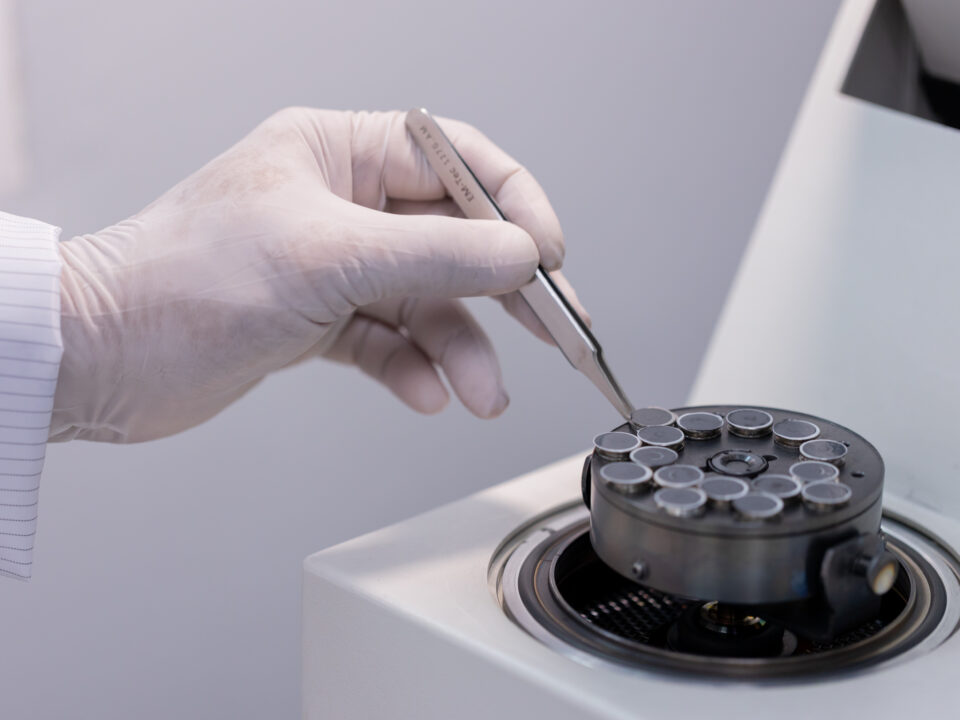
August 10, 2026
RoHS and Banned Substance Testing, Automotive Electronics Compliance Guide
READ MORERoHS Screening · REACH SVHC · IEC 62321 · XRF Screening · ICP-MS Confirmatory Analysis · GCMS Phthalate Testing
ISO/IEC 17025 Accredited Testing Where Applicable | RoHS and REACH Compliance Capability | Chemical and Electronics Testing
A PCB assembly destined for the EU market must not contain lead above defined limits. A sensor housing must not incorporate hexavalent chromium in its plating. A wiring harness component must not include any of the four restricted phthalates in its insulation material above threshold concentrations.
These requirements come from RoHS. For automotive electronics suppliers, compliance is not self-certifiable without analytical evidence from a testing laboratory.
What RoHS Requires
The RoHS Directive (2011/65/EU, amended by 2015/863/EU) restricts ten hazardous substances in electrical and electronic equipment placed on the EU market. Each must not exceed defined concentration thresholds in any homogeneous material within the product.
Substance
Threshold
Typical Location in Electronics
Lead (Pb)
0.1%
Solder, coatings, stabilisers
Mercury (Hg)
0.1%
Switches, lamps
Cadmium (Cd)
0.01%
Plating, stabilisers
Hexavalent chromium Cr(VI)
0.1%
Surface treatments, coatings
Polybrominated biphenyls (PBB)
0.1%
Flame retardants in polymers
Polybrominated diphenyl ethers (PBDE)
0.1%
Flame retardants in polymers
DEHP
0.1%
Plasticiser in PVC insulation
BBP
0.1%
Plasticiser in polymers
DBP
0.1%
Plasticiser in polymers
DIBP
0.1%
Plasticiser in polymers
Automotive equipment is subject to a range of exemptions where no technically feasible substitute currently exists. Exemptions are defined in annexes to the directive and reviewed periodically. If your product qualifies for an exemption, confirm the exemption number and its current expiry date before relying on it in a compliance declaration.
REACH and SVHC Obligations
REACH requires suppliers to communicate information about SVHC present above 0.1% by weight on request. Where SVHC exceeds 0.1% in articles placed on the EU market above one tonne per year, notification to ECHA is also required. The candidate list contains more than 230 substances and is updated twice a year. RoHS and REACH have different substance lists, thresholds, and compliance mechanisms. A PCB may need to satisfy both.
IEC 62321 Testing Methods for PCBs and Automotive Electronics
IEC 62321 is the standard series defining analytical methods for RoHS substance determination. Testing follows a staged approach: XRF screening first, then confirmatory quantitative analysis where screening indicates a potential exceedance.
Substance / Group
Technique
Stage
Lead, Mercury, Cadmium, Chromium (total)
XRF
Screening
Lead, Mercury, Cadmium
ICP-MS (IEC 62321-4)
Confirmatory
Total Chromium
ICP-OES (IEC 62321-5)
Confirmatory pre-step
Hexavalent chromium Cr(VI)
UV-Vis spectrophotometry (IEC 62321-7-2)
Confirmatory
PBB, PBDE
XRF then GCMS (IEC 62321-6)
Screening then Confirmatory
Phthalates (DEHP, BBP, DBP, DIBP)
GCMS (IEC 62321-8)
Confirmatory
Applying IEC 62321 to Automotive PCBs & What Gets Tested
The RoHS threshold applies per homogeneous material, not per product. A complete compliance assessment covers multiple materials within the same component. Key material categories and their primary compliance risks
Solder materials: assessed for lead content. Lead-free transition is mandated for most applications, but automotive-specific exemptions remain under periodic review.
Connector contacts and metal housings: assessed for cadmium plating and hexavalent chromium surface treatments.
Polymer insulation, cable jacketing, and housings: assessed for PBB, PBDE, and phthalate content by GCMS.
PCB laminates: assessed for bromine-containing flame retardants by XRF, with GCMS confirmation where indicated.
Coatings and surface finishes: assessed for hexavalent chromium, cadmium, and lead depending on treatment type.
REACH SVHC screening: scope is determined by the bill of materials and the SVHC categories most likely to apply.
Submitting a bill of materials alongside your samples allows the laboratory to define the most efficient screening programme and avoid unnecessary confirmatory testing.
Frequently Asked Questions
Does RoHS apply to automotive electronics sold outside the EU?
RoHS applies to equipment placed on the EU market. However, most global OEMs apply it as a supply chain requirement regardless of target market, because non-compliant components create risk if market destinations change. Confirm the applicable scope with your customer. Is XRF alone sufficient for a RoHS compliance declaration?
No. XRF is a screening tool only. Where XRF indicates a potential exceedance, confirmatory analysis by ICP-MS, ICP-OES, GCMS, or UV-Vis must follow depending on the substance. A compliance declaration based on XRF screening alone is not analytically defensible. How often does REACH SVHC screening need to be repeated?
The SVHC candidate list is updated typically twice a year. An assessment against an earlier version may not cover newly listed substances. Monitor ECHA updates and assess newly listed substances against your bill of materials on a rolling basis. What should I provide when submitting for RoHS testing? Bill of materials broken down by homogeneous material where possible Target market and any exemptions being claimed, with exemption number and expiry date Whether XRF screening only or full confirmatory analysis is required OEM compliance declaration format if a specific template is required RoHS and REACH Testing at ALS ALS Testing provides RoHS compliance screening and REACH SVHC assessment for automotive PCBs, connectors, sensors, and materials. Our testing programme follows IEC 62321 analytical methods, with XRF screening and confirmatory analysis by ICP-MS, ICP-OES, GCMS, UV-Vis, and ion chromatography depending on the substance group. ISO/IEC 17025 accredited testing is available where covered by our accredited scope. Next Steps See our full Chemical and Electronics Testing services Back to Automotive Testing Contact our team for a compliance testing quotation or technical discussion at Contact us – alstesting.co.th ISO/IEC 17025 Accredited Testing Where Applicable | RoHS and REACH SVHC Screening | IEC 62321 Analytical Methods
RoHS applies to equipment placed on the EU market. However, most global OEMs apply it as a supply chain requirement regardless of target market, because non-compliant components create risk if market destinations change. Confirm the applicable scope with your customer. Is XRF alone sufficient for a RoHS compliance declaration?
No. XRF is a screening tool only. Where XRF indicates a potential exceedance, confirmatory analysis by ICP-MS, ICP-OES, GCMS, or UV-Vis must follow depending on the substance. A compliance declaration based on XRF screening alone is not analytically defensible. How often does REACH SVHC screening need to be repeated?
The SVHC candidate list is updated typically twice a year. An assessment against an earlier version may not cover newly listed substances. Monitor ECHA updates and assess newly listed substances against your bill of materials on a rolling basis. What should I provide when submitting for RoHS testing? Bill of materials broken down by homogeneous material where possible Target market and any exemptions being claimed, with exemption number and expiry date Whether XRF screening only or full confirmatory analysis is required OEM compliance declaration format if a specific template is required RoHS and REACH Testing at ALS ALS Testing provides RoHS compliance screening and REACH SVHC assessment for automotive PCBs, connectors, sensors, and materials. Our testing programme follows IEC 62321 analytical methods, with XRF screening and confirmatory analysis by ICP-MS, ICP-OES, GCMS, UV-Vis, and ion chromatography depending on the substance group. ISO/IEC 17025 accredited testing is available where covered by our accredited scope. Next Steps See our full Chemical and Electronics Testing services Back to Automotive Testing Contact our team for a compliance testing quotation or technical discussion at Contact us – alstesting.co.th ISO/IEC 17025 Accredited Testing Where Applicable | RoHS and REACH SVHC Screening | IEC 62321 Analytical Methods
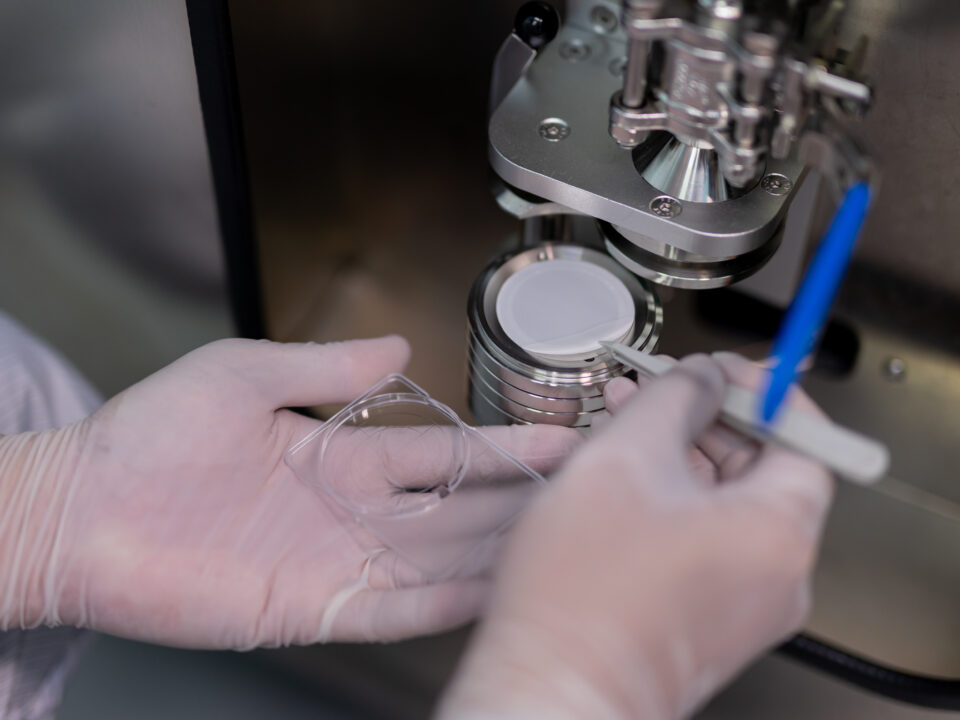
August 10, 2026
Automotive Materials Testing, VDA 278, VOC Emissions and Interior Air Quality
READ MOREVOC Emissions · Fogging · Formaldehyde · Salt Spray · Thermal and Environmental Simulation
ISO/IEC 17025 Accredited Testing Where Applicable | VDA 278 and ISO 12219 Capability | Automotive Materials Specialist
The materials used in automotive manufacturing are tested long before they reach the assembly line. A seat foam must be assessed for VOC emissions before interior approval. A door trim panel must pass fogging testing before OEM specification. A coated bracket must survive salt spray before underbody clearance.
This guide covers the principal materials testing disciplines, the standards that govern them, and how they connect to the supplier qualification process.
What Automotive Materials Testing Covers
Automotive materials testing spans chemical emissions, corrosion and environmental simulation, and regulatory substance compliance, covering interior trim polymers, adhesives, foams, textiles, coatings, fasteners, and EV powertrain materials.
Testing requirements are defined by the OEM material specification, the supplier quality agreement, or both. Re-testing is required whenever formulation, source, or OEM specification changes. Qualification is not a one-time event.
VOC Emissions Testing, VDA 278 and ISO 12219
Volatile organic compound (VOC) emissions from automotive interior materials are subject to strict OEM limits.
The vehicle interior is a confined space where emissions from multiple materials accumulate, and qualification requires each material to meet defined limits before production approval.
VDA 278: Thermal Desorption GC-MS
VDA 278 is the primary standard for VOC and FOG (semi-volatile) analysis of automotive interior non-metallic materials. Required by German OEMs including BMW, Volkswagen Group, Mercedes-Benz, and Audi, and widely adopted across global Tier-1 supply chains.
The method heats a small material sample in two stages: 90°C for the VOC fraction and 120°C for the FOG fraction. Compounds are identified and quantified by GC-MS and reported in micrograms per gram, broken down by chemical class. Pass or fail is assessed against OEM-specified limits per compound, per compound group, or for total VOC.
ISO 12219: Component-Level Chamber Testing
ISO 12219 is the international standard series for VOC measurement in vehicle interiors. Parts 2 through 7 cover component-level emissions testing from individual materials, which is the relevant scope for material suppliers. ISO 12219-1 covers vehicle cabin air at the type approval level and does not apply to material qualification. If your specification references ISO 12219, confirm which part and test conditions apply before submitting samples.
VDA 275: Formaldehyde Determination
Formaldehyde receives dedicated attention in most German OEM specifications, with limits typically tighter than the general aldehyde group limits in VDA 278. VDA 275 uses a bottle method: sample sealed with distilled water at 60°C for three hours, with formaldehyde measured by photometric analysis. Results in micrograms per gram. ALS can run VDA 275 and VDA 278 from a single sample submission.
ISO 6452: Fogging Testing
Fogging is the deposition of condensable vapours from interior materials onto the vehicle windscreen. ISO 6452 defines gravimetric and photometric assessment methods. Fogging testing is typically required alongside VOC testing as part of a complete interior material qualification submission.
Common Reasons for VOC Test Failure
Residual processing solvents: adhesives, coatings, and laminates not fully cured or dried before testing will release solvent compounds that may exceed VOC limits.
Plasticiser migration: PVC-based and plasticised polymers release high-boiling compounds in the FOG fraction at the 120°C stage.
Formaldehyde from binder resins: a recurring issue in headliners, floor carpets, and foam materials using formaldehyde-based binder chemistry.
Amine compounds from polyurethane foam: indicate incomplete urethane reaction chemistry, affected by catalyst selection and curing conditions.
Background contamination: conditioning in a non-clean or VOC-contaminated environment can elevate results independent of the material itself.
Corrosion and Environmental Testing
Automotive materials testing includes corrosion and environmental performance testing for metal components, coatings, and surface treatments alongside VOC emissions requirements.
Salt Spray Testing: ISO 9227 and ASTM B117
ISO 9227 covers three salt spray atmospheres: NSS, AASS, and CASS. ASTM B117 is the American equivalent for neutral salt spray. The standard, atmosphere, duration, and acceptance criteria are always defined by the OEM specification and should not be assumed from general practice.
Thermal and Environmental Simulation
The IEC 60068 series covers the principal environmental simulation tests for automotive materials and electronics: IEC 60068-2-14 for thermal shock, IEC 60068-2-78 for damp heat, and IEC 60068-2-1 and 2-2 for cold and dry heat cycling.
Damp heat testing is particularly relevant for components destined for Malaysia and Southeast Asia, where sustained high humidity is a normal operating condition.
Materials Testing for EV Components
As EV production scales across Southeast Asia, materials testing requirements are expanding beyond conventional powertrain applications. Key testing areas for EV-specific materials include
Battery thermal management components: chemical emissions and thermal stability under operating temperature ranges
High-voltage cable insulation: electrical properties under humidity exposure and thermal cycling
Power electronics assemblies: environmental durability to IEC 60068 and chemical compatibility with cooling fluids
Battery system materials: off-gassing assessment under thermal stress conditions
Frequently Asked Questions
What is the difference between VDA 278 and ISO 12219 for VOC testing?
VDA 278 uses thermal desorption GC-MS and is required by German OEMs. ISO 12219 covers both vehicle-level cabin air testing and component-level emissions testing. For material qualification, the component-level parts of ISO 12219 apply. Both frameworks may apply if your supply chain includes German and international OEM relationships.
Can ALS test for VDA 278 and VDA 275 from the same sample?
Yes. Both tests can be conducted from a single sample submission, minimising the material required and simplifying the submission process. Confirm both requirements when making your enquiry.
Does interior air quality testing mean the same as VOC testing?
Not exactly. VOC testing measures emissions from a specific material sample under laboratory conditions. Interior air quality refers to cumulative VOC concentration in a vehicle cabin, assessed at the vehicle level by the OEM. As a material supplier, the requirement is component-level VOC emission testing, not whole-vehicle cabin air quality measurement.
How should I prepare samples for VDA 278 testing?
Condition samples at 23°C and 50% relative humidity for seven days in a clean environment. Sample size is typically one to three grams. Seal in clean, VOC-free packaging immediately after manufacture.
What to Prepare Before Submitting
Before submitting samples, confirm the material specification and acceptance limits, the standard or standards required, sample quantity available and whether conditioning has been completed, and the OEM reporting template if one is specified.
Automotive Materials Testing at ALS
ALS Testing provides automotive materials testing across VOC emissions, fogging, formaldehyde, salt spray, and thermal and environmental simulation for suppliers in Malaysia and Southeast Asia. ISO/IEC 17025 accredited testing is available where covered by our accredited scope.
Next Steps
See our full Materials and Environmental Testing services
Read our detailed VOC Testing guide
Back to Automotive Testing
Contact our team for a materials testing quotation or technical discussion: https://www.alstesting.co.th/contact-us/
ISO/IEC 17025 Accredited Testing Where Applicable | VDA 278, ISO 9227 and IEC 60068 Capability | Serving Malaysia and Southeast Asia
July 15, 2026
Particle Analysis for Automotive Manufacturing, Methods, Standards and Applications
READ MOREParticle Extraction · Gravimetric Analysis · Microscopic Sizing and Counting · Particle Classification · SEM-EDX Identification
ISO/IEC 17025 Accredited Testing Where Applicable | Automotive Cleanliness Workflow | Automotive Specialist
A particle smaller than a tenth of a millimetre can affect a hydraulic valve, score a fuel injector nozzle, or interfere with a narrow control orifice. The risk depends on the component, the clearance, the material, and the cleanliness limit defined by the OEM or customer specification.
In automotive manufacturing, particle analysis is a technical cleanliness workflow used to extract, count, size, classify and identify particulate contamination on automotive components. It helps manufacturers understand how much contamination is present, how large the particles are, and what materials they are made of.
The results are commonly used for components where particles may affect hydraulic flow, fuel injection, lubrication, cooling, sealing or electronic reliability, then compared against ISO 16232, VDA 19.1, OEM specifications or customer cleanliness limits.
What Is Particle Analysis
A complete particle analysis workflow usually looks at three practical areas.
What the test checks
Why it matters
Total particle mass
Shows the overall contamination load on the component
Particle count and size distribution
Shows whether particles exceed the defined size or count limits
Particle type or material
Helps identify whether the contamination is metallic, non-metallic, fibrous, organic, mineral or another material type
No single measurement gives the full picture. A component may have a low total particle mass but still contain one large metallic particle that could interfere with a valve or precision bore. Another component may have many small particles but still remain within the agreed cleanliness requirement. Particle analysis combines mass, size distribution and particle type so that manufacturers and OEMs can evaluate cleanliness against a defined specification.
For a full comparison of how cleanliness requirements are handled under the two main automotive cleanliness frameworks, see our companion article on ISO 16232 vs VDA 19.
How the Particle Analysis Workflow Works
Particle analysis is not a single test. It is a controlled workflow that moves from extraction to quantification, characterisation and reporting.
Stage
What happens
Main output
Extraction
Particles are removed from the component using a controlled method
Extracted particles in liquid or on a collection medium
Quantification
Particles are weighed, counted and measured
Particle mass, count and size distribution
Characterisation
Particles are classified or identified by material type
Metallic, non-metallic, fibre, polymer, mineral or elemental information
Reporting
Results are compared with the specified cleanliness requirement
Cleanliness code, particle limits or customer report format
This workflow is applied to functionally relevant surfaces, internal channels and component areas where contamination could affect performance, reliability or acceptance by the customer.
Particle Extraction Methods
Before particles can be counted or identified, they must be removed from the component in a controlled way. The purpose of extraction is to collect contamination from the relevant surfaces without adding particles from the test environment, solvent, equipment or handling process.
The extraction method depends on component geometry, surface condition, component weight, cleanliness requirement and whether the component can safely contact liquid.
Extraction method
Use when
Notes
Agitation
Components with simple shapes and open internal cavities
Useful for accessible surfaces and parts that can tolerate immersion
Pressure rinsing
Relevant surfaces or channels can be reached by controlled liquid flow
Suitable for defined flow paths, surfaces and internal areas
Ultrasonic extraction
The component has complex surfaces, recesses or difficult geometry
Helps dislodge particles from areas that direct rinsing may not reach
Air jet extraction
The component should not contact liquid
Used only when particles can still be captured and controlled for analysis
Before an extraction method is used for production testing, it should be validated for the component and requirement. A declining extraction curve is commonly used to show that repeated extraction cycles produce a decreasing particle count. This helps confirm that the method is removing the available contamination rather than leaving a significant unmeasured residue.
A blank value test is also important. It checks the cleanliness of the extraction equipment, solvent, membrane and test environment before the component result is interpreted. If the blank value is too high, the result may be distorted by particles introduced during the test process rather than particles from the component itself.
Particle Quantification Methods
After extraction, the liquid is filtered through a membrane so that particles can be collected and analysed. In the ALS workflow shown in the reference material, the analysis includes gravimetric measurement and microscopic sizing and counting on the filter membrane.
Method
What it measures
Why it matters
Limitation
Gravimetric analysis
Total mass of particles collected on the membrane
Gives a fast overall contamination index
Does not show particle size distribution
Microscopic sizing and counting
Particle count and size range on the filter membrane
Shows whether particles exceed count or size limits
Requires a validated microscope and image analysis method
Liquid particle counting where specified
Particles suspended in liquid
May be used when the customer or method requires it
Should not be confused with membrane-based microscopic counting
Gravimetric analysis is useful because it shows the overall contamination load. However, mass alone does not show whether the contamination comes from many small particles or one oversized particle. This matters because a single large metallic particle can create more functional risk than a higher number of smaller particles within specification.
Microscopic sizing and counting addresses this gap. The filter membrane is examined using a calibrated microscope and image analysis system. Particles are counted, measured and grouped into defined size ranges. This provides the size distribution data needed to evaluate the component against the cleanliness code or particle count limits defined by the customer, ISO 16232, VDA 19.1 or the relevant reporting template.
Particle Characterisation and Material Identification
Quantification shows how many particles are present and how large they are. Characterisation helps explain what the particles are and where they may have come from.
Particle or method
What it indicates
Why it matters
Metallic shiny particles
Possible machining, cutting, wear or metallic debris
Important for wear, scoring, valve sticking and possible electrical concerns
Non-metallic or non-shiny particles
Polymer, rubber, mineral, oxide-coated material or residue
Helps separate metallic debris from other process or handling contamination
Fibres
Packaging, wipes, clothing, handling or the production environment
Useful for tracing contamination from handling or packaging steps
SEM-EDX
Elemental composition of a particle
Helps distinguish iron, aluminium, stainless steel, glass, ceramic or mineral particles
FTIR
Organic or polymer-based material type
Useful for plastics, elastomers, oil, residue or organic contamination
Fibre classification should follow the applicable inspection specification. In the ALS example report, fibres are treated as non-metallic particles with a length-to-width ratio greater than 20, the maximum diameter ≤ 50 µm. Other standard editions or customer specifications may use different fibre measurement criteria.
Where the exact identity of a particle must be confirmed, SEM-EDX can provide elemental composition data. FTIR may also be used when the particle is organic or polymer-based. These methods are especially useful when particle analysis is used not only for cleanliness classification, but also for contamination source investigation.
How Particle Analysis Results Are Reported
Particle analysis results are usually reported as a cleanliness result showing particle count, particle size range and sometimes particle type. In many automotive cleanliness reports, this is expressed as a Component Cleanliness Code. The exact notation depends on the ISO 16232 edition, VDA 19.1 edition, OEM specification or customer reporting template.
A Component Cleanliness Code gives OEMs, suppliers and laboratories a shared way to communicate the particle profile of a component. The code groups particles into defined size ranges and assigns a cleanliness level for each range.
Example
CCC = A (B11/C9/D7/E6/F3/G0/H1/I00/J00/K00)
In this example, each letter represents a particle size range and each number indicates the count level found in that range. Lower numbers generally indicate fewer particles in that size class.
The exact notation, size classes and upper size ranges should always follow the applicable standard edition, OEM specification or customer reporting template. Some reports may use B to K notation, while other specifications or standard updates may use extended ranges. For this reason, the code should be treated as a reporting example rather than a universal format for every cleanliness inspection.
The measured cleanliness result is then compared against the customer requirement, drawing, purchase specification or internal quality limit. This gives the manufacturer a clearer basis for release, investigation, supplier qualification or corrective action.
Where Particle Analysis Matters Most
Particle analysis is most valuable for components where particulate contamination has a direct path to functional failure.
Application area
Typical risk
Why particle analysis helps
Hydraulic systems
Sticking valves, scoring, leakage or restricted flow
Checks particles in narrow passages and precision clearances
Fuel injection systems
Nozzle damage, spray disruption or flow concern
Detects oversized or hard particles before assembly
Transmission and lubrication components
Wear in oil passages, bearings or moving interfaces
Supports process control and supplier qualification
Cooling and thermal management components
Flow restriction, sealing issue or thermal transfer concern
Useful for EV and high-precision cooling circuits
Power electronics and electronic assemblies
Insulation risk, bridging or process contamination
Particle type can matter as much as particle size
Particle analysis is also useful during supplier qualification, process validation, field failure investigation and production change control. If a machining process, washing process, packaging material or assembly step changes, particle analysis can help confirm whether the change has affected cleanliness.
Frequently Asked Questions
What is the difference between particle analysis and visual cleanliness inspection
A visual cleanliness inspection can identify visible contamination, but it cannot measure particle count, size distribution, mass or material composition with the same level of detail. Particle analysis is a controlled laboratory process that produces quantitative cleanliness data for OEM review, supplier quality requirements and process investigation.
Can particle analysis identify the source of contamination
Particle analysis can provide strong evidence about possible contamination sources. Metallic shiny particles may point to machining or wear. Fibres may point to packaging, wiping materials, clothing or handling. SEM-EDX and FTIR can provide more detailed material information. Definitive source attribution may still require a broader failure analysis or process investigation.
Do all automotive components require particle analysis
No. Particle analysis is applied selectively to components where particulate contamination creates a defined functional or quality risk. This often includes components with narrow fluid channels, precision clearances, sealing surfaces, hydraulic passages, fuel pathways, cooling circuits or sensitive electronic areas. If an OEM drawing or customer specification defines a cleanliness requirement, particle analysis may be needed to verify compliance.
Is particle analysis always covered by ISO/IEC 17025 accreditation
Not necessarily. ISO/IEC 17025 accreditation applies to specific methods within a laboratory’s accredited scope. Some parts of the workflow may be accredited, while additional particle classification, SEM-EDX, FTIR or source investigation may be reported as supporting analysis depending on the laboratory scope and customer requirement. For formal submissions, the applicable scope should be confirmed before testing.
Request a Particle Analysis Quote
Whether you are establishing a cleanliness testing programme for a new component, investigating contamination from a production process, or qualifying a supplier against an OEM cleanliness requirement, ALS Testing can support particle analysis for automotive components.
What to prepare before submitting samples
Applicable standard or customer specification
Cleanliness limit or required Component Cleanliness Code
Component drawing and material information
Critical surfaces or internal channels to be assessed
Sample quantity and production condition
Packaging condition and handling requirements
OEM report template where applicable
Testing under ISO/IEC 17025 accreditation is available where covered by the applicable accredited scope. Additional particle identification support such as SEM-EDX or FTIR can be included where required by the customer specification or investigation objective.
Next Steps
See our full Technical Cleanliness Testing services for automotive components at https://www.alstesting.co.th/technical-cleanliness-testing/
Read our companion guide comparing the two governing standards ISO 16232 vs VDA 19
For a deeper look at particle size distribution and cleanliness classification, see our explainer on Particle Size Analysis
Contact our team for a particle analysis quotation or technical discussion at https://www.alstesting.co.th/contact-us/
ISO/IEC 17025 Accredited Testing Where Applicable | Extraction, Microscopic Counting and Particle Identification Support | Automotive Cleanliness Testing
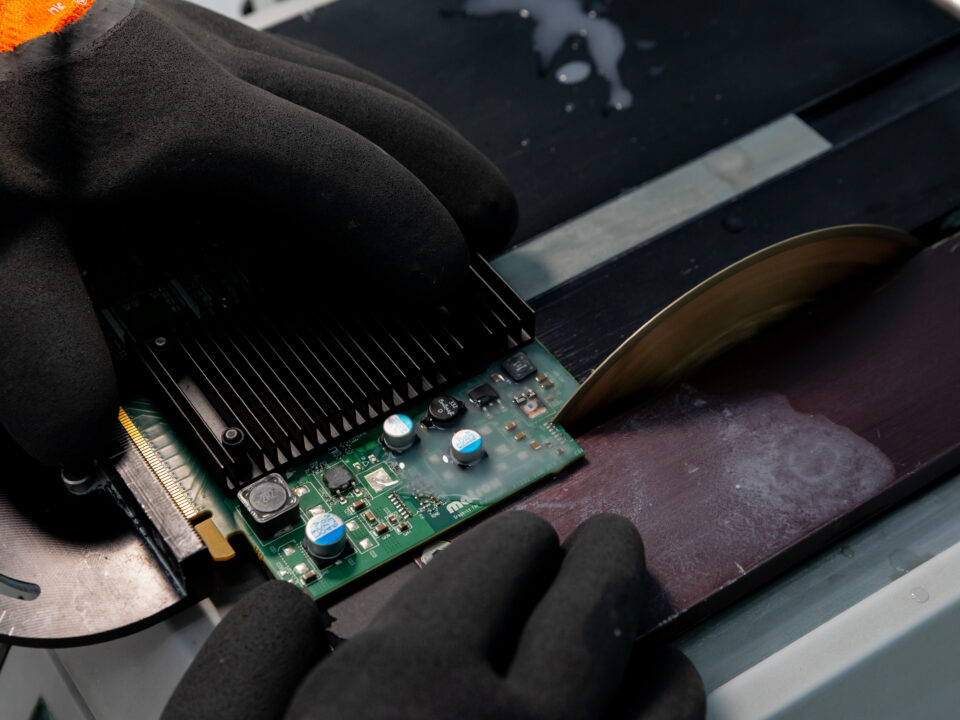
June 30, 2026
Scanning Electron Microscopy Analysis for Failure Analysis: SEM, FTIR, Cross-Section and Root Cause Investigation
READ MORESEM · EDX · FTIR · Cross-Sectioning · Root Cause Investigation
ISO/IEC 17025 Accredited Testing Where Applicable | SEM EDX FTIR Cross-Section Support | Automotive Failure Analysis
A component can fail in many ways. It may crack during qualification testing, return from the field with corrosion, show a coating defect, or fail electrically without an obvious surface mark. The first question is usually what failed. The more useful question is why it failed.
Scanning electron microscopy analysis is one of the key techniques used in automotive failure investigation because it can examine fracture surfaces, corrosion features, particles, coatings and surface defects at much higher magnification than optical microscopy. It is rarely used alone. A stronger investigation usually combines SEM with EDX, FTIR, cross-sectioning and background information from the component’s service or production history.
A good failure analysis does not jump straight to the highest magnification. It starts with the least destructive checks, builds evidence step by step, and only cuts or alters the sample when the investigation has a clear reason to do so.
What Happens During Failure Analysis
Failure analysis is a structured investigation used to understand the physical, chemical or mechanical evidence behind a component failure. The aim is not simply to take microscope images. The aim is to connect the observed damage with the most likely failure mechanism and the conditions that caused it.
A typical investigation moves from broad observation to targeted analysis.
Stage
What it does
Why it matters
Visual and optical examination
Documents the sample as received and locates the failure area
Preserves evidence before cutting, cleaning or coating
SEM imaging
Examines fracture surfaces, corrosion, particles or surface defects at high magnification
Shows fine surface features that optical microscopy may miss
EDX analysis
Detects elemental signals from selected areas or particles
Supports material, contamination or corrosion hypotheses
FTIR spectroscopy
Identifies organic materials such as polymers, oils, coatings or residues
Useful for non-metallic contamination and polymer-related failures
Cross-sectioning
Cuts and polishes the sample to reveal internal structure
Shows coating layers, interfaces, crack paths, porosity or solder joint features
The order can change depending on the sample, but the principle is the same. Non-destructive documentation should come first. Destructive preparation should come later, once the analyst knows what evidence needs to be exposed.
Visual and Optical Examination
The first stage is simple but important. The laboratory documents the sample condition, photographs the failure area and records visible features such as cracks, corrosion, staining, deformation, wear marks or coating damage.
Stereo microscopy gives a low magnification overview with depth of field. This helps the analyst decide where to examine next with SEM or where a cross-section should be taken. Skipping this stage can remove context that may be needed later, especially if the sample is cut, cleaned or mounted.
Scanning Electron Microscopy Analysis
SEM uses a focused electron beam to scan the sample surface and create high magnification images. In failure analysis, this is especially useful for fracture surfaces and rough three-dimensional features.
On a broken metal part, SEM may show features that support a fatigue, overload, brittle fracture or wear-related interpretation. Fatigue striations, where present, can indicate progressive crack growth. Dimpled features may support ductile overload. Cleavage-like facets may support brittle fracture. These features are not interpreted in isolation; they must be considered with material, loading history, geometry and service conditions.
SEM is also useful for corrosion deposits, coating defects, particles, contamination and surface damage. It can show morphology clearly, but it does not identify every chemical compound by itself. That is why SEM is often paired with EDX.
What EDX Adds to SEM
EDX, also written as EDS, detects characteristic X-rays emitted from the sample when it is examined under the electron beam. This allows the analyst to identify elements present in a selected point, area or particle.
For example, EDX may detect chlorine, sulfur, oxygen, iron, aluminium, copper, silicon or other elemental signals. These signals can support a corrosion, contamination or material transfer hypothesis. However, EDX should not be described as confirming a specific compound on its own. Detecting chlorine does not automatically prove a defined chloride compound, and detecting sulfur does not automatically prove sulfate. The result needs to be interpreted with the sample condition, morphology and any supporting tests.
FTIR for Organic Materials and Residues
SEM and EDX are strong tools for imaging and elemental analysis, but they are not the best choice for identifying organic materials. FTIR is used when the question involves polymers, coatings, adhesives, oils, elastomers or residue films.
FTIR measures how a material absorbs infrared light and produces a spectrum that can be compared with reference data. In automotive failure analysis, FTIR may help identify a seal material, a polymer contaminant, an adhesive residue, a coating film or degraded organic material found near the failure area.
Cross-Section Analysis
Some failures cannot be understood from the surface. Cross-section analysis is used when the investigation needs to see inside the material, coating, solder joint, plated layer or bonded interface.
The sample is mounted, cut, ground and polished to expose the area of interest. In metals, etching may be used to reveal microstructure. In coatings or electronics, the cross-section can show layer thickness, voids, cracks, delamination, porosity or interface defects.
Because cross-sectioning permanently changes the sample, it should be performed after visual and surface examination. The cut location should be chosen based on the evidence already collected.
Which Technique Fits Which Failure
Different failure symptoms need different evidence. The table below gives a practical starting point, but the final test plan should be based on the sample condition and investigation objective.
Failure symptom
Useful techniques
Evidence the laboratory may look for
Cracked metal component
Visual exam, SEM, EDX, cross-sectioning
Crack origin, fracture mode, inclusions, corrosion or overload features
Corroded connector
Visual exam, SEM, EDX, FTIR where residue is present
Corrosion morphology, elemental signals, residue or film identification
Coating defect
Optical exam, cross-sectioning, SEM, FTIR
Coating thickness, adhesion issue, contamination, interface condition
Polymer or rubber failure
FTIR, optical exam, SEM where needed
Material identification, degradation, contamination or surface damage
Unknown particles or residue
SEM-EDX, FTIR
Elemental profile, organic material type or possible contamination source
A single technique may answer part of the issue, but most root cause work needs multiple evidence streams. SEM can show how a surface failed. EDX can add elemental information. FTIR can identify organic residue. Cross-sectioning can show what happened below the surface.
Example Investigation
Consider an automotive connector returned from the field after intermittent electrical failure. Visual examination may show staining around the contact area. SEM can examine the contact surface at higher magnification and show corrosion morphology or particles between contacts. EDX can detect elemental signals such as chlorine, sulfur, copper, tin or other elements that support a contamination or corrosion hypothesis.
If a film or residue is present, FTIR may help identify whether it is an oil, polymer, adhesive residue or process-related organic material. If moisture ingress or seal failure is suspected, a cross-section through the sealing area can show whether the interface, seal geometry or housing condition contributed to the failure.
The conclusion should be based on all of the evidence, not on one image or one spectrum alone.
What to Prepare Before Sending a Sample
Failure analysis is more focused when the laboratory receives both the failed part and the right background information. Prepare the following where available.
Component name and function
Failure symptom and when it was discovered
Whether the sample came from production, qualification testing or the field
Material grade, coating, plating or surface treatment
Operating environment such as heat, humidity, vibration or chemical exposure
Number of failed samples and number of good comparison samples
Photos before removal or cleaning, if available
Any previous test data or inspection records
What decision the report needs to support, such as root cause, corrective action or customer response
Avoid cleaning, cutting or altering the failed area before submission unless the laboratory advises it. If comparison samples are available, include them. A good part from the same lot can make the investigation much stronger.
What a Failure Analysis Report Can and Cannot Do
A failure analysis report can identify observed damage, describe the evidence, explain the likely failure mechanism and support an evidence-based root cause conclusion. In many cases, it can also suggest contributing factors or recommend what process area should be checked next.
It should not be treated as a legal judgement by itself. Whether the root cause becomes supplier responsibility, design issue, production escape, misuse or field exposure depends on technical evidence plus contractual and commercial context.
Turnaround time also depends on scope. A simple SEM-EDX examination may be faster than a multi-technique investigation involving cross-section preparation, FTIR and comparison samples. If the case is urgent, the timing should be discussed before the test plan is confirmed.
Frequently Asked Questions
Do I need to know which technique I need before contacting a laboratory
No. You can send the failure description, photos and available background information first. The laboratory can recommend whether SEM, EDX, FTIR, cross-sectioning or another method is appropriate.
What is scanning electron microscopy analysis used for
Scanning electron microscopy analysis is used to examine fine surface features such as fracture morphology, corrosion deposits, wear marks, particles, coating defects and contamination. It helps show details that are not visible with normal optical microscopy.
Can SEM and EDX identify the exact cause of corrosion
They can support a corrosion investigation by showing morphology and elemental signals. They may indicate the presence of elements such as chlorine, sulfur or oxygen. The exact cause still depends on supporting evidence such as service history, material condition, environment, residue analysis and process data.
Is failure analysis only for metal components
No. Failure analysis can be applied to metals, polymers, rubber, coatings, adhesives, electronics materials and composites. The technique selection depends on the material and the failure symptom.
Is every failure analysis result covered by ISO/IEC 17025 accreditation
Not necessarily. ISO/IEC 17025 accreditation applies to specific methods within a laboratory’s accredited scope. If accredited results are required for submission, confirm the exact method and scope before testing begins.
Go Deeper into SEM Analysis
This article explains SEM as part of a broader failure analysis workflow. For a more detailed technical guide to SEM imaging, magnification, sample preparation and limitations, read the dedicated SEM Analysis for Automotive Failure Investigation article.
Request a Failure Analysis Quote
ALS Testing can support automotive failure analysis for cracked components, corrosion, coating defects, contamination, polymer issues and field-returned assemblies.
Testing under ISO/IEC 17025 accreditation is available where covered by the applicable accredited scope. Share the sample condition, failure background and required report purpose so the laboratory can recommend the right investigation plan.
Next Steps
Back to Failure Analysis Hub for the full service overview at https://www.alstesting.co.th/failure-analysis-services-sem-ftir-edx-als-testing/
Read the detailed SEM Analysis guide for automotive failure investigation
Explore FTIR material identification capabilities for automotive materials
Contact our team to discuss a failure analysis investigation at https://www.alstesting.co.th/contact-us/
ISO/IEC 17025 Accredited Testing Where Applicable | SEM EDX FTIR Cross-Section Support | Automotive Failure Analysis
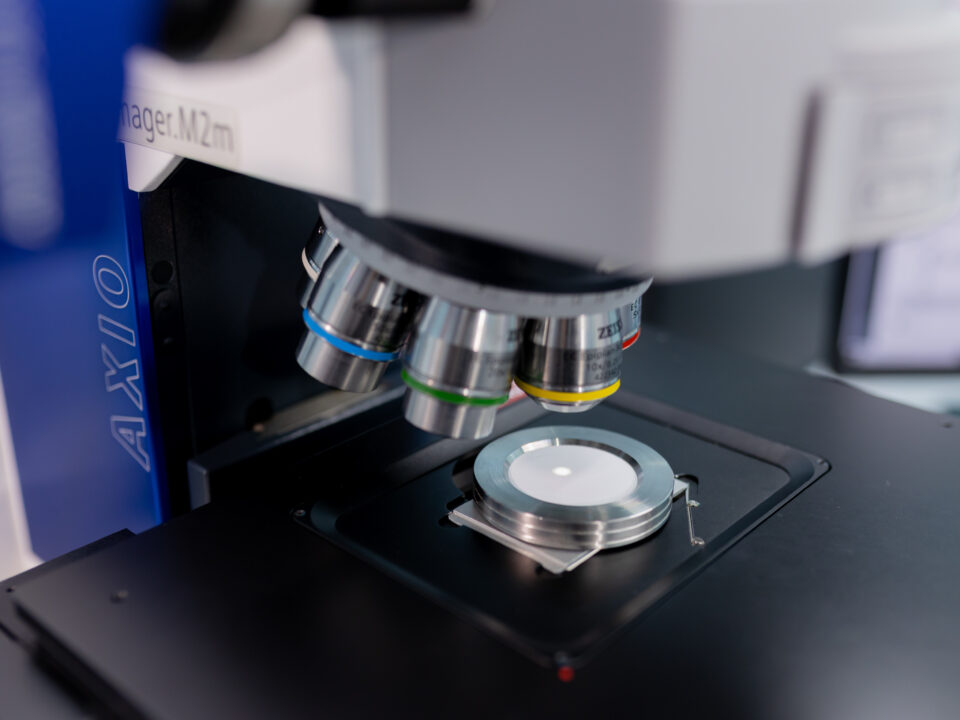
June 30, 2026
Automotive Testing Standards ISO, VDA, IEC and ASTM Complete Reference Guide
READ MORECleanliness · Failure Analysis · Materials and Environmental · Chemical and Electronics
ISO/IEC 17025 Accredited Testing Where Applicable | Cross Discipline Testing Support | Automotive Specialist
Automotive testing standards help manufacturers prove that a component meets the requirement written in an OEM drawing, material specification, purchase document or quality agreement. The challenge is that automotive testing does not rely on one standard family. Cleanliness, corrosion, VOC emissions, humidity, PCB contamination and chemical compliance may each use different ISO, VDA, IEC, ASTM, IPC or regulatory references.
This guide brings the key automotive testing standards together by discipline, so engineering, quality and procurement teams can identify what each reference is used for and what information should be confirmed before sending samples to a laboratory.
How to Use This Guide
The standard named in the customer document should always be treated as the controlling requirement. If the drawing says ISO 9227, test to ISO 9227. If it says ASTM B117, test and report against ASTM B117. If it references an OEM method or a specific revision, send that document to the laboratory before testing starts.
For quick screening, use the table below to match the testing need with the standard family.
Testing need
Common standards or methods
What to confirm before testing
Technical cleanliness and particles
ISO 16232, VDA 19.1, VDA 19.2
Component surfaces, extraction method, cleanliness code and report format
Failure investigation
SEM, EDX, FTIR, microscopy, cross-sectioning
Failure mode, sample history, suspected material or process issue
Corrosion and environmental exposure
ISO 9227, ASTM B117, IEC 60068 series
Exposure condition, duration, inspection interval and acceptance criteria
Interior material emissions
VDA 278, ISO 12219, VDA 275, ISO 6452
Material type, OEM requirement, VOC or fogging criterion
Electronics and chemical testing
IPC-TM-650, J-STD-001, IEC 62321, REACH
Board type, target substances, acceptance limit and required report scope
Cleanliness and Particle Contamination Standards
Technical cleanliness testing measures particulate contamination on functionally relevant automotive components. It is often used for parts with narrow channels, sealing surfaces, fluid passages or precision clearances.
ISO 16232 specifies requirements for applying and documenting methods used to determine particulate contamination on functionally relevant components and systems of road vehicles. It is commonly used in global automotive supply chains.
VDA 19.1 is the German automotive guideline for inspection of technical cleanliness and particulate contamination on functionally relevant components. VDA 19.2 focuses on technical cleanliness in assembly environments, including the conditions that help prevent new contamination from being introduced during production.
ISO 16232 and VDA 19.1 are closely aligned for many component cleanliness applications, but the required reporting format, cleanliness class notation or customer template may still differ. The laboratory should follow the standard and format named in the customer requirement.
For detailed guidance, link this section to the ISO 16232 vs VDA 19 guide and the Particle Analysis in Automotive Manufacturing article.
Failure Analysis Techniques
Failure analysis usually does not start with one governing automotive test standard. It starts with a problem, such as fracture, corrosion, leakage, delamination, contamination, coating failure or unexpected wear. The laboratory then selects the techniques needed to build evidence around the failure mechanism.
SEM provides high magnification imaging of fracture surfaces, corrosion sites and contamination features. EDX adds elemental composition data from selected points or areas. FTIR can identify organic materials such as polymers, oils, coatings and residues. Cross-sectioning exposes internal structure, coating layers, solder joints, cracks or interfaces for closer examination.
These methods may be performed under accredited or validated laboratory procedures where covered by scope. If the report will be used for customer submission, legal review or supplier dispute, the required method, scope and reporting format should be confirmed before testing begins.
Materials and Environmental Testing Standards
Materials and environmental testing checks how automotive parts respond to heat, humidity, corrosion, emissions and other service related exposure conditions.
VDA 278 is used for thermal desorption analysis of VOC and FOG emissions from automotive interior materials. ISO 12219 covers vehicle interior air and component level VOC measurement methods. VDA 275 is used for formaldehyde emission testing of interior materials. ISO 6452 assesses fogging behaviour of interior trim materials that may deposit condensable films on glass surfaces.
ISO 9227 defines salt spray test atmospheres including neutral salt spray, acetic acid salt spray and copper accelerated acetic acid salt spray. ASTM B117 is a salt spray or salt fog practice commonly referenced in ASTM based or North American specifications and is broadly comparable to the neutral salt spray atmosphere in ISO 9227.
The IEC 60068 series is used for environmental testing of electrotechnical products and components. IEC 60068-2-14 covers change of temperature testing. IEC 60068-2-1 covers cold testing. IEC 60068-2-2 covers dry heat testing. IEC 60068-2-78 covers damp heat steady state testing. The exact severity, duration and acceptance criteria should come from the product or customer specification.
Chemical and Electronics Standards
Chemical and electronics testing covers ionic contamination, soldering cleanliness evidence, restricted substances and material compliance.
IPC-TM-650 2.3.28 is an ion chromatography method for ionic analysis of circuit boards. It can be used to identify and quantify specific anions and cations extracted from printed boards or assemblies.
J-STD-001 is an assembly requirement standard for soldered electrical and electronic assemblies. It should not be described as a universal requirement for ion chromatography on every PCB. Cleanliness compliance may be supported by objective evidence, qualified process data, SIR testing, ionic process monitoring, IC analysis or customer specific requirements.
IEC 62321 is the method series used to determine certain restricted substances in electrotechnical products for RoHS related assessment. REACH SVHC screening is a regulatory compliance activity based on substances of very high concern identified under REACH. The analytical method depends on the substance category and the required reporting scope.
Master Standards Reference
Use this table as the main reference map. It separates formal standards, regulatory references and analytical techniques so they are not treated as the same type of requirement.
Reference
Discipline
What it covers
ISO 16232
Cleanliness
Particulate contamination inspection for functionally relevant road vehicle components and systems
VDA 19.1
Cleanliness
Technical cleanliness inspection for particulate contamination in automotive components
VDA 19.2
Cleanliness
Technical cleanliness control in assembly environments
SEM, EDX, FTIR and cross-sectioning
Failure analysis
Analytical techniques used for root cause investigation, material identification and failure evidence
VDA 278
Materials and environmental
VOC and FOG thermal desorption analysis for automotive interior materials
ISO 12219
Materials and environmental
VOC measurement for vehicle interior air and interior materials
VDA 275
Materials and environmental
Formaldehyde emission testing for automotive interior materials
ISO 6452
Materials and environmental
Fogging behaviour of interior trim materials
ISO 9227
Materials and environmental
Salt spray corrosion testing including NSS, AASS and CASS atmospheres
ASTM B117
Materials and environmental
Salt spray or salt fog apparatus practice, commonly used for neutral salt spray testing
IEC 60068-2-14
Materials and environmental
Change of temperature testing
IEC 60068-2-1
Materials and environmental
Cold testing
IEC 60068-2-2
Materials and environmental
Dry heat testing
IEC 60068-2-78
Materials and environmental
Damp heat steady state testing
IPC-TM-650 2.3.28
Chemical and electronics
Ionic analysis of circuit boards by ion chromatography
J-STD-001
Chemical and electronics
Soldered assembly requirements and cleanliness evidence framework
IEC 62321 series
Chemical and electronics
Determination of certain restricted substances in electrotechnical products
REACH SVHC
Chemical and electronics
Screening or assessment for substances of very high concern under REACH
How Accreditation Supports Testing
ISO/IEC 17025 accreditation provides independent recognition that a laboratory is competent to perform specific testing or calibration activities within its accredited scope. It does not automatically mean every method, standard, technique or investigation type listed in a guide is covered.
For formal submissions, supplier qualification or OEM review, confirm three things before testing starts.
The required standard and revision
Whether the method is covered by the laboratory’s accredited scope
The report format or customer template required for submission
ILAC MRA recognition can support international acceptance of accredited results between accreditation bodies and markets, but customer acceptance still depends on the specification, contract requirement and scope of accreditation.
Choosing the Right Standard
The easiest way to avoid retesting is to start from the source document rather than from a general service name. A request that says “automotive testing” or “environmental test” is usually not enough.
What you have
What it usually tells the laboratory
What may still be missing
OEM drawing
Standard name, acceptance criteria and sometimes sample condition
Revision, test duration or report template
Material specification
Required test method and performance limit
Sample preparation or inspection intervals
Purchase or quality agreement
Required compliance evidence
Exact method variant or accreditation requirement
Internal issue report
Failure symptom and suspected cause
Correct analytical method and comparison baseline
No standard named
General testing need only
Laboratory must help define a suitable test plan before quotation
If the standard is unclear, send the full document title, revision, part number, material information, sample quantity and intended use of the report. This helps the laboratory confirm whether the work should be run under cleanliness testing, failure analysis, environmental testing, corrosion testing or chemical and electronics testing.
Frequently Asked Questions
How do I know which automotive testing standard applies
Start with the OEM drawing, material specification, purchase document or quality agreement. That document should name the standard, revision, test condition and acceptance criteria. If it does not, send the document to the laboratory for review before submitting samples.
Are ISO and VDA standards interchangeable
Not always. Some ISO and VDA methods are closely aligned, such as ISO 16232 and VDA 19.1 for technical cleanliness, but report format, notation and customer templates may differ. The report should follow the requirement named by the customer.
Is failure analysis covered by one automotive standard
Usually no. Failure analysis is a structured investigation using techniques such as SEM, EDX, FTIR, microscopy and cross-sectioning. The method depends on the failure mode and the evidence needed.
Does accreditation cover every standard in this guide
No. ISO/IEC 17025 accreditation applies to specific methods within the laboratory’s scope. If accredited results are required, confirm the exact method and scope before testing begins.
What should I send before asking for a quote
Send the standard name, revision, drawing or specification, sample description, material information, required acceptance criteria, report format and whether accredited results are required.
Explore ALS Testing Services by Discipline
ALS Testing supports automotive testing across cleanliness, failure analysis, materials and environmental testing, and chemical and electronics testing for manufacturers, suppliers and engineering teams in Malaysia and Southeast Asia.
Testing under ISO/IEC 17025 accreditation is available where covered by the applicable accredited scope. For standards or OEM methods not listed here, share the full requirement so ALS can confirm capability before samples are submitted.
Next Steps
Back to Automotive Testing Hub for the full service overview at https://www.alstesting.co.th/automotive-testing-services-als-testing-laboratory/
Technical Cleanliness Testing at https://www.alstesting.co.th/technical-cleanliness-testing/
Failure Analysis Services at https://www.alstesting.co.th/failure-analysis-services-sem-ftir-edx-als-testing/
Materials and Environmental Testing at https://www.alstesting.co.th/automotive-materials-environmental-testing-als-testing/
Chemical and Electronics Testing at /chemical-electronics-testing/
Review laboratory accreditation scope at /accreditations/
Contact our team for guidance on which standard applies to your component at https://www.alstesting.co.th/contact-us/
ISO/IEC 17025 Accredited Testing Where Applicable | Cross Discipline Automotive Testing Support | Standards Based Reporting
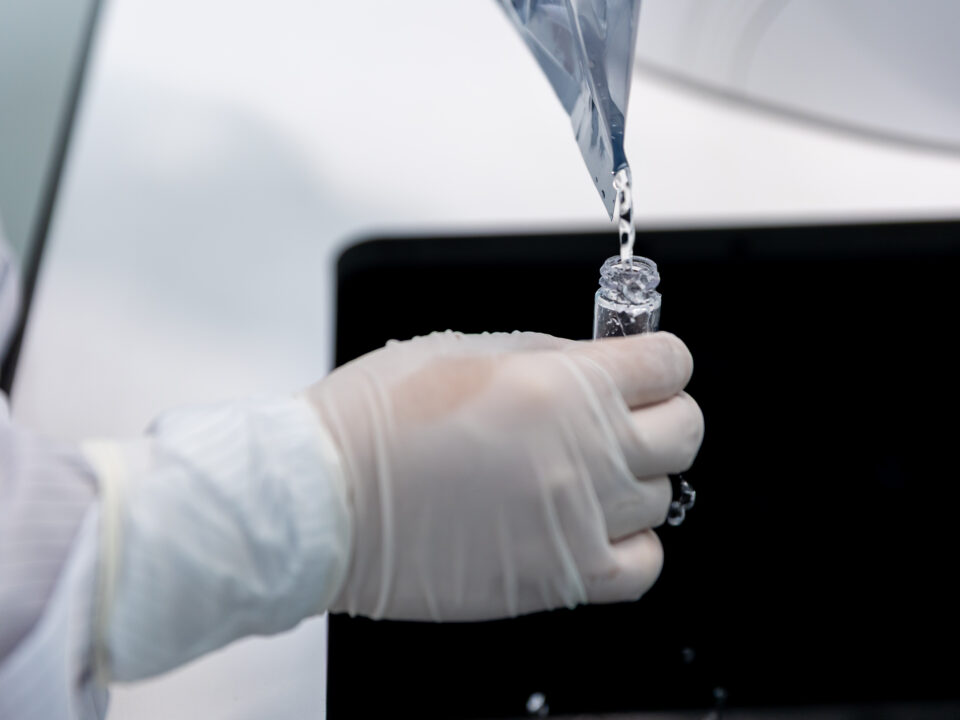
June 30, 2026
PCB Test Cleanliness Testing & Ion Chromatography, IPC Standards and Ionic Contamination
READ MOREIon Chromatography · ROSE Screening · IPC-TM-650 2.3.28 · J-STD-001 Cleanliness Evidence
ISO/IEC 17025 Accredited Testing Where Applicable | Anion and Cation Analysis | Electronics Testing Support
A printed circuit board can pass functional testing at the end of production and still fail later in the field. One reason is residual ionic contamination left after soldering, cleaning or handling. These residues may not be visible, but under humidity and voltage bias they can support corrosion, leakage current or electrochemical migration.
A PCB test for ionic contamination helps manufacturers check whether residues on a board or assembly are within the cleanliness requirement defined by a customer, OEM or internal process control plan. For automotive electronics, this matters because control units, sensors, battery management systems and power electronics often operate under heat, vibration and humidity for long service periods.
In practical terms, PCB cleanliness testing does two things. It measures whether ionic residues are present, and it helps identify which ionic species are involved. That distinction is important because a total contamination number alone may not explain the source or risk of the residue.
Why PCB Cleanliness Test Matters
Ionic residues can come from flux activators, soldering chemistry, cleaning process variation, handling, packaging or the production environment. If these residues remain on the board, they may become active when moisture and electrical bias are present.
Risk area
What may happen
Why it matters in automotive electronics
Corrosion
Conductors, solder joints or contacts may corrode
Can reduce long term reliability of assemblies exposed to humidity
Electrochemical migration
Dendritic growth may form between biased conductors
Can create intermittent shorts or leakage paths
Leakage current
Residues may allow unwanted current flow
Can affect sensitive circuits and signal stability
Process variation
Residue levels may change between production lots
Helps identify cleaning, flux or handling issues before field failures
PCB cleanliness testing is therefore not only a pass or fail check. It is also a process control and root cause tool, especially when a supplier needs to prove that a soldering and cleaning process is stable.
ROSE Testing and Ion Chromatography
ROSE testing, also known as Resistivity of Solvent Extract testing, has long been used as a fast screening method for ionic contamination. It extracts ionisable residues into a solvent and measures the conductivity or resistivity change of that solution.
ROSE is useful for routine monitoring, but it reports contamination as an overall value. It does not identify whether the residue is chloride, sulfate, nitrate, acetate, formate, sodium, potassium, ammonium or another ionic species.
Ion chromatography gives more detail. It separates and measures individual ionic species in the extract. This makes IC more useful when the goal is root cause investigation, customer submission or a detailed cleanliness profile.
Method
What it shows
Best use
Limitation
ROSE testing
Overall ionic contamination response
Fast production screening and process monitoring
Does not identify individual species
Ion chromatography
Specific anions and cations in the extract
Detailed cleanliness profile, root cause work and customer evidence
Requires laboratory analysis and clear extraction conditions
SIR testing
Electrical insulation behaviour under humidity and bias
Process qualification and reliability evidence
Longer test duration and different purpose from IC
ROSE and IC should not be treated as interchangeable. ROSE can indicate that a process may need attention. IC can show which residues are present and help guide corrective action.
IPC Methods and Cleanliness Evidence
IPC-TM-650 2.3.28 is the IPC test method commonly associated with ionic analysis of circuit boards by ion chromatography. It is used to measure extractable ionic contamination from printed boards or printed board assemblies and report specific ions in the extract.
J-STD-001 is different. It is an assembly requirement standard for soldered electrical and electronic assemblies. It does not mean every PCB assembly must automatically be tested by IC. Cleanliness compliance depends on the class, product requirement, user agreement and objective evidence supporting the manufacturing process.
Reference
Role in PCB cleanliness testing
Practical point
IPC-TM-650 2.3.28
Ion chromatography method for extractable ionic contamination
Used when species level ionic data is required
J-STD-001
Assembly requirements including cleaning and residue expectations
Supports process qualification and objective evidence rather than one universal IC limit
Customer or OEM specification
Defines acceptance criteria, sample type, method and reporting format
Should be treated as the controlling requirement for submission
SIR or other reliability evidence
Shows electrical reliability under defined conditions
Often used alongside chemical cleanliness evidence for process validation
A key point is that there is no single universal pass or fail limit that applies to every PCB, assembly class and automotive application. The older 1.56 µg NaCl equivalent per cm² value should not be used as a blanket acceptance criterion for all modern PCB cleanliness work. Limits should come from the customer specification, OEM requirement, qualified process data or agreed objective evidence.
What Ion Chromatography Can Identify
Ion chromatography can measure anions such as chloride, fluoride, sulfate, nitrate, phosphate and organic acid residues such as acetate or formate, depending on the method and scope. It can also be used for cations such as sodium, potassium, ammonium and related ionic species where the test programme includes cation analysis.
The value of this species level result is practical. Elevated chloride may point toward corrosive residues or environmental chloride exposure. Organic acid residues may relate to flux chemistry or incomplete process control. Sodium or potassium may suggest handling, cleaning chemistry or environmental sources.
The report should not be read in isolation. A high ion result may indicate a contamination concern, but root cause depends on the board design, process history, flux system, cleaning process, storage condition and failure evidence.
Reading a PCB Cleanliness Test Report
A useful PCB cleanliness report should state the test method, extraction condition, sample area, board or assembly description, ions measured, result units and any customer limit used for comparison.
For IC, results are commonly reported by species, often as mass per unit area. The most useful part of the report is not only whether a limit is exceeded, but which ions dominate the result. That information can help the manufacturer decide whether to review flux residue, wash process, rinsing quality, handling, packaging or environmental exposure.
If the test is being used for formal submission, the report format should follow the customer or OEM requirement. If the test is being used for troubleshooting, the report should be interpreted together with production history and any visual or failure analysis evidence.
When to Pair PCB Cleanliness Testing with Failure Analysis
PCB cleanliness testing is useful for production monitoring and qualification, but field failures often need more than chemistry data. If a returned assembly shows corrosion, dendritic growth, leakage current or intermittent failure, IC can confirm whether ionic residues are present and identify the species involved.
Failure analysis can then examine the affected area directly. SEM-EDX may help characterise corrosion products or elemental composition at a failure site. Cross-sectioning or microscopy may show whether corrosion is linked to a solder joint, conductor spacing, coating defect or trapped residue under a component.
Used together, IC and failure analysis provide stronger evidence than either method alone.
Before Submitting Samples
Before sending a PCB or assembly for cleanliness testing, confirm the purpose of the test. A production screening request, an OEM qualification submission and a field failure investigation may need different sample handling and reporting.
Prepare the following information where available.
Board or assembly type
Customer or OEM specification
Required IPC method or internal method
Required ions, such as anions only or anions and cations
Acceptance criteria or objective evidence requirement
Board area or extraction area
Flux type and cleaning process
Production lot or failure background
Packaging and handling condition
Required report format
Samples should be handled in a way that avoids adding new contamination before testing. Packaging, gloves, storage and transport conditions can affect the result, especially when the residues of interest are present at low levels.
Frequently Asked Questions
Is ion chromatography always better than ROSE testing
Not always. IC provides more detailed information because it identifies individual ionic species. ROSE is still useful as a faster screening or process monitoring method. IC is more suitable when root cause evidence, species level data or customer submission detail is required.
What ionic species are most concerning on PCB assemblies
Chloride is often treated as a key concern because it can support corrosion at low levels under the right conditions. Sulfate, nitrate, organic acids, sodium, potassium, ammonium and amine related residues may also matter depending on the design, environment and customer specification.
Does J-STD-001 require ion chromatography for every PCB
No. J-STD-001 cleanliness requirements are tied to qualified manufacturing process and objective evidence. IC may be used as part of that evidence, but it is not automatically required for every PCB in every situation.
Is 1.56 µg NaCl equivalent per cm² still a universal pass fail limit
No. It should not be used as a universal cleanliness limit for all PCB assemblies. Modern cleanliness assessment should follow the customer requirement, product class, qualified process data and agreed objective evidence.
Does PCB cleanliness testing also cover RoHS or REACH
No. Ionic contamination testing and RoHS or REACH compliance are different test programmes. PCB cleanliness testing looks at ionic residues that may affect electrical reliability. RoHS and REACH relate to restricted substances and chemical compliance.
Request a PCB Cleanliness Testing Quote
ALS Testing can support PCB cleanliness testing for production checks, process qualification, customer submission and field failure investigation.
Testing under ISO/IEC 17025 accreditation is available where covered by the applicable accredited scope. If accredited results are required, confirm the exact method, ions, sample type and reporting requirement before testing begins.
What to prepare before requesting a quote
PCB or assembly description
Required method or customer specification
Required ion list
Sample quantity and board area
Acceptance limit or objective evidence requirement
Flux and cleaning process information
Failure background if applicable
Required report format or OEM template
Providing these details early helps the laboratory confirm the right extraction approach, analysis scope, report format and turnaround time.
Next Steps
See our full Chemical and Electronics Testing services at /chemical-electronics-testing/
Read our guide on PCB failure investigation and root cause analysis at https://www.alstesting.co.th/failure-analysis-services-sem-ftir-edx-als-testing/
Explore Technical Cleanliness Testing services for components beyond electronics at https://www.alstesting.co.th/technical-cleanliness-testing/
Contact our team for a PCB cleanliness testing quotation or technical discussion at https://www.alstesting.co.th/contact-us/
ISO/IEC 17025 Accredited Testing Where Applicable | Ion Chromatography for PCB Cleanliness | Electronics Testing Support
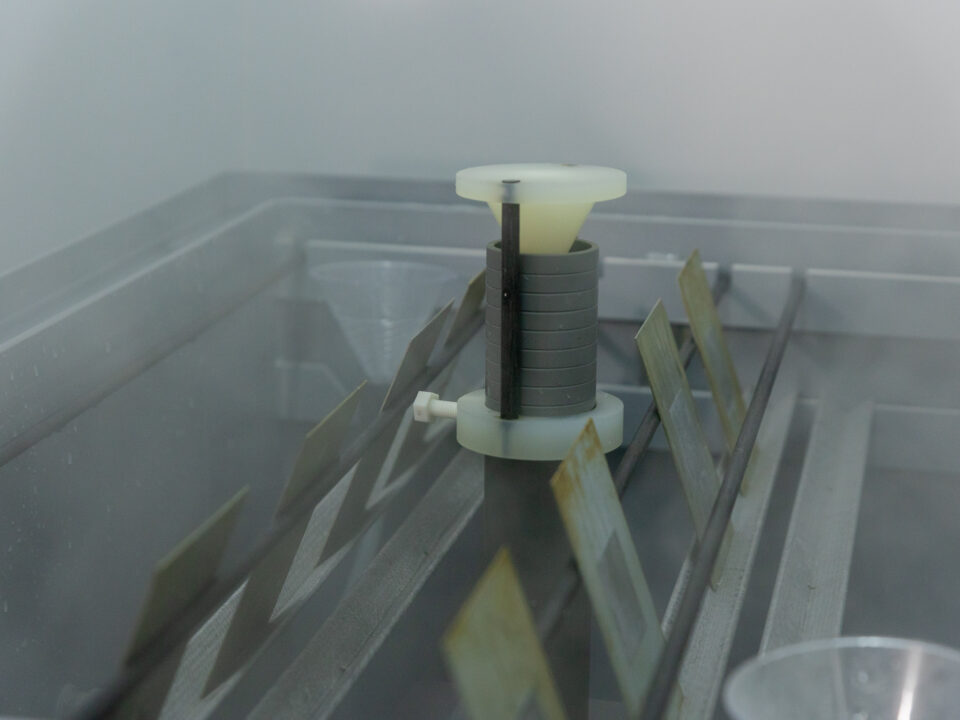
June 30, 2026
Salt Spray Test ISO 9227 vs ASTM B117 Corrosion Testing for Automotive Parts
READ MORENeutral Salt Spray · Acetic Acid Salt Spray · Copper Accelerated Test · Cyclic Corrosion Testing
ISO/IEC 17025 Accredited Testing Where Applicable | Corrosion Testing Capability | Automotive Standard Testing
A vehicle’s underbody, fasteners, brackets, exterior fittings and coated metal parts are exposed to moisture, road salt, temperature changes and surface damage throughout service life. Manufacturers need a controlled way to evaluate whether a coating, plating or corrosion protection system meets the requirement stated in an OEM drawing or material specification.
Salt spray testing provides controlled corrosion exposure inside a test chamber. It should not be treated as a direct conversion from test hours to years of road use. The result is used for comparison, qualification and quality control against a defined standard, exposure duration and acceptance criterion.
For automotive parts, the most commonly referenced standards are ISO 9227 and ASTM B117. ASTM B117 is broadly comparable to the neutral salt spray atmosphere in ISO 9227, while ISO 9227 also includes AASS and CASS atmospheres for specific materials and coating systems.
What Salt Spray Testing Measures
Salt spray testing, also called salt fog testing, exposes a specimen to an atomised salt solution in a controlled chamber. The test is used to assess how a material, coating, plating or corrosion protection system responds under a defined corrosive atmosphere.
For automotive components, the result is usually assessed through visual inspection after a defined exposure period. Depending on the specification, the report may evaluate white corrosion, red rust, blistering, corrosion creep from scribed areas, coating breakdown or another acceptance criterion.
What the test checks
Why it matters
Corrosion formation
Shows whether corrosion appears within the specified exposure period
Coating or plating performance
Helps assess whether surface protection meets the requirement
Corrosion creep from scribe
Used when the specification requires evaluation from a damaged coating line
White corrosion or red rust
Common acceptance criteria for plated or coated metallic parts
Visual rating or pass fail result
Supports supplier approval, production validation or OEM submission
Salt spray testing is useful because it is standardised and repeatable. Its main limitation is that it does not reproduce every real driving condition such as drying cycles, UV exposure, road debris, coating damage or climate variation.
ISO 9227 Test Atmospheres
ISO 9227 defines three main salt spray atmospheres. The correct atmosphere should come from the customer specification, not from general preference.
ISO 9227 atmosphere
Common name
Typical use
NSS
Neutral Salt Spray
General corrosion testing for metallic materials with or without corrosion protection
AASS
Acetic Acid Salt Spray
More aggressive testing for selected coatings, aluminium related applications and decorative plating systems where specified
CASS
Copper Accelerated Acetic Acid Salt Spray
Highly aggressive testing often used for decorative copper nickel chromium or nickel chromium coating systems where specified
NSS is the most common route for automotive coated or plated parts. AASS and CASS should only be selected when the product standard, OEM requirement or customer specification calls for those atmospheres.
ASTM B117 and ISO 9227 NSS
ASTM B117 is the American standard practice for operating salt spray or salt fog apparatus. In automotive supply chains, it is often referenced by North American drawings, material standards and customer requirements.
The key point is that ASTM B117 should be compared mainly with ISO 9227 NSS. It should not be treated as identical to ISO 9227 as a whole because ISO 9227 also includes AASS and CASS.
Dimension
ISO 9227
ASTM B117
Main scope
Salt spray testing with NSS, AASS and CASS
Salt spray or salt fog apparatus practice
Closest overlap
ISO 9227 NSS
ASTM B117 neutral salt fog
Additional atmospheres
AASS and CASS included
Not the main focus
Typical use
Global, European and Asian OEM specifications
North American and ASTM based specifications
Test duration
Set by product, OEM or customer specification
Set by product, OEM or customer specification
Acceptance criteria
Defined by the citing specification
Defined by the citing specification
A chamber capable of running one method may often support the other when properly validated, but the report must follow the exact standard named in the requirement.
Continuous Salt Spray and Cyclic Corrosion Testing
Continuous salt spray testing creates a constant salt fog environment. It is repeatable, but it does not represent every condition that a vehicle experiences in service. Real exposure often includes wet periods, dry periods, humidity changes, temperature variation and surface damage.
Cyclic corrosion testing is used when the specification requires alternating phases instead of constant salt fog.
Test type
Exposure pattern
When it is used
Continuous salt spray
Constant salt fog exposure
When ISO 9227 NSS, AASS, CASS or ASTM B117 is specified
Cyclic corrosion testing
Alternating salt, humidity, drying and sometimes other stages
When an OEM protocol requires changing wet and dry exposure
OEM corrosion protocol
Defined by manufacturer standard
When the drawing references a specific automotive corrosion method
If the requirement names a cyclic corrosion method, it should not be replaced with continuous salt spray unless the customer approves the change.
How Long a Salt Spray Test Takes
Test duration is set by the product specification, customer requirement or OEM drawing. The laboratory should not assume one generic duration for every component.
Example duration
Common use case
Important note
24 to 96 hours
Basic screening or lower severity requirements
Use only when the specification allows it
240 hours
Moderate coating or plating requirements
Acceptance depends on the defined corrosion limit
500 hours
Higher durability or exterior related requirements
Does not equal a fixed number of service years
1,000 hours or more
Demanding corrosion resistance requirements
Requires advance scheduling and chamber planning
A component can pass a shorter exposure and still fail a longer one. This is why the required duration and acceptance criterion must be confirmed before testing starts.
Choosing the Right Salt Spray Test
The correct test method should always come from the drawing, material specification or customer requirement. A request that only says “salt spray test” is usually not enough.
Component or finish
Likely test route
What to confirm
Painted or coated steel parts
ISO 9227 NSS or ASTM B117
Exposure duration, scribe requirement and corrosion limit
Plated fasteners
ISO 9227 NSS or ASTM B117
White corrosion, red rust and coating specific criteria
Aluminium components
ISO 9227 NSS or AASS where specified
Material grade, coating type and atmosphere
Decorative plating systems
AASS or CASS where specified
Plating system and required severity
Exterior parts with wet dry exposure
Cyclic corrosion testing where specified
Exact OEM cycle and inspection points
Before testing, confirm the standard, atmosphere, duration, sample condition, inspection interval and pass fail criteria.
What the Result Tells You
A salt spray test result shows the condition of the specimen after exposure under a defined method. It may report corrosion products, coating blistering, corrosion creep, red rust, white corrosion or another visible change depending on the material and coating.
The result should be interpreted only against the acceptance criteria in the specification. It does not automatically prove long term field performance unless the customer has defined how the result should be used.
A complete report should state the standard used, test atmosphere, exposure duration, chamber conditions, sample description, inspection points and observed result.
Before Submitting Samples
Prepare these details before requesting a salt spray test.
Required standard such as ISO 9227, ASTM B117 or an OEM method
Required atmosphere such as NSS, AASS, CASS or cyclic corrosion
Exposure duration in hours or cycles
Acceptance criteria
Coating, plating or material specification
Drawing number and revision
Scribe, masking or orientation requirements
Sample quantity and dimensions
Interim inspection and photo requirements
Required report format or OEM template
If these details are missing, the laboratory may need to clarify the requirement before testing can begin.
Frequently Asked Questions
Is ISO 9227 the same as ASTM B117
Not exactly. ASTM B117 is broadly comparable to ISO 9227 NSS. ISO 9227 also includes AASS and CASS, so the two standards should not be treated as identical in every case.
Can salt spray test hours be converted into years of service life
No. Salt spray hours should not be converted directly into years of service life. Real vehicle exposure depends on climate, road salt use, humidity, temperature, coating damage, design and maintenance.
How do I know whether to use NSS, AASS or CASS
The required atmosphere should come from the customer or OEM specification. NSS is the most common neutral salt spray atmosphere. AASS and CASS are more aggressive and should be used only where specified.
What does a salt spray test result show
It shows how the tested specimen performed under a defined corrosive atmosphere for a defined exposure period. The result is compared against the acceptance criteria in the specification.
Can a component pass 96 hours but fail 500 hours
Yes. A coating or plating system can look acceptable after a shorter exposure and still show unacceptable corrosion after a longer exposure.
Request a Salt Spray Testing Quote
ALS Testing can support salt spray and corrosion testing for coated, plated and metallic automotive components where testing is required for qualification, supplier approval, process validation or customer submission.
Testing under ISO/IEC 17025 accreditation is available where covered by the applicable accredited scope. If accredited results are required for submission, confirm the exact method and scope before testing begins.
What to prepare before requesting a quote
Applicable standard or customer specification
Required test atmosphere
Required exposure duration
Component drawing and revision
Coating, plating or material specification
Sample quantity and dimensions
Scribe, masking or orientation requirements
Acceptance criteria
Interim inspection and photo requirements
Required report format or OEM template
Providing these details at the enquiry stage helps the laboratory confirm the correct method, chamber configuration, schedule and report format before the test begins.
Next Steps
See our full Materials and Environmental Testing services for automotive at https://www.alstesting.co.th/automotive-testing-services-als-testing-laboratory/
Read our detailed explainer on accelerated environmental ageing test methods
Back to Automotive Testing Hub for the full service overview at https://www.alstesting.co.th/automotive-testing-services-als-testing-laboratory/
Contact our team for a salt spray testing quotation or technical discussion at /contact/
ISO/IEC 17025 Accredited Testing Where Applicable | ISO 9227 and ASTM B117 Capability | Cyclic Corrosion Testing Available
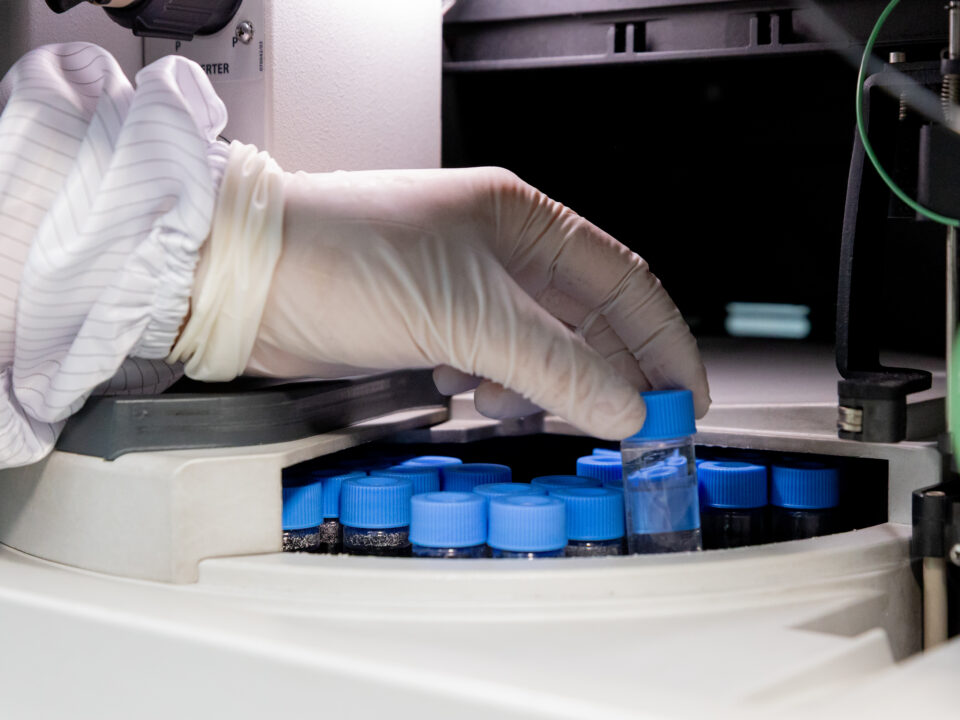
June 2, 2026
Anion and Cation Testing & How Ion Chromatography Protects Electronics Reliability
READ MOREA PCB assembly passes visual inspection. Automated optical inspection finds nothing. Functional test at room temperature is clean. The board ships, gets installed in a vehicle, and three months later starts producing intermittent faults that are difficult to reproduce and expensive to trace.
The cause, when it is eventually found, is ionic contamination. Residual flux activator left on the board surface after soldering, invisible to optical methods and undetectable by functional test under dry conditions, has begun to drive electrochemical corrosion and leakage current in the presence of operating temperature cycling and humidity. The contamination was there from the start. The damage accumulated over time.
Anion and cation testing by ion chromatography is the analytical method that would have found it. This article explains how the test works, what it detects, why it matters specifically for automotive electronics, and how to interpret the results it produces.
What Is Ionic Contamination and Why Does It Matter?
Ionic contamination refers to charged chemical species, either positive ions (cations) or negative ions (anions), present on the surface of an electronic assembly or component. In the context of PCB manufacturing and assembly, ionic contamination originates primarily from flux residues left after soldering. All soldering fluxes contain activators, which are acidic or ionic compounds that break down the metal oxides on solder pads and component leads to allow good solder wetting. After soldering, these activators and their reaction products remain on the board surface as ionic residues.
Under dry conditions, ionic residues are typically benign. They sit on the surface, insoluble in dry air, causing no immediate problem. The failure mode is activated by moisture. When humidity rises or when condensation occurs on the board surface, ionic residues dissolve into a thin electrolytic film. That film becomes a conductive path between adjacent conductors. Current flows where it should not. In the presence of an applied voltage, the ionic species migrate: cations move toward the cathode and anions toward the anode, depositing metal at the cathode in a process called dendritic growth or electromigration. Dendrites are metallic crystalline growths that bridge the gap between conductors, causing intermittent or permanent short circuits.
The ionic species of greatest concern are those that are most mobile, most soluble, and most corrosive: chloride, fluoride, bromide, sulfate, acetate, and formate on the anion side; sodium, potassium, and ammonium on the cation side. Ammonium and organic amines from no-clean flux formulations are particularly significant because they indicate the presence of insufficiently activated or partially decomposed flux residues that retain moisture-absorbing and corrosion-promoting properties.
Ionic contamination is a latent failure mechanism. It is present from the moment of manufacture but causes damage only when activated by humidity and temperature. Testing before shipment is the only reliable way to detect it before it reaches field conditions.
How Ion Chromatography Works
Ion chromatography (IC) is an analytical technique that separates and quantifies ionic species in a liquid sample. The technique was developed in the 1970s and has become the standard method for trace ionic analysis across water quality, food safety, pharmaceutical, and electronics testing applications.
The operating principle is ion exchange chromatography. A liquid sample is injected onto a column packed with a charged stationary phase. Ionic species in the sample are attracted to and retained by the stationary phase, then released sequentially as the mobile phase gradient changes. Because different ions have different affinities for the stationary phase, they travel through the column at different speeds and emerge at the detector at different times, producing a chromatogram with a distinct peak for each ionic species.
Detection in modern IC systems uses a suppressed conductivity detector. As each ionic species elutes from the column, it passes through a suppressor device that converts the mobile phase background ions to low-conductivity water, leaving the analyte ions as the dominant conductivity signal. This suppression step dramatically improves sensitivity and selectivity, allowing detection of ionic species at concentrations of parts per billion (micrograms per litre) in solution, which translates to nanograms per square centimetre on a PCB surface.
Quantification is achieved by comparison with external calibration standards: solutions of known ionic concentration that are run alongside the samples and used to construct a calibration curve for each ionic species. The result for each ion is expressed as the measured concentration in the extract solution, which is then converted to surface density (typically micrograms per square centimetre) using the board surface area extracted.
Anion Analysis vs Cation Analysis
Anion and cation analysis require separate analytical conditions because anions and cations have opposite charges and require stationary phases and mobile phases of opposite polarity for effective separation. In practice, most IC instruments configured for anion analysis use an anion exchange column with a carbonate or hydroxide mobile phase, while cation analysis uses a cation exchange column with a dilute acid mobile phase.
The two analyses can be conducted sequentially on the same instrument platform or simultaneously on a dual-channel instrument. For a comprehensive ionic contamination assessment, both anion and cation analysis should be conducted from the same extraction solution, providing a complete profile of all ionic species present.
The Standard Method IPC-TM-650 2.3.28
The primary standard governing ionic contamination testing of PCBs and electronic assemblies by ion chromatography is IPC-TM-650 Method 2.3.28, published by IPC (the Association Connecting Electronics Industries). This method defines the extraction procedure, the IC analytical conditions, and the reporting requirements for ionic contamination testing.
The extraction procedure in IPC-TM-650 2.3.28 uses a mixture of 75 percent isopropyl alcohol and 25 percent deionised water (the IPA-water extract). The board or assembly is placed in a clean vessel and covered with a defined volume of the extraction solvent. The extraction is conducted for one hour at 80 degrees Celsius under agitation. The extract is then filtered and injected into the IC system for anion and cation analysis.
The extraction is designed to dissolve ionic species from the board surface into the solvent, including flux residues that are not fully soluble in water alone. The IPA component improves dissolution of organic flux residues while the water component provides the ionic medium for dissolution of inorganic ionic contaminants. The result is an extract that captures the full range of ionic species relevant to electronics reliability assessment.
Ionic Species
Ion Type
Primary Source on PCB
Failure Risk
Chloride (Cl-)
Anion
Flux activator residue, environmental deposition, halogenated materials
High – aggressive corrosion initiator, highly mobile
Fluoride (F-)
Anion
Some flux formulations, etching process residues
Moderate to high – corrosive to aluminium and some metals
Bromide (Br-)
Anion
Flame retardant materials, some flux systems
Moderate – corrosive at higher concentrations
Sulfate (SO4 2-)
Anion
Environmental deposition, some flux chemistry
Moderate – sulfate-induced corrosion
Nitrate (NO3-)
Anion
Environmental, some cleaning chemistry
Low to moderate – less corrosive than chloride
Acetate (CH3COO-)
Anion
No-clean flux activator decomposition products
Moderate – hygroscopic, promotes leakage current
Formate (HCOO-)
Anion
No-clean flux activator decomposition products
Moderate – indicates flux residue activity
Sodium (Na+)
Cation
Environmental, handling contamination, process water
Moderate – hygroscopic, promotes corrosion
Potassium (K+)
Cation
Environmental contamination
Moderate
Ammonium (NH4+)
Cation
No-clean flux amine activators, flux decomposition
High – hygroscopic, indicates active flux residues
Methylamine / TEA
Cation (amine)
No-clean flux amine-based activators
High – indicates incompletely deactivated flux
Chloride and ammonium are the two most diagnostically significant species in PCB ionic contamination testing. Elevated chloride indicates aggressive corrosion risk. Elevated ammonium or organic amines indicates the presence of active no-clean flux residues that retain corrosion-promoting properties.
Interpreting Anion and Cation Test Results
IC results for PCB ionic contamination are expressed as micrograms of each ionic species per square centimetre of board surface area. These surface density values are compared against the acceptance limits defined in the applicable cleanliness specification.
Acceptance Limits & Where Do the Numbers Come From?
Acceptance limits for ionic contamination in PCB assemblies originate from a combination of IPC standards, OEM-specific cleanliness specifications, and the results of reliability studies correlating ionic contamination levels with field failure rates. The most widely referenced historical limit is 1.56 micrograms sodium chloride equivalent per square centimetre, which was the original threshold defined for cleaned assemblies in earlier revisions of IPC standards.
Modern automotive electronics specifications typically apply tighter limits, particularly for chloride, which is often limited to 0.2 to 0.5 micrograms per square centimetre for safety-critical assemblies. The specific limit applicable to your assembly is defined by your customer’s specification, the relevant IPC document (IPC-7711, IPC-7721, or the cleanliness section of J-STD-001), or the OEM supplier quality requirement.
What High Chloride Tells You
Elevated chloride concentration is the most common and most diagnostically significant finding in PCB ionic contamination testing. The sources of chloride contamination on a PCB include residual flux activator (particularly from rosin and organic acid flux systems), environmental deposition of chloride aerosols in manufacturing or storage environments, and halogenated materials in the board laminate or component packaging that have been mobilised during processing.
When chloride is elevated above specification, the corrective action depends on identifying the source. If chloride tracks with the presence of specific component types or board regions near specific assembly operations, the source is likely process-related. If chloride is uniformly distributed across the board, environmental contamination during storage or handling is more likely. IC results alone identify that chloride is elevated; source investigation may require additional analytical steps including surface mapping by point extraction from specific board areas.
What Ammonium and Organic Amines Tell You
Ammonium and organic amine cations are characteristic markers of no-clean flux residue activity. Modern no-clean flux formulations use amine-based activators that are designed to fully decompose and become electrochemically inert during the soldering thermal profile. When ammonium or methylamine is detected at elevated levels in IC analysis, it indicates that the flux activator has not been fully deactivated, either because the soldering thermal profile was inadequate, the flux loading was excessive, or the specific flux chemistry is not compatible with the soldering process conditions.
This finding is significant because it means the residue retains hygroscopic and corrosion-promoting properties even though the board may have been manufactured under a no-clean process that is not expected to require cleaning. The corrective action is typically thermal profile optimisation, flux type review, or in some cases, a move to a cleaning process to remove the residue entirely.
Ion Chromatography vs ROSE Testing & Understanding the Difference
Ion chromatography is not the only method for assessing ionic contamination on PCBs. An older technique, ROSE testing (Resistivity of Solvent Extract), is still used in some applications and is worth understanding in the context of IC analysis.
ROSE testing measures the total ionic content of a board extract by its electrical conductivity, expressed as equivalent sodium chloride contamination in micrograms per square centimetre. It is a rapid, low-cost method that provides a single aggregate number representing all ionic contamination on the board. It does not identify which ionic species are present or in what proportions.
Ion chromatography supersedes ROSE testing in technical information value. IC identifies each ionic species individually, enabling diagnosis of the contamination source and targeted corrective action. ROSE testing tells you that contamination is present above a threshold. IC tells you what it is and, by inference, where it came from. For automotive electronics qualification, where the identity of contaminating species is increasingly required by OEM specifications and where root cause investigation of any failures is mandatory, IC is the appropriate method.
Dimension
ROSE Testing
Ion Chromatography (IC)
Output
Single conductivity number (NaCl equivalent)
Individual concentration of each anion and cation
Species identification
None
Full identification of all ionic species present
Sensitivity
Moderate
High – parts per billion detection in extract
Diagnostic value
Low – pass/fail only
High – identifies species and enables source tracing
OEM acceptance
Declining – many specs now require IC
Accepted by all major automotive OEM specifications
Standard reference
IPC-TM-650 2.3.25
IPC-TM-650 2.3.28
Cost
Lower
Higher – more information per test
Typical application
Production line screening where IC is used for qualification
OEM qualification, failure investigation, process validation
Ionic Contamination in Automotive Electronics & Why the Stakes Are Higher
Ionic contamination matters in all electronics applications, but the consequences in automotive electronics are more severe than in most other sectors. Automotive electronics operate in conditions that maximise the risk of ionic contamination driven failure: wide temperature cycling that promotes condensation, vibration that can crack conformal coatings and expose underlying surfaces, extended service lives measured in decades rather than years, and safety-critical functions where intermittent faults have direct consequences for driver safety.
An engine control unit that develops an intermittent fault from ionic contamination-driven leakage current is not a product return. It is potentially a safety incident, a warranty campaign, and a significant engineering investigation. The cost difference between finding ionic contamination before shipment by IC testing, and finding it after installation in vehicles through field failures, is several orders of magnitude.
For automotive electronics manufacturers in Malaysia and Southeast Asia, the ionic contamination testing requirement typically enters the supply chain through OEM qualification requirements, customer cleanliness specifications, or process qualification programmes. Where no specific limit has been defined by the customer, the IPC standards provide a framework for establishing appropriate internal cleanliness limits based on the application criticality.
For the full range of chemical and electronics testing services including ionic contamination analysis: https://www.alstesting.co.th/anion-test-specialist-malaysia/
Ionic Contamination and Component Cleanliness & The Connection
Ionic contamination testing on PCBs and technical cleanliness testing on precision mechanical components address the same fundamental problem from different perspectives: contamination that is invisible to standard inspection methods but causes field failures in service. The analytical techniques differ but the quality management principle is identical.
For manufacturers who produce both precision mechanical components and automotive electronics, or who supply into supply chains that require both types of testing, understanding the connection between the two disciplines helps in establishing a coherent quality testing programme. In both cases, the contamination is measured at a level of precision that only accredited laboratory analysis can provide, the results are compared against defined limits, and the findings drive corrective action in the manufacturing process.
For technical cleanliness testing of precision mechanical components to ISO 16232 and VDA 19: https://www.alstesting.co.th/technical-cleanliness-testing/
Ion Chromatography at ALS Testing
ALS Testing provides anion and cation analysis by ion chromatography to IPC-TM-650 2.3.28 for PCB assemblies, individual components, and process solution analysis. Our IC capability covers the full range of ionic species relevant to electronics reliability assessment: the primary anions including fluoride, chloride, bromide, nitrate, phosphate, sulfate, acetate, and formate; and the primary cations including sodium, potassium, ammonium, and the amine species associated with no-clean flux residues.
All ionic contamination testing at ALS is conducted within our ISO/IEC 17025:2017 accredited quality management system. Results are reported with individual species concentrations in micrograms per square centimetre, compared against the limits specified in your cleanliness specification or OEM requirement, with clear pass/fail designation for each species and for the total ionic contamination level.
Our reports include the full IC chromatogram data alongside the tabulated results, enabling your engineering team to review the species profile and make informed decisions about corrective action priorities. For investigations where elevated ionic contamination has been detected and source tracing is required, we can design follow-up sampling strategies including area-specific extractions to localise contamination to specific board regions or process steps.
Summary
Anion and cation testing by ion chromatography is the definitive analytical method for ionic contamination assessment of PCBs and automotive electronics assemblies. It identifies individual ionic species at concentrations that are analytically significant but invisible to all other inspection methods, enabling both pass/fail qualification and diagnostically useful information about contamination sources and corrective actions.
The primary standard for the test is IPC-TM-650 2.3.28. The most diagnostically significant species are chloride on the anion side, which indicates aggressive corrosion risk, and ammonium and organic amines on the cation side, which indicate active no-clean flux residues that retain corrosion-promoting properties. IC supersedes ROSE testing in diagnostic value and is the method required by automotive OEM cleanliness specifications.
For automotive electronics manufacturers, the cost of finding ionic contamination before shipment through IC testing is a small fraction of the cost of the field failures it prevents. For production-line application, IC provides the species resolution that allows root cause investigation and targeted process improvement rather than pass/fail screening alone.
Next Steps
See our full Chemical and Electronics Testing services including ionic contamination analysis: https://www.alstesting.co.th/anion-test-specialist-malaysia/
Learn about technical cleanliness testing for precision mechanical components: https://www.alstesting.co.th/technical-cleanliness-testing/
Contact our team for an IC testing quotation or technical consultation: https://www.alstesting.co.th/contact-us/
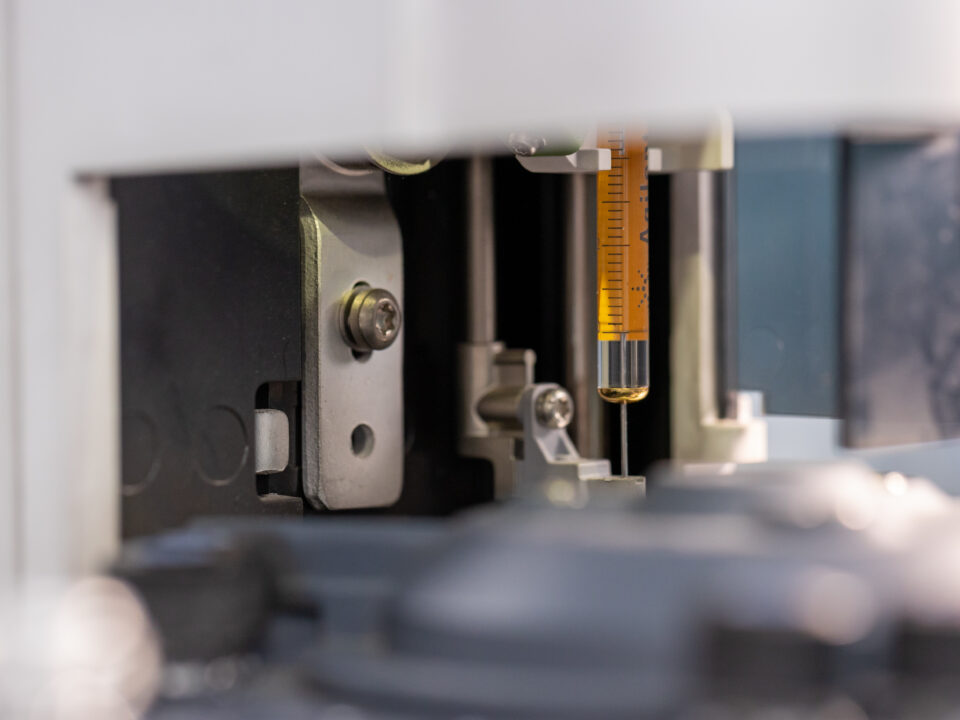
June 2, 2026
VOC Testing for Automotive Interiors & VDA 278, ISO 12219 and What You Need to Know
READ MOREWalk into a new car and you notice it immediately. That distinctive new-vehicle smell is not a design feature. It is the combined off-gassing of dozens of materials installed in the cabin: adhesives curing under the instrument panel, plasticisers migrating from PVC surfaces, flame retardants volatilising from foam seating, solvent residues evaporating from trim adhesives. Most of these compounds dissipate over weeks and months. Some of them, at high enough concentrations, raise health concerns.
This is the problem that VOC testing for automotive interiors is designed to address. For materials and components suppliers in the automotive supply chain, VOC testing is not optional. It is a qualification gate that your interior material must pass before an OEM will approve it for production, and increasingly it is a regulatory requirement in markets where cabin air quality limits are defined by law.
This article explains what automotive VOC testing involves, which standards govern it, how the laboratory methods work, and what you need to prepare before submitting materials for testing.
What Are VOCs and Why Do They Matter in Automotive Interiors?
VOC stands for volatile organic compound. The term covers a broad class of carbon-based chemicals that evaporate readily at room temperature or under mild heating. In the context of automotive interior materials, VOCs originate from the raw materials used in manufacturing, from residual processing chemicals, and from the chemical reactions that continue as materials age, heat, and interact with each other inside the vehicle cabin.
The interior of a modern vehicle is a complex assembly of polymer components: instrument panels, door trim, headliners, seat foams, floor carpets, steering wheels, and the adhesives and coatings that hold them together. Each of these materials has a VOC emission profile. In a sealed cabin at ambient temperature, the combined emissions from all interior materials accumulate to define the overall cabin air quality.
At low concentrations, most VOCs are not acutely harmful. At higher concentrations, compounds including benzene, toluene, xylene, formaldehyde, and acetaldehyde are associated with eye and respiratory irritation, headache, and in the case of benzene and formaldehyde, longer-term health concern. The regulatory and OEM response has been to define maximum permissible emission limits for individual compounds and compound groups, enforced through material qualification testing at the supplier level.
The materials in a vehicle cabin are tested individually by the supplier before assembly. By the time a vehicle reaches the consumer, every significant interior material has been qualified against VOC emission limits. VOC testing is where that qualification happens.
For automotive materials suppliers in Malaysia and Southeast Asia, the primary VOC testing requirements come from two directions: German OEM specifications referencing VDA 278 and associated standards, and broader international specifications referencing ISO 12219. Suppliers who serve both markets, or who supply into global Tier-1 supply chains, often need to satisfy both frameworks.
The Key Standards for Automotive VOC Testing
VDA 278 Thermal Desorption Analysis
VDA 278 is the most widely referenced standard for VOC and semi-volatile organic compound (SVOC) analysis of automotive interior non-metallic materials. It is published by the VDA, the German Automotive Industry Association, and is required by German OEMs including BMW, Volkswagen Group, Mercedes-Benz, and Audi, as well as by the broader Tier-1 supply chains that serve these customers.
The method uses thermal desorption combined with gas chromatography and mass spectrometry (TD-GC-MS). A small sample of the material, typically one to three grams, is placed in a glass sample tube and heated in two stages. The first heating stage at 90 degrees Celsius drives off the volatile organic fraction, corresponding to compounds with boiling points up to approximately 250 degrees Celsius. The second heating stage at 120 degrees Celsius drives off the semi-volatile or fogging fraction, corresponding to higher-boiling condensable compounds.
The compounds emitted at each stage are collected on a Tenax sorbent tube, then thermally desorbed and injected into the GC-MS system for identification and quantification. Results are reported in micrograms per gram of material for the VOC fraction and separately for the SVOC or FOG fraction. Pass/fail assessment is made against the emission limits specified in the relevant OEM or customer specification.
VDA 278 produces a compound-by-compound profile of emissions. For each individual compound identified above the reporting threshold, the result includes the compound name, its CAS number, and its concentration. This level of detail is important because OEM specifications typically define limits for specific compound categories (for example, total aromatic hydrocarbons, or individual aldehyde limits) rather than a single total VOC number.
ISO 12219 The International Standard Series
ISO 12219 is a multi-part international standard covering VOC measurement in vehicle interiors. Different parts address different aspects and scales of measurement.
ISO 12219-1 covers VOC measurement in complete vehicle cabins using the bag method: the vehicle is sealed under defined conditioning conditions and a sample of cabin air is collected in a Tedlar bag for subsequent analysis. This is used for type approval and vehicle-level compliance, rather than material-level supplier qualification.
ISO 12219-2 through to ISO 12219-7 cover VOC emission measurement from individual components and materials using chamber methods of varying scales, from large climate chambers down to micro-scale chamber devices. These methods are used at the material and component qualification stage and are referenced by OEM specifications that align with ISO rather than VDA frameworks.
For most materials suppliers, the relevant parts of ISO 12219 are those covering component-level testing, which is where individual materials are assessed before vehicle assembly. If your OEM specification references ISO 12219, confirm which specific part or parts are required and at what test conditions.
VDA 275 Formaldehyde by Photometric Analysis
Formaldehyde is a specific VOC that receives dedicated attention in automotive interior specifications. It is emitted from wood-based composites, certain adhesives, and resins used in interior components, and is subject to individual emission limits that are typically tighter than the general aldehyde group limits applied in thermal desorption analysis.
VDA 275 defines a bottle method for formaldehyde determination: the sample is placed in a sealed glass bottle with distilled water and conditioned at 60 degrees Celsius for three hours. The formaldehyde emitted into the headspace dissolves in the water and is quantified by UV-Vis spectrophotometry using a colorimetric reagent. Results are expressed in micrograms per gram of material. This dedicated method is more sensitive and specific for formaldehyde than the thermal desorption approach used in VDA 278, and is required separately by most German OEM specifications.
ISO 6452 Fogging Testing
Fogging is a related but distinct phenomenon. It refers to the deposition of condensable vapours from interior materials onto the vehicle windscreen as a visible film. The fog film impairs driver visibility and is particularly problematic in cold weather conditions when the windscreen temperature is low enough to promote condensation. ISO 6452 defines both gravimetric and photometric methods for fogging assessment.
In the gravimetric method, a sample is heated in a glass beaker and the vapours condense on a cooled aluminium foil disc placed above the sample. The mass of the deposit is the fogging result. In the photometric method, the deposit forms on a glass disc and is measured by change in reflectance before and after the test. Different OEM specifications reference different methods and apply different acceptance criteria.
Where HPLC Fits in VOC Testing
High performance liquid chromatography (HPLC) is not the primary technique in automotive VOC testing, where thermal desorption GC-MS is the dominant method. However, HPLC plays a specific and important role in the analysis of certain compounds that are not well-served by GC-MS approaches.
The most significant application of HPLC in automotive VOC testing is the analysis of carbonyl compounds, particularly aldehydes and ketones. Formaldehyde, acetaldehyde, acrolein, benzaldehyde, and other carbonyls are collected by drawing air or headspace vapour through a cartridge impregnated with 2,4-dinitrophenylhydrazine (DNPH). The carbonyl compounds react with DNPH to form stable hydrazone derivatives, which are then eluted from the cartridge and analysed by HPLC with UV detection.
This DNPH-HPLC method provides better sensitivity and specificity for individual aldehyde species than thermal desorption GC-MS, and is specified by some OEM and regulatory frameworks for carbonyl compound determination. ISO 16000-3, which covers determination of formaldehyde and other carbonyl compounds in indoor air, uses this DNPH-HPLC approach, and it is applied in some automotive interior air quality programmes where individual aldehyde quantification to low levels is required.
HPLC is the method of choice when individual aldehyde species including formaldehyde need to be quantified at concentrations below the practical range of thermal desorption GC-MS, or where a regulatory framework specifically requires the DNPH-HPLC approach.
If your specification references a DNPH-HPLC method for aldehyde determination, please confirm this requirement at the enquiry stage so our team can advise on the appropriate approach for your application.
Which Materials Require VOC Testing?
Any non-metallic material used inside the vehicle cabin is a potential candidate for VOC testing. In practice, the materials that receive the most attention are those with the highest emission potential or the largest surface area exposed to cabin air.
Material Category
Primary VOC Concern
Typical Standard Applied
Instrument panels and dashboard covers
Aromatic hydrocarbons, plasticisers (SVOC/FOG)
VDA 278, OEM-specific
Headliners and roof lining
Formaldehyde from binder resins, aldehyde compounds
VDA 278, VDA 275
Seat foam (polyurethane)
Amine compounds, acetaldehyde, TDI residues
VDA 278
Floor carpets and underfelt
Formaldehyde from latex binder, styrene
VDA 278, VDA 275
Door trim panels
Aromatic hydrocarbons, plasticisers
VDA 278
Adhesives and sealants
Solvents, residual monomers
VDA 278, customer-specific
Coatings and paints (interior surfaces)
Solvents, residual monomers, reactive diluents
VDA 278, ISO 12219
Steering wheel covers and grips
Plasticisers, rubber processing aids
VDA 278, fogging ISO 6452
Rubber seals and gaskets (interior-facing)
Sulfur compounds, plasticisers
VDA 278
Wire insulation and cable jacketing
Plasticisers, flame retardant emissions
VDA 278, customer-specific
The test requirement is typically defined in the material specification or the OEM supplier quality manual. If you are uncertain whether your material requires VOC testing and to which standard, the starting point is the customer’s material specification document or the PPAP requirement list for the programme.
The VOC Testing Process: From Sample to Report
Sample Conditioning and Preparation
The conditioning of material samples before testing is defined by the standard and significantly affects the results. VDA 278 specifies that samples should be conditioned at 23 degrees Celsius and 50 percent relative humidity for seven days before testing, in a clean environment free from interfering VOC sources. This conditioning period allows the initial burst of highly volatile compounds from freshly manufactured or packaged materials to stabilise, so that the test reflects the material’s emission profile under conditions more representative of normal cabin use.
The sample size is defined by VDA 278: typically one to three grams of material, cut to fit the sample tube. Sampling location matters for heterogeneous materials – the test result reflects the specific layer or region of the material that was sampled, not necessarily the entire component. For composite materials with multiple layers, different layers may be tested separately if their VOC profiles are likely to differ significantly.
Thermal Desorption and GC-MS Analysis
The conditioned sample is placed in the thermal desorption tube and the tube is loaded into the thermal desorption unit. The tube is purged with carrier gas while being heated to the first temperature stage (90 degrees Celsius for the VOC fraction), and the desorbed compounds are collected on the cold Tenax trap. The trap is then rapidly heated and the collected compounds are injected as a concentrated plug into the GC column.
Separation by gas chromatography resolves the mixture of compounds into individual peaks. Each peak is identified by comparison with reference compound spectra in the mass spectrometry library and confirmed by retention time matching with reference standards. Quantification uses either external calibration against reference standards of individual compounds, or a total ion chromatogram approach with a representative standard compound for groups of similar compounds.
The SVOC or FOG fraction is determined by repeating the desorption procedure at 120 degrees Celsius with a new sample or with the same sample after the VOC desorption stage, depending on the protocol specified.
Reporting and Pass/Fail Assessment
The test report lists each identified compound by name, CAS number, and concentration in micrograms per gram of material. Compounds are grouped by chemical class: aromatic hydrocarbons, aldehydes, ketones, alcohols, esters, and other categories. The total concentration within each class and the overall total VOC (TVOC) are calculated and reported alongside the individual compound data.
Pass/fail assessment is made by comparing measured concentrations against the limits defined in the applicable OEM specification. Limits may be defined as individual compound limits (for example, formaldehyde below 10 micrograms per gram), group limits (for example, total aromatic hydrocarbons below 100 micrograms per gram), and overall TVOC limits. A material fails if any individual limit or group limit is exceeded.
Common Reasons for VOC Test Failure and What to Do
Understanding why materials fail VOC tests is as useful as understanding what the tests measure. The most common failure causes in automotive interior materials are:
Residual processing solvents: adhesives, coatings, or laminates that have not been fully cured or dried before testing. The solution is typically process optimisation to ensure adequate cure or drying conditions before material dispatch.
Plasticiser migration: high-boiling phthalate or non-phthalate plasticisers from PVC or flexible polymer components contributing to the SVOC or FOG fraction. Reformulation with lower-emission plasticisers, or reduction of plasticiser loading, is the typical response.
Formaldehyde from binder resins: textile materials, wood composites, and certain foam systems use formaldehyde-based binder resins. Low-emission or formaldehyde-free binder alternatives are available for most applications.
Amine compounds from polyurethane foam: certain foam formulations emit amine compounds as the urethane reaction proceeds. Catalyst selection and foam formulation adjustment can reduce amine emissions.
Contamination during conditioning or packaging: if samples are conditioned or stored in environments with high ambient VOC levels, background contamination can elevate results. Clean conditioning environments and clean packaging materials are essential.
In most cases, VOC test failures are solvable through material formulation adjustment, process optimisation, or changes to raw material selection. The failure report from an accredited laboratory identifies the specific compounds responsible, which provides the information needed to target corrective action precisely.
VOC Testing at ALS Testing
ALS provides VOC testing for automotive interior materials to VDA 278, VDA 275, and ISO 12219 frameworks. For aldehyde-specific determination requirements, please contact our technical team to confirm the appropriate method for your specification. Our testing is conducted within our ISO/IEC 17025:2017 accredited quality management system, with results formatted to meet OEM submission requirements.
Our reports include the full compound-by-compound profile with compound identification, CAS numbers, concentrations, and pass/fail assessment against the specified limits. For clients submitting materials for German OEM qualification programmes, our reports are structured to meet the documentation requirements of the relevant OEM supplier quality system.
We serve materials suppliers and component manufacturers across Malaysia and Southeast Asia, with experience across the full range of automotive interior material types: polymers, foams, textiles, adhesives, coatings, and composite structures. If your specification falls outside the standard VDA 278 or ISO 12219 framework, our technical team will review the requirement and advise on the appropriate test method.
Summary: What You Need to Know Before Submitting
VOC testing for automotive interiors is a qualification requirement, not a formality. The standard you test to is determined by your OEM or customer, not by your preference: German OEMs require VDA 278 and typically VDA 275 for formaldehyde; international OEMs reference ISO 12219. Both frameworks require testing by an ISO/IEC 17025 accredited laboratory for formal qualification purposes.
The compounds that most commonly drive failures are residual solvents, plasticisers, formaldehyde from binder resins, and amine compounds from polyurethane processing. Identifying which compound drove a failure is the starting point for effective corrective action.
Where specifications require aldehyde-specific determination at high sensitivity, DNPH-HPLC is a complementary approach applied in addition to thermal desorption GC-MS. It is not a replacement for GC-MS, which remains the primary method across both VDA 278 and ISO 12219 frameworks.
Next Steps
See our full Materials and Environmental Testing services for automotive: https://www.alstesting.co.th/automotive-materials-environmental-testing-als-testing/
Read our detailed VDA 278 explainer including test conditions and reporting format: /blog/vda-278-explainer/
Back to Automotive Testing Hub for the full service overview: https://www.alstesting.co.th/automotive-testing-services-als-testing-laboratory/
Contact our team for a VOC testing quotation or technical discussion: https://www.alstesting.co.th/contact-us/
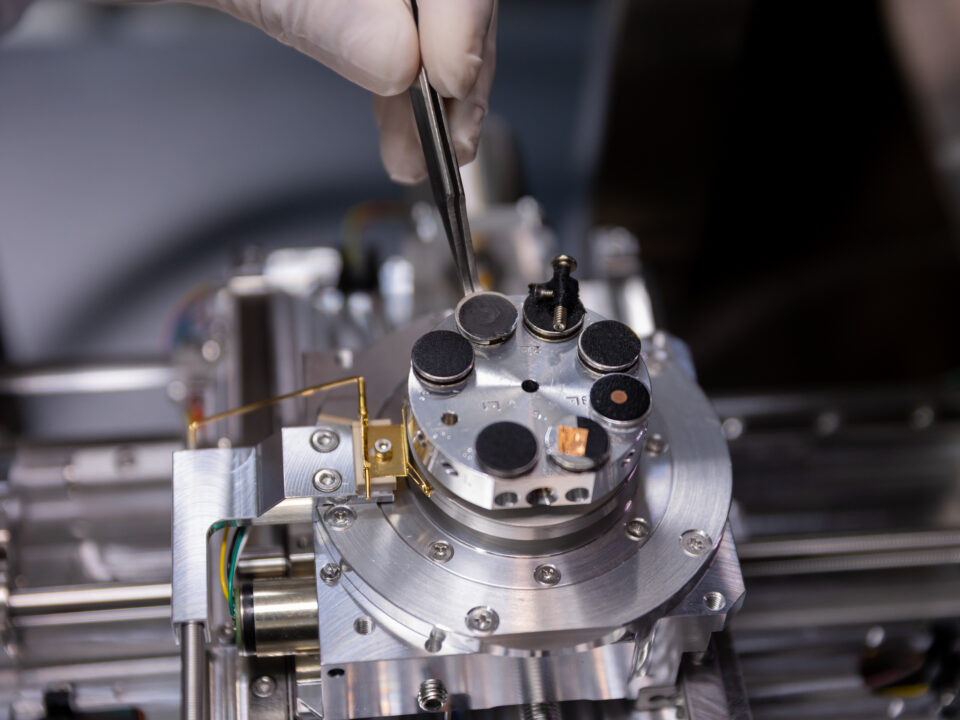
June 2, 2026
Scanning Electron Microscopy (SEM) Analysis & How It Works and Automotive Applications
READ MOREWhen an automotive component fails in the field, or returns from an OEM qualification test with an unexplained result, the investigation eventually reaches a question that cannot be answered with a magnifying glass. The fracture surface looks unusual under optical microscopy, but the relevant features are below the resolution limit. The corrosion morphology suggests a specific mechanism, but you cannot confirm it from a visual examination. A particle was found on a critical surface, but its identity and origin are unknown.
Scanning electron microscopy resolves that question. SEM is the analytical bridge between what you can observe at the macro scale and what you need to know at the micro and nano scale. It is the single most powerful imaging tool available for failure analysis work in automotive manufacturing, and it is the technique that separates a surface-level investigation from a definitive root cause conclusion.
This article explains how SEM analysis works, what makes it uniquely suited to automotive failure investigation, and the specific applications where it delivers information that no other technique can provide.
How Scanning Electron Microscopy Works
Optical microscopy uses visible light to form an image. The resolution limit of optical microscopy is set by the wavelength of light, which constrains maximum useful magnification to approximately 1,000 to 2,000 times. Beyond that limit, the image becomes blurred rather than more detailed. For many failure analysis scenarios, this is insufficient. Fatigue striations, grain boundary features, corrosion pit morphology, and the surface texture of fracture faces all occur at scales that demand higher resolution.
Scanning electron microscopy replaces the light beam with a focused beam of electrons. Electrons have a wavelength several orders of magnitude shorter than visible light, which is what allows SEM to achieve resolution several hundred times greater than optical microscopy. The practical result is that SEM can produce sharp, detailed images at magnifications from approximately 20 times up to 100,000 times or higher, with a depth of field that is far greater than optical microscopy at equivalent magnifications.
The operating principle is sequential scanning. The electron beam is rastered across the sample surface in a grid pattern. At each point, the beam interacts with the sample and generates signals that are detected and used to construct the image. The most commonly used signal in standard SEM imaging is secondary electrons, which are low-energy electrons ejected from the sample surface by the primary beam. Because secondary electron emission is highly sensitive to surface topography, secondary electron images show the three-dimensional texture of the sample surface with exceptional clarity.
A second commonly used signal is backscattered electrons, which are primary beam electrons reflected back from the sample by elastic scattering. Backscattered electron intensity is strongly dependent on the atomic number of the elements in the sample: heavier elements appear brighter and lighter elements appear darker. This makes backscattered electron imaging valuable for identifying compositional contrast across a sample surface, for example distinguishing different phases in an alloy microstructure or identifying heavy-element inclusions in a polymer matrix.
SEM gives you the surface of a component or fracture face at a scale where the failure mechanism leaves its clearest physical record. What happened to a component is written in features that are tens to hundreds of micrometres in size. SEM reads that record.
Sample Preparation for SEM
Most metallic and ceramic samples can be imaged directly in the SEM without preparation, provided they are clean and appropriately sized for the sample chamber. Non-conducting samples, including most polymers, rubber, and unfilled ceramics, require a thin conductive coating applied by sputter deposition, typically gold, platinum, or carbon, to prevent the sample surface from charging under the electron beam. Charging causes image distortion and artefacts that interfere with analysis. The coating layer is typically 5 to 20 nanometres thick and does not obscure the surface features of interest.
For cross-section analysis, samples are prepared by cutting through the area of interest, embedding in a low-shrinkage resin, and grinding and polishing to a metallographic finish. This reveals the internal structure of the component at the cut plane, including coating layers, grain structure, crack paths, and interface morphology, all of which can then be imaged and analysed by SEM.
Sample preparation is a critical step that directly affects the quality of SEM results. Contamination introduced during preparation, or damage to fracture surfaces from careless handling, can mask or destroy the very features the analysis is designed to reveal. Experienced analysts handle samples with this in mind from the moment of receipt.
SEM Resolution and Magnification & What the Numbers Mean in Practice
Resolution and magnification are related but distinct concepts. Magnification tells you how many times larger the image is than the object. Resolution tells you the smallest feature the instrument can distinguish as separate from its neighbour.
Modern SEM instruments achieve practical working resolution of 3 to 20 nanometres depending on the instrument type and operating conditions. For most automotive failure analysis work, working resolution of 10 to 50 nanometres is sufficient to resolve the features of interest. In practice, the resolution achieved on a real sample depends on the sample condition, the accelerating voltage used, and the detector configuration. For most failure analysis work in automotive applications, working resolution of 10 to 50 nanometres is sufficient to resolve the features of interest.
The magnification range that covers most automotive failure analysis work is from 50 times to 10,000 times. At 50 to 200 times, SEM provides overview imaging of fracture surfaces and corrosion zones that gives context before higher magnification is applied. At 500 to 2,000 times, the characteristic features of specific failure mechanisms become clearly visible: fatigue striations, cleavage facets, intergranular fracture paths, corrosion pit morphology. Above 5,000 times, fine microstructural features, nano-scale corrosion products, and the surface morphology of individual particles can be resolved.
Magnification Range
What It Shows
Typical Application
20x to 200x
Overview of fracture faces, corrosion zones, large defects
Initial characterisation, failure site mapping
200x to 1,000x
Fracture morphology, crack initiation sites, gross microstructural features
Failure mechanism identification
1,000x to 5,000x
Fatigue striations, cleavage facets, grain boundary details, corrosion pits
Root cause determination, mechanism confirmation
5,000x to 20,000x
Fine microstructural features, corrosion product morphology, thin film details
Detailed mechanism analysis, corrosion characterisation
20,000x and above
Nano-scale features, particle surface morphology, ultra-thin coating details
Advanced characterisation, research-level analysis
SEM-EDX Combining Imaging with Elemental Analysis
SEM imaging tells you what a feature looks like. Energy-dispersive X-ray spectroscopy (EDX), also written EDS, tells you what it is made of. The two techniques are routinely operated together, using the same electron beam in the same instrument, and together they are more powerful than either technique alone.
When the primary electron beam interacts with the sample, it generates X-rays whose energies are characteristic of the elements present. Each element produces X-rays at specific, known energies: iron at 6.4 keV, aluminium at 1.49 keV, chlorine at 2.62 keV, and so on. The EDX detector measures the energy and intensity of these X-rays, producing a spectrum that identifies which elements are present and at what relative concentrations.
In automotive failure analysis, SEM-EDX is applied in three primary ways. Point analysis targets a specific feature identified in the SEM image and produces an elemental spectrum for that location. This is used to identify a corrosion product, confirm the composition of an inclusion, or characterise a contaminating particle. Area analysis averages the elemental composition across a defined region of the sample, providing a bulk compositional snapshot. Elemental mapping uses the EDX signal to construct colour-coded maps showing where specific elements are distributed across the imaged area, revealing elemental gradients, segregation, and the spatial relationship between different phases or contamination layers.
The combination of SEM morphological imaging and EDX elemental identification is the most information-dense single analytical step available in failure analysis. It simultaneously answers what happened and what it happened to.
EDX does have limitations that experienced analysts account for. It is a surface technique with a sampling depth of approximately 1 to 2 micrometres at typical operating voltages. Quantification accuracy depends on sample geometry and is less precise for light elements (below sodium in the periodic table, including carbon, nitrogen, and oxygen) than for heavier elements. For definitive quantitative analysis of light elements or trace concentrations, EDX results are confirmed by complementary techniques such as FTIR for organic identification or ICP-MS for trace elemental quantification.
For a deeper look at EDX elemental analysis and its role in failure investigation, see our dedicated EDX Analysis guide: /blog/edx-analysis/
Automotive Applications of SEM Analysis
SEM analysis is applied across a wide range of failure scenarios in automotive manufacturing and service. The following are the most significant application areas in the context of ALS’s failure analysis work.
Fracture and Fatigue Analysis
Fracture surfaces are the primary domain of SEM in automotive failure analysis. The mechanism of a fracture leaves characteristic morphological signatures on the fractured faces, and SEM imaging at appropriate magnification reveals these signatures clearly.
Fatigue fractures are identified by the presence of fatigue striations: closely spaced parallel marks that represent the crack front position at each load cycle. Striations are typically visible at magnifications of 1,000 to 5,000 times, and their spacing provides information about the crack growth rate per cycle. The initiation site of a fatigue crack is identifiable in the SEM image by the convergence of striation patterns and is typically associated with a stress concentration: a surface defect, a machining mark, a corrosion pit, or an inclusion.
Brittle fracture modes leave different signatures. Cleavage fracture in crystalline metals produces flat, faceted fracture surfaces aligned with specific crystallographic planes, visible in SEM as bright, planar areas with characteristic river line patterns. Intergranular fracture, where the crack propagates along grain boundaries rather than through grains, produces a faceted surface where individual grain surfaces are visible. This mode is associated with grain boundary embrittlement from hydrogen absorption, temper embrittlement, or grain boundary corrosion.
Ductile overload fracture produces a dimpled surface morphology at the microscale, where micro-voids nucleate at inclusions or particles and coalesce as the material deforms. The presence and size of dimples, and whether they are equiaxed or elongated, provides information about the stress state at fracture.
Corrosion Characterisation
SEM imaging characterises the morphology of corrosion damage in detail that cannot be achieved by optical microscopy. Pitting corrosion is identified by the hemispherical or crystallographic pit geometry and the presence of corrosion product deposits within and around the pits. The EDX spectrum of the corrosion products identifies the mechanism: chloride-rich corrosion products indicate chloride-induced pitting, sulfate-rich products indicate sulfuric acid attack, and the presence of zinc, chromate, or other coating elements indicates breakdown of the protective layer.
Crevice corrosion, galvanic corrosion at bimetallic interfaces, and stress corrosion cracking all have distinctive SEM signatures. Stress corrosion cracking produces branched or transgranular crack morphology that SEM distinguishes clearly from mechanical fatigue. Cross-section SEM imaging of corroded surfaces shows the depth and morphology of the corroded zone, the integrity of any remaining coating, and the relationship between the corrosion front and the underlying microstructure.
Contaminant and Particle Identification
When foreign particles are found on automotive component surfaces, in hydraulic fluids, on electrical contacts, or on PCB surfaces, SEM-EDX provides the most direct path to identification. The morphology of a particle (rounded, angular, fibrous, platelet-shaped) narrows the candidate material types. The EDX elemental composition provides positive identification: an iron-rich angular particle is consistent with machining swarf, a silicon and oxygen-rich particle suggests a silicate mineral contaminant, a carbon-rich fibrous particle indicates organic fibre contamination.
This combination of morphological and compositional information is essential for contamination source investigation. Identifying not just that contamination is present but where it likely originated from allows targeted corrective action in the manufacturing process. In cleanliness testing applications where particles are extracted from precision components and collected on filter membranes, SEM-EDX analysis of specific particles from the filter provides the particle identification data required by some OEM cleanliness specifications and by failure investigations where particle composition is central to the root cause.
Coating and Surface Treatment Analysis
SEM cross-section analysis is the primary tool for characterising the thickness, morphology, and integrity of coatings, platings, and surface treatments on automotive components. A properly prepared cross-section through a coated surface reveals each layer in the coating stack with nanometre-scale detail: the base material microstructure, the interface between base material and coating, each individual coating layer and its thickness uniformity, and any defects such as porosity, cracking, or delamination planes within the coating.
EDX line scan analysis across the cross-section shows how the elemental composition transitions from one layer to the next, identifying the composition of each layer and detecting diffusion zones, interdiffusion effects, or contaminating species at layer interfaces. This is particularly relevant for investigation of adhesion failures, where the locus of failure (whether it occurred within a layer or at an interface) determines whether the failure is a coating process problem, a surface preparation problem, or a design problem.
PCB and Automotive Electronics Failure Analysis
Electronic components and PCB assemblies in automotive applications are subject to increasingly stringent reliability requirements, driven by the safety-critical nature of automotive control systems. SEM analysis is central to failure investigation in this domain.
Solder joint failures are characterised by SEM to distinguish fatigue-driven cracking from brittle intermetallic fracture, from dewetting and non-wet opens caused by poor solderability. The fracture morphology and the composition of the solder and intermetallic layers identified by EDX provide the evidence to determine root cause. Corrosion and dendritic growth failures on PCB surfaces are investigated by SEM to characterise the morphology of the corrosion product and identify the ionic species responsible through EDX analysis. The distribution and density of corrosion sites across the board provides information about whether contamination was local or global, which guides the corrective action.
For PCB ionic contamination analysis and chemical cleanliness investigation, see our Chemical and Electronics Testing services: https://www.alstesting.co.th/anion-test-specialist-malaysia/
SEM vs Optical Microscopy & When to Use Each
SEM and optical microscopy are complementary techniques. In a structured failure analysis investigation, both are used, with optical microscopy providing the initial characterisation and SEM providing the higher-resolution detail needed to reach a definitive conclusion.
Dimension
Optical Microscopy
SEM Analysis
Maximum useful magnification
1,000x to 2,000x
Up to 100,000x or higher
Resolution
0.2 micrometres (diffraction limited)
Typically 3 to 20 nm (varies by instrument/settings)
Depth of field
Low – challenging for rough fracture surfaces
High – excellent for three-dimensional surfaces
Colour imaging
Yes – colour information from reflected light
No – greyscale images only (BSE gives compositional contrast)
Elemental analysis
Not available
Available via EDX – point, area, and map
Sample preparation
Minimal for most samples
Coating required for non-conducting samples
Throughput
Fast – rapid overview imaging
Slower – higher setup time per sample
Best application
Initial survey, large-area overview, surface colour assessment
High-resolution characterisation, elemental identification, fine feature analysis
Cost
Lower per hour
Higher per hour – more information per analysis
The practical workflow in failure analysis begins with stereo microscopy for large-area overview and failure site identification, moves to optical microscopy for initial characterisation at intermediate magnifications, and then applies SEM for the high-resolution imaging and EDX elemental analysis that establishes root cause. This sequence preserves the most informative analytical steps and ensures that SEM time is focused on the features that matter most.
What SEM Analysis Cannot Do
Understanding the limitations of SEM is as important as understanding its capabilities. SEM is an imaging and elemental analysis technique. It is not a molecular identification technique: it can tell you that a particle contains carbon, oxygen, and iron, but it cannot tell you whether the organic phase is a polyamide, a polyester, or an epoxy. For molecular identification of organic materials, FTIR spectroscopy is the appropriate complementary technique.
SEM is also a surface technique. Without cross-section preparation, it analyses only the surface of the sample. Subsurface features, internal cracks, and through-thickness compositional gradients are not visible in surface SEM imaging without sectioning. For volumetric characterisation, techniques such as serial cross-section analysis or X-ray computed tomography (available at specialist facilities) are required.
EDX quantification is more accurate for heavier elements than for light elements. Carbon, nitrogen, and oxygen are detectable but quantified with lower accuracy than elements from sodium and above in the periodic table. When precise quantification of light elements is required, complementary techniques including combustion analysis or carrier gas hot extraction are used.
These limitations are not reasons to avoid SEM. They are reasons to use it as part of a structured, multi-technique failure analysis programme where each technique’s output builds on and is corroborated by the others.
SEM Analysis at ALS Testing
ALS Testing provides SEM and SEM-EDX analysis as part of our automotive failure analysis services. Our SEM capability covers the full range of applications described in this article: fracture and fatigue analysis, corrosion characterisation, contaminant and particle identification, coating cross-section analysis, and PCB and electronics failure investigation.
All SEM analysis at ALS is conducted within our ISO/IEC 17025:2017 accredited quality management system, with documented equipment calibration, analyst qualification records, and sample traceability throughout. Our reports include representative SEM images with scale bars, magnification data, and operating conditions, supported by EDX spectra and maps where elemental characterisation is part of the investigation scope. Reports are formatted to support OEM submission, warranty dispute documentation, and technical engineering review.
Our failure analysis team has experience across the full range of automotive materials and component types: metals, polymers, composites, coatings, adhesives, and electronics assemblies. When a failure reaches the SEM stage, we have the context and the technical depth to connect what we see in the image to what was happening in the manufacturing process or service environment.
Summary
Scanning electron microscopy is the central imaging tool of automotive failure analysis. It achieves magnifications and resolutions that optical microscopy cannot reach, with a depth of field that makes it uniquely suited to imaging the rough, three-dimensional surfaces of fractures and corrosion zones. When combined with EDX elemental analysis, it identifies not just the morphology of a failure feature but the material it involves.
In automotive applications, SEM analysis is applied to fracture and fatigue investigation, corrosion characterisation, contaminant and particle identification, coating and surface treatment analysis, and PCB and electronics failure investigation. It is the technique that converts a visible failure into a defensible root cause conclusion, supported by documented images and data that hold up in OEM review, warranty proceedings, and regulatory submissions.
Next Steps
See our Failure Analysis services and full SEM capability overview: https://www.alstesting.co.th/failure-analysis-services-sem-ftir-edx-als-testing/
Read our guide to EDX elemental analysis in failure investigation: /blog/edx-analysis/
For PCB and electronics failure analysis including ionic contamination: https://www.alstesting.co.th/anion-test-specialist-malaysia/
Contact our team to discuss a failure investigation: https://www.alstesting.co.th/contact-us/
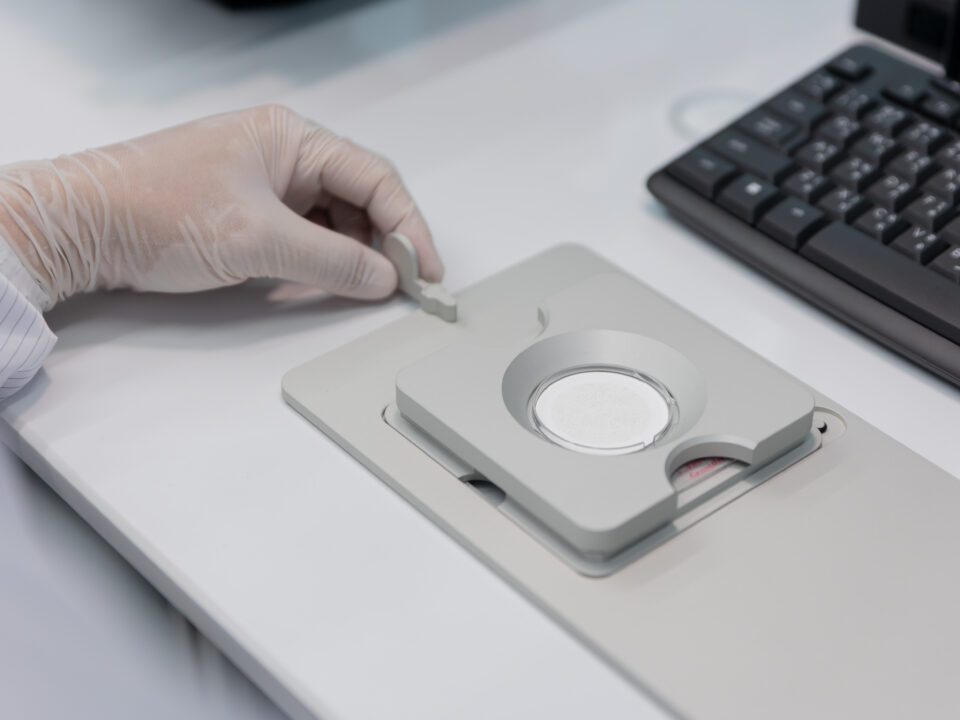
June 2, 2026
ISO 16232 vs VDA 19 & Which Automotive Cleanliness Standard Do You Need?
READ MOREAt some point in the component qualification process, your OEM or customer will specify a cleanliness requirement. That requirement will reference one of two standards: ISO 16232 or VDA 19. If you have not worked with technical cleanliness testing before, the distinction between them is not immediately obvious. Both cover the same subject. Both are widely used in automotive manufacturing. And in practice, they are more aligned than their different names suggest.
But the differences matter, and choosing the wrong standard for your submission can delay qualification or require retesting. This guide explains what each standard covers, how they relate to each other, and how to determine which one your specific application requires.
Where ISO 16232 and VDA 19 Come From
ISO 16232 is the international standard for technical cleanliness testing in road vehicles. It was developed by ISO Technical Committee 22, the body responsible for road vehicle standards, and is published in ten parts covering the full range of cleanliness test activities – from sampling strategy and extraction methods through to analysis and reporting. Because it is an ISO standard, it is adopted as the reference framework by most international OEMs and by testing laboratories operating outside Germany.
VDA 19 is the equivalent German automotive industry standard, published by the VDA – the Verband der Automobilindustrie, the German Association of the Automotive Industry. It was developed by and for the German automotive industry, and reflects the cleanliness testing practices established by German OEMs over decades of precision component manufacturing. VDA 19 is published in two parts: Part 1 covers particle contamination analysis of functionally relevant automotive components, and Part 2 covers assembly environment requirements for technical cleanliness.
The relationship between them is a deliberate harmonisation. VDA 19 Part 1 and ISO 16232 were aligned through a coordinated revision process, with the result that the two standards are technically equivalent for most cleanliness testing applications. The methods, particle extraction principles, classification logic, and analytical requirements are substantively the same. Where they differ is in specific reporting format details, particle classification notation, and the scope of Part 2 of VDA 19, which has no direct ISO equivalent covering assembly environment requirements.
ISO 16232 and VDA 19 are harmonised standards covering the same testing discipline. Choosing between them is primarily a matter of which your OEM or customer specifies – not a choice between different test methods.
What ISO 16232 and VDA 19 Cover
ISO 16232 Structure and Scope
ISO 16232 is organised as a single consolidated document covering all aspects of cleanliness testing. The key sections for most testing applications are:
Part 5: Cleanliness inspection principles, covering inspection method selection, start parameters, cleaning mechanism parameters, and staff competency requirements.
Part 6: Qualification testing and blank level determination, including routine inspection and double inspection protocols.
Part 7: Extraction methods, covering preparatory and post-treatment steps, liquid extraction, and air extraction approaches.
Part 8: Analysis filtration, defining the filtration method used to prepare extracted particles for examination.
Part 9: Analysis methods, including Standard analysis, Extended analysis, and Shortened analysis, each suited to different testing scenarios.
The full ISO 16232 framework provides a complete methodology from extraction through to reporting, applicable to any automotive component where cleanliness is a functional requirement.
VDA 19 Structure and Scope
VDA 19 Part 1 covers functionally equivalent ground to ISO 16232, with the same core methodology: extraction of particles from the component, gravimetric and light obscuration particle counting, microscopic classification, and cleanliness class assignment. The particle size ranges, classification categories, and reporting principles are aligned with ISO 16232.
VDA 19 Part 2 is distinct. It addresses the assembly environment – the cleanliness requirements for the cleanroom or controlled environment in which precision components are assembled. It defines cleanliness classes for workspaces, tools, personnel, and packaging, providing a framework for controlling contamination introduction during the assembly process. ISO 16232 does not have an equivalent part covering assembly environments, which is why VDA 19 Part 2 remains in active use even among organisations whose component testing follows ISO 16232.
Key Similarities and Differences
For most cleanliness testing applications, the practical similarities between the two standards are more significant than their differences. The table below summarises the key dimensions.
Dimension
ISO 16232
VDA 19
Origin
International (ISO TC 22)
German automotive industry (VDA)
Technical equivalence
Harmonised with VDA 19 Part 1
Harmonised with ISO 16232
Particle extraction methods
Liquid: Pressure rinsing, Ultrasonic, Agitation, Internal rinsing.
Air: Air jet, Air through flow
Liquid: Pressure rinsing, Ultrasonic, Agitation, Internal rinsing.
Dry: Air jet, Air through flow, Stamping, Suction
Gravimetric analysis
Standard analysis
Standard analysis
Light Obscuration Particle Counting (LPC)
Shorten analysis
Shorten analysis
Microscopic particle classification
Standard analysis
Standard analysis
Particle size ranges
Particle size > 50 µm
Particle size > 50 µm
Particle classification types
Metallic, non metallic, fibre
Same categories
Cleanliness class notation
ISO cleanliness class format
VDA cleanliness class format – slightly different notation
Assembly environment
Not covered
Covered in VDA 19 Part 2
Report format
ISO 16232 format
VDA 19 format, different layout conventions
Primary adopters
Global OEMs, non-German automotive markets
German OEMs and their Tier-1 supply chains
The notation difference in cleanliness class reporting is worth noting. Both standards define cleanliness classes based on particle counts per size range, but the way those classes are expressed in the test report differs between the two standards. If your OEM has specified a cleanliness requirement using VDA 19 notation, submitting a report in ISO 16232 format and vice versa can create confusion in the review process, even if the underlying analytical data is identical.
Which Standard Applies to Your Situation?
The straightforward answer: the standard that applies to your situation is the one your OEM or customer has specified. If the specification document, the purchase order, or the supplier quality requirement references VDA 19 – test to VDA 19 and report accordingly. If it references ISO 16232 – test to ISO 16232. Where the customer has specified both, which does happen in supply chains that cross between German and non-German OEM requirements, your laboratory will need to produce a report that addresses both frameworks.
Where no specific standard is referenced, or where you are establishing a cleanliness specification for a new product rather than responding to an OEM requirement, the choice is more open. The following considerations are relevant.
Choose ISO 16232 If…
Your primary customers or OEM relationships are outside Germany – particularly Japanese, American, Korean, or UK-based OEMs
You are testing to support ISO-referencing type approvals or international regulatory submissions
Your laboratory scope or accreditation references ISO 16232 as the test method
You are developing a cleanliness specification for a new component and want maximum international portability
Choose VDA 19 If…
Your customer is a German OEM or a Tier-1 supplier directly serving BMW, Volkswagen Group, Mercedes-Benz, Audi, Bosch, or ZF
The supplier quality manual, PPAP requirements, or component specification explicitly references VDA 19
You are testing for assembly environment qualification as well as component cleanliness – VDA 19 Part 2 is the relevant standard for this
Your existing cleanliness classification system uses VDA 19 notation and you need continuity across historical data sets
When Both Apply
Some Tier-1 suppliers serve multiple OEM relationships that span German and non-German customers. In this case, the same component may need to meet cleanliness requirements under both frameworks. Because the test methods are harmonised, a single test programme can produce data that satisfies both standards, provided the laboratory issues reports in the appropriate format for each customer requirement. Confirm this capability with your laboratory before proceeding, and provide both specification references when submitting your samples.
Because ISO 16232 and VDA 19 are technically harmonised, a single set of test results can satisfy both standards. The difference lies in how the report is formatted and how the cleanliness class is expressed.
A Note on Accreditation
Regardless of which standard your cleanliness test is conducted to, the laboratory producing the results should be accredited to ISO/IEC 17025:2017. This accreditation is the foundation of credibility for your test data. It means that the methods, equipment, and quality system behind your results have been independently audited and verified.
In practice, OEMs and procurement teams reviewing cleanliness test reports will look for the accreditation mark before they assess the results. A non-accredited report, however technically competent the laboratory, is not accepted as formal compliance evidence for OEM qualification, type approval, or regulatory submission purposes.
ALS Testing is accredited to ISO/IEC 17025:2017. Our cleanliness testing capability covers both ISO 16232 and VDA 19, with reports formatted to the appropriate standard for each customer requirement. Our results are accepted by OEMs in more than 100 countries.
Practical Checklist Before You Submit Samples for Cleanliness Testing
Having the right information ready before sample submission helps your laboratory select the correct methods, format the report correctly, and avoid unnecessary follow-up. The following checklist covers the key points.
Confirm the standard: identify whether the OEM or customer specification references ISO 16232, VDA 19, or both
Confirm the cleanliness class requirement: obtain the specified cleanliness class or particle count limits from the specification document
Confirm the component type and critical surfaces: identify which surfaces and channels need to be sampled
Confirm the extraction method: some specifications define the required extraction method; if not, your laboratory will advise based on component geometry
Confirm whether SEM-EDX particle identification is required: some OEM specifications require elemental identification of particles above a defined size. If required, confirm this capability with your laboratory at the enquiry stage.
Confirm report format requirements: if your OEM requires a specific report format or data template, provide this to your laboratory before testing begins
Package samples correctly: seal components in clean polythene bags immediately after manufacture to prevent post-manufacture contamination that would invalidate the test
Summary
ISO 16232 and VDA 19 are technically harmonised standards covering the same testing discipline: the extraction, quantification, and classification of particulate contamination from precision automotive components. The choice between them is driven primarily by your OEM requirement, not by any fundamental difference in the testing process.
German OEMs and their direct Tier-1 suppliers will typically specify VDA 19. Global OEMs outside Germany will typically specify ISO 16232. Where both apply, the harmonised methods allow a single test programme to satisfy both frameworks with appropriate dual reporting.
What matters most in both cases is that the testing is conducted by an ISO/IEC 17025 accredited laboratory with genuine specialist capability in technical cleanliness testing – the extraction methods, particle counting equipment, microscopic analysis, and reporting experience to produce results that your OEM will accept without qualification.
Next Steps
See our full Cleanliness and Particle Testing capability: https://www.alstesting.co.th/technical-cleanliness-testing/
Read our detailed guide to VDA 19 testing requirements: /blog/vda-19-guide/
Download our ISO 16232 test preparation checklist: /blog/iso-16232-checklist/
Contact our team to discuss your cleanliness testing requirements: https://www.alstesting.co.th/contact-us/
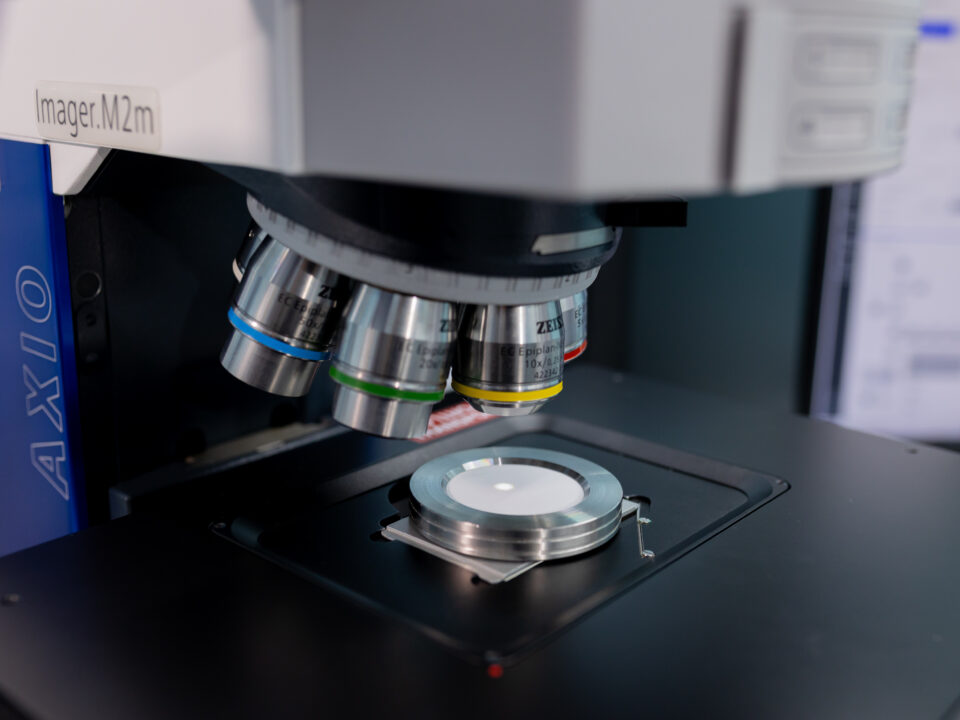
June 2, 2026
What Is Automotive Testing? Definition, Types and Why It Matters
READ MOREIf you are new to the automotive supply chain – or expanding into it – you will encounter the term automotive testing early and often. It appears in OEM qualification documents, supplier quality requirements, and regulatory submissions. It is referenced in purchase orders, quality plans, and audit checklists. But what does it actually mean, and why does it carry so much weight?
This guide answers both questions. It covers what automotive testing is, the main categories it encompasses, how it fits into the manufacturing lifecycle, and what separates a test that gives you confidence from one that simply gives you a result.
The Definition of Automotive Testing
Automotive testing is the systematic evaluation of materials, components, sub-assemblies, and complete vehicle systems against defined specifications. Those specifications may be set by an OEM, a regulatory body, an international standards organisation such as ISO or IEC, or a combination of all three.
The goal is verification. Testing establishes, with documented evidence, that a product does what it is supposed to do, under the conditions it will actually encounter, at the level of precision the application requires. For a hydraulic valve in a transmission, that means cleanliness down to the micron level. For an interior trim panel, it means VOC emissions within prescribed limits. For a PCB in a safety-critical control unit, it means ionic contamination below the threshold that triggers corrosion or leakage current.
Automotive testing is not the same as general product testing. The standards are more demanding, the traceability requirements are stricter, and the consequences of getting it wrong are more severe. That is why the framework around it – accreditation, methodology, and documentation – exists in the form it does.
Automotive testing is verification with consequences. It is the documented evidence that sits between a supplier’s claim and an OEM’s acceptance.
The Main Types of Automotive Testing
Automotive testing covers a wide range of disciplines. In practice, most suppliers will engage with several of these over the course of a product’s lifecycle. Understanding the landscape helps you identify what your specific situation requires.
Technical Cleanliness Testing
Cleanliness testing quantifies the particulate contamination present on or within a precision automotive component. It is governed by ISO 16232 and VDA 19 – the international and German automotive industry standards respectively – and produces a cleanliness class: a formal rating that can be compared directly against the cleanliness specification defined by the OEM or component designer.
Cleanliness matters because particles that are invisible to the eye can cause catastrophic failures in hydraulic systems, fuel systems, and braking systems. A single metallic particle of the wrong size in the wrong place can jam a valve, block an orifice, or score a precision-ground surface. For EV platforms, the cleanliness requirements of battery thermal management circuits and power electronics cooling paths are equally stringent.
The process involves particle extraction from the component, gravimetric analysis to determine total particle mass, light obscuration particle counting to establish size distribution, and in some cases SEM-EDX analysis to identify particle composition. This is specialist work – not every laboratory offers it to the depth that OEM qualifications require.
See our Cleanliness and Particle Testing services for ISO 16232 and VDA 19 capability details. https://www.alstesting.co.th/technical-cleanliness-testing/
Failure Analysis
Failure analysis is the forensic investigation of a component that has failed – in production, in qualification testing, or in the field. The objective is root cause: not just identifying what failed, but tracing the failure back to its physical, chemical, or mechanical origin.
The core techniques are scanning electron microscopy (SEM) for high-magnification surface and fracture imaging, energy-dispersive X-ray spectroscopy (EDX) for elemental identification, FTIR spectroscopy for organic material identification, and metallurgical cross-section preparation for internal microstructural analysis. These techniques are applied in combination, following the failure evidence from the macro scale down to the micro and nano scale.
Failure analysis is applied at every stage of the automotive lifecycle: during development to catch design or material weaknesses early, during qualification when unexpected test failures must be explained, during production to prevent recurrence of non-conformances, and after field returns to determine warranty liability and drive product improvement.
Materials and Environmental Testing
This category covers two related but distinct disciplines. Materials testing evaluates the chemical composition and performance properties of automotive materials – plastics, rubbers, foams, adhesives, coatings, metals, and composites. Environmental testing exposes components and materials to simulated real-world conditions – temperature extremes, humidity, corrosion, UV exposure, vibration – to assess durability and stability.
Key standards in this area include VDA 278 and ISO 12219 for VOC and semi-volatile organic emissions from interior materials, ISO 9227 and ASTM B117 for salt spray corrosion testing, and the IEC 60068 series for thermal shock and environmental simulation of automotive electronics. These tests support material qualification, OEM specification compliance, and regulatory approval across interior and exterior component categories.
Full capability details are available on our Automotive Materials and Environmental Testing page at https://www.alstesting.co.th/automotive-materials-environmental-testing-als-testing/
Chemical and Electronics Testing
Chemical testing in automotive applications covers two converging areas. The first is trace chemical analysis of materials and components: identifying and quantifying organic compounds, trace elements, restricted substances, and ionic contaminants using techniques including GCMS, ICP-MS, FTIR, and ion chromatography (IC).
The second is electronics-specific chemical testing, which has grown significantly as vehicle architectures shift toward electronics-intensive platforms. This includes ionic contamination testing of PCB assemblies by IC to IPC-TM-650, anion and cation analysis of flux residues and process chemical contamination, RoHS restricted substance screening to IEC 62321, and REACH SVHC screening for hazardous chemical content.
Ion chromatography – the basis of what is often called the anion test – is increasingly critical for automotive electronics manufacturers. It detects the anionic species that drive corrosion and leakage current failures in PCB assemblies: chloride, fluoride, sulfate, nitrate, phosphate, and organic acid anions from flux residues.
How Automotive Testing Fits the Manufacturing Lifecycle
Testing is not a single event at the end of a production run. In a well-structured quality system, it is integrated throughout the manufacturing lifecycle, with different test types serving different purposes at each stage.
Material and Supplier Qualification
Before a material or sub-component enters production, it needs to be qualified against the OEM specification. This typically involves a defined test programme covering chemical composition, mechanical performance, emissions, and where relevant, cleanliness. Qualification testing establishes the baseline – the evidence that the material or component, as supplied, meets the defined requirements. This is predominantly third-party laboratory work, because OEMs require accredited results.
Prototype and Development Testing
During development, testing is used iteratively. A material is selected, tested, modified based on results, and tested again. Failure analysis at this stage investigates unexpected results and guides design changes. The goal is to resolve weaknesses before they become production problems, when the cost of correction is manageable.
Production Quality Control
Once production is established, routine testing monitors process stability and product consistency. This is often a combination of in-house QC – simple checks that verify the process is running within limits – and periodic third-party testing to maintain the documented evidence of compliance. The frequency and scope of third-party testing during production is typically defined by the OEM or the quality plan.
Field Failure Investigation
When components fail in service, failure analysis traces the failure to its cause. This determines whether the failure represents a design defect, a manufacturing escape, a misapplication, or a warranty claim that is outside the supplier’s scope. The findings drive corrective action and, in more serious cases, inform recall or field campaign decisions. At this stage, the independence and accreditation of the laboratory producing the analysis matters significantly – both for the technical credibility of the conclusions and for their use as evidence in commercial or legal contexts.
Destructive vs Non-Destructive Testing
One practical distinction that matters when planning a test programme is whether the testing is destructive or non-destructive.
Destructive testing involves irreversible analysis. Cross-section preparation, chemical extraction, mechanical fracture testing – these all consume the sample. The benefit is that they yield the most detailed information about a component’s internal structure, material composition, and failure mechanism. The trade-off is that the tested sample cannot be returned to service or reused.
Non-destructive testing (NDT) allows a component to be evaluated and returned. Techniques such as SEM surface imaging, particle extraction (which does not damage the component structure), and X-ray inspection fall in this category. NDT is preferred where sample numbers are limited – for example, with prototype components or field returns where no duplicate is available.
In practice, a failure analysis investigation will often begin with non-destructive examination and progress to destructive techniques as the evidence trail narrows. The sequence is planned in advance to preserve the most informative analytical options.
Why Independent, Accredited Testing Matters
It is worth being direct about this. Not all testing is equal, and the difference between testing conducted by an ISO/IEC 17025 accredited independent laboratory and testing conducted in-house has concrete consequences.
ISO/IEC 17025 is the international standard for the competence of testing and calibration laboratories. Accreditation to this standard means that a laboratory’s methods, equipment calibration, analyst qualifications, and quality management system have been audited and verified by an independent accreditation body. The ILAC MRA – the Mutual Recognition Arrangement administered by the International Laboratory Accreditation Cooperation – extends this recognition globally, so that accredited results from a laboratory in Malaysia are accepted by OEMs and regulators in Europe, North America, and Japan without question.
There are three reasons this matters in practice.
OEM acceptance: the vast majority of global OEMs require accredited test data for qualification submissions, type approvals, and compliance evidence. In-house data, regardless of how it was generated, is generally not accepted for these purposes.
Liability protection: an independent test report provides documented, objective evidence of compliance at the time of manufacture. This evidence is critical when warranty claims, product liability disputes, or regulatory investigations arise. An independent report protects suppliers from unjustified claims.
Objectivity: an independent laboratory has no stake in the outcome. It reports what it finds. For any test result that will be used in a formal context – OEM submission, regulatory filing, legal proceedings – this independence is not optional.
ALS Testing is accredited to ISO/IEC 17025:2017, with results recognised under the ILAC MRA in more than 100 countries. Our test reports carry the formal ILAC MRA mark and are accepted by OEMs and regulatory authorities worldwide.
The laboratory you choose to partner with has direct consequences for your OEM relationships, your regulatory posture, and your ability to respond to quality issues with credible evidence.
Choosing the Right Laboratory for Automotive Testing
With multiple testing laboratories operating in Malaysia and across Southeast Asia, choosing the right partner requires more than a price comparison. A few dimensions worth evaluating:
Accreditation scope: confirm that the specific tests you require are within the laboratory’s accredited scope, not just offered as unaccredited services. The distinction matters for OEM and regulatory submissions.
Specialist capability: some test types – particularly cleanliness testing to ISO 16232 and VDA 19, and advanced failure analysis using SEM, FTIR, and EDX – require specialist equipment and methodological expertise that not every general testing laboratory has invested in.
Understanding of automotive context: raw analytical data has limited value without interpretation in the context of your manufacturing process and OEM specification. A laboratory that understands automotive manufacturing can tell you not just what the results show, but what they mean for your quality programme.
Turnaround and communication: production schedules and OEM submission deadlines are real constraints. A laboratory that communicates proactively from sample receipt through to report delivery reduces the risk of delays cascading into production or commercial consequences.
ALS Testing combines ISO/IEC 17025 accreditation, specialist cleanliness and failure analysis capability, and 40 years of global testing network experience with deep local knowledge of the Malaysian and Southeast Asian automotive market.
Ready to Discuss Your Testing Requirements?
Whether you are qualifying a new component for an OEM programme, investigating a failure, or establishing a testing protocol for a new material or platform, ALS Testing’s specialists are here to help.
See the full range of ALS automotive testing services: https://www.alstesting.co.th/automotive-testing-services-als-testing-laboratory/
Contact our team for a quotation or technical consultation: https://www.alstesting.co.th/contact-us/
May 14, 2026
C3 New service : Special Offer 2,000 baht
READ MOREC3 (Critical Cleanliness Control®) — The Next Level of PCB Cleanliness Testing
ALS Testing Services (Thailand) Co., Ltd.
New Service
Special Offer : 2,000 baht
(Regular Price: 3,000 baht)
️ Promotional Details — Limited Time Offer
ALS is proud to offer C3 testing at a special introductory price:
Regular Price
Promotional Price
C3 Testing Service
฿3,000
✅ ฿2,000
️ Promotion Period: May 15 – August 14, 2026 (Limited-time offer — secure your slots early!)
The Hidden Threat on Every PCB
In today’s electronics manufacturing landscape, cleanliness is not just a matter of aesthetics — it is a fundamental quality and reliability requirement. Every printed circuit board (PCB) that passes through a production line is exposed to a wide range of potential contaminants: flux residues, ionic salts, process chemicals, airborne particulates, moisture, and even fingerprint oils from human handling.
What makes this especially dangerous is that many of these contaminants are invisible to the naked eye. A PCB may look perfectly clean under normal inspection — yet still carry enough ionic contamination to cause field failures months or years down the line.
The consequences of neglecting PCB cleanliness can be severe:
️ Moisture absorption by residual ionic salts
⚙️ Electrochemical corrosion of copper traces and solder joints
️ Electromigration and dendritic growth — microscopic conductive bridges forming between circuit traces
⚡ Leakage currents and short circuits
Complete board failure — often unpredictable and difficult to trace in the field
This is why cleanliness testing is no longer optional — it is a critical step in any robust quality assurance and reliability program.
What Is C3 (Critical Cleanliness Control®)?
C3 (Critical Cleanliness Control®) is a state-of-the-art, localized ionic cleanliness testing technology designed specifically to address the limitations of traditional cleanliness measurement methods.
At its core, C3 works by using ultra-pure deionized water as an extraction medium. A precisely controlled volume of water is applied to a specific, targeted area of the PCB surface. The water extracts ionic contaminants from that localized zone, and the resulting solution is then analyzed by measuring its electrical conductivity and resistance. From these measurements, the instrument calculates the Corrosivity Index (C.I.) — a standardized indicator of contamination level and potential corrosion risk.
The fundamental principle is elegant in its simplicity:
The more ionic contamination present, the higher the electrical conductivity of the extract → the higher the C.I. value → the greater the risk.
Conversely:
✅ Low C.I. = Clean PCB = Low corrosion risk = Reliable product
The Science Behind Ionic Contamination
To fully appreciate the value of C3 testing, it is important to understand why ionic contamination is so harmful at a fundamental level.
What Are Ionic Contaminants?
Ionic contaminants are electrically charged chemical species (ions) — both positively charged cations (e.g., Na⁺, K⁺, Ca²⁺) and negatively charged anions (e.g., Cl⁻, Br⁻, SO₄²⁻) — that remain on the PCB surface after manufacturing.
Common sources include:
Contamination Source
Typical Ionic Species
Solder flux residues
Organic acids, halide activators (Cl⁻, Br⁻)
Human handling
NaCl (sodium chloride) from perspiration
Process water
Calcium, magnesium, chloride ions
Atmospheric dust
Mixed ionic salts
Cleaning agent residues
Surfactant ions, alkaline species
PCB substrate outgassing
Various organic ionic compounds
⚠️ The Electrochemical Failure Mechanism
When ionic contaminants combine with moisture — even at normal ambient humidity levels — they form a thin electrolytic film on the PCB surface. In the presence of an applied electric field (i.e., a powered circuit), this sets off a chain of electrochemical reactions:
Ionic contamination+H2O+Electric field→Electrochemical corrosion+Dendritic growthIonic contamination+H2O+Electric field→Electrochemical corrosion+Dendritic growth
Dendritic growth (also called electrochemical migration or ECM) is particularly insidious: metallic ions dissolved from corroding conductors are redeposited as branching, tree-like conductive filaments that can bridge adjacent circuit traces, causing intermittent or permanent short circuits. These failures are notoriously difficult to diagnose after the fact.
Traditional Testing vs. C3 — Understanding the Difference
❌ Traditional Methods: ROSE Testing (Resistivity of Solvent Extract)
For decades, the industry relied primarily on ROSE (Resistivity of Solvent Extract) testing — standardized under IPC-TM-650 Method 2.3.25 — as the go-to cleanliness measurement. In ROSE testing, the entire PCB is immersed in a mixture of isopropyl alcohol (IPA) and deionized water, and the total ionic contamination of the whole board is measured.
While ROSE testing provides a useful global cleanliness benchmark, it has well-recognized limitations:
❌ It gives only a board-average result — it cannot identify where contamination is located
❌ High-risk localized zones (e.g., beneath dense IC packages) may have dangerous contamination levels that are diluted and masked by cleaner areas elsewhere on the board
❌ It cannot be performed on boards with components or coatings already applied
❌ Results are not spatially resolved — they provide no actionable guidance for process engineers
✅ C3: The Localized, Targeted Solution
C3 was developed precisely to overcome these limitations. Rather than flooding the entire board, C3 applies its extraction water to a precisely defined, small area — as small as a few square centimeters — enabling point-by-point contamination mapping of the PCB surface.
Feature
ROSE / Traditional Testing
C3 (Critical Cleanliness Control®)
Testing Area
Entire board (global average)
Specific localized zones
Spatial Resolution
None
High — point-by-point mapping
Under-component testing
❌ Not possible
✅ Capable (QFN, BGA, etc.)
Non-destructive
✅ Yes
✅ Yes
Speed
Moderate
⚡ Rapid — near-immediate results
Process trend monitoring
Limited
✅ Full C.I. trend tracking
Actionability
Low
High — identifies specific problem areas
Key Advantages of C3 Testing
1. Localized, Targeted Testing
Unlike global testing methods, C3 allows engineers to test exactly where it matters most — directly beneath high-density IC packages, in solder joint crevices, around connector interfaces, or any zone identified as high-risk. This targeted approach dramatically increases the sensitivity and relevance of the contamination data.
2. ⚡ Rapid, Real-Time Results
C3 delivers results almost immediately after sample extraction. This makes it ideal for in-line or at-line quality control, enabling rapid feedback during production rather than waiting for lengthy laboratory turnaround times.
3. Fully Non-Destructive
The C3 extraction process uses only ultra-pure water and causes zero physical or electrical damage to the PCB, its components, solder joints, or surface finishes. The tested board can proceed normally through the production process or be returned to the customer without any impact on its integrity.
4. Process Trend Monitoring and SPC Integration
Because C3 generates quantitative C.I. data for specific locations, it is perfectly suited to Statistical Process Control (SPC) integration. Engineers can plot C.I. values over time to:
Identify process drift before it causes failures
Evaluate the effectiveness of cleaning process changes
Establish and maintain cleanliness control limits
Generate compliance documentation for customers and auditors
5. Hidden Zone Inspection (Under-Component Testing)
One of the most powerful capabilities of C3 is its ability to assess contamination beneath components — including low-standoff packages such as QFN (Quad Flat No-Lead) and BGA (Ball Grid Array) devices, where conventional inspection is physically impossible. This is increasingly critical as component miniaturization continues and the standoff gap between package and PCB becomes ever smaller.
Applications Across the Electronics Manufacturing Lifecycle
C3 is a versatile tool applicable at multiple stages of PCB fabrication, assembly, and quality assurance:
✔️ 1. Post-Soldering Cleanliness Verification
After wave soldering, reflow soldering, or selective soldering operations, flux residues — especially from no-clean flux formulations — may remain on the PCB surface. C3 provides a quantitative measure of residual ionic contamination, enabling engineers to determine whether cleaning is required or whether the no-clean residues are within acceptable limits.
✔️ 2. Pre-Conformal Coating Inspection
Conformal coating is applied to protect PCBs in harsh environments (humidity, chemicals, vibration). However, if ionic contamination is present beneath the coating, moisture can penetrate and trigger under-coating corrosion and delamination, causing the coating to fail. C3 testing before coating application ensures that the substrate is clean and that the coating will perform as intended.
✔️ 3. In-Line Production Quality Control
C3 can be integrated into the production quality control workflow as a routine check at defined process stages. By monitoring C.I. values at regular intervals, manufacturing teams can maintain consistent cleanliness standards and rapidly detect when a process step (e.g., a solder paste applicator, a flux dispensing system, or a cleaning machine) begins to drift out of specification.
✔️ 4. PCB Failure Analysis (FA)
When a PCB is returned from the field due to a reliability failure, C3 is an invaluable tool in the failure analysis process. By mapping the contamination profile of specific areas on the failed board — and comparing it against reference (non-failed) boards — engineers can determine whether ionic contamination played a role in the failure and identify its likely source.
✔️ 5. Cleaning Process Validation and Optimization
When introducing or validating a new cleaning chemistry, cleaning machine, or cleaning process parameter, C3 provides the quantitative data needed to confirm that the process effectively removes contamination from all critical zones, including those beneath low-standoff components.
✔️ 6. Incoming Material and Bare Board Inspection
C3 can also be applied to bare PCB substrates and incoming solder paste or flux materials to verify their ionic contamination levels before they enter the production line — preventing contamination from being introduced at the very start of the manufacturing process.
Understanding the Corrosivity Index (C.I.)
The primary output of C3 testing is the Corrosivity Index (C.I.), a dimensionless numerical value derived from the electrical conductivity measurement of the extraction solution. The C.I. provides a direct, standardized, and comparable measure of ionic contamination for any tested location.
C.I. Interpretation Guide:
C.I. Value Range
Cleanliness Status
Risk Level
Recommended Action
Low ✅
Excellent — PCB is clean
Very Low
No action required; approve for next process
Moderate ⚠️
Acceptable — minor contamination
Low–Medium
Monitor trend; review process
High ❌
Contamination detected
High
Investigate source; consider re-cleaning
Very High ❌❌
Heavy contamination
Critical
Do not proceed; immediate corrective action
Note: Specific C.I. acceptance thresholds should be established based on the end-use application, customer requirements, and applicable industry standards (e.g., IPC-7711/7721, IPC-6012, IPC-A-610).
Industry Standards and Regulatory Context
The importance of PCB cleanliness is recognized and mandated by major international electronics industry standards:
IPC-7711/7721 — Rework, Modification and Repair of Electronic Assemblies
IPC-6012 — Qualification and Performance Specification for Rigid Printed Boards
IPC-A-610 — Acceptability of Electronic Assemblies
IPC-TM-650 2.3.25 — Ionic Cleanliness Testing
J-STD-001 — Requirements for Soldering Electrical and Electronic Assemblies
MIL-PRF-31032 / MIL-P-55110 — Military specifications for PCB reliability
C3 testing supports compliance with these standards by providing the localized, quantitative, and traceable cleanliness data that global testing methods cannot supply.
Contact Us
For inquiries, quotations, and sample submissions, please contact our Marketing Team:
+66 94 480 4705 +66 94 480 4706 +66 83 858 1323
➡️ Click here to view full promotion details
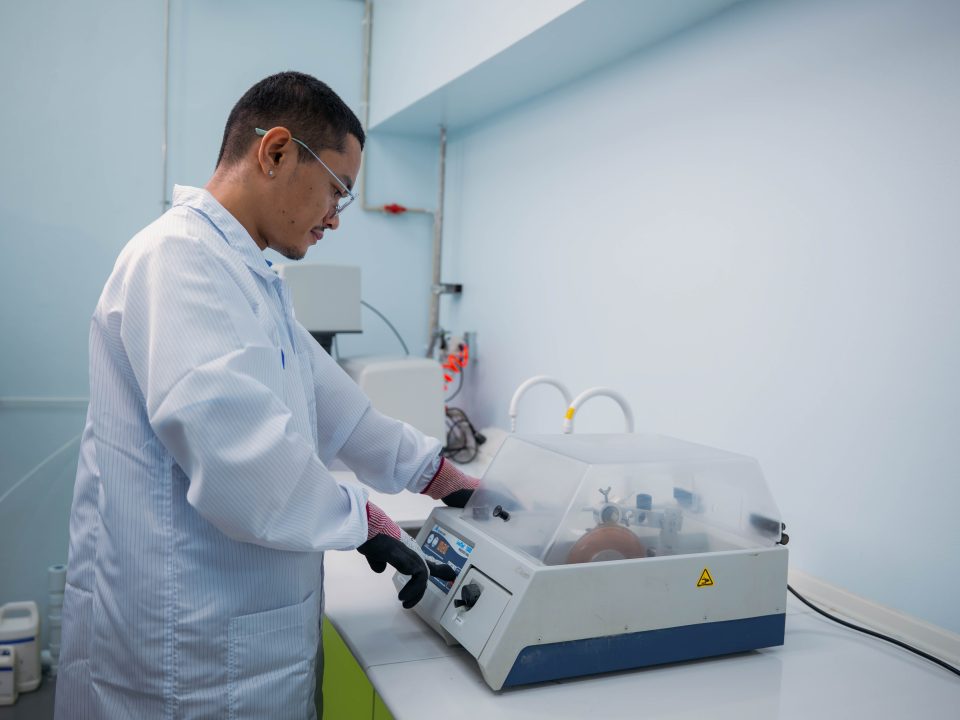
May 13, 2026
Cross-Sectional Analysis for Electronic Devices
READ MORECross-Sectional Analysis for Electronic Devices: Seeing What the Naked Eye Can’t
When the Real Problem Is Hidden Inside
In electronics manufacturing, the most critical defects are often the ones you can’t see. A hairline crack in a solder joint, a void in a plating layer, an invisible delamination between PCB layers — any of these can cause a device to fail unpredictably in the field, with consequences ranging from product recalls to safety incidents.
Cross-sectional analysis is the technique that makes the invisible visible. By physically sectioning a component and examining its internal structure with precision instruments, engineers gain access to information that no surface inspection can provide — and that information is often the difference between a reliable product and an expensive failure.
What Is Cross-Sectional Analysis — and Why Does It Matter?
Cross-sectional analysis involves preparing a material or device specimen by cutting, mounting, and polishing it to reveal a precise internal cross-section, then examining that section under high-powered microscopy. It’s routinely applied to PCBs, PCBAs (assembled boards), integrated circuits (ICs), and a wide range of other electronic and industrial components.
The Five Core Objectives
Table
Objective
What It Delivers
Defect Detection
Identifies incomplete connections, solder defects, and structural flaws before they cause failures in the field
Material Quality Assessment
Evaluates layer thickness, density, mechanical strength, and durability — informing better material selection decisions
Failure Analysis
Traces the root cause of device failures with scientific precision, not guesswork
Product Development
Reveals weaknesses in current designs and provides the data needed to build better, more reliable products
Cost Reduction
Catching defects early in production is dramatically cheaper than recalls, rework, or warranty claims downstream
Step-by-Step: The Cross-Sectional Analysis Process
Reliable results depend on rigorous, standardized preparation. Here’s how the process unfolds at ALS:
Stage 1: Sample Preparation
Document the sample Before any cutting begins, the specimen is photographed in full — capturing the overall condition and the specific area of interest. This creates a visual baseline for the entire analysis.
Precision cutting The specimen is cut using specialized equipment, maintaining a minimum distance of 1.0 cm from the region of interest to avoid cutting-induced damage. If the area is particularly sensitive, the sample is pre-mounted in epoxy resin to protect it during sectioning.
Ultrasonic cleaning The cut specimen is cleaned in an ultrasonic bath for 2–3 minutes, then thoroughly dried — removing any debris or contamination that could affect imaging quality.
Stage 2: Mounting (Casting)
The specimen is embedded in a precisely measured mixture of epoxy resin and hardener, cast into a mold that holds it securely in the correct orientation. Once fully cured, the mounted sample is carefully removed from the casting cup.
The casting cup is cleaned with IPA-soaked cloth after each use to remove cured resin residue — maintaining consistent mounting quality across samples.
✨ Stage 3: Grinding and Polishing
The mounted specimen is processed on a NANO 1000T Grinder-Polisher, working through progressively finer abrasives at controlled speeds until the cross-section surface is perfectly flat, smooth, and ready for microscopic examination.
Stage 4: Microscopic Analysis
Optical Microscopy Using a high-performance optical microscope at magnifications ranging from 10× to 500× (selected based on sample characteristics), the cross-section is systematically imaged and examined for visible defects, layer integrity, and structural anomalies.
SEM/EDX Analysis For deeper investigation, Scanning Electron Microscopy (SEM) provides nanometer-level resolution imaging of internal structures, while Energy Dispersive X-ray Spectroscopy (EDX) identifies the elemental composition of specific areas — revealing not just where a problem exists, but what it’s made of.
Stage 5: Reporting
Analysis data — including images, measurements, and compositional findings — is compiled into a comprehensive report. Results are presented with supporting graphics, charts, and clear scientific interpretation, making findings accessible to both technical and non-technical stakeholders.
The Technical Toolkit: Key Analysis Techniques
Optical Microscopy
Uses visible light to generate high-resolution images at the micrometer scale. The standard first step for examining solder joint quality, layer continuity, and surface-level defects in PCBs and electronic assemblies.
⚡ Electron Microscopy (SEM & TEM)
Replaces light with a focused electron beam to achieve nanometer-scale resolution — far beyond what optical microscopy can deliver. Essential for studying particle morphology, interface characteristics, and fine structural details that affect electrical and mechanical performance.
️ Metallographic Analysis
Chemical etching techniques are applied to reveal grain boundaries, phase distributions, and internal microstructure in metallic materials — enabling detailed assessment of structural continuity and micro-level defects.
Hardness Testing (Vickers / Rockwell)
Quantifies the mechanical properties of materials at the cross-section — including hardness, wear resistance, and strength — providing critical data for quality certification and material performance evaluation.
X-ray Analysis (XRD & XRF)
XRD (X-ray Diffraction) — Reveals crystal structure and phase composition of materials
XRF (X-ray Fluorescence) — Identifies elemental composition and detects contamination or impurities
Together, these techniques provide a complete chemical and structural picture of the material under investigation.
What Materials and Applications Can Cross-Sectional Analysis Examine?
Cross-sectional analysis is far more versatile than many realize. Beyond electronics, it has applications across virtually every field of materials science and engineering:
️ Electronic Materials
PCBs — Detecting soldering defects, delamination, via integrity issues, and layer thickness non-conformance
Electronic components — Capacitors, resistors, and ICs: internal structural assessment and material integrity verification
Metallic Materials
Metal alloys — Examining crystal structure, elemental distribution, and internal defects such as cracks or incomplete fusion
Industrial materials — Evaluating mechanical properties and wear resistance of steel and aluminum for structural and machinery applications
Chemical and Polymer Materials
Plastics and polymers — Analyzing internal structure, additive distribution, strength, and flexibility characteristics
Ceramic materials — Assessing internal structure, fracture resistance, and impact strength for industrial ceramic applications
Medical and Biomedical Research
Biological tissue — Studying cellular architecture, comparing cancerous and healthy cells, and evaluating tissue response to treatment
Vaccines and pharmaceuticals — Examining structural composition to assess formulation stability and efficacy
Social Sciences
Cross-sectional studies — Collecting population-level data at a single point in time to analyze factors influencing health outcomes, behaviors, and demographic trends — providing foundational data for longitudinal research
Why Choose ALS for Cross-Sectional Analysis?
ALS Testing combines state-of-the-art instrumentation — including high-performance optical microscopes, SEM/EDX systems, and precision grinding equipment — with years of hands-on expertise in electronics failure analysis and materials characterization.
Our ISO/IEC 17025 accredited laboratory ensures that every analysis is conducted to the highest international standards, with results that are scientifically defensible, clearly communicated, and ready to support your quality decisions.
Whether you’re investigating a field failure, validating a new manufacturing process, or developing the next generation of electronic products, cross-sectional analysis with ALS gives you the internal insight you need to get it right.
Contact ALS Testing Services (Thailand)
ALS Testing Services (Thailand) Co., Ltd. Advanced chemical analysis and materials testing — powered by modern technology and specialist expertise.
Tel: +(66) 2700 9665 Email: pathumthani@alsglobal.com
When surface inspection isn’t enough — cut deeper with ALS. Contact our team today to discuss your cross-sectional analysis requirements.
May 13, 2026
Volatile Organic Compounds (VOCs)
READ MOREVolatile Organic Compounds (VOCs): What They Are, Why They Matter, and How to Measure Them
The Invisible Chemicals Around Us
They’re in the paint on your walls, the fuel in your car, the cleaning products under your sink — and quite possibly, the air you’re breathing right now. Volatile Organic Compounds (VOCs) are a family of chemicals so pervasive that most people encounter them daily without realizing it.
VOCs are liquid or solid chemical compounds with low boiling points, meaning they evaporate easily at room temperature and enter the air we breathe. While some are relatively harmless, others pose serious risks to human health and the environment — making accurate detection, measurement, and control essential for industries, regulators, and communities alike.
Meet the Key Players: Common Types of VOCs
Benzene
A colorless aromatic hydrocarbon found in petrol, diesel, paints, and solvents. Benzene is classified as a known human carcinogen, with established links to leukemia and damage to the nervous system. Even low-level, long-term exposure carries significant health risks.
Formaldehyde
A colorless, pungent gas that dissolves readily in water. Widely used in wood-based manufacturing (plywood, particleboard) and household cleaning products, formaldehyde causes respiratory irritation, eye and skin reactions, and is associated with increased cancer risk with prolonged exposure.
Toluene
A benzene-like hydrocarbon with an added methyl group, found in petrol, solvents, and paints. Exposure to toluene can cause dizziness, headaches, and neurological impairment — particularly in poorly ventilated environments.
Xylene
A hydrocarbon with two methyl groups, used extensively in paint production, solvents, and fuels. Xylene exposure affects the eyes, respiratory system, and nervous system, and can be especially hazardous in occupational settings.
Where Do VOCs Come From?
VOC emissions come from a surprisingly wide range of sources — both natural and human-made:
Natural Sources
Decomposing organic matter — When plants and animals break down, bacteria release VOCs such as methane and ethylene as byproducts
Natural seepage — Petroleum deposits and geothermal activity can release VOCs naturally into the atmosphere
Combustion Sources
Industrial fuel burning — Power generation, manufacturing facilities, and industrial boilers burning oil, coal, or gas release significant VOC emissions
Vehicle exhaust — Fossil fuel-powered vehicles are a major source of urban VOC pollution, contributing to smog formation and air quality degradation
Industrial Sources
Manufacturing processes — Production of paints, solvents, rubber, plastics, and specialty chemicals involves extensive use of VOCs
Industrial operations — Equipment cleaning, maintenance, and chemical handling all generate VOC releases that must be carefully managed
Everyday Sources
Household products — Wall paints, cleaning agents, bleaches, fuels, and dry-cleaning fluids all contain VOCs that off-gas into indoor air
Home appliances — Printers, air conditioners, and other devices can emit low levels of VOCs during operation
The Health Impact: What VOC Exposure Does to the Body
Table
Health Effect
Symptoms & Consequences
️ Irritation
Eye, nose, and throat irritation — often the first sign of exposure
Respiratory problems
Breathing difficulties, airway constriction, worsening of asthma
Neurological effects
Dizziness, confusion, insomnia, and memory impairment
⚠️ Cancer risk
Certain VOCs (notably benzene) are classified carcinogens with documented links to leukemia
Environmental Consequences: Beyond Human Health
VOCs don’t just affect people — they damage the world around us:
Air Quality
VOCs react with nitrogen oxides in sunlight to form photochemical smog — the hazy, harmful air pollution common in urban areas. This ground-level ozone damages respiratory systems and reduces visibility.
Water Quality
When VOCs enter water bodies through spills or runoff, they become toxic to aquatic life — disrupting ecosystems and contaminating drinking water sources.
Soil Quality
VOCs that leach into soil inhibit plant growth and degrade soil health, with long-term consequences for agriculture and natural ecosystems in contaminated areas.
Controlling VOC Emissions: A Multi-Layer Approach
1. Standards and Legislation
Thailand has established regulatory limits for key VOCs in ambient air — for example:
Benzene: ≤ 1.7 µg/m³ annually
Vinyl Chloride: ≤ 10 µg/m³ annually
The Pollution Control Department enforces industry-specific VOC emission limits, backed by legally binding regulations.
2. Monitoring and Reporting
Continuous air quality monitoring in high-risk zones — near industrial facilities and fuel storage sites — tracks VOC levels in real time
Industry self-auditing ensures ongoing compliance and transparency in emissions reporting
⚙️ 3. Source Control
Vapor recovery systems at fuel storage facilities and service stations capture VOC emissions before they escape into the atmosphere
Process optimization in manufacturing reduces VOC usage and improves efficiency — achieving the same output with lower chemical inputs
4. Public Awareness and Participation
Community education on VOC risks and safe product use empowers people to reduce personal exposure
Environmental governance frameworks that include public participation create shared accountability for air quality in communities
How VOCs Are Measured: The Science of Detection
Accurate VOC measurement is the foundation of effective control — and the methods vary depending on whether you’re testing air, water, or soil.
VOC Measurement in Air
Sample Collection Air samples are collected using adsorption tubes or continuous sampling systems, where VOCs are captured at low temperatures onto an adsorbent material for later analysis.
Key Technologies:
Table
Technology
How It Works
PID (Photoionization Detector)
Uses a UV lamp to ionize organic gases, enabling rapid real-time concentration measurements in the field
GC-MS (Gas Chromatography–Mass Spectrometry)
Separates and identifies individual VOC compounds with high precision — the gold standard for laboratory air analysis
Result: Real-time concentration data that enables immediate response to pollution events and supports regulatory compliance monitoring.
VOC Measurement in Water
Sample Collection Water samples are collected in sealed, airtight containers to prevent evaporation during transport to the laboratory — a critical step that preserves sample integrity.
Key Technologies:
Table
Technology
How It Works
GC-MS
Analyzes VOCs in water after sample preparation (e.g., salting out to concentrate compounds) for precise identification and quantification
HSGC (Headspace Gas Chromatography)
Forces dissolved VOCs to volatilize into the headspace above the sample, then analyzes the vapor — ideal for water matrices
Result: Accurate VOC concentration data essential for drinking water safety assessments and environmental compliance monitoring.
VOC Measurement in Soil
Sample Collection Soil samples are collected from multiple locations and sealed immediately in airtight containers to minimize VOC loss through evaporation — maintaining the reliability of results.
Key Technologies:
Table
Technology
How It Works
SPE (Solid Phase Extraction)
Isolates and purifies VOC compounds from the soil matrix before analysis
GC-MS
Identifies and quantifies VOC contaminants in soil with high sensitivity and specificity
Result: Soil VOC data enables comprehensive environmental risk assessment — particularly critical for sites with a history of industrial activity, fuel spills, or chemical contamination.
Why Professional VOC Analysis Matters
Whether you’re an industrial operator managing emissions compliance, an environmental consultant assessing a contaminated site, or a manufacturer verifying product safety, accurate VOC analysis requires both sophisticated instrumentation and experienced scientific interpretation.
The consequences of getting it wrong — regulatory penalties, health liabilities, environmental damage — are far greater than the cost of getting it right.
ALS Testing Services (Thailand) Co., Ltd. _ Your VOC Analysis Partner
ALS Testing Services (Thailand) Co., Ltd. provides comprehensive VOC analysis across air, water, and soil matrices — powered by advanced analytical technology and a team of experienced specialists.
Our capabilities include:
✅ GC-MS analysis for precise VOC identification and quantification
✅ Headspace GC for liquid and water-phase VOC testing
✅ Field and laboratory sampling support
✅ Results delivered to international standards with full technical interpretation
Tel: +(66) 2700 9665
Email: pathumthani@alsglobal.com
From regulatory compliance to product safety verification — contact ALS Testing today for VOC analysis you can rely on.

May 13, 2026
Component Cleanliness
READ MOREComponent Cleanliness: The Hidden Factor That Keeps Industry Running
When Clean Isn’t Just Tidy — It’s Critical
In precision manufacturing, a single microscopic particle in the wrong place can bring an entire system to a halt. Component cleanliness — the rigorous process of ensuring that manufactured parts are free from contamination — is one of the most important yet often overlooked disciplines in modern industry.
Whether you’re producing automotive parts, aircraft components, electronic assemblies, or industrial machinery, contamination control isn’t a finishing step. It’s a fundamental quality requirement that directly impacts performance, safety, and service life.
7 Reasons Component Cleanliness Can’t Be Ignored
1. Preventing Wear and Component Damage
Unwanted particles — dust, metal shavings, oil residues — act like sandpaper inside precision mechanisms. When contaminants infiltrate moving parts, they accelerate friction and wear, causing components to degrade far faster than designed. Proper cleaning dramatically extends component service life and protects the investment in precision manufacturing.
⚙️ 2. Eliminating Jamming and Operational Irregularities
In systems where components move or interact — such as engines, hydraulic circuits, or pneumatic systems — even minor contamination can disrupt smooth operation. The result? Sluggish movement, unexpected jamming, or complete system seizure. Clean components move as designed: reliably, smoothly, and without interruption.
3. Reducing Fire and Explosion Risk
In chemical processing and aerospace applications, contamination isn’t just a mechanical problem — it can be a safety hazard. Accumulated chemical residues or reactive substances inside components can trigger unintended chemical reactions or generate dangerous heat buildup. Regular cleaning eliminates this risk before it becomes a crisis.
4. Protecting Product Quality
In electronics and pharmaceutical manufacturing, even trace-level contamination on sensitive components can compromise the entire product — causing functional defects, failed inspections, or non-compliance with quality standards. Component cleanliness ensures that what comes off the production line meets specification, every time.
5. Preventing Cascading Production Problems
Contamination doesn’t stay in one place. Dirty components introduce particles into manufacturing equipment, causing blockages, inconsistent outputs, and efficiency losses that compound over time. Cleaning at each stage of production keeps the entire manufacturing process running smoothly — preventing small problems from becoming expensive shutdowns.
6. Reducing Maintenance Costs
Clean components simply last longer and break down less frequently. By preventing contamination-related damage, regular cleanliness protocols significantly reduce repair and replacement costs — delivering measurable savings over the life of equipment and machinery.
7. Meeting Industry Standards and Regulatory Requirements
Component cleanliness is not just good practice — in many industries, it’s a mandatory requirement. Standards such as ISO, ASTM, VDA 19, and ISO 16232 define specific cleanliness thresholds that must be met. Compliance protects product quality, supports certification, satisfies legal obligations, and demonstrates a genuine commitment to safety.
The Bottom Line
Component cleanliness is one of the most cost-effective investments in manufacturing quality. When contamination is controlled:
✅ Components last longer ✅ Systems run more reliably ✅ Production processes stay efficient ✅ Safety risks are minimized ✅ Products consistently meet international standards
Neglecting it, on the other hand, invites a cascade of preventable failures — from premature wear and system downtime to product recalls and safety incidents.
ALS Testing: Your Partner in Cleanliness Verification
ALS Testing Services provides a comprehensive range of component cleanliness testing and analysis capabilities — giving you the scientific data to verify cleanliness levels, identify contamination sources, and make confident quality decisions.
Our Testing Instruments and Capabilities
Table
Instrument / Method
What It Does
FT-IR & FT-IR Microscopy
Identifies organic contaminants, polymer residues, and unknown substances on component surfaces
Liquid Particle Counter (LPC)
Measures and counts suspended particles in liquid — ideal for hydraulic fluids and cleaning baths
VDA 19 / ISO 16232-2018 Particle Analysis
Industry-standard measurement and counting of particles on automotive components
Ion Chromatography (IC)
Quantifies residual ionic contamination — critical for corrosion prevention and electronic reliability
HPLC (High Performance Liquid Chromatography)
Separates and analyzes complex chemical mixtures including coatings, additives, and process residues
SEM/EDX
High-resolution surface imaging combined with elemental analysis — pinpoints the composition and origin of contamination particles
GC/MS (Liquid & Gas Sample Preparation)
Identifies and quantifies volatile and semi-volatile organic compounds in both liquid and gas-phase samples
Why Choose ALS?
✅ ISO/IEC 17025 accredited laboratory — internationally recognized, reliable results
State-of-the-art analytical instruments — the right tool for every contamination challenge
Experienced specialist team — expert interpretation and actionable recommendations
Serving multiple industries — automotive, electronics, aerospace, pharmaceutical, and more
Contact ALS Testing Services (Thailand)
ALS Testing Services (Thailand) Co., Ltd. Advanced chemical analysis and materials testing — powered by modern technology and specialist expertise.
Tel: +(66) 2700 9665
Email: pathumthani@alsglobal.com
Don’t leave cleanliness to chance. Contact our team today to find the right testing solution for your components and your industry.
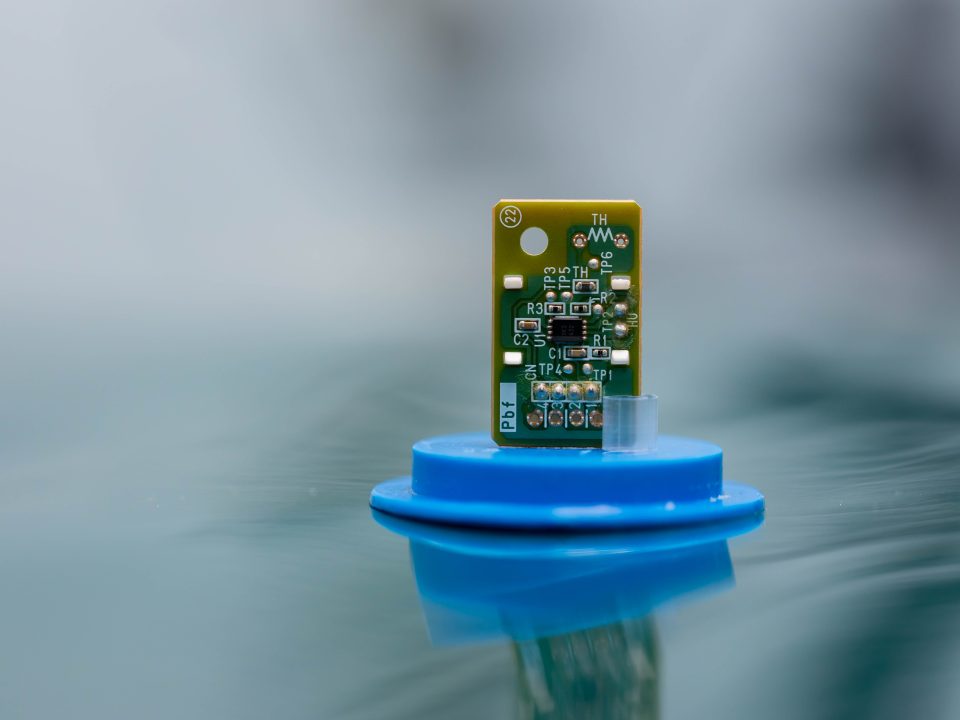
May 13, 2026
PCB Testing
READ MOREPCB Testing: Ensuring Every Circuit Performs When It Matters Most
The Tiny Board Behind Every Big Technology
From the smartphone in your pocket to life-saving medical devices and satellite systems, Printed Circuit Boards (PCBs) are the invisible backbone of modern electronics. These precisely engineered boards use etched copper pathways on insulating substrates to mount and connect electronic components — and when they fail, everything built around them fails too.
That’s why PCB testing isn’t optional. It’s essential.
Comprehensive testing throughout the design, manufacturing, and assembly stages is the only reliable way to ensure a PCB will perform consistently and safely — across every application, in every environment it was built for.
Why PCB Testing Is Non-Negotiable
1. Quality Assurance That Protects Your Product
A PCB defect doesn’t stay confined to the board — it becomes a system failure. Testing identifies and resolves issues before a defective board ever makes it into a finished product, safeguarding both performance and reliability.
2. Catching Problems Early Saves Money
The earlier a defect is found, the cheaper it is to fix. Detecting a fault on the production line costs a fraction of what it costs to address the same problem after assembly, shipping, or — worst of all — after a customer complaint. PCB testing directly reduces rework, scrap, warranty claims, and recall costs.
3. ️ Reliability Where It Counts Most
PCBs power some of the world’s most critical systems — medical devices, aerospace equipment, industrial controls. In these applications, failure isn’t just inconvenient; it can be dangerous. Rigorous testing ensures every board meets the reliability standards required to perform under demanding, real-world conditions.
4. Defect Detection Across the Full Spectrum
PCB testing covers a wide range of potential failure modes:
Short circuits and open circuits
Soldering defects
Component misplacement or misalignment
Material inconsistencies
Thorough testing catches these issues systematically — not by chance.
5. ✅ Process Verification, Not Just Product Inspection
PCB testing isn’t just about finding what went wrong — it verifies that the entire manufacturing process is working correctly. From etching and drilling to soldering and component placement, testing confirms that every step consistently meets specification.
6. ⚡ Functional Verification
Beyond physical inspection, PCBs must be verified to work as intended. This means testing:
Electrical connectivity
Signal integrity
Component functionality across the entire board
7. ️ Environmental Stress Testing
Depending on the application, PCBs may face extreme temperatures, high humidity, vibration, or thermal cycling in service. Environmental testing determines whether a board can withstand these stresses without performance degradation — a critical checkpoint for any product going into challenging conditions.
Testing Standards: The Framework for PCB Quality
PCB testing is governed by widely recognized international standards that define acceptance criteria and test methodologies. The most commonly applied specifications include:
Table
Standard
Application
IPC-6012
Qualification and performance for rigid PCBs
IPC-6013
Flexible and rigid-flex printed boards
IPC-6016
High-density interconnect (HDI) boards
IPC-6018
Microwave end-product boards
MIL-PRF-55110
Military-grade rigid PCBs
MIL-P-50884
Military flexible printed wiring
MIL-PRF-31032
Military printed circuit board manufacturing
Testing to these standards ensures your PCBs meet both commercial and defense-grade quality benchmarks — supporting certification, supplier qualification, and market access globally.
ALS PCB Testing Capabilities
ALS Testing provides a comprehensive suite of PCB testing services covering both raw materials and fully assembled PCAs (Printed Circuit Assemblies). Our capabilities include:
Ionic Cleanliness Testing (IC / ROSE)
Ionic Contamination (IC) testing and Resistivity of Solvent Extract (ROSE) testing measure the level of ionic contamination on a PCB surface — residues from flux, cleaning agents, or handling that can cause corrosion, current leakage, or dendritic growth over time.
Even trace ionic contamination can significantly shorten a PCB’s service life, particularly in high-humidity environments.
Advanced Instrumental Analysis: FT-IR & SEM/EDX
FT-IR (Fourier Transform Infrared Spectroscopy) Identifies organic compounds, polymer residues, contaminants, and coating materials on PCB surfaces. Ideal for pinpointing the chemical nature of unknown substances affecting board performance.
SEM/EDX (Scanning Electron Microscopy with Energy Dispersive X-ray Analysis) Delivers high-resolution surface imaging combined with precise elemental analysis — enabling detailed investigation of solder joint quality, surface contamination, corrosion mechanisms, and coating integrity at the microscale.
IPC-TM-650 Test Methods
A comprehensive set of standardized test procedures covering mechanical, chemical, electrical, and environmental properties of PCB materials and assemblies — the industry’s definitive testing reference.
️ Thermal Analysis: DSC & TGA
DSC (Differential Scanning Calorimetry) Measures thermal properties such as glass transition temperature (Tg), melting point, and cure state of PCB laminates — critical data for predicting how a board will behave at operating temperatures.
TGA (Thermogravimetric Analysis) Evaluates material stability and decomposition behavior under heat — essential for understanding the long-term thermal durability of PCB materials.
Cross-Section Analysis
One of the most revealing techniques in PCB failure investigation. Cross-sectioning exposes the internal structure of through-holes, vias, solder joints, and plating layers — allowing direct visual assessment of manufacturing quality and the root cause of failures that aren’t visible from the surface.
The ALS Advantage: Experience You Can Rely On
ALS Testing has been delivering PCB quality testing for many years, building deep expertise across a wide range of board types, standards, and failure scenarios.
When a problem is detected, our team doesn’t just report a result — we help you understand it. From evaluating overall board quality to conducting thorough failure analysis, ALS provides the scientific insight and technical guidance needed to resolve issues efficiently and prevent them from recurring.
Summary: Build Boards You Can Trust
PCB testing is one of the highest-return investments in electronics manufacturing. It protects your product quality, reduces costs, ensures regulatory compliance, and — most importantly — ensures that the products you put into the world work reliably for the people who depend on them.
Whether you’re qualifying new materials, investigating a field failure, or implementing ongoing quality control, ALS Testing has the accreditation, the instruments, and the expertise to deliver results you can act on.
ALS Testing Services (Thailand) Co., Ltd. Advanced chemical analysis and materials testing
— powered by modern technology and specialist expertise.
Tel: +(66) 2700 9665
Email: pathumthani@alsglobal.com
Let’s make sure your PCBs perform exactly as designed — every time. Reach out to our team today.
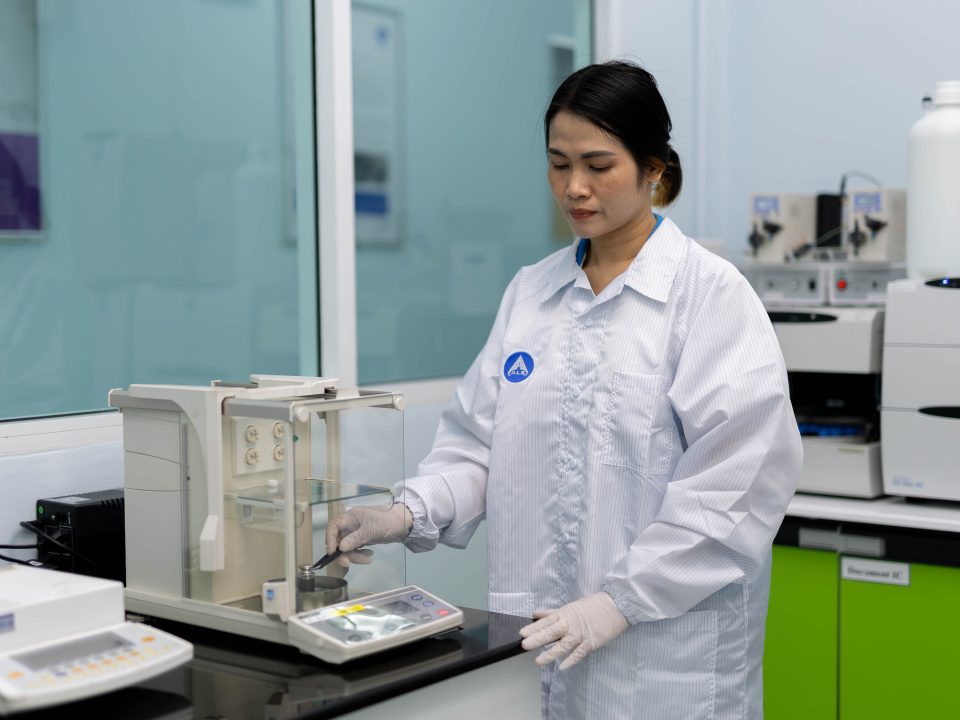
May 13, 2026
Particle & Contamination Analysis
READ MOREParticle & Contamination Analysis for Automotive Components
VDA 19 / ISO 16232 — Under ISO/IEC 17025 Accreditation
Why Cleanliness Is Critical in Automotive Manufacturing
In automotive manufacturing, invisible contamination can cause very visible — and very costly — failures. Microscopic particles left on components can block hydraulic systems, wear down precision surfaces, and trigger electronic malfunctions. That’s why the automotive industry has developed rigorous international standards to control component cleanliness.
ALS Testing provides comprehensive particle measurement, counting, and analysis services for automotive components in full compliance with VDA 19 and ISO 16232:2018 — the two most important cleanliness standards in the global automotive supply chain — conducted within our fully ISO/IEC 17025 accredited laboratory.
Our testing goes beyond simple quality checks. It supports new product development, drives manufacturing process improvements, and provides the scientific data needed to protect product performance and safety in the field.
The Two-Stage Testing Process: VDA 19 / ISO 16232
ALS holds accreditation specifically covering ISO 16232 testing within the scope of our ISO/IEC 17025 certification. Our testing follows a structured two-stage methodology:
Stage 1: Decline Test — Validating Extraction Parameters
Before full particle analysis can begin, it’s essential to confirm that the extraction process itself is working correctly for your specific component. This is what the Decline Test establishes.
How it works:
The component undergoes a controlled extraction process to remove particles from its surface and internal passages
The extraction fluid is filtered through a membrane filter
The filter is analyzed using a Particle Analyzer
This process is repeated six times on the same component, yielding six individual filter membranes
Results from all six filters are plotted on a graph and evaluated against VDA 19 / ISO 16232 acceptance criteria
✅ If the results meet the standard’s requirements, the extraction parameters are validated — and the process moves on to Stage 2.
Think of this as calibrating your measurement process before taking the actual measurement. It’s what separates reliable data from guesswork.
Stage 2: Particle Analysis — Size, Quantity, and Classification
With validated extraction parameters in place, the component undergoes its full particle analysis according to VDA 19 standards. The extraction fluid is filtered and the membrane is examined using a Particle Analyzer to determine:
Table
Parameter
What It Tells You
Quantity
How many particles are present
Size
The dimensional range of particles detected
Type
What the particles are made of
Particle Classification
All detected particles are categorized into three types:
Metallic — Metal particles from machining, wear, or assembly
Non-Metallic — Rubber, plastic, ceramic, or mineral particles
Fiber — Natural or synthetic fiber contamination
Going Deeper: Advanced Identification Techniques
When standard particle analysis isn’t enough — for example, when you need to know the exact elemental composition or chemical identity of a contaminant — ALS applies specialized analytical techniques.
For Metallic Particles: SEM/EDX Analysis
Scanning Electron Microscopy with Energy Dispersive X-ray Analysis (SEM/EDX) is the gold standard for characterizing metallic particles at the microscopic level.
How It Works
SEM directs a focused electron beam across the particle surface, generating high-resolution images that reveal surface morphology and structural detail at the micrometer scale
EDX detects the characteristic X-rays emitted when the electron beam interacts with atoms in the sample — effectively producing a unique elemental fingerprint for each material
What SEM/EDX Can Tell You
Table
Capability
Application
Elemental composition at micrometer level
Identify what metal alloy a particle came from
Chemical mapping across a surface
Visualize element distribution in coatings or alloys
Surface and structural defect analysis
Detect cracks, wear patterns, and coating failures
Corrosion characterization
Trace signs of oxidation or chemical attack
Coating thickness and layer analysis
Verify coating integrity and uniformity
Why It Matters
SEM/EDX doesn’t just identify that a metallic particle exists — it tells you exactly where it came from. That’s the information you need to trace contamination back to its source in the manufacturing process and fix it permanently.
For Non-Metallic Particles & Fibers: FT-IR Analysis
Fourier Transform Infrared Spectroscopy (FT-IR) is the technique of choice for identifying non-metallic materials such as plastics, rubbers, resins, and fibers.
How It Works
Every chemical compound absorbs infrared light in a unique pattern — essentially a molecular fingerprint. FT-IR measures how a sample absorbs infrared radiation across different wavelengths, then matches that pattern against reference libraries to identify the material with high confidence.
Sample Types FT-IR Can Analyze
Table
State
Examples
Solid
Plastics, rubber, synthetic and natural fibers
Liquid
Cleaning agents, paints, oils, adhesives
Gas/Vapor
Volatile organic compounds
FT-IR Capabilities at ALS
High-Sensitivity MGT-A Detector — ensures precise, reliable measurements even at trace levels
Interchangeable Accessories (VATR, Liq-Cell, ZnSe Compression Cell) — enables analysis of samples in any physical state
Nicolet Nic-Plan Microscope — specialized for analyzing microscopic particles and trace contaminants
Applications
✅ Qualitative Analysis — Identify polymers, resins, adhesives, oils, and unknown contaminants ✅ Quantitative Analysis — Measure the concentration of specific chemical components in a sample
Key Advantages
Requires only a tiny sample — ideal for microscopic contaminants
Non-destructive — the sample can be preserved for further testing if needed
Fast and accurate — results are typically available quickly without complex preparation
Industries Served at ALS Pathumthani
FT-IR testing at ALS supports a broad range of sectors:
Automotive
Electronics & IT
Telecommunications
Plastics & Polymers manufacturing
Why Particle Analysis Matters to Your Business
Particle and contamination analysis isn’t just a laboratory exercise — it delivers measurable business value across the entire manufacturing operation.
✅ Tighter Quality Control
Understanding particle size and distribution enables manufacturers in automotive, food, pharmaceutical, and chemical industries to consistently meet product specifications — and catch deviations before they reach the customer.
⚙️ Optimized Production Processes
By monitoring particle characteristics in real time, manufacturers can fine-tune process conditions continuously — ensuring consistent output and reducing variability that leads to defects.
⏱️ Faster Problem Detection
Online particle analysis techniques enable real-time process monitoring, dramatically reducing the delays and blind spots associated with offline sampling. When something goes wrong, you find out immediately — not at the end of the production run.
Stronger R&D Capability
For research and development teams, particle analysis provides the material behavior data needed to design better products, develop new formulations, and understand how materials perform under real-world conditions.
Cross-Industry Applicability
The value of particle analysis extends well beyond automotive:
Table
Industry
Application
Food
Controlling powder particle size for texture and consistency
Pharmaceutical
Verifying drug particle size for efficacy and bioavailability
Chemical
Managing reagent and product particle size in manufacturing
Electronics
Detecting contamination in precision components
Reduced Production Costs
Better quality control means fewer defective products, less rework, and fewer costly recalls. Investing in particle analysis pays for itself through the waste and failure costs it prevents.
Why Choose ALS for VDA 19 / ISO 16232 Testing?
Table
What We Offer
What It Means for You
✅ ISO/IEC 17025 accredited
Results recognized internationally
Full VDA 19 / ISO 16232 scope
End-to-end testing under a single accredited roof
⚙️ Advanced SEM/EDX & FT-IR capability
Deep-dive identification when standard analysis isn’t enough
Experienced specialist team
Accurate analysis and actionable interpretation
Comprehensive reporting
Clear results ready for customer submission or internal QC
Ready to take control of component cleanliness? Contact ALS Testing Services (Thailand) Co., Lt. today to discuss your VDA 19 / ISO 16232 testing requirements — and let our experts help you meet the standards your customers and partners demand.
Tel: +(66) 2700 9665
Email: pathumthani@alsglobal.com
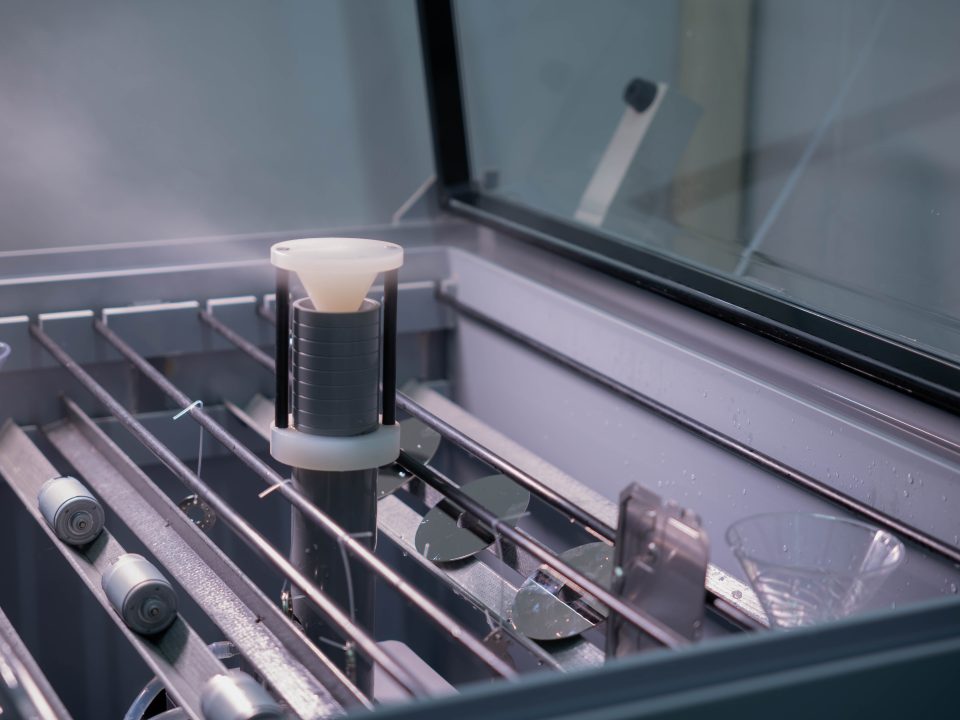
May 13, 2026
Corrosion Testing
READ MORECorrosion Testing & Salt Spray Test: How Strong Is Your Material Against the Elements?
When Rust Is More Than Just Ugly — It’s a Safety Risk
Every material degrades over time. But in industries where structural integrity is non-negotiable — construction, transportation, energy, aerospace, and marine — corrosion isn’t just a cosmetic issue. It’s a safety and business liability.
Corrosion testing gives manufacturers, engineers, and quality managers the data they need to answer a critical question before it becomes a costly problem: How long will this material last — and what will make it fail?
What Is Corrosion Testing?
Corrosion occurs when materials — particularly metals — react chemically with their environment. Water, oxygen, exhaust gases, acids, and alkalis are all common culprits. Corrosion testing is the systematic process of evaluating how well a material resists these reactions under controlled conditions.
The Four Goals of Corrosion Testing
Table
Objective
Why It Matters
⏳ Predict service life
Know how long a material will perform before it degrades
Select the right material
Match materials to specific environmental conditions — humidity, acidity, temperature
Improve production processes
Refine surface coatings or switch to more durable material options
️ Enhance safety
Prevent degradation that could lead to structural failure or hazardous conditions
The Gold Standard: Salt Spray Testing
Among all corrosion tests, the Salt Spray Test — also known as the Salt Fog Test — is one of the most widely used and internationally recognized methods for evaluating corrosion resistance.
By recreating a salt-laden, high-humidity atmosphere inside a controlled test chamber, the Salt Spray Test simulates the kind of corrosive environment that materials face in coastal regions, marine applications, and harsh outdoor settings — in a matter of hours or days, rather than months or years.
It’s the go-to test for industries including automotive manufacturing, aerospace, marine engineering, and construction — anywhere that materials must stand up to salt exposure over time.
How Does the Salt Spray Test Work?
The test follows a clear, standardized process designed to deliver consistent, reproducible results:
Step-by-Step Process
Step 1: Sample Preparation Test specimens are thoroughly cleaned and prepared to remove any surface contaminants that could interfere with accuracy. A clean baseline is essential for meaningful results.
⚙️ Step 2: Chamber Setup The test chamber is calibrated to precise environmental conditions as specified by the relevant standard — typically 35°C with controlled humidity — creating a uniform corrosive atmosphere for every test.
Step 3: Salt Fog Exposure A sodium chloride (NaCl) solution is atomized into a continuous fine mist within the sealed chamber. Specimens are exposed to this salt fog for a defined period — commonly 48, 96, or 240+ hours — depending on the standard and application requirements.
Step 4: Inspection and Evaluation Once the test period ends, each specimen is carefully examined for signs of corrosion damage, including:
Rust formation
Surface discoloration
Blistering or swelling
Cracking or delamination of coatings
International Standards: Testing You Can Trust Globally
Salt Spray Testing is governed by internationally recognized standards that ensure results are accurate, comparable, and credible across borders:
Table
Standard
Scope
Primary Industries
ASTM B117
The most widely adopted Salt Spray standard worldwide
Automotive, metal components
ISO 9227
International standard for salt corrosion testing
Construction materials, industrial equipment
JIS Z 2371
Japanese standard for Salt Spray testing
Machinery, industrial devices
Testing to these standards means your results are recognized by international buyers, regulatory bodies, and certification authorities — a critical advantage in export markets.
Reading the Results: What Does Your Material’s Performance Tell You?
Salt Spray Test outcomes provide clear, actionable insights into a material’s corrosion resistance:
Rust Formation
The appearance of rust is a direct indicator that the material’s protective barrier has been compromised. The earlier rust appears, the weaker the corrosion resistance.
Surface Discoloration
A material with strong corrosion resistance maintains its original color and appearance. Discoloration signals chemical breakdown at the surface.
Blistering or Cracking
Coating failure often appears as bubbling, peeling, or cracking — indicating that the protective layer has lost adhesion and can no longer shield the base material.
Where Salt Spray Testing Makes a Difference: Industry Applications
Automotive
Steel frames, alloy components, and exterior body parts are routinely tested to ensure they can withstand road salt, rain, and coastal driving conditions over the vehicle’s lifespan.
✈️ Aerospace
Aircraft components are exposed to high-altitude humidity and condensation. Salt Spray testing validates that critical parts maintain structural integrity in these demanding environments.
⚓ Marine
For vessels, offshore structures, and port infrastructure, resistance to saltwater corrosion isn’t optional — it’s essential. Salt Spray testing confirms that marine-grade materials live up to their name.
️ Construction
Structural fasteners, reinforcement materials, and cladding systems used in coastal or high-humidity environments must be rigorously tested before they’re trusted with long-term structural loads.
Maintaining Test Equipment: The Overlooked Key to Reliable Results
Even the best-designed test is only as good as the equipment running it. To ensure consistent, trustworthy results, Salt Spray test chambers require:
Regular cleaning — to prevent residue buildup that alters test conditions
Routine calibration — to verify that temperature, humidity, and spray concentration remain within specification
Periodic chamber inspection — to confirm structural integrity and seal performance
Skipping maintenance doesn’t just affect results — it can compromise the credibility of your entire testing program.
Summary: Why Salt Spray Testing Belongs in Your Quality Process
The Salt Spray Test is one of the most practical and cost-effective tools available for evaluating corrosion resistance. It delivers fast, standardized, internationally recognized results that help manufacturers:
✅ Validate material and coating performance before production
✅ Meet international quality and export requirements
✅ Identify weaknesses early — before they reach your customers
✅ Build products that genuinely last in the real world
Whether you’re developing a new coating system, qualifying a supplier’s materials, or troubleshooting a corrosion complaint from the field, Salt Spray testing gives you the answers you need — backed by science and international standards.
ALS Testing Services (Thailand) Co., Ltd. — Your Partner in Corrosion Testing
ALS Testing Services (Thailand) Co., Ltd. provides comprehensive chemical analysis and material testing services, powered by advanced technology and a team of experienced analytical specialists.
We offer Salt Spray Testing in full compliance with ASTM B117, ISO 9227, and JIS Z 2371, conducted within our ISO/IEC 17025 accredited laboratory — delivering results you can rely on and present with confidence to clients and regulators worldwide.
Tel: +(66) 2700 9665 Email: pathumthani@alsglobal.com
Ready to put your materials to the test? Contact us today and let our experts guide you toward the right testing solution for your product and industry.
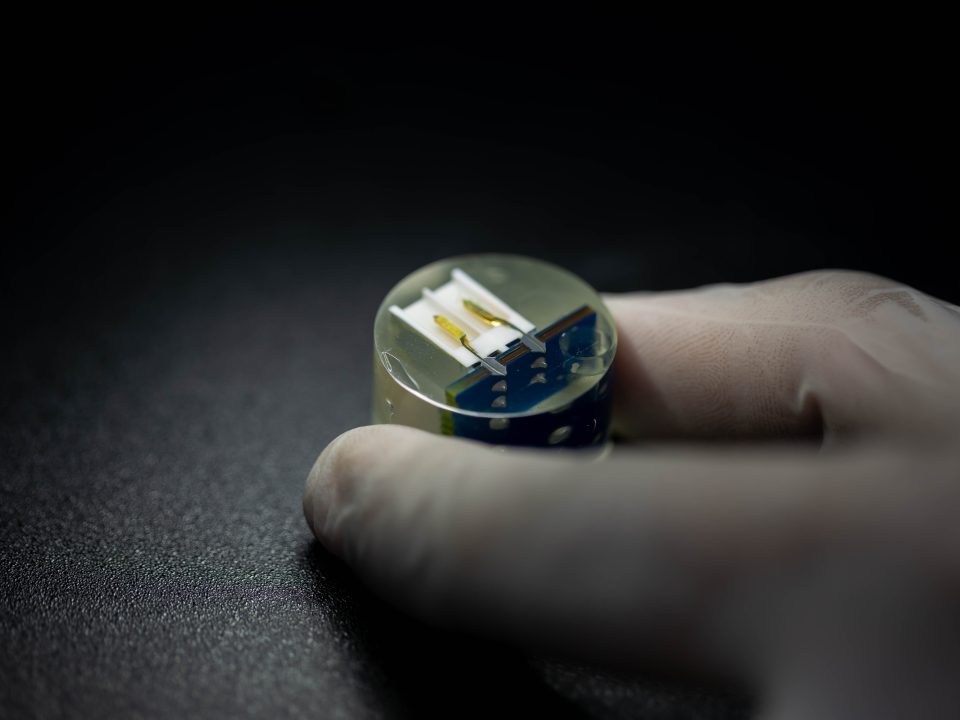
May 13, 2026
Failure Analysis & Reliability Testing: Building Products That Last
READ MOREWhy Getting to the Root of the Problem Changes Everything
What separates good manufacturers from great ones? It’s not just the ability to build products — it’s the ability to understand why they fail, and prevent it from happening again.
Failure analysis and reliability testing sit at the heart of modern quality engineering. Organizations that invest in these processes consistently achieve lower costs, higher customer satisfaction, and stronger market reputations. The numbers back this up: studies show that 73% of production defects can be prevented when the right failure prevention methods are in place.
Let’s break down exactly what these processes involve — and why they matter to your business.
Part 1: Failure Analysis — Finding the Real Cause, Not Just the Symptom
What Is Failure Analysis?
Failure analysis is the systematic process of tracing a problem back to its true origin — whether in the manufacturing process, the machinery, or the material itself. Think of it as forensic science for your production line.
The goal isn’t just to fix what went wrong. It’s to understand why it went wrong — so it never happens again.
Why It Matters
✅ Identifies the root cause of production problems, not just surface symptoms
Leads to targeted, effective corrective actions
⏱️ Reduces wasted time and resources in future production cycles
Prevents costly product recalls before they ever occur
Does your business have a systematic failure analysis process in place? If not, you may be one production run away from an expensive recall.
ALS offers a range of specialized testing methods to help clients pinpoint the exact cause of damage or defects — whether related to contamination, material inconsistencies, or process-related issues.
Failure Analysis Services at ALS
Optical Microscope Examination The essential first step in any failure investigation. Optical microscopy reveals surface defects, cracks, chips, and structural anomalies that are invisible to the naked eye — providing a rapid, cost-effective overview before more advanced techniques are applied.
Scanning Electron Microscopy (SEM) When optical microscopy isn’t enough, SEM takes you deeper. With magnification capabilities far beyond conventional microscopes — and built-in EDX capability for precise elemental composition analysis — SEM is the go-to technique for detailed failure characterization. It answers not just what failed, but what the material is made of at the point of failure.
Foreign Material Identification Contamination is one of the leading causes of product failures across industries. This service identifies and characterizes unwanted foreign substances in products — critical for food, pharmaceutical, and electronics manufacturing, where even trace contamination can have serious consequences.
Micro-metrological Measurements Precision dimensional analysis at the microscale, including:
Step height measurement
Surface flatness measurement
Surface roughness measurement
These measurements detect dimensional deviations at the micrometer level — catching issues that would otherwise go unnoticed until a product fails in the field.
FT-IR Microscopy Analysis Ideal for identifying organic compounds and polymer materials, FT-IR microscopy can accurately characterize materials and contaminants at the microscopic level. It’s an essential tool for the plastics and polymer industries, and widely used in international reliability testing standards.
Cross-sectional Analysis Sometimes you need to look inside. Cross-sectional analysis reveals the internal structure of a material or component — making it invaluable for evaluating coating integrity, layer adhesion, and interface quality between dissimilar materials. The insights gained directly inform process improvements and defect prevention strategies.
Part 2: Reliability Testing — Proving Your Product Will Go the Distance
What Is Reliability Testing?
A product might look perfect coming off the production line. But will it still perform six months later, in a humid warehouse in Southeast Asia, or under the hood of a car in the middle of a desert summer?
Reliability testing answers that question — before your customers do.
It’s the process of evaluating whether a product or material will function correctly throughout its expected service life, under realistic operating conditions. By simulating environmental stresses in a controlled laboratory setting, reliability testing compresses years of real-world wear into days or weeks of accelerated testing.
The Business Case for Reliability Testing
Table
Benefit
Impact
️ Validated product quality and safety
Confidence before market launch
Reduced product recalls
Studies show reliability testing can cut recall rates by up to 60%
Stronger customer trust
Fewer complaints, higher loyalty
International market access
Products certified to global standards open new doors
Long-term brand reputation
Consistent quality becomes your competitive advantage
⚗️ Reliability Testing Methods
Temperature-Humidity Cycling Simulates the natural cycles of temperature and humidity that products encounter in real-world environments. This test is particularly effective at detecting material fatigue caused by repeated expansion and contraction — a common hidden cause of premature failure in electronics and structural components.
Thermal Shock Testing What happens when a product goes from freezing cold to intense heat in seconds? Thermal shock testing finds out. By exposing products to sudden, extreme temperature changes, this test reveals whether materials and joints can withstand the thermal stresses of demanding operating environments.
Chemical Compatibility Studies Not all materials play well with the chemicals around them. This testing evaluates how materials respond to chemical exposure over time — identifying degradation, swelling, or structural breakdown before it causes field failures. For industries ranging from automotive to pharmaceuticals, chemical compatibility is a non-negotiable checkpoint.
Salt Spray Chamber Testing A controlled simulation of salt-laden environments — essential for metal components used in marine, coastal, or high-humidity settings. Salt spray testing predicts corrosion resistance and helps engineers accurately estimate product lifespan under corrosive conditions.
Xenon Arc Testing (UV Weathering) Sunlight is one of the most damaging forces that outdoor products face. Xenon arc testing replicates the full spectrum of solar radiation to evaluate how materials — paints, plastics, coatings — degrade under prolonged UV exposure. Leading manufacturers use this in parallel with broader risk assessments to validate outdoor durability.
Reliability Testing by Industry: Which Tests Matter Most?
Table
Testing Method
Electronics
Automotive
Food & Pharma
Construction
Temperature-Humidity Cycling
●●●●
●●●
●●
●●
Thermal Shock
●●●●
●●●●
●
●●●
Chemical Compatibility
●●
●●●
●●●●
●●●●
Salt Spray Test
●●
●●●●
●
●●●●
Xenon Arc (UV) Test
●●
●●●
●●
●●●●
● = Relevance level (more dots = higher importance for that industry)
The Bottom Line: Failure Analysis + Reliability Testing = Competitive Advantage
In a market where quality expectations are rising and the cost of failures is higher than ever, failure analysis and reliability testing are no longer optional — they’re essential.
Together, these two disciplines give manufacturers a complete quality assurance framework:
Failure analysis tells you what went wrong and why — enabling precise, permanent fixes
Reliability testing confirms your product will perform as promised — under every condition your customer will encounter
Organizations that embrace both consistently outperform those that don’t — with lower defect rates, fewer recalls, stronger customer relationships, and a brand reputation built on genuine, proven quality.
Ready to strengthen your products with professional failure analysis and reliability testing? Contact our specialists today for a consultation tailored to your specific industry and product needs — and take the first step toward quality that your customers can count on.
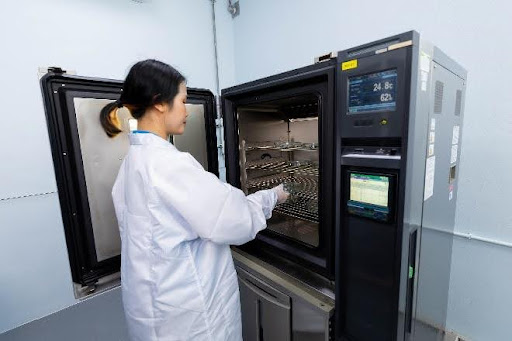
May 13, 2026
Material Testing: The Foundation of Industrial Excellence
READ MOREWhy Failure Analysis and Reliability Begin with Understanding Your Materials
In manufacturing and engineering, using the wrong material — or not fully understanding the one you’re using — can be catastrophic. Material testing is how industry professionals eliminate that uncertainty. It ensures that every component, structure, and product performs exactly as intended, under real-world conditions.
In today’s industrial landscape, effective material testing doesn’t just improve product quality — it reduces production risks, enhances safety, and prevents costly failures before they happen.
What Is Material Testing?
At its core, material testing is a systematic process for examining and evaluating the properties of a material — how it behaves, what it can withstand, and where its limits lie. These properties fall into three key categories:
⚙️ 1. Mechanical Properties
How does the material respond when force is applied? This covers strength, flexibility, toughness, and resistance to repeated stress — the properties that determine whether a material holds up or breaks down under load.
2. Chemical Properties
How does the material interact with its environment? This includes its composition, reactivity, corrosion resistance, and behavior when exposed to chemicals — critical for products used in harsh or chemically active environments.
3. Physical Properties
What are the material’s inherent physical characteristics? Density, thermal conductivity, and electrical conductivity all fall here — properties that define how a material fits into its intended application.
Together, these three dimensions give engineers and manufacturers a complete picture of a material’s capabilities — and its vulnerabilities — before anything goes into production.
Two Fundamental Approaches to Testing
1. Destructive Testing (DT)
As the name suggests, this approach involves permanently altering or breaking the test specimen to extract precise data about its mechanical properties. It’s the go-to method when you need hard numbers and real-world simulations.
Common Destructive Tests:
Table
Test
What It Measures
Tensile Test
Strength and elasticity under pulling force
Impact Test
Toughness and resistance to sudden shock
Hardness Test
Resistance to surface deformation under pressure
Fatigue Test
Service life under repeated cyclic loading
Why it’s valuable:
Delivers accurate, quantitative data on mechanical behavior
Closely simulates real operating conditions
Backed by internationally recognized standards such as ASTM and ISO
️ 2. Non-Destructive Testing (NDT)
NDT examines materials and components without causing any damage — meaning the tested part can go straight back into service. It’s the preferred choice for quality control, in-service inspection, and detecting hidden defects.
Common Non-Destructive Tests:
Table
Test
What It Detects
Ultrasonic Testing
Internal cracks, voids, and inclusions
Radiographic Testing (X-ray)
Internal structural defects and anomalies
Liquid Penetrant Testing
Surface-breaking cracks and discontinuities
Magnetic Particle Testing
Surface and near-surface defects in ferrous materials
Why it’s valuable:
Zero damage to the component — ready to use immediately after testing
Cost-effective over the long term — no material wastage
Can be applied to structures and machinery already in service, such as bridges, pipelines, and industrial equipment
Chemical Analysis: Looking Deeper into Material Composition
Understanding a material’s physical behavior is only part of the story. Chemical analysis reveals what a material is made of and how it will react in its environment. This is especially critical in industries like hard disk manufacturing and automotive production, where contamination or compositional inconsistencies can cause serious failures.
Key Chemical Analysis Instruments
GC-MS (Gas Chromatography–Mass Spectrometry) The gold standard for detecting organic compounds and contaminants. GC-MS separates and identifies volatile substances with extraordinary precision — down to the parts per million (ppm) or even parts per billion (ppb) level. Ideal for detecting trace impurities in materials.
HPLC (High Performance Liquid Chromatography) Designed for analyzing complex liquid mixtures, particularly compounds that are non-volatile or heat-sensitive. Used to quantify surface coatings, additives, and residual substances in a wide range of materials.
IC (Ion Chromatography) A specialized technique for detecting and measuring ions in solution — particularly those responsible for corrosion. Critical for materials used in humid environments or those in contact with liquid media.
Specialized Chemical Property Testing
Chemical Resistance Testing
Studies how materials degrade when exposed to real-world chemicals
Measures changes in weight, shape, and mechanical properties after chemical exposure
Predicts service life in chemically aggressive environments
Corrosion Testing
Determines corrosion rates of metals across different environments
Investigates corrosion mechanisms and contributing factors
Evaluates the effectiveness of anti-corrosion coatings and treatments
Migration Testing
Checks whether materials release substances into food, packaging, or medical devices
Assesses safety compliance with health and regulatory requirements
Measures the quantity of released substances under simulated use conditions
The Real Business Case for Material Testing
Investing in material testing isn’t just about compliance — it’s about protecting your business at every level:
Table
Benefit
What It Means in Practice
✅ Quality Assurance
Confirms materials meet required specifications before production
Product Development
Provides the data needed to design better, smarter products
Failure Prevention
Identifies weaknesses before they become costly problems
Cost Reduction
Prevents expensive recalls, rework, and liability claims
Regulatory Compliance
Meets legal and industry requirements across sectors
Frequently Asked Questions
Q: How long does material testing take? It depends on the type of test. Basic tests can be completed in a few hours, while complex evaluations — such as fatigue testing — may take several days or even weeks. A good laboratory will give you a clear timeline upfront.
Q: How do I know which testing method is right for my material? The right method depends on your objective, the type of material, and the properties you need to evaluate. Consulting with an experienced testing specialist ensures you choose the most efficient and accurate approach for your needs.
Q: Is material testing necessary for small businesses? Absolutely. Quality failures don’t discriminate by company size. The cost of a product recall, customer complaint, or safety incident will always far exceed the cost of testing. For small businesses especially, one quality failure can be devastating — making proactive testing a smart investment, not an optional extra.
The Bottom Line
Material testing is one of the most powerful tools available to manufacturers and engineers. Whether you’re validating a new material, troubleshooting a production issue, or ensuring compliance with international standards, systematic testing gives you the knowledge to make confident decisions.
The choice between destructive and non-destructive testing, mechanical and chemical analysis, isn’t an either/or — it’s a toolkit. The best results come from selecting the right combination for your specific application.
Investing in quality material testing doesn’t just protect your products — it protects your brand, your customers, and your bottom line.
For organizations that want true confidence in their products, partnering with an ISO/IEC 17025 accredited laboratory ensures that every test is conducted with the precision, reliability, and scientific rigor your industry demands.
Ready to put your materials to the test? Work with certified experts who can guide you from sample preparation to actionable results — and help you build products that genuinely last.
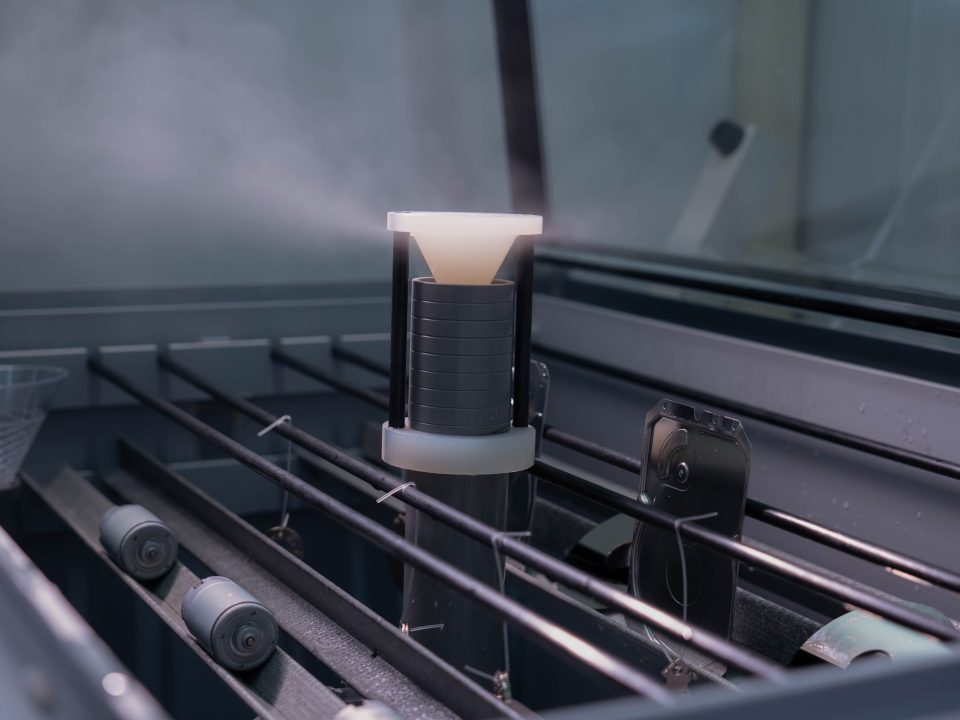
May 13, 2026
Salt Spray Testing for Metal Products
READ MORESalt Spray Test: The Quality Check Your Metal Products Can’t Afford to Skip
What Is a Salt Spray Test?
Picture this: instead of waiting years to find out whether your metal product will rust in the real world, you get a reliable answer in a matter of hours. That’s the power of the Salt Spray Test.
This internationally recognized standard method evaluates how well metals and surface coatings resist corrosion — and it’s a non-negotiable quality checkpoint for products like fasteners, automotive components, and structural engineering materials. By recreating a highly concentrated salt fog environment inside a controlled test chamber, the test artificially accelerates the corrosion process — delivering in hours what nature would take months or years to produce.
The result? A clear, data-backed prediction of how your product will hold up in the real world.
Why Metal Products Need This Test
Every metal — regardless of how well it’s manufactured — is vulnerable to rust and degradation when exposed to moisture and corrosive agents. This is especially relevant in Thailand, where a hot, humid climate and extensive coastal regions mean that salt-laden air is a daily reality for many products.
And rust isn’t just a cosmetic problem. Corrosion attacks the core mechanical properties that make metal products reliable:
️ Structural strength
Tensile resistance
️ Impact durability
⏳ Overall service life
That’s why global standards bodies — ISO, ASTM, and JIS — have established strict Salt Spray Test requirements. Failing to meet these benchmarks doesn’t just mean a lower-quality product. It means market rejection, failed certifications, and significant financial consequences.
How the Test Works: A Step-by-Step Breakdown
The Salt Spray Test follows a precise, systematic process designed to ensure consistent and reliable results:
Step 1: Sample Preparation
Metal specimens are thoroughly cleaned per ISO 8407 to remove any contaminants that could skew results. They’re then carefully positioned inside the Salt Spray Chamber at the correct angle for uniform exposure.
⚙️ Step 2: Controlled Test Conditions
The chamber maintains tightly regulated parameters throughout the test:
NaCl concentration: 5% ± 0.5%
Temperature: 35°C ± 2°C
pH level: 6.5 – 7.2
These conditions create a standardized corrosive environment that is repeatable and comparable across laboratories worldwide.
⏱️ Step 3: Test Duration by Standard
Test duration depends on the product’s intended application and the applicable international standard:
Table
Duration
Standard
Application
48 hours
ISO 9227
General consumer products
96 hours
ASTM B117
Industrial-grade components
240+ hours
JIS Z 2371
Harsh environment, high-durability products
Step 4: Evaluation and Analysis
Once the test concludes, every specimen is assessed against strict criteria:
Rust coverage — must not exceed the allowable threshold
Coating adhesion — no peeling, blistering, or delamination permitted
Remaining coating thickness — must not fall below the minimum requirement
Post-test mechanical properties — strength and durability must be retained
What Happens When Products Fail the Test?
In today’s export-driven manufacturing landscape, failing a Salt Spray Test carries consequences that go far beyond a rejected sample:
❌ Lost Certifications
Products that fail cannot obtain international quality certification — locking them out of markets with strict quality requirements.
Entire Shipments Rejected
Real-world cases from metal parts exporters show that non-compliant products can lead to full-batch rejections — with manufacturers bearing the cost of return shipping on top of lost revenue.
Long-Term Reputation Damage
A track record of delivering below-standard products erodes client trust — and trust, once lost, is difficult to rebuild. Future business opportunities quietly disappear.
Expensive Rework and Delays
Reworking rejected products means additional raw material costs, extra production time, and delayed delivery schedules — a compounding financial drain that hits your bottom line hard.
Choosing the Right Testing Partner
Not all test results are created equal. The credibility of your Salt Spray Test depends heavily on the laboratory conducting it. Here’s what to look for — and why ALS Testing delivers on every count:
Why ALS Testing?
ALS Testing is an ISO/IEC 17025 accredited laboratory — the international gold standard for testing and calibration facilities. Our Salt Spray testing services are purpose-built for the metals industry, offering:
Table
What We Offer
What It Means for You
High-precision instruments
Regularly calibrated equipment ensures consistent, reliable results every time
20+ years of expertise
Scientists and engineers with deep, hands-on knowledge of metals and corrosion
Internationally recognized reports
Test certificates accepted by global buyers, auditors, and regulatory bodies
Technical consultation
Expert guidance on how to improve your product based on test findings
The Bottom Line
The Salt Spray Test isn’t just a bureaucratic checkbox — it’s a strategic safeguard for your product quality, your export credentials, and your business reputation.
In a competitive global market, partnering with an accredited, trusted laboratory like ALS Testing gives you the confidence that your products are built to last — and the certified proof to back it up.
Don’t wait for the market to find your product’s weaknesses. Find them first.
Contact ALS Testing today to schedule your Salt Spray Test and take the next step toward internationally certified quality.
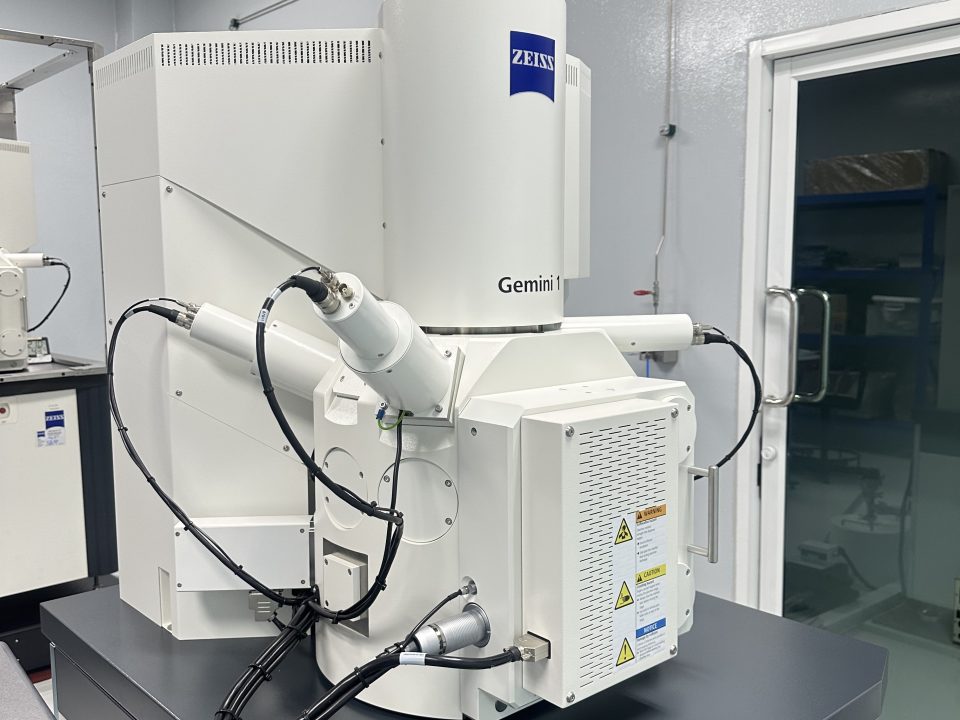
May 13, 2026
SEM-EDX: The Microscopic Eye That Reveals What Your Materials Are Really Made Of
READ MORESEM-EDX: The Microscopic Eye That Reveals What Your Materials Are Really Made Of
In engineering, research, and industrial quality control, knowing exactly what your materials are made of isn’t just useful — it’s essential. That’s where SEM-EDX (Scanning Electron Microscopy with Energy Dispersive X-ray Spectroscopy) comes in. This internationally recognized technique gives scientists and engineers an unprecedented look at material composition at the microscopic level, making it one of the most powerful analytical tools available today.
What Exactly Is SEM-EDX?
SEM-EDX combines two complementary technologies into one powerful system:
SEM — Scanning Electron Microscope
Imagine being able to zoom into a material’s surface up to 500,000 times its actual size, with nanometer-level resolution. That’s what SEM does. Instead of light, it uses a focused beam of electrons to generate incredibly detailed images of a material’s surface and internal structure — all in compliance with ISO/TS 24597.
⚡ EDX — Energy Dispersive X-ray Spectroscopy
While SEM shows you what something looks like, EDX tells you what it’s made of. When the electron beam strikes a material, it triggers the emission of X-rays with energy levels unique to each element. By measuring these X-rays, EDX can identify which elements are present and in what quantities — down to a detection limit of approximately 0.1–1% by weight.
Together, these two technologies give you a complete picture: both the physical structure and the chemical composition of a material, simultaneously, in the same location.
How Does It Actually Work?
The science behind SEM-EDX is sophisticated, but the process follows a clear and logical sequence:
Step 1: Sample Preparation
Samples are prepared according to ASTM E1508 standards — typically involving surface polishing, solvent cleaning, and in some cases, coating with a conductive material like gold or carbon to prevent charge buildup on non-conductive samples.
Step 2: SEM Imaging
When the electron beam hits the sample surface, it produces two types of signals:
Secondary electrons → reveal surface topography
Backscattered electrons → highlight compositional contrast
These signals are captured and reconstructed into high-resolution images that show the material’s microstructure in remarkable detail.
Step 3: EDX Elemental Analysis
High-energy electrons knock inner-shell electrons out of atoms, creating vacancies. When outer-shell electrons drop down to fill these gaps, they release X-rays — and crucially, each element releases X-rays at a characteristic energy level. This is essentially the element’s fingerprint.
Step 4: Identification and Quantification
The EDX detector captures these X-ray signals and compares them against reference databases using algorithms based on ISO 22309 and ASTM E1508 standards to identify elements and calculate their relative concentrations.
Typical accuracy:
Major elements: ±1–2%
Trace elements: ±5–10%
Why SEM-EDX Stands Out
Feature
What It Means for You
Micro-level precision
Analyze composition in areas as small as a few micrometers — ideal for examining grain boundaries, inclusions, or localized defects
️ Non-destructive analysis
The core sample structure remains intact, allowing follow-up testing with other techniques
Integrated analysis
Physical and chemical data are captured together, making correlations faster and more reliable
⏱️ Fast turnaround
Preliminary results in minutes; full analysis within 1–2 hours
Versatility
Works on metals, polymers, ceramics, composites, and semiconductors
What Are the Limitations?
No tool is perfect. Here’s what to keep in mind when using SEM-EDX:
Light element detection — EDX struggles with elements lighter than sodium (atomic number < 11). Hydrogen, helium, and lithium cannot be detected at all.
Quantitative precision — While highly capable, SEM-EDX may be less precise than dedicated techniques like XRF or ICP-MS for strict quantitative work.
Sample preparation requirements — Samples must have clean, smooth surfaces, which can occasionally be time-consuming and may alter the sample slightly.
Cost — SEM-EDX instruments are expensive to purchase and maintain, and require trained specialists to operate — making per-analysis costs higher than simpler methods.
Real-World Applications Across Industries
Metals & Materials
Case study: SEM-EDX identified sulfide segregation at crack boundaries in a failed oil pipeline — directly pinpointing the root cause of the failure (Journal of Failure Analysis and Prevention, Vol. 18, 2018)
Alloy composition verification per ASTM E1508
Phase segregation and elemental distribution analysis
Coating interface contamination detection
Electronics
Case study: SEM-EDX revealed silicon contamination in gold bonding layers as the cause of MEMS sensor failure (IEEE Transactions on Device and Materials Reliability, Vol. 20, 2020)
PCB and component defect analysis
Solder joint quality inspection
Semiconductor material characterization per IEC 61249
Automotive & Aerospace
Failure analysis of structural components
Weld quality and dissimilar material joint inspection
Wear and corrosion analysis per SAE J1757
R&D and Advanced Materials
Nanostructure characterization
Particle distribution analysis in composite materials
Thin-film uniformity inspection for electronics and solar cells
How to Choose the Right SEM-EDX Service Provider
Getting accurate, actionable results depends not just on the equipment — but on the expertise behind it. When selecting a laboratory, look for:
✅ ISO/IEC 17025 accreditation — The international gold standard for testing and calibration laboratories
✅ Modern, well-maintained instruments — Precision analysis requires instruments that are regularly calibrated and updated
✅ Experienced scientists and engineers — Skilled interpretation of SEM-EDX data is as important as the data itself
✅ Comprehensive reporting — Reports should include SEM images, EDX spectra, quantitative analysis, and expert interpretation — not just raw numbers
Why ALS?
ALS Testing is an ISO/IEC 17025 accredited laboratory with over 40 years of experience in materials analysis. We serve research institutions, universities, and industrial clients across a wide range of sectors — delivering:
High-precision SEM-EDX analysis using state-of-the-art instruments
Expert consultation and technical guidance
Actionable insights to help you solve problems and improve product quality
Whether you’re investigating a product failure, developing a new material, or verifying a supplier’s specifications, ALS Testing gives you the analytical depth and scientific expertise to make confident, informed decisions.
The Bottom Line
SEM-EDX is one of the most powerful tools available for understanding what materials are made of and why they behave the way they do. By combining high-resolution imaging with precise elemental analysis in a single workflow, it delivers insights that are simply not possible with conventional testing methods.
Choosing an accredited, experienced laboratory partner ensures that those insights are accurate, reliable, and truly useful — whether for quality control, failure investigation, or cutting-edge research.
Contact ALS Testing Services (Thailand) Co., Ltd. today to learn how SEM-EDX analysis can help you build better products with greater confidence.
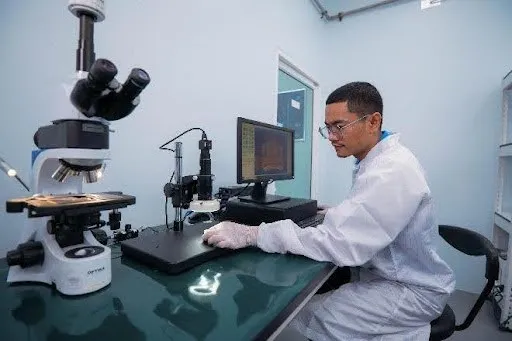
May 7, 2026
Material Testing: The Foundation of Quality, Safety, and Global Market Access
READ MOREIn today’s competitive manufacturing landscape, material testing is far more than a routine procedure — it’s a strategic investment that reflects a company’s commitment to quality, safety, and reliability. For many businesses, it’s also an unexpected key to unlocking global market opportunities.
By identifying substandard materials early and establishing credible quality benchmarks, material testing builds the trust that customers and trade partners demand. ALS Testing, part of the ALS Global network operating in over 70 countries including Thailand, brings world-class testing capabilities directly to Thai businesses.
5 Areas of Material Testing Expertise at ALS Testing
1. Metals & Coatings
Corrosion resistance testing: Salt Spray Test, CASS (accelerated corrosion simulation using specialized chemical agents)
Mechanical property testing: hardness, tensile, compression, and impact
Microstructural analysis: SEM/EDX, XRD, XRF for crystal structure and elemental composition
2. Plastics, Polymers & Chemical Materials
Organic compound identification using FT-IR spectroscopy
Xenon Arc Testing for UV-induced plastic degradation
Migration testing — detecting chemicals released from packaging or pharmaceutical/food-contact materials
3. Electronics & Semiconductors
Failure analysis of PCBs, PCBAs, and electronic components (cross-section analysis, failure investigation)
Component cleanliness and particle testing: LPC, VDA 19 / ISO 16232
Trace element and foreign substance detection: SEM/EDX, GC-MS, HPLC, IC
️ 4. Construction Materials & Environmental Samples
Contaminant analysis in construction materials: cement, ceramics, pesticides, and heavy metals
Waste material and soil testing to international standards
️ 5. Cosmetics, Food & Pharmaceuticals
Testing for allergens, contaminants, and microbial contamination
Sterility testing for pharmaceuticals, microbial limits for cosmetics, and pathogen detection in food products
Advanced Testing Instruments at ALS Testing
SEM/EDX — Microstructural & Elemental Analysis
Scanning Electron Microscopy combined with Energy-Dispersive X-ray Analysis provides high-resolution imaging of material surfaces, revealing cracks, defects, and foreign particles — along with precise elemental identification. Ideal for failure analysis and quality control of high-precision parts like electronics and plated metals.
FT-IR / HPLC / GC-MS / IC — Organic & Inorganic Chemical Analysis
These instruments form the backbone of chemical testing — identifying compounds in materials ranging from coatings, plastics, fragrances, and volatile substances to heavy metals, mineral salts, and ionic species. Used across food, cosmetics, pharmaceutical, electronics, and environmental testing.
XRD / XRF — Crystal Structure & Coating Analysis
Using X-ray technology, XRD identifies crystal phases in materials like minerals, ceramics, and metal coatings — including internal stress and crystal size analysis. XRF rapidly measures elemental composition without damaging the sample. Both are essential for material verification and quality assurance.
⚙️ Mechanical Testing
A comprehensive suite of tests evaluating the physical performance of materials:
Table
Test
Purpose
Tensile Test
Measures resistance to pulling forces and material elasticity
Hardness Test
Assesses resistance to scratching and wear
Impact Test
Evaluates energy absorption under sudden force without fracturing
Compression Test
Measures resistance to crushing and compressive loads
Additionally, environmental simulation tests assess material stability under repeated temperature and humidity cycling — predicting long-term performance in real-world conditions.
️ Environmental Stress Tests
Real-world conditions simulated in the lab:
Salt Spray Test — Simulates coastal corrosion from salt-laden air
Thermal Shock Test — Rapid temperature cycling to assess crack and deformation resistance
UV / Xenon Arc Exposure — Simulates sunlight and outdoor weathering degradation
5 Reasons Material Testing Is Essential for Global Business Growth
1. ✅ Quality Verification
Testing confirms that production materials meet defined specifications. Plastics must have the right tensile strength and flexibility. Metals must withstand loads without becoming brittle or fracturing. Technical testing at this level is the frontline defense against production failures and field defects.
2. ️ Safety Assessment
Before any product reaches the market, material testing evaluates real-world safety risks — from battery components that could overheat and ignite, to wire insulation that must handle current without melting, to medical device components that must withstand mechanical stress without failure. Every test is a layer of protection for the end user.
3. International Certification & Compliance
Exporting to global markets means meeting stringent quality, safety, and environmental regulations. Material testing validates compliance with international standards including ISO, ASTM, RoHS, and REACH — ensuring your products legally qualify for sale in target markets and strengthening brand credibility with international buyers.
4. Failure Analysis & Recall Prevention
When damage occurs — whether on the production line or after market launch — systematic failure analysis identifies the true root cause: material defects, design flaws, or external factors. Acting on these findings prevents recurrence, reduces costly product recalls, and protects long-term brand reputation.
5. Environmental & Health Compliance (ESG)
Material testing plays a vital role in detecting hazardous substances — such as lead, cadmium, and volatile organic compounds (VOCs) — that can accumulate in the body and cause long-term health damage. Rigorous testing from the production stage reduces consumer health risks and aligns your business with the ESG framework (Environmental, Social, Governance), which is increasingly expected by global investors, regulators, and customers alike.
Take Your Products to the World with ALS Testing
Material testing is the key that unlocks quality confidence, regulatory compliance, and global market access. With world-class technology, internationally accredited laboratories, and deep industry expertise across more than 70 countries, ALS Testing is the trusted partner Thai businesses need to:
Reduce production and quality risks
Meet international regulatory requirements
Build confidence with global customers and trade partners
Expand into international markets with certainty
Choose ALS Testing as your quality partner — and take your business to the global stage with confidence and sustainability.
May 7, 2026
Salt Spray Testing: Protecting Your Products Before They Reach the Market
READ MOREIn the manufacturing world, surface quality can make or break a product. Salt Spray Testing — also known as Salt Fog Testing — is one of the most widely used methods for evaluating a product’s resistance to corrosion. From metal components and steel parts to automotive hardware, electronics, and medical devices, this test simulates harsh real-world conditions inside a controlled chamber by continuously spraying a sodium chloride (NaCl) solution as a fine mist onto test samples.
The result? A clear, reliable picture of how long your product can withstand corrosive environments — before it ever leaves the factory.
Which Industries Need Salt Spray Testing?
Salt Spray Testing is versatile enough to serve a wide range of manufacturing sectors:
1. Automotive Industry
Car frames, bumpers, bolts, and screws must be evaluated for long-term durability in high-pollution, high-salt environments. Salt Spray Testing helps confirm that these components can handle real-world conditions throughout their intended service life.
️ 2. Construction Industry
Structural metal components used in buildings and bridges need to demonstrate both strength and corrosion resistance. Salt Spray Testing validates the safety and longevity of these critical materials.
⚡ 3. Electrical & Electronics Industry
Electrical and electronic components installed outdoors or in fluctuating weather conditions are constantly exposed to corrosion risk. Testing ensures they can withstand the elements without performance degradation.
⚓ 4. Marine Industry
Ship components and marine engines operate in one of the most corrosive environments on Earth. Salt Spray Testing closely simulates actual sea conditions, making it the ideal quality check for marine-grade materials.
️ 5. Metal Coating Industry
For coatings such as zinc, chromium, and paint finishes, the test verifies how effectively the coating prevents corrosion — revealing any weaknesses in the protective layer.
6. Outdoor Furniture & Equipment
Products like iron fences, ornamental gates, garden tables, and outdoor chairs face constant exposure to moisture and salt in the air. Salt Spray Testing helps prevent premature rusting and structural failure that can quickly damage a brand’s reputation.
3 Key Benefits of Salt Spray Testing
1. Catch Problems Before Delivery
Salt Spray Testing acts as a final quality checkpoint — revealing corrosion weaknesses before products reach the customer. If a product corrodes faster than expected, the engineering team can use that data to improve coating formulas, material selection, or packaging — preventing field failures in automotive parts, electrical equipment, and industrial tools.
2. Drive Continuous Product Improvement
The data generated by Salt Spray Testing provides actionable insights for ongoing product development — refining coating formulas, switching to more durable materials, or redesigning manufacturing processes — resulting in products with a longer service life that perform reliably in real customer environments.
3. Strengthen Brand Credibility
In today’s competitive market, customers and partners make decisions based on trust and verified quality. Test results from an internationally accredited laboratory demonstrate your commitment to excellence and give your brand a measurable, credible quality advantage.
How ALS Testing Delivers Salt Spray Results You Can Rely On
While some factories have basic in-house testing equipment, only a professional, accredited laboratory can provide results that are internationally recognized, referenceable for export, and accepted by global partners.
Here’s what makes ALS Testing’s approach stand out:
✅ ISO/IEC 17025 Accredited Laboratory
All Salt Spray Testing at ALS is conducted under full ISO/IEC 17025 accreditation, covering two key pillars:
Technical Competence — Tests are performed using calibrated instruments, by trained specialists, following standardized processes — ensuring every result is accurate, consistent, and traceable.
Quality Management System — Unlike general ISO 9001 certification, ISO/IEC 17025 is specifically designed for testing and calibration laboratories, ensuring every step of the workflow is systematic, transparent, and quality-controlled.
️ Strict Parameter Control with Calibrated Equipment
Every parameter in the Salt Spray process — concentration, temperature, spray rate, and duration — is rigorously controlled using calibrated instruments operated by experienced technicians. This ensures results that are scientifically defensible and reproducible.
Clear Reports with Expert Scientific Interpretation
Test reports include detailed records of observations, photographs, and environmental conditions at each testing interval. Results are analyzed and interpreted by qualified scientists, providing a direct pass/fail assessment against industry standards or customer-specific requirements.
Technical Consultation & Root Cause Solutions
When a product fails to meet the standard, our expert scientists don’t just report the result — they investigate the root cause. Whether it’s inadequate surface preparation, inconsistent coating application, or material-related vulnerabilities, we provide clear, actionable recommendations to resolve the issue.
Elevate Your Product Standards with ALS Testing
In an increasingly competitive manufacturing landscape, having internationally accredited, reliable test results is no longer optional — it’s essential for market access and customer confidence.
ALS Testing offers a complete, high-precision Salt Spray Testing service that helps you:
Detect problems before products are delivered
Reduce the risk of market failures and warranty claims
Use test findings to drive product improvement
Build stronger trust with customers and OEM partners
Choose ALS Testing for your Salt Spray needs — and take a confident step toward world-class product quality.
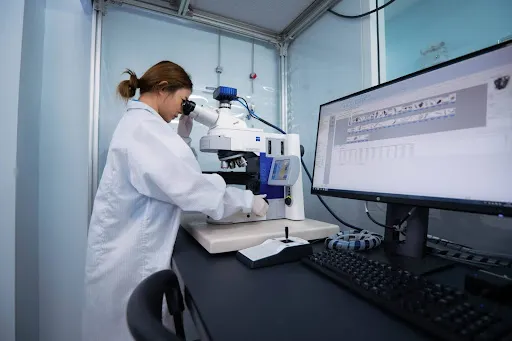
May 7, 2026
Dust & Particle Analysis: The Cleanliness Standard Your Business Can’t Afford to Ignore
READ MOREIn industries like automotive, electronics, and medical devices, cleanliness is not optional — it’s a fundamental requirement. Even microscopic dust particles can compromise product quality, trigger costly recalls, and damage your brand’s reputation. That’s why Dust Analysis (Particle Analysis) is a critical step that gives manufacturers the confidence their products meet both domestic and international standards.
ALS Testing Services (Thailand), a member of the ALS Global network with over 40 years of testing and quality inspection expertise, offers comprehensive, internationally accredited dust analysis services — helping businesses elevate product quality and reduce production risk.
What Is Dust Analysis?
Dust Analysis is the process of detecting, measuring, and classifying particulate contaminants found in components, finished products, or production environments. Using specialized tools and standards, it evaluates whether contamination levels affect:
✅ Product quality and performance
✅ Safety requirements
✅ International standards such as VDA 19 (Technical Cleanliness of Components) and ISO 16232:2018 (Cleanliness of Components in Automotive Manufacturing)
ALS Testing’s 3-Step Dust Analysis Service
Step 1: Validation of Extraction Parameters
Before analysis begins, we verify that the particle extraction method is appropriate for your specific component. This involves 6 repeated extractions, analyzed through a Particle Analyzer — ensuring accuracy and full compliance with VDA 19 / ISO 16232 criteria.
Step 2: Particle Analysis
Once extraction is validated, the extracted particles are classified into three main categories:
Table
Category
Examples
Metallic
Iron, aluminum, and copper shavings from wear and machining
Non-Metallic
Plastic, rubber, or environmental dust particles
Fiber
Threads from fabric, filters, or packaging materials
Results specify the quantity, size, and type of each particle — enabling manufacturers to assess whether their components meet cleanliness standards and to plan precise maintenance actions.
Step 3: Advanced Analysis
When deeper identification is needed, ALS Testing offers cutting-edge analytical technologies:
SEM/EDX (Scanning Electron Microscopy with Energy-Dispersive X-ray Analysis) — identifies the elemental composition of metallic particles
FTIR (Fourier Transform Infrared Spectroscopy) — identifies non-metallic particles such as plastics, rubber, and natural fibers
4 Business Benefits of Dust Analysis
1. ️ Reduce the Risk of Product Recalls
By detecting contamination before products reach customers, dust analysis helps you catch problems at the source — preventing costly recalls, economic losses, and damage to customer trust.
2. Compete Confidently in Global Markets
International markets — especially automotive, electronics, and medical — enforce strict cleanliness requirements. Standards-compliant dust analysis confirms your products are ready for these markets, opening doors to new trade opportunities.
3. ⚙️ Improve Production Process Efficiency
Particle data reveals contamination rates and their origins — whether from machinery, the work environment, or assembly steps. This actionable intelligence allows manufacturers to eliminate risk points and optimize production for the long term.
4. Build Customer and Partner Confidence
Test results from an ISO/IEC 17025-accredited laboratory provide tangible proof of quality — giving customers and business partners the assurance that your products undergo rigorous quality control. This is a powerful foundation for building lasting business relationships.
Which Industries Benefit from Dust Analysis?
Dust analysis isn’t limited to automotive alone. Here’s how it adds value across multiple sectors:
Food & Beverage
Dust and particles from packaging, machinery, or the environment can contaminate food products and cause failures under safety standards like HACCP, GMP, or ISO 22000. ALS particle analysis pinpoints contaminant types and sources — enabling targeted fixes such as improved packaging steps or upgraded air filtration systems.
Cosmetics & Personal Care
In skincare and cosmetics production, tiny particles — dust, fibers, or material fragments — can cause skin irritation, adverse reactions, or product degradation. Dust analysis helps manufacturers identify and eliminate contamination before products reach consumers.
⛽ Energy & Petrochemical
Dust particles, metal debris, and sediment deposits can cause blockages, accelerated wear, and equipment damage that disrupts operations. Regular particle analysis keeps pipes, hydraulic systems, and process equipment clean — maintaining both safety and operational efficiency.
Elevate Your Quality Standards with ALS Testing Services
In today’s highly competitive industrial landscape, cleanliness standards are not a box to check — they are a strategic quality tool. Neglecting dust analysis risks product defects, regulatory non-compliance, and reputational damage that is far more costly than the test itself.
ALS Testing Services (Thailand) is your trusted partner — backed by 40+ years of ALS Global expertise, world-class analytical standards, advanced technology, and clear, actionable reports designed to help you improve, compete, and grow.
Achieve world-class cleanliness confidence — with ALS Testing Services.
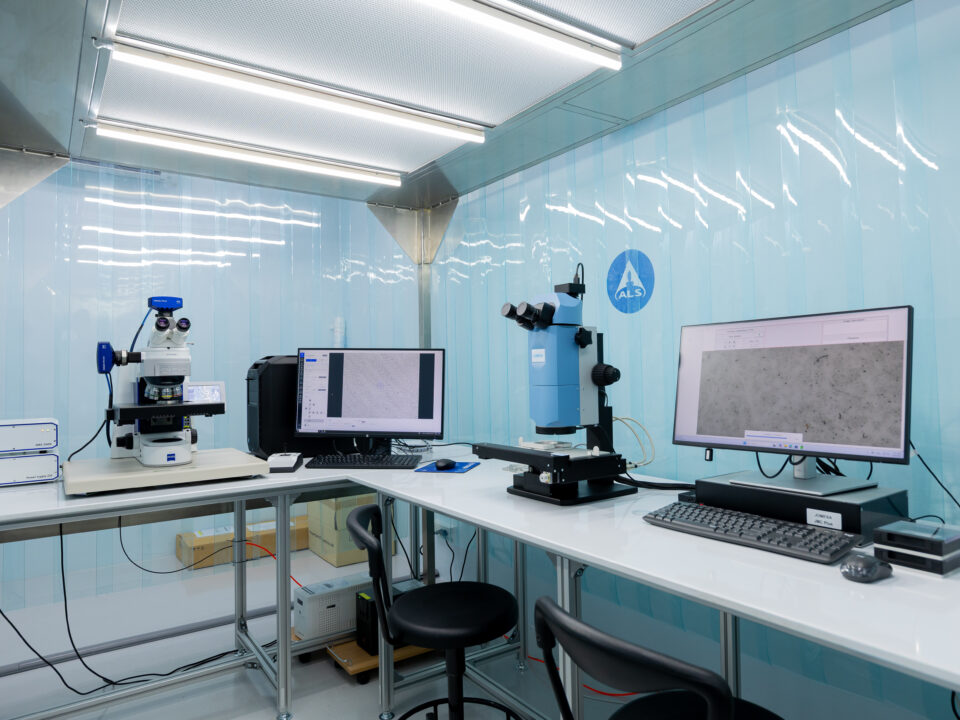
May 7, 2026
Particle Cleanliness Testing: The Invisible Quality Factor in Automotive Manufacturing
READ MOREIn the automotive industry, precision is everything. Countless components operate within hydraulic systems, oil circuits, and delicate mechanisms where even the tiniest foreign particle can cause serious problems. Yet one quality factor that manufacturers often overlook — despite its significant impact — is particle cleanliness.
Microscopic metal shavings, plastic fragments, or tiny fibers invisible to the naked eye can silently compromise the performance and lifespan of critical components. That’s why particle analysis is no longer just an inspection task — it’s a core pillar of any robust quality management system.
The Standards Behind the Science: VDA 19 & ISO 16232
Two internationally recognized standards govern particle cleanliness testing in the automotive world:
Table
Standard
Role
VDA 19
Provides procedural guidelines and test methods
ISO 16232
Establishes universal criteria for communication between OEMs and suppliers
Using both standards together ensures that particle analysis results are globally comparable, traceable, and credible — making it easier for factories to benchmark quality and meet OEM expectations.
Why Does It Matter?
Even particles just a few microns in size can trigger unexpected failures, such as:
Blocked oil channels in hydraulic systems
Increased friction and wear in precision moving parts
Stiffening of mechanical components, reducing responsiveness
False signals in electronic systems, causing malfunctions
Think of particle analysis as a preventive health check for your production line — identifying contamination risks before they turn into real-world failures.
How Particle Analysis Works: A 2-Step Process
Step 1: Decline Test — Validating Extraction Parameters
The first step under VDA 19 is the Decline Test, which verifies that the particle extraction method is appropriate for the specific component being tested. This confirms that all potentially contaminating particles are consistently extracted — with no variability caused by equipment or methodology.
⚠️ If the Decline Test fails, it signals instability in the production or cleaning process — which must be corrected before proceeding to the main analysis.
Step 2: Particle Analysis — Classification and Quantification
Once extraction is validated, particles are categorized into three groups:
Metallic — metal shavings or fragments from machining
Non-Metallic — plastic, rubber, or other solid particles
Fiber — thread-like contaminants from packaging or assembly
This classification tells manufacturers not just how many particles are present, but what type, what size, and — critically — where they came from: machining, assembly, surface finishing, or even component packaging.
4 Real Business Benefits of World-Class Particle Testing
1. ⬇️ Reduce Scrap and Production Costs
Once the source of contamination is pinpointed, targeted corrective actions — such as improving washing steps or adding dust protection — lead directly to lower scrap rates and more stable production output.
2. Boost Supplier Credibility with OEMs
Reporting to ISO 16232 means your results speak a universal language that OEMs understand and trust — eliminating interpretation gaps and positioning your factory as a reliable, quality-controlled supplier.
3. Enable Continuous Process Monitoring
Particle data allows factories to track cleanliness trends over time, enabling proactive maintenance planning and preventing quality issues from ever reaching the customer.
4. Build the Foundation for Zero Defect Manufacturing
By controlling quality at the particle level, factories can detect defects that are completely invisible to the human eye — moving steadily closer to the Zero Defect goal through data-driven, precisely targeted improvements.
Comprehensive Particle Cleanliness Testing with ALS Testing
For manufacturers committed to systematic cleanliness improvement, conducting particle analysis under VDA 19 and ISO 16232 within an ISO/IEC 17025-accredited laboratory is an essential step — one that reduces quality risk and aligns your processes with the expectations of global automotive manufacturers.
ALS Testing delivers a complete end-to-end service covering every stage:
✅ Custom extraction condition design for each component type ✅ Filtration, particle counting, and classification ✅ Categorization per VDA 19 / ISO 16232 criteria ✅ Detailed reports ready for direct OEM submission
The results can be immediately applied to improve production processes, plan waste reduction, and establish internal cleanliness standards aligned with your business goals.
Whether you’re looking to stabilize production, reduce scrap, strengthen OEM alignment, or lay the groundwork for Zero Defect Manufacturing — particle cleanliness analysis with ALS Testing is the confident first step toward getting there.
May 7, 2026
GC-MS Testing: The Science Behind Safe and High-Quality Products
READ MOREn today’s world, where product quality control and safety are non-negotiable for any business, GC-MS (Gas Chromatography-Mass Spectrometry) has emerged as one of the most powerful analytical tools available — giving businesses the confidence that their products are truly safe and up to standard.
In this article, we’ll break down what GC-MS is, why it matters across industries (especially food), and how ALS Testing Services (Thailand) can support your business with world-class testing expertise.
What Is GC-MS? A 4-Step Process Explained
GC-MS is an advanced chemical analysis technique that combines two powerful instruments:
GC (Gas Chromatography) — separates the individual compounds within a sample
MS (Mass Spectrometry) — identifies and measures each compound by analyzing its mass and chemical structure
Together, they allow scientists to identify and quantify substances in a sample with exceptional precision, speed, and detail.
Here’s how the process works, step by step:
Step 1: Sample Injection
The sample — prepared as a liquid or gas — is precisely injected into the GC instrument via an automated injector. A carrier gas then transports it into the separation column. Temperature and pressure are carefully controlled at this stage to preserve sample integrity and ensure accurate results.
Step 2: Compound Separation
Inside the GC column — a long, ultra-thin tube coated with a special material — individual compounds travel at different speeds depending on their chemical affinity to the coating and their boiling points. This causes each compound to exit the column at a different time, effectively separating the mixture into its individual components, one by one.
Step 3: ⚡ Compound Detection
Once separated, each compound enters the mass spectrometer, where its molecules are converted into ions through ionization (using electrical energy or light). The MS then measures each ion’s mass-to-charge ratio (m/z) — essentially a unique “fingerprint” for each substance.
Step 4: Data Analysis and Identification
The MS output is converted into a mass spectrum graph, which displays the distribution and intensity of ions. Analytical software then compares this spectrum against a large reference database of known chemical signatures to identify exactly what substances are present — and in what quantities. This data forms the foundation for evaluating product safety and quality.
Why GC-MS Matters: Key Benefits for Your Business
GC-MS plays a critical role across multiple industries — food & beverage, pharmaceuticals, environmental science, and chemicals. Here’s why it’s indispensable:
Highly Detailed Chemical and Contaminant Analysis
GC-MS can detect a wide range of complex organic compounds at extremely low concentration levels — from pesticide residues in food, to environmental toxins, to contaminants in medical products.
✅ Ensuring Product Quality and Safety
For businesses producing products that demand high safety standards — food, cosmetics, pharmaceuticals, or medical devices — GC-MS testing confirms that products are free from harmful substances, giving both you and your customers peace of mind.
Supporting Regulatory Compliance
Many countries and industries require strict testing for chemical residues and contaminants. GC-MS is the go-to tool for meeting these requirements, helping businesses avoid fines, product recalls, and regulatory penalties.
Gaining a Competitive Edge
Backed by precise analytical data, businesses can communicate product safety and quality to customers and partners with confidence — building lasting trust and sustainable market growth.
Why Choose ALS Testing for GC-MS?
High Accuracy with Modern, International-Standard Equipment
ALS Testing operates state-of-the-art GC-MS instruments under a rigorous quality management system certified to ISO/IEC 17025 — the international benchmark for testing and calibration laboratories. This means results that are accurate, reliable, and globally recognized.
End-to-End Service — From Sample to Report
Our full-service offering covers every step: professional sample receiving and preparation, advanced instrument analysis, and the delivery of clear, detailed, and easy-to-understand reports — so you can act on the findings immediately.
Wide Range of Sample Types Supported
Whether your samples are food, water, soil, air, cosmetics, or industrial products, our GC-MS service is built to handle them all — covering the diverse needs of businesses across many sectors.
In-Depth Expert Consultation
Our team of specialists doesn’t just hand you numbers — they walk you through the results, helping you understand the deeper insights so you can improve your production processes and quality controls effectively.
Test Your Products with World-Class GC-MS at ALS Testing Services
GC-MS is not just a laboratory technique — it’s a strategic business tool that helps reduce production risks, strengthen market confidence, and elevate product standards.
With proven experience and cutting-edge technology, ALS Testing Services (Thailand) is the trusted partner you need for comprehensive, internationally-accredited GC-MS testing.
Take your business to the next level of quality and safety — and step into a new standard of confidence with ALS Testing.
May 7, 2026
Corrosion in the EV Era: Why Salt Spray Testing Matters More Than Ever
READ MOREAs the automotive industry shifts into the electric vehicle (EV) age, countless components are being redesigned to be lighter, more energy-efficient, and capable of handling high-voltage electrical systems. Modern EVs are no longer built from steel alone — they incorporate aluminum alloys, mixed metals, plastics, and extensive electronics, all working together in increasingly complex structures.
But that complexity comes with a hidden risk: corrosion.
The Corrosion Challenge in Electric Vehicles
The multi-material construction of EVs creates several corrosion vulnerabilities, including:
Localized (pitting) corrosion on aluminum and alloy components
⚡ Galvanic corrosion at joints where dissimilar metals meet
Degradation of electrical connectors and busbars from salt mist and moisture
These risks are especially significant in high-humidity coastal areas, or heavily polluted urban environments, where corrosion can accelerate far faster than engineers anticipate — putting long-term user safety at risk.
The most vulnerable areas in an EV include:
Underbody structural panels
Battery packs and mounting brackets
Electrical connectors and wiring trays
Battery cooling pipes and heat dissipation plates
For both parts suppliers and original equipment manufacturers (OEMs), managing corrosion is not just about aesthetics — it directly affects safety, reliability, and long-term costs. This is where the Salt Spray Test becomes essential.
What Can a Salt Spray Test Tell You About EV Components?
The Salt Spray Test (also known as a Salt Fog Test) simulates a harsh environment of continuous salt mist and high humidity to assess how well a component resists corrosion. Here’s what it can reveal:
1. When Corrosion First Appears
One of the key metrics is recording exactly when rust or surface changes begin after the test starts. This data can be benchmarked against OEM specifications to determine pass or fail.
2. The Pattern of Corrosion
The test doesn’t just tell you whether corrosion occurs — it shows how it occurs. Engineers can identify:
Pitting on aluminum surfaces
Coating delamination (peeling protective layers)
Corrosion at dissimilar-metal junctions
These insights help manufacturers pinpoint whether the root cause lies in the component design, surface preparation, or the coating process itself.
3. ️ Coating System Effectiveness
For coated or painted components — such as battery brackets, underbody panels, or electric motor housings — the test verifies whether the protective coating actually works. Early peeling or rust signals a weakness in the coating formula or process that needs to be addressed.
Why Salt Spray Testing Is Critical to OEM Standards
The increased complexity and safety risks of EV structures have made corrosion testing a mandatory quality gate for OEM approval. Here’s why:
1. Reducing High-Voltage Electrical Safety Risks
Electrical connectors, busbars, and battery components are highly susceptible to oxide film formation and surface corrosion. Keeping these free from salt-induced corrosion helps prevent short circuits and abnormal heat buildup in the electrical system.
2. Ensuring Structural Reliability
Underbody frames, battery mounting assemblies, and load-bearing structures that rust prematurely can lose structural strength — with serious safety implications. Passing the Salt Spray Test to OEM standards confirms that components can withstand real-world conditions.
3. Meeting International Standards and Enabling Traceability
Global OEMs reference standards such as ASTM B117 and ISO 9227, alongside their own internal specifications. Certified lab results are critical for part approval before production begins at an industrial scale.
The data from Salt Spray Testing is not just a pass/fail verdict — it is a strategic tool that gives engineering and quality teams a clear direction for continuous improvement.
Test Your EV Components with ALS Testing
For manufacturers aiming to become suppliers to EV-era OEMs, taking Salt Spray Test data seriously can meaningfully reduce scrap rates, minimize warranty claims, and open doors to long-term business opportunities.
ALS Testing provides corrosion testing under strictly controlled Salt Spray conditions, fully aligned with international automotive industry standards — covering sample preparation, salt solution control, temperature management, and detailed reports that can be referenced directly with OEMs.
✅ Elevate your competitiveness in the global market with Salt Spray Testing from the expert team at ALS Testing — a key step toward confident OEM approval, today and into the future of electric mobility.
Interested in Salt Spray Testing services? Contact ALS Testing to learn how we can support your EV component qualification process.
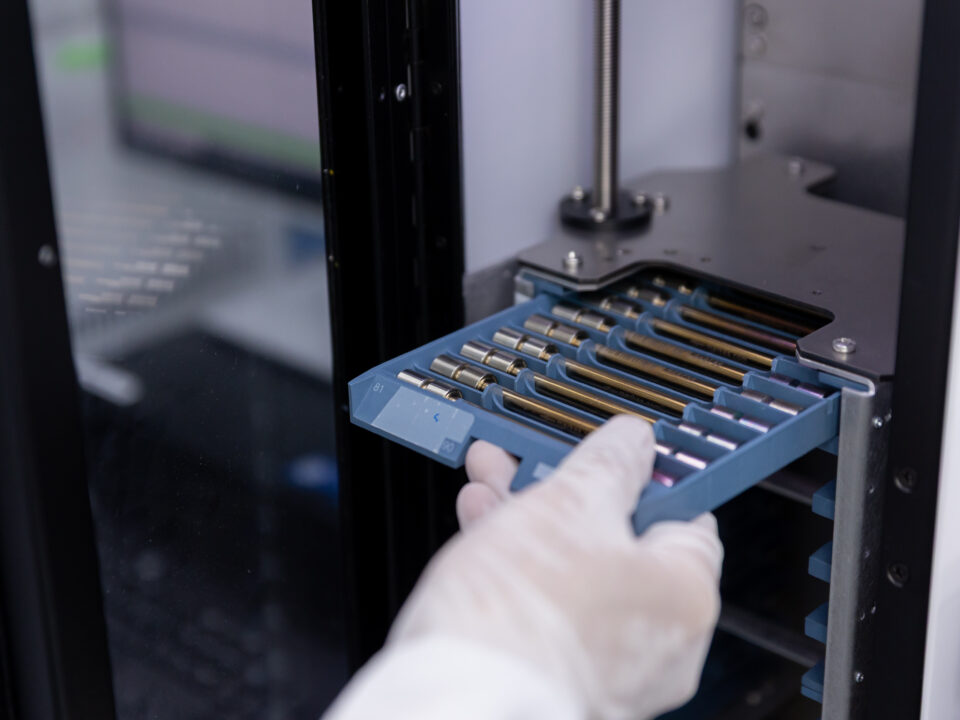
May 6, 2026
ESG and VOCs Analysis: Why Verifiable Data Is the New Standard for Sustainable Business
READ MOREESG Is No Longer Just a Trend — It Is a Business Imperative
Environmental, Social, and Governance (ESG) reporting has moved from a voluntary best practice to a core business requirement. Investors, regulators, customers, and the public now expect organizations to back their sustainability claims with data that can actually be verified.
For industrial organizations, one of the most critical — and often underestimated — environmental indicators is Volatile Organic Compounds (VOCs). These invisible chemical compounds touch all three pillars of ESG, making accurate VOCs analysis far more than a technical exercise.
What Are VOCs — and Why Do They Matter for ESG?
Volatile Organic Compounds (VOCs) are chemicals that evaporate easily at room temperature. They are released during manufacturing processes, fuel combustion, and a wide range of industrial activities — often without being seen or smelled until concentrations reach harmful levels.
Their relevance to ESG spans all three dimensions:
Table
ESG Pillar
How VOCs Connect
Environment
VOCs monitoring reflects how effectively an organization controls its air emissions and environmental impact
Social
Exposure to VOCs directly affects worker health and safety — a core social responsibility
Governance
Accurate, traceable VOCs reporting demonstrates organizational transparency and accountability
VOCs data is not just a technical concentration value. It is evidence of how seriously an organization takes its responsibility to people and the planet.
Accuracy Is Everything — Here Is Why
Getting VOCs analysis right requires two things working together: proper sample collection and laboratory-grade analysis.
Portable field instruments like PID detectors are useful for quick, on-site readings — but they cannot identify specific compounds or produce the defensible results required for formal ESG reporting.
For that, laboratory analysis is essential. The most widely used technologies include:
GC-MS (Gas Chromatography–Mass Spectrometry) — the gold standard for identifying and quantifying individual VOC compounds with precision
HSGC (Headspace Gas Chromatography) — optimized for analyzing VOCs in water samples
SPE (Solid Phase Extraction) — used to prepare soil and water samples before GC-MS analysis
But technology alone is not enough. The accuracy of results also depends on:
How samples are collected and preserved
The chain of custody maintained during transport
The laboratory’s internal quality control systems
Weak processes at any of these stages can produce misleading data — and in an ESG context, misleading data carries real consequences.
VOCs Across Three Environmental Media
VOCs do not stay in one place. They migrate through air, water, and soil — which means effective monitoring requires a tailored approach for each medium.
️ Air
Air samples are collected using sorbent tubes or continuous sampling methods, then analyzed by GC-MS to identify specific compounds and concentrations. VOCs air monitoring is essential for:
Controlling workplace air quality
Assessing emission levels in and around industrial facilities
Meeting occupational health and environmental regulations
Water
Because VOCs evaporate rapidly, water sampling demands airtight containers and careful handling to prevent loss before analysis. Using HSGC combined with GC-MS delivers precise results critical for:
Evaluating water quality near industrial sites
Assessing safety for consumption or discharge
Supporting environmental impact assessments
Soil
In areas with a history of industrial activity, multi-point soil sampling ensures comprehensive coverage. Samples undergo SPE preparation before GC-MS analysis, providing data essential for:
Long-term environmental risk assessment
Contamination source identification
Regulatory compliance and site remediation planning
The Laboratory’s Role in Building ESG Credibility
In the ESG framework — particularly under Environment and Governance — environmental data must be both accurate and traceable. This is where the laboratory becomes a strategic partner, not just a service provider.
A credible accredited laboratory delivers:
✅ Rigorous quality control at every stage of analysis ✅ Calibrated instruments maintained to international standards ✅ Systematic documentation that creates a clear audit trail ✅ Results that hold up — whether submitted to regulators, included in ESG reports, or shared with investors and partners
When VOCs data comes from a reliable, accredited source, it transforms from raw numbers into verifiable proof of environmental stewardship.
Data That Means Something
In the age of ESG, the numbers in your sustainability report are scrutinized more carefully than ever. They need to be:
Accurate — reflecting what is actually happening in your operations
Traceable — supported by documented methodology and chain of custody
Credible — produced by laboratories recognized locally and internationally
A concentration value is just a number. Verifiable, well-documented VOCs data is evidence — of accountability, of transparency, and of a genuine commitment to sustainability.
Organizations that invest in rigorous VOCs analysis are not just checking a compliance box. They are building the data foundation that ESG credibility requires.
Learn more about VOCs analysis services: www.alstesting.co.th/volatile-organic-compounds-vocs

May 6, 2026
Is Your Carbon Footprint Report Built on Solid Data?
READ MOREWhy Chemical Testing Is the Foundation of Credible ESG Reporting
Numbers Only Matter If They Are Right
Every organization calculating its Carbon Footprint is working toward the same goal: an accurate, credible, and defensible picture of its greenhouse gas emissions. But here is the question most overlook —
How reliable is the data behind those numbers?
Carbon Footprint reporting, as defined by frameworks like the GHG Protocol and ISO 14064, is fundamentally a calculation. It takes Activity Data — fuel consumed, waste generated, refrigerants used — and multiplies it by established Emission Factors to estimate total greenhouse gas output.
The formula is standardized. The methodology is clear. But if the input data is inaccurate, even a perfectly executed calculation produces a misleading result.
This is exactly where chemical testing becomes essential.
What Is Chemical Testing — and What Does It Have to Do with Carbon?
Chemical testing is the process of collecting and analyzing samples from environmental media — air, water, soil, waste streams, and process gases — using standardized methods and equipment. The goal is to determine concentration, composition, and potential impact on the environment, human health, or regulatory compliance.
In the context of Carbon Footprint reporting, chemical testing is not about measuring carbon directly in a lab. Rather, it is about validating the quality of Activity Data — ensuring that what goes into the calculation actually reflects what is happening on the ground.
Carbon Footprint is the calculation. Chemical testing is what makes the inputs worth calculating.
Where Chemical Testing Makes a Real Difference
In complex industrial operations, relying on generic averages or assumptions introduces significant margin for error. Chemical analysis replaces those assumptions with real, site-specific data:
Table
Application
How It Improves Accuracy
Fuel Heating Value Analysis
Uses actual calorific value instead of generic averages
Stack Gas Measurement (CO₂, CH₄, N₂O)
Directly assesses combustion efficiency and emission rates
Wastewater COD Analysis
Calculates methane generation potential from treatment systems
❄️ Refrigerant Identification (HFCs, PFCs)
Ensures the correct Global Warming Potential (GWP) value is applied
Raw Material Composition Analysis
Supports accurate Scope 3 emission assessments
In each of these cases, chemical testing acts as a data verification layer — not replacing the Carbon Footprint calculation, but making the data that feeds it far more trustworthy.
Why Data Integrity Is Non-Negotiable
A Carbon Footprint report that earns stakeholder trust is not just mathematically correct — it is traceable, transparent, and verifiable. The factors that determine credibility go beyond the calculation itself:
✅ How Activity Data was collected and recorded
✅ Whether international standards are clearly referenced
✅ Internal quality control systems in place
✅ Transparency throughout the reporting process
Within the broader ESG framework — particularly on the environmental and governance dimensions — verifiable data is the bedrock of long-term credibility. Investors, regulators, customers, and partners are increasingly asking not just “What is your carbon footprint?” but “How do you know?”
More Than a Statistic — A Reflection of Who You Are
The figures in a Carbon Footprint report represent far more than emissions data. They are a statement of organizational accountability and transparency.
Choosing to ground your reporting in accurate, chemically verified data does two things at once:
Reduces the risk of reporting errors that could damage credibility or invite regulatory scrutiny
Builds a stronger foundation for long-term sustainability — one that holds up under audit, due diligence, and public disclosure
In an era where ESG performance is increasingly tied to business reputation and investment attractiveness, the quality of your data is the quality of your commitment.
The carbon numbers you report are only as strong as the data behind them. Make sure yours are built to last.
Learn more about ALS Testing’s Chemical Testing Services: https://www.alstesting.co.th/services/
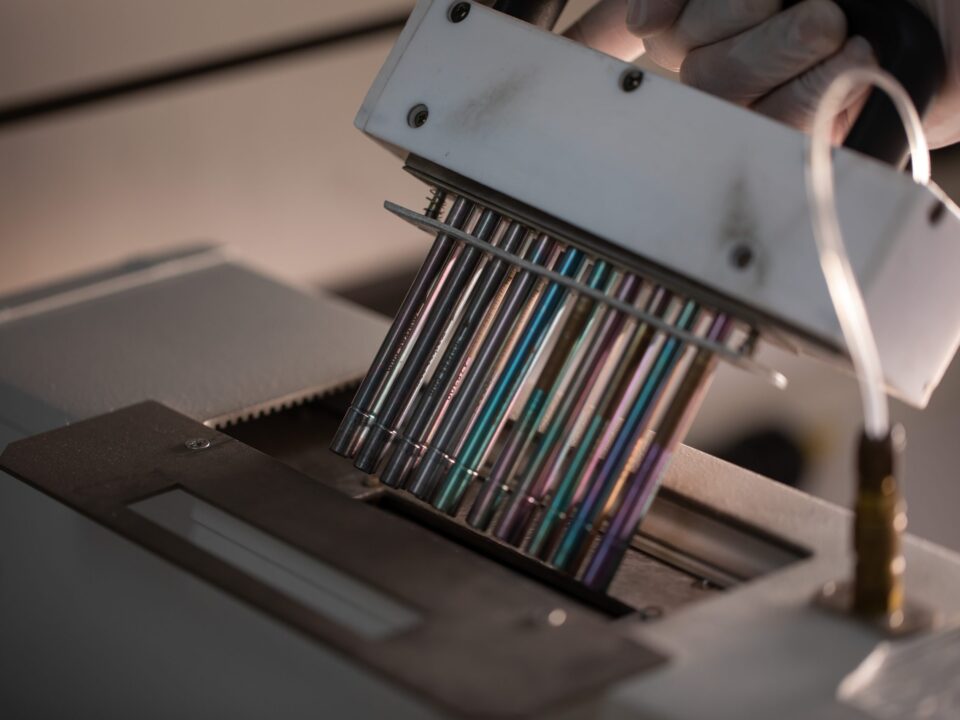
May 6, 2026
Hidden Risks, Real Harm — How VOCs and FT-IR Keep Your Workers Safe
READ MOREThe Invisible Threat in Every Factory
Dust.
Fumes.
Chemical vapors.
They are present in nearly every manufacturing environment — and most of the time, you cannot see them.
As air pollution and industrial health concerns grow globally, workplace safety is no longer just a regulatory checkbox. Employees, business owners, and the public are paying closer attention to what workers breathe every day. Regulations are tightening. Standards are rising. And for good reason.
In many production processes, the real danger is not the accident you can see — it is the hazard you cannot.
Vapors released from solvents, paints, and adhesives
Fine dust and particles generated from grinding, cutting, or friction
Invisible residues and contaminants that accumulate on work surfaces over time
None of these cause immediate, dramatic symptoms. But prolonged exposure quietly damages the respiratory system, the nervous system, and overall health — often before anyone realizes there is a problem.
Factories that want to grow sustainably need tools that make these invisible risks visible. That is exactly what VOCs testing and FT-IR analysis are designed to do.
Two Tests, One Powerful Combination
VOCs Testing — What Is in the Air?
VOCs (Volatile Organic Compounds) testing measures the concentration of airborne organic chemicals in the workplace — production floors, enclosed processing areas, and anywhere chemical use is involved.
The results give factories clear, actionable intelligence:
Which areas carry the highest inhalation risk
When contamination levels spike above safe thresholds
Where to improve ventilation or adjust processes
Perhaps most importantly, having real numbers eliminates uncertainty. When employees ask “Is the air here safe?”, management can answer with data — not reassurances.
FT-IR Analysis — What Is That Dust?
FT-IR (Fourier Transform Infrared Spectroscopy) takes a different but equally important angle. Rather than measuring air quality, it identifies the chemical identity of solid particles, residues, and contamination found in the workplace.
FT-IR works by analyzing how a material absorbs infrared light — producing a unique chemical “fingerprint” for each substance. Even from a tiny sample, or from dust invisible to the naked eye, FT-IR can accurately identify:
Plastics, rubber, and resins
Fibers and polymer materials
Chemical residues and unknown contaminants
Knowing exactly what the dust is allows factories to:
Pinpoint the true source of contamination
Adjust production processes or switch to safer materials
Reduce product defects and production waste
Better Together
VOCs and FT-IR are highly effective individually — but together, they provide a complete picture.
Table
VOCs Testing
FT-IR Analysis
Focus
Air quality
Particle & residue identity
Answers
What are workers breathing?
What is this dust or contaminant?
Key Benefit
Health risk assessment
Root cause identification
When used in combination, factories gain insight into both the air their people breathe and the materials their processes produce — enabling smarter, more targeted improvements across health, safety, and production quality.
Long-Term Benefits That Go Beyond Compliance
Better Production Quality
When you know exactly where contamination comes from, you can control it. Fewer defects. More consistent output. Greater confidence from customers and partners.
Lower Operating Costs
Solving problems with precise data eliminates costly guesswork — less rework, fewer unplanned line stoppages, and less wasted raw material.
A Workforce That Trusts You
When employees see that air quality and contamination are being actively monitored, they feel valued — not overlooked. That trust translates into stronger engagement, fewer grievances, and lower turnover over time.
Audit-Ready, Every Day
VOCs and FT-IR results serve as verifiable, scientific documentation of systematic risk management — whether facing regulatory inspections, occupational health audits, or assessments from business partners and clients.
From Invisible Risk to Informed Action — with ALS Testing
Creating a truly safe workplace is not a one-time exercise. It is an ongoing commitment built on reliable data.
By combining VOCs and FT-IR testing, factories can transform hidden risks into actionable insights — enabling precise adjustments to ventilation systems, material choices, and work procedures that protect both people and processes.
ALS Testing — a globally accredited laboratory operating in Thailand — brings world-class VOCs and FT-IR testing to your doorstep. No overseas sample submissions. No complicated logistics. Just internationally standardized results that give your factory the clarity it needs to keep improving.
Because workplace safety should not be a policy on paper. It should be part of how your business grows.
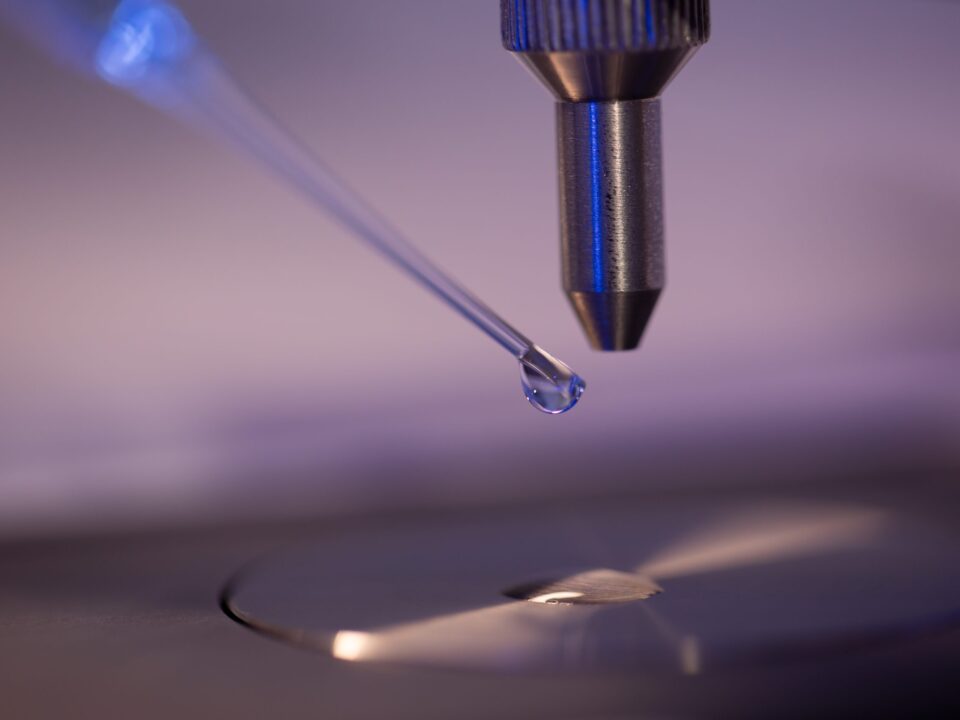
May 6, 2026
FT-IR Testing: Getting Quality Right from the Start
READ MOREThe Real Cost of Wrong Materials
In industrial and construction projects, quality failures rarely announce themselves immediately. By the time a problem surfaces — a coating that peels, a sealant that cracks, a polymer that fails under load — the damage is already done, and the cost to fix it is exponentially higher than it would have been to prevent it.
The most effective quality strategy is not inspection after the fact. It is verification at the source.
That is precisely where FT-IR (Fourier Transform Infrared Spectroscopy) plays a decisive role — as a powerful, science-backed first line of quality control.
What FT-IR Actually Does
FT-IR is an analytical technique that identifies the chemical structure of a material by measuring how it absorbs infrared light. Each material produces a unique spectral “fingerprint,” revealing:
What the material truly is — not just what it appears to be
What chemical groups it contains
Whether any chemical changes have occurred
It does not measure structural strength or load-bearing capacity. What it does — with speed and precision — is confirm that the material in your hands is exactly what it is supposed to be.
10 Ways FT-IR Strengthens First-Line QC
1. Confirm Material Identity Before Use
Is this epoxy, polyurethane, silicone, or something else entirely? FT-IR answers that question with certainty — preventing the wrong material from ever entering your process.
2. Filter Materials Before Expensive Testing
Mechanical and safety testing is time-consuming and costly. FT-IR acts as the first gate, ensuring only chemically verified materials move forward — saving both time and resources.
3. Track Quality Consistency Across Production Lots
The same product from different production batches is not always the same. FT-IR detects batch-to-batch variation, keeping quality consistent from project start to finish.
4. ⚠️ Detect Formula Changes or Unauthorized Substitutions
If a supplier changes raw materials, reduces key components, or delivers an off-spec formulation, FT-IR will reveal the chemical difference — clearly and objectively.
5. ️ Assess Material Condition, Not Just Type
FT-IR goes beyond identification. It can detect signs of thermal degradation, UV damage, or oxidation — providing early warning signals before a material fails in the field.
6. ️ Replace Guesswork with Science
Many materials look identical to the naked eye. FT-IR eliminates reliance on visual inspection or experience alone, replacing assumptions with hard analytical evidence.
7. Reduce the Long-Term Cost of Failure
Catching the wrong or degraded material at incoming inspection costs a fraction of what field failures, rework, or post-installation damage will demand. Prevention always pays.
8. Build a Traceable Quality Record
FT-IR results are documented, verifiable, and traceable — serving as reliable technical evidence in quality disputes and informed decision-making for engineers and management alike.
9. ⚡ Fast, Non-Destructive, and Non-Disruptive
Testing is rapid, requires minimal sample material, and does not interrupt production lines — making it perfectly suited for incoming inspection and routine spot checks.
10. A Smart First Step, Not the Final Word
FT-IR is a precision screening tool, not a replacement for structural or safety testing. By confirming chemical suitability first, it makes every subsequent test more targeted, more meaningful, and more cost-effective.
Where FT-IR Is Commonly Applied
FT-IR delivers strong results for any material with a defined chemical composition — particularly where materials look similar but perform very differently:
Table
Material Category
Why FT-IR Matters
Coatings & Anti-Corrosion Products
Verify formulation integrity before application
Construction Adhesives & Sealants
Confirm chemical type and detect substitution
Polymers, Rubber & Damping Components
Identify grade and detect degradation
Insulation, Foam & Plastics
Distinguish between visually similar materials
Know the Limits
FT-IR is a tool of precision — not a universal solution. It cannot replace structural load testing, crack detection, or engineering safety assessments. Those require dedicated mechanical and non-destructive testing methods. Used within its proper scope, however, FT-IR is one of the most efficient QC investments available.
Why ALS Testing
ALS Testing is an internationally accredited laboratory based in Thailand, delivering FT-IR analysis as part of a comprehensive, science-driven QC approach.
When materials enter the process already verified for chemical identity, condition, and conformance, the entire quality system performs better:
✅ Fewer surprises downstream
✅ More targeted advanced testing
✅ Stronger documentation for technical and commercial decisions
✅ Lower risk of costly late-stage failures
FT-IR with ALS Testing does not just check a box.
It changes the way organizations think about quality — from reactive to proactive, from assumption to evidence, from risk to confidence.
When first-line QC is right, everything that follows works better.
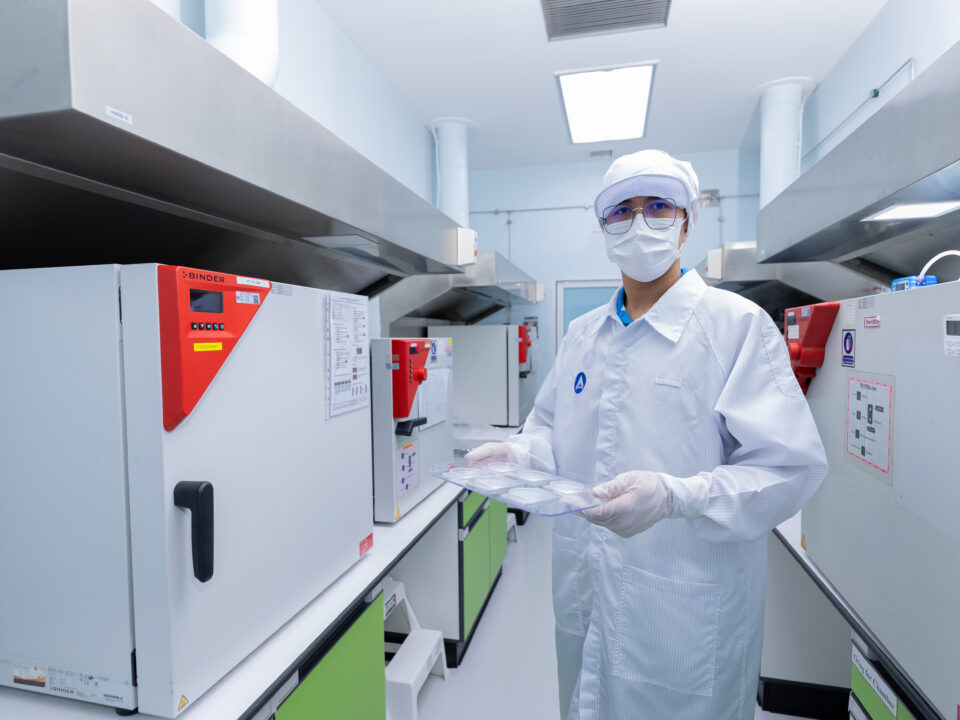
May 6, 2026
ISO 16232 & Technical Cleanliness for EV Safety
READ MOREICE vs. EV: A New Kind of Risk
The shift from combustion engines (ICE) to electric vehicles (EV) changes more than the power source — it changes the entire risk profile.
ICE systems fail through mechanical wear — predictable, repairable.
EV systems fail through electrical faults and thermal instability — sudden, dangerous, and potentially irreversible.
Even a few microns of contamination can trigger a battery short circuit, leading to thermal runaway — and potentially fire or explosion.
Why ISO 16232 Now Matters for Safety
The updated VDA 19.1 (3rd Edition, 2025), developed by 40+ leading automotive companies, elevates ISO 16232 from a quality standard to a functional safety requirement, introducing:
Particle analysis below 50 microns
SEM/EDX inspection techniques
Standardized dry extraction methods
Failure assessment for battery and electronic components
How Contamination Causes EV Failures
In high-voltage EV systems (400–800V), small conductive particles can cause:
Short circuits
Electrical arcing
Insulation breakdown
Leakage currents
These failures occur without warning — making cleanliness a safety-critical design requirement, not just a quality checkpoint.
ICE vs. EV: Quick Comparison
Table
Factor
ICE
EV (High Voltage)
Main Risk
Mechanical wear
Short circuit / Thermal instability
Critical Particle Size
> 100 µm
< 50 µm
Primary Impact
Performance loss
Arcing, insulation failure
ISO 16232 Role
Quality standard
Functional safety standard
ISO 16232 in the EV Supply Chain
ISO 16232 is evolving from a measurement tool into a full process control framework:
Cleanliness limits tied to failure mechanisms
Integrated with PFMEA / DFMEA
Supported by real-time monitoring and traceability
The Road to Zero Contamination
To stay competitive, organizations should:
✅ Embed cleanliness into product design from day one ✅ Invest in SEM/EDX and real-time inspection tools ✅ Build data-driven process controls ✅ Train personnel and foster a quality-first culture
FAQ
Why are small particles more dangerous in EVs? High-voltage systems have lower insulation tolerance. Particles under 50 µm can instantly cause short circuits and trigger thermal runaway.
How does cleanliness relate to Functional Safety? Contamination can initiate electrical bridging and insulation failure — making it a direct concern under ISO 26262.
Where should organizations start? Define cleanliness requirements based on failure mechanisms, then integrate them into design, manufacturing, and inspection — supported by SEM/EDX and traceability systems.
What are the long-term benefits of compliance? Fewer recalls, reduced thermal and electrical failures, longer system lifespan, and stronger trust from OEM customers.
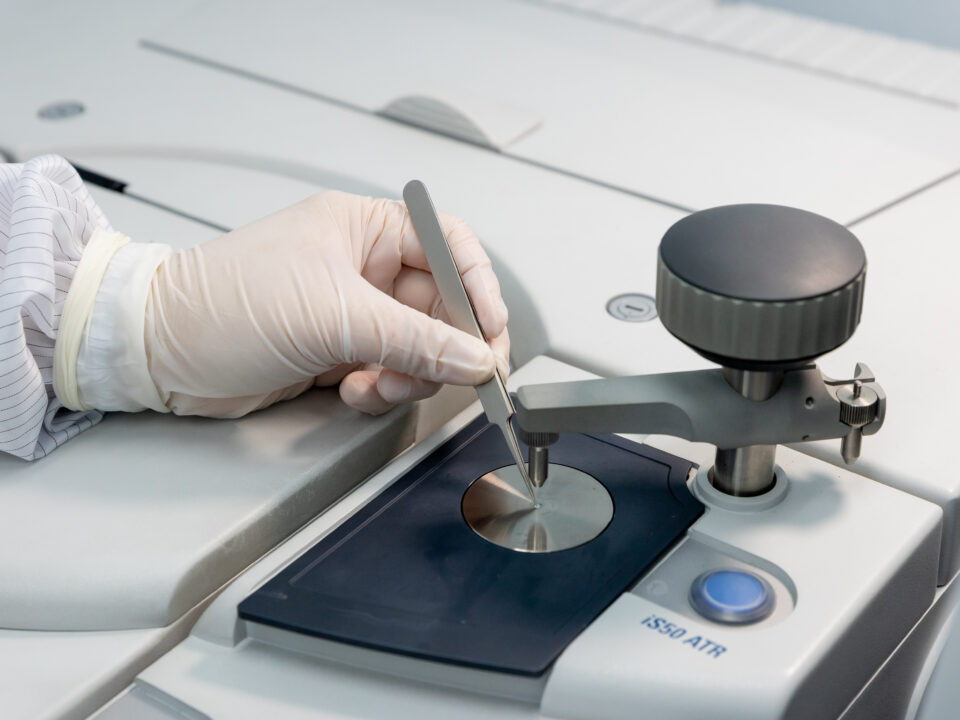
May 6, 2026
Cleanliness Lab : Readiness for Tier 1 Automotive Standards
READ MOREIntroduction
In the modern automotive industry, component precision and reliability are paramount — particularly with the growing adoption of intelligent braking systems, high-pressure fuel systems, and electric vehicles. One critical aspect often overlooked is technical cleanliness: the control of micron-level particles that can cause blockages, wear, and damage to critical systems, ultimately leading to costly product recalls.
Establishing a Cleanliness Lab aligned with Tier 1 Automotive standards is therefore not merely a compliance requirement — it is a strategic risk management initiative.
What is a Cleanliness Lab?
A Cleanliness Lab is a controlled laboratory facility designed to assess the cleanliness of automotive components through particle extraction and analysis, ensuring contamination levels remain within defined specifications.
For Tier 1 Suppliers, the lab functions as a quality gateway prior to OEM delivery — verifying product conformance, reducing rejection risk, and strengthening customer confidence. Applicable standards include ISO 16232 and VDA 19, both of which define systematic and reproducible testing methodologies. Organizations that meet these standards gain a competitive advantage within the global automotive supply chain.
Laboratory Infrastructure Requirements
Reliable test results depend on a well-designed facility. Key infrastructure elements include:
Cleanroom controlled to ISO Class 5–8
HEPA filtration system to minimize airborne particle levels
Positive pressure system to prevent external air ingress
Segregated zones for sample preparation, extraction, and analysis
One-way flow layout to minimize cross-contamination
Essential Equipment
Equipment
Function
Significance
Particle Extraction System
Extracts particles from test components
Core step of the testing process
Microscope
Analyzes particle size and morphology
Enables detailed characterization
Particle Counter
Quantifies particle count
Comparison against standard limits
Vacuum Filtration Unit
Filters test samples
Prepares samples for analysis
Laminar Flow Cabinet
Controls local environment
Reduces contamination risk
Standard Testing Workflow
The cleanliness testing process comprises five core steps:
Sample Collection
Particle Extraction
Filtration
Analysis
Reporting
To ensure process reliability and integrity, the following must also be in place:
Clearly defined Standard Operating Procedures (SOPs)
Blank testing for quality control verification
Process validation
Traceability systems and data integrity controls
Personnel Competency
Despite advances in technology, personnel remain the most critical factor in Cleanliness Lab quality assurance. Required competencies include laboratory instrument operation, particle analysis techniques, and a working knowledge of ISO and VDA standards. Organizations must maintain continuous training, competency assessments, and periodic skill reviews.
Human factors also represent a significant contamination risk — including improper gowning, deviation from SOPs, and inappropriate behavior within the cleanroom — all of which can directly compromise test accuracy and overall system reliability.
Development Challenges
Building a Cleanliness Lab presents several challenges:
Capital investment for cleanroom construction and specialized equipment procurement
Standard complexity requiring expert knowledge for accurate interpretation and implementation
Upstream process control — an unstable manufacturing process limits the effectiveness of laboratory testing alone
Organizations are advised to develop both manufacturing controls and laboratory capabilities concurrently to achieve sustainable Tier 1 compliance.
Future Outlook: Smart Cleanliness Lab
The next generation of cleanliness laboratories is evolving toward intelligent, automated systems, incorporating:
AI-powered particle analysis
Automated microscopy
Real-time data connectivity
Integration with manufacturing execution and quality management systems enables end-to-end quality control, reducing cycle time, improving result consistency, and supporting compliance with increasingly stringent industry standards.
From Compliance to Competitive Advantage
A Cleanliness Lab is not merely a testing facility — it is an integral component of a holistic quality management system, spanning product design, manufacturing, and delivery. Organizations that establish a fully compliant Cleanliness Lab will be well-positioned to meet OEM requirements, reduce long-term operational risk, and sustain competitiveness in the global automotive market.
Investment in a Cleanliness Lab is an investment in long-term business sustainability.
FAQ
Is a Cleanliness Lab required for all manufacturing facilities? Not universally — however, it is essential for high-precision or safety-critical components, particularly in electric vehicle, electronics, and stringent-cleanliness applications.
How should an organization begin? Conduct a Gap Analysis against ISO 16232 and VDA 19, then develop a structured implementation plan covering facility design, equipment, and process requirements.
What is the estimated budget? Costs range from hundreds of thousands to several million baht, depending on lab scale, technology scope, and target compliance level.
How long does implementation take? Typically 3–12 months, subject to organizational readiness and system complexity.
What are common implementation mistakes? Inadequate facility design, unclear SOPs, insufficient personnel training, and failure to address upstream process control — resulting in test outcomes that do not reflect real-world conditions.
April 24, 2026
Chemical & Electronics Testing | Anion Test Specialist | ALS Testing Malaysia
READ MOREAnion/Cation Analysis · Ion Chromatography · GCMS · ICP-MS · RoHS/REACH Compliance · PCB Testing
ISO/IEC 17025 Accredited | Anion Test Specialist | Full Chemical Analytical Suite
The automotive industry’s shift toward electronics-intensive vehicle architectures, from advanced driver assistance systems (ADAS) to battery electric powertrains, has fundamentally changed the chemical testing requirements of automotive supply chains. Modern vehicles contain hundreds of electronic control units, kilometres of wiring, and sophisticated PCB assemblies whose reliability depends critically on chemical cleanliness, ionic contamination control, and compliance with global hazardous substance regulations.
At the same time, automotive chemical testing encompasses traditional analytical disciplines that remain essential: trace element analysis by ICP-MS, organic compound identification by GCMS, REACH and RoHS substance screening, and the growing discipline of ion chromatography for ionic contamination measurement, the ‘anion test’ that has become a critical quality control tool for automotive electronics manufacturers.
ALS Testing provides a comprehensive suite of chemical and electronics testing services, combining specialist ion chromatography capability with broad analytical chemistry capacity across ICP-MS, GCMS, FTIR, and regulatory compliance screening. With anion testing reaching search volumes of 210 per month in Malaysia – and no competitor currently offering well-developed content on this topic in the Malaysian market – ALS has a clear opportunity to establish content authority and capture this commercially significant keyword cluster.
Ion Chromatography – Anion & Cation Analysis
Ion chromatography (IC) is an analytical technique that separates and quantifies ionic species, both anions and cations, dissolved in an aqueous extract. In automotive and electronics testing, IC is applied to measure ionic contamination on component surfaces, in process fluids, and in assembly environments. The ‘anion test’ is shorthand for ion chromatography analysis of anionic species, has become one of the most widely applied quality control tests in automotive electronics manufacturing.
What Is Anion Testing?
Anion testing by ion chromatography quantifies the concentration of negatively charged ionic species, particularly chloride (Cl⁻), fluoride (F⁻), sulfate (SO₄²⁻), nitrate (NO₃⁻), phosphate (PO₄³⁻), and a range of organic acid anions including acetate, formate, and oxalate, in an aqueous extract of a component or material. These anions are of critical concern in automotive electronics because many of them are aggressive corrosion initiators and electrolytic conductors that can cause:
Electrochemical corrosion of metal conductors and contact surfaces
Dendritic growth (metallic whisker growth between PCB conductors under voltage bias)
Leakage current increase that triggers false signals in sensitive electronic circuits
Delamination of PCB laminates and conformal coatings in the presence of moisture
Accelerated corrosion of solder joints and connector contacts
In automotive applications, the primary source of ionic contamination is residual flux from PCB soldering processes, particularly when no-clean flux residues are not fully removed or when water-soluble flux residues are inadequately cleaned. Process water, fingerprints, environmental deposition, and chemical exposure during manufacturing are secondary sources.
Ion Chromatography Test Method – IPC-TM-650 2.3.28 / J-STD-001
The primary standard for ionic contamination testing of PCB assemblies is IPC-TM-650 Method 2.3.28, which defines the extraction method (a mixture of isopropyl alcohol and water applied to the PCB surface) and specifies the ion chromatography analysis for both anions and cations. The J-STD-001 standard (Requirements for Soldering Electrical and Electronic Assemblies) references cleanliness requirements that may require IC analysis for qualification.
ALS conducts ionic contamination testing by IC to IPC-TM-650 2.3.28, providing results in µg/cm² for each ionic species identified, against the limits specified by the client’s cleanliness specification or OEM requirement. Results identify both the type and quantity of each ionic species, enabling manufacturers to verify compliance and infer potential root causes (such as chloride excess suggesting flux residue or organic acids suggesting flux decomposition products).
Cation Analysis – Sodium, Potassium, Ammonium & Others
In addition to anion analysis, ALS provides cation analysis by IC for the principal positively charged ionic species of concern in electronics: sodium (Na⁺), potassium (K⁺), ammonium (NH₄⁺), and the amines associated with no-clean flux formulations (particularly methylamine and triethanolamine, which are characteristic of amine-based flux activators). Elevated ammonium or amine concentrations can indicate inadequate removal of flux activator residues, which in combination with humidity can cause under-board corrosion and leakage current failures.
RoHS & REACH Compliance Testing
The Restriction of Hazardous Substances (RoHS) Directive and the Registration, Evaluation, Authorisation and Restriction of Chemicals (REACH) Regulation are the two most significant global regulatory frameworks governing chemical content in electrical and electronic products. Compliance with both is mandatory for automotive electronics products supplied to the EU market, and is increasingly required by global OEMs as a contractual supply chain requirement regardless of the target market.
RoHS Compliance Screening – IEC 62321 Series
The RoHS Directive restricts the use of six hazardous substances in electrical and electronic equipment: lead (Pb), mercury (Hg), cadmium (Cd), hexavalent chromium (Cr(VI)), polybrominated biphenyls (PBB), and polybrominated diphenyl ethers (PBDE). RoHS 2 (Directive 2011/65/EU and its amendments) added four phthalates (DEHP, BBP, DBP, and DIBP), making ten restricted substances in total.
ALS provides RoHS compliance screening to the IEC 62321 series of test methods, which defines the analytical methods for determination of each restricted substance group. Screening begins with X-ray fluorescence (XRF) screening for elemental species (Pb, Hg, Cd, Cr) and proceeds to confirmatory quantitative analysis by ICP-MS or ICP-OES where XRF screening indicates potential exceedance. Hexavalent chromium is determined specifically by UV-Vis spectrophotometry, and phthalates are determined by GCMS.
REACH – SVHC Screening
The REACH regulation requires declaration of substances of very high concern (SVHC) in articles above a concentration threshold of 0.1% w/w, when the SVHC concentration exceeds 0.1% in the article as a whole. The SVHC candidate list, published by the European Chemicals Agency (ECHA) and updated regularly, now contains over 230 substances, including phthalates, heavy metals, aromatic amines, certain polymers, and flame retardants. ALS provides targeted SVHC screening for the substances most commonly encountered in automotive materials and electronic components, using appropriate analytical methods including XRF, ICP-MS, GCMS, and IC.
GCMS – Organic Chemical Analysis
Gas chromatography-mass spectrometry (GCMS) is the primary analytical tool for identification and quantification of organic compounds, including solvents, plasticisers, flame retardants, process chemicals, and contaminants in automotive materials and components. In automotive chemical testing, GCMS is applied across a range of programmes.
GCMS Applications in Automotive Testing
VOC and SVOC emissions analysis: GCMS is the detection method used in thermal desorption analysis to VDA 278 and ISO 12219, providing a detailed compound-by-compound profile of organic emissions from interior materials. Contaminant identification: when unknown organic contaminants are found on component surfaces, in lubricants, or in process fluids, GCMS compound identification provides the molecular-level identification needed for source investigation and corrective action. Phthalate analysis for RoHS compliance: GCMS is the confirmatory method for determination of phthalates (DEHP, BBP, DBP, DIBP) in materials screened initially by XRF. Solvent and process chemical residue analysis: GCMS identifies residual solvents and cleaning agents on component surfaces after cleaning processes, providing evidence of adequate cleaning or contamination by inappropriate process chemicals.
ICP-MS & ICP-OES – Trace Element Analysis
Inductively coupled plasma mass spectrometry (ICP-MS) and inductively coupled plasma optical emission spectrometry (ICP-OES) are the premier techniques for trace and ultra-trace elemental analysis in automotive materials, process fluids, and environmental samples. These techniques provide multi-element analysis at concentrations from percentage levels (ICP-OES) down to parts per trillion (ICP-MS) in dissolved samples, making them essential tools for restricted element screening, material composition verification, and contamination source tracing.
Trace Element Analysis Applications
RoHS element screening: ICP-MS and ICP-OES provide confirmatory quantitative analysis for lead, mercury, cadmium, and total chromium in materials where XRF screening has indicated potential RoHS exceedance. Automotive fluid analysis: engine oils, coolants, hydraulic fluids, and gear lubricants are analysed by ICP-OES for wear metals (iron, copper, aluminium, chromium), additive elements (zinc, phosphorus, molybdenum), and contaminant elements as part of condition monitoring and failure investigation programmes. Material composition verification: ICP analysis confirms the elemental composition of alloys, platings, and surface treatments against specified composition limits. Environmental sample analysis: ALS applies ICP-MS to environmental water and soil samples in support of automotive manufacturing facility environmental monitoring and regulatory compliance programmes.
PCB & Electronics Component Testing
Automotive electronics components, including PCBs, connectors, sensors, power modules, and wire harness assemblies, are subject to some of the most demanding chemical cleanliness and material compliance requirements in the electronics industry. The consequences of chemical contamination in automotive safety systems, powertrain controls, or battery management electronics are severe, ranging from intermittent operation through to complete functional failure in safety-critical systems.
PCB Ionic Contamination Testing
Ion chromatography analysis of PCB ionic contamination (IPC-TM-650 2.3.28) is described in detail in the Ion Chromatography section above. ALS provides this as a standard service for automotive PCB manufacturers and assemblers, supporting both production quality control and OEM qualification requirements.
Solderability Testing
Solderability testing evaluates the wettability of component leads, PCB pads, and solder surfaces, specifically the ability of liquid solder to spread uniformly across a surface. Poor solderability leads to cold solder joints, dewetting, and non-wet opens, which are a significant source of early-life failures in automotive electronics. ALS provides solderability testing by wetting balance (J-STD-002) and dip-and-look methods (IPC-TM-650 2.4.12) to support incoming component qualification and process control.
Conformal Coating Inspection & Analysis
Conformal coatings applied to automotive PCBs provide protection against moisture, contamination, and mechanical stress. ALS provides analysis of conformal coating composition by FTIR to verify coating type, cross-section analysis by optical and scanning electron microscopy to assess coating thickness and uniformity, and adhesion testing to evaluate bonding integrity of the coating to the PCB surface. These tests support both coating process validation and investigation of coating failures in field-returned assemblies.
Standards & Test Methods
Standard / Method
Technique
Application
IPC-TM-650 2.3.28
Ion Chromatography (IC)
PCB ionic contamination – anion and cation analysis
J-STD-001
Multiple
Soldering cleanliness requirements – references IC for qualification
IEC 62321-1 to -8
XRF, ICP-MS, ICP-OES, GCMS, UV-Vis
RoHS restricted substance screening and confirmatory analysis
REACH SVHC
XRF, ICP-MS, GCMS, IC
SVHC substance screening in automotive materials and articles
VDA 278
Thermal Desorption GCMS
VOC and FOG emissions from interior materials – German OEM
ISO 12219
Chamber / GCMS
Interior air VOC analysis – international standard
ISO/IEC 17025
Quality Management System
Accreditation framework for all ALS analytical methods
ICP-MS / ICP-OES
Elemental Analysis
Trace element quantification – fluids, materials, coatings
GCMS (Full Scan / SIM)
Organic Compound ID & Quantification
Contaminant ID, RoHS phthalates, VOC analysis
J-STD-002
Wetting Balance
Solderability testing – component leads and PCB pads
Why ALS for Chemical & Electronics Testing?
Specialist in Ion Chromatography – Anion Test Leader in Malaysia
ALS Testing offers one of the most comprehensive ion chromatography capabilities in the Malaysian testing market, covering the full range of ionic species relevant to automotive electronics quality control: fluoride, chloride, nitrite, phosphate, sulfate, acetate, formate, oxalate, and the organic acid anions characteristic of no-clean flux residue. Our IC capability covers both anion and cation analysis in a single analytical run, providing a complete ionic profile from a single sample extraction.
With anion test searches at 210 per month in Malaysia and no competitor currently providing a well-developed digital resource on this topic, ALS is positioned to be the definitive reference for automotive electronics manufacturers in the region seeking ion chromatography testing services.
Full Analytical Suite Under One Roof
Rather than working with multiple specialist laboratories for different analytical disciplines, ALS clients benefit from access to our full analytical suite: IC, ICP-MS, ICP-OES, GCMS, FTIR, SEM-EDX, and XRF under a single ISO/IEC 17025 accredited quality management system. This simplifies sample management, reduces logistics complexity, and ensures consistency of sample handling across all analytical techniques applied to the same investigation.
Automotive Context & Application Knowledge
Chemical analysis in automotive applications requires more than analytical technique proficiency; it requires understanding of where contamination comes from, why it matters in context, and how analytical results translate into manufacturing and quality decisions. ALS analysts have experience in automotive manufacturing environments and understand the quality questions that drive testing requests. This enables us to provide results and interpretations that are directly actionable, rather than raw analytical numbers that require translation.
Frequently Asked Questions – Chemical & Electronics Testing
Q: What is an anion test and why is it important for PCB manufacturing?
An anion test is ion chromatography (IC) analysis of ionic contamination on a PCB or electronic component surface, specifically targeting negatively charged ionic species including chloride, fluoride, sulfate, nitrate, phosphate, and organic acid anions. These anions are important in PCB manufacturing because they are the primary ionic contaminants that cause electrochemical corrosion, dendritic growth, and leakage current failures in PCB assemblies, particularly in humid environments. The anion test is conducted to IPC-TM-650 Method 2.3.28 and provides results in µg/cm², comparable to OEM or IPC cleanliness acceptance limits.
Q: What is the difference between RoHS and REACH, and does ALS test for both?
RoHS (Restriction of Hazardous Substances Directive) restricts the use of ten specific hazardous substances in electrical and electronic equipment placed on the EU market: six original substances (lead, mercury, cadmium, hexavalent chromium, PBB, PBDE) plus four phthalates added by RoHS 2. REACH is a broader chemical regulation requiring identification and communication of substances of very high concern (SVHC) in articles. The SVHC candidate list contains over 230 substances. ALS provides compliance screening for both RoHS and REACH, using appropriate analytical methods for each substance category. We can provide a combined RoHS and REACH SVHC screening programme from a single sample submission.
Q: Can ALS identify unknown contaminants on automotive components?
Yes. Unknown contaminant identification is one of our most commonly requested analytical services. Our approach typically begins with FTIR analysis to identify organic contaminants and provide a rapid initial classification. SEM-EDX is applied to characterise the morphology and elemental composition of inorganic contaminants or particles. GCMS provides definitive molecular identification of organic species when FTIR yields an ambiguous or incomplete result. ICP-MS can quantify trace elements in dissolved contaminants. By applying this suite of techniques in sequence, ALS can identify the chemical nature and likely source of most contaminants encountered in automotive manufacturing environments.
Q: How do I interpret ion chromatography results for my PCB cleanliness specification?
IC results for PCB ionic contamination are typically expressed as µg/cm² of each ionic species, calculated from the total extracted mass divided by the board surface area analysed. These results are compared against the cleanliness acceptance limit specified by your OEM, your customer’s specification, or a standard such as IPC-7711. Common acceptance limits range from 0.2 µg/cm² to 1.56 µg/cm² for total ionic contamination, depending on the application’s criticality. Our report will state the measured concentration of each ionic species and compare it against your specified limit to provide a clear technical conclusion regarding compliance. If you need guidance on interpreting results or selecting appropriate cleanliness limits for your application, our technical team is available to advise.
Q: Does ALS provide GCMS analysis for VOC testing as well as RoHS phthalate screening?
Yes. Our GCMS capability covers both applications and more. For VOC/FOG emissions analysis, GCMS is the detection method used in thermal desorption analysis to VDA 278, providing compound identification and quantification of organic emissions from automotive interior materials. For RoHS phthalate screening, GCMS is the confirmatory analytical method applied after XRF screening for samples that require quantitative phthalate determination. Additionally, GCMS is applied to unknown contaminant identification, solvent residue analysis, process chemical characterisation, and environmental sample analysis. Our GCMS systems operate in full-scan mode for compound identification and selected ion monitoring (SIM) mode for trace-level quantification.
Request a Chemical & Electronics Testing Quote
From anion/cation analysis of PCB assemblies to RoHS compliance screening, GCMS contaminant identification, and ICP-MS trace element analysis, ALS Testing provides the chemical and electronics testing services that automotive electronics manufacturers in Malaysia and Southeast Asia require. Our ISO/IEC 17025 accredited results are accepted by global OEMs, and our specialist ion chromatography capability makes us the leading choice for automotive ionic contamination testing in the region.
→ Request a Quote: https://www.alstesting.co.th/request-a-quote/
→ Back to Automotive Testing Hub: /automotive-testing/
ISO/IEC 17025 Accredited | Ion Chromatography Specialist | RoHS + REACH + Anion/Cation Testing
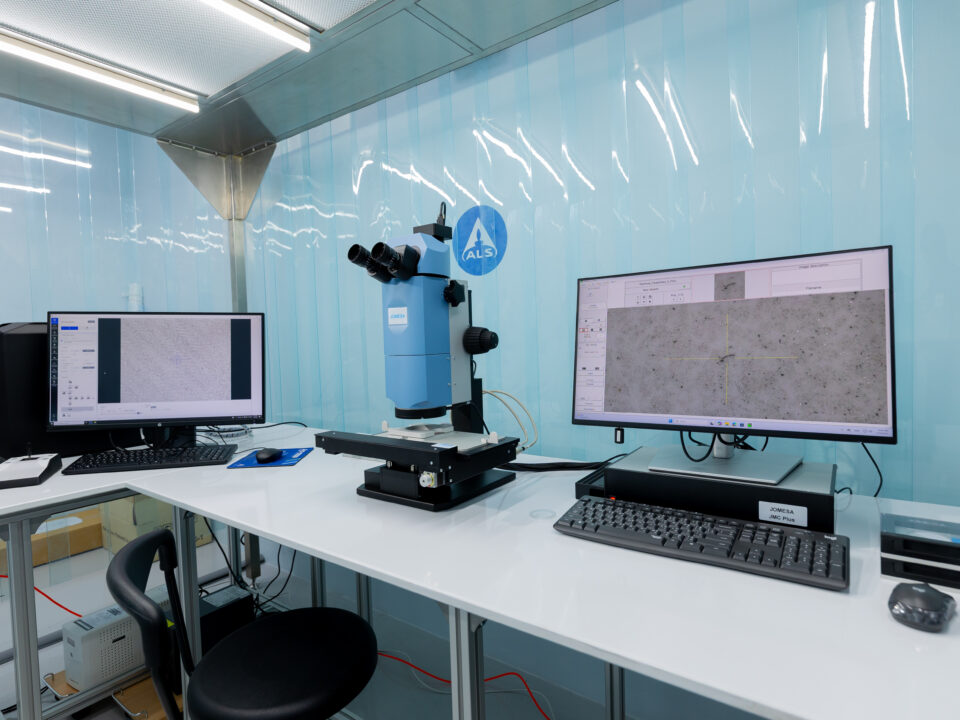
April 24, 2026
Automotive Testing Services | ALS Testing Laboratory
READ MOREISO/IEC 17025 Accredited | Cleanliness · Failure Analysis · Materials · Chemical Testing
ISO 17025 Accredited | ILAC MRA | 40+ Years Global Network
Every automotive component failure begins with something invisible: contamination, material degradation, or an undetected defect. In today’s automotive manufacturing landscape, where tolerance for error is measured in microns and regulatory pressure increases with every new model cycle, the stakes of unvalidated components have never been higher.
Manufacturers across Malaysia and Southeast Asia face mounting pressure from multiple directions: more complex EV platforms, tighter OEM specification requirements, increasingly stringent chemical and emissions standards, and supply chains that span continents. A single undetected particle in a hydraulic system, a material that off-gasses beyond permissible limits, or a PCB with ionic contamination that escapes to field conditions. All of these can trigger warranty claims, production shutdowns, and reputational damage that far exceeds the cost of proper testing.
ALS Testing is an independent ISO/IEC 17025 accredited laboratory providing automotive testing services to OEMs, Tier-1 and Tier-2 suppliers, component manufacturers, and automotive electronics companies across Malaysia and Southeast Asia. With over 40 years of global experience across the ALS network and deep local expertise in the Malaysian and regional automotive market, ALS delivers the precision, objectivity, and internationally recognised results that modern automotive manufacturers require.
Explore our full range of automotive testing services below, from technical cleanliness and failure analysis to materials testing and chemical compliance screening.
What Is Automotive Testing?
Automotive testing is the systematic evaluation of materials, components, sub-assemblies, and complete vehicle systems to verify that they meet defined performance, safety, chemical, and regulatory specifications. It spans the entire manufacturing lifecycle, from raw material qualification through prototype validation, production quality control, and field failure investigation.
In scope, automotive testing covers a broad spectrum of disciplines: physical and mechanical testing of materials and structures; chemical analysis of coatings, fluids, and polymer compounds; cleanliness and contamination analysis of precision components and hydraulic systems; failure analysis of components returned from field or production; and environmental simulation testing to assess durability under real-world conditions including temperature cycling, humidity, corrosion, and vibration.
Testing can be classified in several ways. Destructive testing involves irreversible analysis (cross-sections, chemical extraction, or mechanical fracture testing) and yields the most detailed information about a component’s internal structure and material composition. Non-destructive testing (NDT) allows a component to be evaluated and returned to service, using techniques such as SEM imaging, X-ray inspection, or particle extraction. Testing can also be categorised by regulatory purpose: type approval testing confirms conformance to legal and OEM requirements for production intent components, while R&D testing supports early-stage development, material selection, and process optimisation.
Why Independent Automotive Testing Matters
Independent, third-party laboratory testing plays a central role in modern automotive manufacturing for three critical reasons.
First, regulatory and OEM acceptance: many OEM qualification, type approval, and regulatory processes require or prefer testing performed by an ISO/IEC 17025 accredited laboratory. While in-house testing remains valuable for routine quality control and product development, accredited third-party testing can provide independently verified results when formal evidence of conformity is required. Accredited laboratory results carry a level of traceability and methodological rigour that in-house testing cannot formally provide.
Second, liability protection: when a component or material is tested by an independent laboratory, the test report provides documented, objective evidence of compliance at the time of manufacture. This evidence is critical in the event of warranty claims, product liability disputes, or regulatory investigations. An independent report reduces risk exposure for suppliers and protects against unjustified claims.
Third, objectivity and confidence: there is no conflict of interest in third-party testing. ALS operates independently of its clients and has no stake in any particular test outcome. Our results reflect reality, which is exactly what manufacturers, regulators, and end customers require.
ALS provides all of the above, with 40+ years of global expertise and a local team who understands the nuances of the Malaysian and Southeast Asian automotive supply chain.
Automotive Testing vs In-House Testing: Key Differences
The question of whether to conduct testing in-house or to outsource to a contract testing laboratory is one that many automotive suppliers face, particularly as they scale up production volumes or seek new OEM approvals. The decision involves multiple dimensions beyond simple cost comparison.
Dimension
In-House Testing
Third-Party Lab (ALS)
Accreditation
Typically not ISO/IEC 17025 accredited
ISO/IEC 17025:2017 accredited – ILAC MRA recognised
OEM Acceptance
Often not accepted for formal approval
Accepted by global OEMs and regulatory bodies
Equipment Scope
Limited to owned equipment
Full analytical suite: SEM, FTIR, EDX, ICP, GC-MS and more
Objectivity
Potential conflict of interest
Fully independent – no stake in outcome
Cost Structure
High fixed capex + maintenance
Variable cost – pay per test
Turnaround
Internal queues and priorities
Dedicated testing workflow
Regulatory Use
Internal QC only
Type approval, OEM submission, regulatory compliance
For most suppliers, the most effective approach is a combination: in-house QC for routine production monitoring, with outsourced third-party testing for OEM submissions, qualification testing, failure investigations, and regulatory compliance. ALS functions as a natural extension of your quality team in this hybrid model.
Our Automotive Testing Services
ALS Testing provides a comprehensive range of automotive testing services, with particular expertise in technical cleanliness, failure analysis, materials and environmental testing, and chemical and electronics analysis. These capabilities support automotive manufacturers and suppliers from component qualification and contamination analysis through to failure investigation and regulatory compliance.
Cleanliness & Particle Testing (ISO 16232 / VDA 19)
ALS specialises in technical cleanliness testing to ISO 16232 and VDA 19, supporting automotive manufacturers and suppliers with quantitative assessment of particulate contamination in precision components and systems.
Our cleanliness testing services provide manufacturers of precision hydraulic components, fuel system parts, transmission assemblies, and braking system components with quantitative evidence that their products meet defined cleanliness classes.
Testing includes extraction of particles from component surfaces and channels, gravimetric analysis for mass-based cleanliness assessment, light obscuration particle counting (LPC) for size distribution and particle count, and microscopic analysis of extracted particles for material identification. ALS combines particle extraction, gravimetric analysis, particle counting, and microscopic material identification to provide a detailed assessment of technical cleanliness for automotive components.
→ Explore our Cleanliness & Particle Testing services: ISO 16232 and VDA 19 cleanliness testing
Failure Analysis (SEM / FTIR / EDX)
Our failure analysis team uses scanning electron microscopy (SEM), FTIR spectroscopy, EDX elemental analysis, and cross-section preparation to identify the root causes of automotive component failures. Whether the failure originated in manufacturing, material selection, processing, or field conditions, our analysts have the tools and experience to trace it to its origin.
Failure analysis is applied across a wide range of scenarios: fracture surface analysis to determine whether a failure was fatigue-related, overload-driven, or corrosion-initiated; contaminant identification on component surfaces; delamination and adhesion failure analysis; and investigation of field returns from OEM warranty programmes. Scanning electron microscopy (SEM) is an important tool in automotive failure analysis, enabling detailed examination of fracture surfaces, contaminants, coatings, and microscopic defects that may not be identified through visual inspection alone.
→ Explore our Failure Analysis services: SEM, FTIR, and EDX failure analysis
Automotive Materials & Environmental Testing
From VOC emissions testing to ISO 12219 and VDA 278 through to salt spray corrosion testing to ISO 9227 and ASTM B117, and thermal shock simulation to IEC 60068. ALS validates that your materials and components survive the demands of real-world automotive use. Our materials and environmental testing services support material qualification, OEM specification compliance, and regulatory approval for automotive interior and exterior components.
Key capabilities include volatile organic compound (VOC) analysis for automotive interior air quality compliance, semi-volatile organic compound (SVOC) screening, fogging testing to ISO 6452, salt spray and humidity testing for corrosion resistance evaluation, and thermal cycling and vibration testing for durability qualification.
These testing capabilities help automotive manufacturers evaluate interior air quality, corrosion resistance, and material durability, supporting component qualification and compliance with relevant OEM and international requirements.
→ Explore our Materials & Environmental Testing services: VOC emissions testing and salt spray
Chemical & Electronics Testing
ALS provides anion and cation analysis by ion chromatography, GCMS trace chemical analysis, ICP-MS elemental analysis, RoHS and REACH compliance screening, and ionic contamination testing for PCB assemblies and automotive electronics components. Our chemical testing services support automotive electronics manufacturers in meeting the increasingly stringent chemical requirements of global OEM supply chains and international regulatory frameworks.
Ion chromatography supports the identification and quantification of ionic contaminants that may affect the reliability of automotive electronics and PCB assemblies. ALS can analyse relevant ionic species including chloride, fluoride, sulfate, phosphate, and organic acid anions. Our ion chromatography capabilities cover the full range of ionic species relevant to automotive electronics: chloride, fluoride, sulfate, phosphate, and organic acid anions.
→ Explore our Chemical & Electronics Testing services: anion and cation analysis by ion chromatography
Industries We Serve
ALS Testing works with manufacturers, suppliers, and engineering teams across the full automotive value chain. Our accredited testing services are designed to meet the specific needs of each customer segment, from globally operating OEMs with complex multi-standard testing requirements to local Tier-2 suppliers seeking a reliable laboratory partner for production qualification.
OEM & Tier-1 Automotive Suppliers
For OEMs and Tier-1 suppliers, ALS provides component validation testing, type approval support, and testing to OEM-specific standards including BMW GS specifications, Ford WSS standards, Toyota TSM requirements, and general group standards from major European, American, and Japanese automotive manufacturers. Our ISO/IEC 17025 accreditation ensures that results are accepted without question at OEM technical centres worldwide.
Whether you require cleanliness class certification for a hydraulic valve body, failure analysis of a returned warranty component, or VOC emissions testing for interior trim materials, ALS has the capability and accreditation to support your supply chain quality requirements.
Electric Vehicle (EV) Manufacturers & Suppliers
As EV adoption accelerates across Southeast Asia, driven by government incentive programmes in Malaysia, Thailand, Indonesia, and Vietnam. ALS supports EV manufacturers and their supply chains with battery component cleanliness testing, thermal management material analysis, electric motor component failure investigation, and chemical analysis of battery electrolytes and electrode materials.
The unique testing challenges posed by EV platforms, from the cleanliness requirements of high-voltage battery assemblies to the ionic contamination risks in power electronics, map directly to ALS’s core competencies in cleanliness testing and chemical analysis. These capabilities allow ALS to support selected EV component and material testing requirements across the automotive supply chain.
Automotive Electronics & PCB Manufacturers
From ionic contamination testing and anion/cation analysis by ion chromatography, through to RoHS/REACH compliance screening and solderability testing, ALS supports automotive electronics manufacturers with the precise chemical and reliability analysis that modern automotive electronics programmes demand. Automotive electronics are subject to some of the most stringent chemical cleanliness requirements in the electronics industry, driven by the safety-critical nature of automotive control systems.
Automotive Materials & Polymer Suppliers
ALS tests automotive-grade plastics, rubbers, foams, adhesives, coatings, and composite materials for VOC and SVOC emissions, restricted substance compliance, chemical resistance, and mechanical performance to VDA, ISO, and OEM specifications. Whether you supply instrument panel materials, headliner fabrics, underbonnet polymers, or structural adhesives, ALS can provide the testing evidence your OEM customers require.
Standards & Accreditations
Trust in laboratory testing results rests on a foundation of documented accreditation, methodological rigour, and equipment traceability. ALS Testing is accredited to ISO/IEC 17025:2017, the international standard for the competence of testing and calibration laboratories, by an accreditation body that is a signatory to the ILAC Mutual Recognition Arrangement (MRA).
ISO/IEC 17025:2017 Accreditation
ALS Testing is accredited to ISO/IEC 17025:2017, with results recognised under the ILAC MRA across more than 100 countries. This means that test reports issued by ALS are accepted by OEMs, regulatory bodies, and government agencies worldwide without the need for re-testing. The ILAC MRA is the global framework that enables laboratory results to cross borders with confidence, which is essential for automotive supply chains that operate across multiple markets.
Our accreditation covers a defined scope of tests, with accredited test methods listed in our schedule of accreditation available from our accreditation body. For any test conducted within our accredited scope, our reports carry the formal ILAC MRA mark, confirming that the result was produced under a quality management system that meets the highest international standards for laboratory competence.
Key Automotive Standards We Test To
ALS testing capabilities span the major international and OEM-specific standards that govern automotive material, component, and electronics testing. The following table provides a reference overview of the key standards applied across our automotive testing scope.
Standard
Full Name
Category
Applied In
ISO 16232
Road Vehicles – Cleanliness of Components
Cleanliness Testing
Hydraulic, fuel, braking systems
VDA 19
Testing of Technical Cleanliness
Cleanliness Testing
Precision components – German OEM standard
VDA 278
Volatile Organic Compounds from Non-metallic Materials
VOC / Emissions
Automotive interior air quality
ISO 12219
Interior Air of Road Vehicles
VOC / Emissions
Cabin VOC and SVOC measurement
VDA 275
Formaldehyde Emission – Photometric Analysis
Chemical Emissions
Interior materials – formaldehyde
ISO 9227
Corrosion Tests – Salt Spray Apparatus
Environmental / Corrosion
Metal components, coatings, fasteners
ASTM B117
Salt Spray (Fog) Apparatus
Environmental / Corrosion
General corrosion testing – US standard
IEC 60068
Environmental Testing for Electronic Products
Environmental Simulation
Automotive electronics components
IPC-TM-650
Test Methods Manual – PCB & Electronics
Electronics Testing
PCB ionic contamination, solderability
REACH
Registration, Evaluation, Authorisation of Chemicals
Chemical Compliance
Restricted substances – EU directive
RoHS Directive
Restriction of Hazardous Substances
Chemical Compliance
Electronics – hazardous substance limits
Why Choose ALS Testing?
In a market where testing laboratories are not in short supply, the quality of the laboratory you choose to partner with has direct consequences for your OEM relationships, your regulatory compliance posture, and your ability to respond to product quality issues quickly and with confidence. ALS Testing differentiates itself across four key dimensions that matter most to automotive manufacturers.
Specialist in Cleanliness & Failure Analysis
ALS Testing brings specialist-level expertise in automotive cleanliness testing to ISO 16232 and VDA 19, and failure analysis using SEM, FTIR, and EDX, capabilities that few laboratories in Malaysia can match at this depth. While major competitors in the Malaysian market offer general testing services, cleanliness testing and advanced failure analysis require specialised equipment, methodological experience, and analysts who understand automotive manufacturing processes. This combination of cleanliness testing and advanced failure analysis enables ALS to support automotive manufacturers from routine component qualification through to complex root-cause investigations.
ISO/IEC 17025 Accredited – Globally Recognised Results
Our accredited test reports are accepted by OEMs and regulatory authorities across more than 100 countries under the ILAC MRA, giving you confidence in every result and eliminating the risk of results being rejected by your customer’s technical approval team. When you submit an ALS test report in support of an OEM qualification, a type approval application, or a regulatory submission, you are submitting a document that carries internationally recognised weight.
Part of a 40+ Year Global Testing Network
As part of the ALS global network, one of the world’s leading testing, inspection, and certification organisations, we combine world-class laboratory capabilities with deep local knowledge of the Malaysian and Southeast Asian automotive market. The ALS global network provides access to specialised testing capabilities, technical expertise, and reference resources that simply are not available at standalone regional laboratories. For automotive manufacturers with testing requirements that extend beyond our local scope, the global ALS network provides seamless access to the same quality standards in other markets.
Fast Turnaround & Responsive Technical Support
We understand that testing delays cost money. Production holds, delayed OEM submissions, and extended field investigation timelines all have real financial consequences. Our team is structured to provide fast turnaround times and proactive communication from the moment of sample receipt through to the delivery of your final test report. We treat every sample as if a production decision depends on it, because it often does.
Frequently Asked Questions (FAQ)
Q: What automotive testing services does ALS offer?
ALS Testing provides five core categories of automotive testing services
(1) Technical Cleanliness & Particle Testing to ISO 16232 and VDA 19;
(2) Failure Analysis using SEM, FTIR, EDX, and cross-section analysis;
(3) Automotive Materials & Environmental Testing including VOC, salt spray, and thermal simulation;
(4) Chemical & Electronics Testing including ion chromatography, GCMS, and RoHS/REACH compliance; and
(5) the full Automotive Testing Hub encompassing all of the above with OEM-standard test methods. Contact our team or visit the relevant service page for a detailed capability list.
Q: Is your laboratory accredited for automotive testing?
Yes. ALS Testing is accredited to ISO/IEC 17025:2017. Our test reports carry the ILAC MRA mark and are recognised by OEMs and regulatory bodies in more than 100 countries worldwide. Accreditation to ISO/IEC 17025 is the international gold standard for laboratory competence, and it means that every test result we produce has been generated under a formally validated quality management system with documented traceability to national and international measurement standards.
Q: Do you serve clients in Malaysia and other countries in the region?
Yes. ALS Testing primarily serves clients in Malaysia, and we also support manufacturers and suppliers in Thailand, Singapore, Indonesia, Vietnam, and other markets across Southeast Asia. Our ISO/IEC 17025 accreditation, recognised under the ILAC MRA, means that our test reports are accepted across all major global markets. For samples shipped from outside Malaysia, please contact us to discuss logistics and sample submission requirements.
Q: Can you test to OEM-specific standards such as BMW, Toyota, or Ford specifications?
Yes. ALS has experience with a range of OEM-specific test standards in addition to international standards such as ISO, VDA, and IEC. Please contact us with your specific requirements, including the OEM specification number and revision, and our technical team will confirm our capability and advise on the appropriate test method. For standards outside our current scope, we will advise whether the test can be conducted under the ALS global network.
Q: How do I submit samples and obtain a quote?
The process is straightforward
(1) Contact our team via the enquiry form at /contact/ or by telephone, providing details of the component, the test required, and the standard or specification;
(2) Our technical team will provide a quotation and sample submission instructions;
(3) Ship or deliver your samples to our laboratory;
(4) Testing is conducted and your report is issued electronically. For urgent requirements, please indicate this when making contact and we will advise on expedited options.
Q: What is the typical turnaround time for automotive testing?
Turnaround times vary depending on the test type, sample preparation requirements, and current laboratory workload. Simple chemical analyses may be completed within two to five business days, while complex failure analysis or multi-test programmes may require one to three weeks. Please contact our team when submitting your enquiry and we will provide a specific timeline estimate for your requirements. We also offer expedited service for time-critical investigations; please ask about this option if your situation requires faster results.
Request an Automotive Testing Quote
Ready to discuss your automotive testing requirements? Whether you need cleanliness certification for a precision component, a root cause failure analysis, VOC emissions testing for interior materials, or a comprehensive multi-test qualification programme, ALS Testing’s specialists are here to help, from initial sample submission guidance through to delivery of your final test report.
Our team makes the process simple. Tell us what you need, and we will provide a clear quotation, sample submission instructions, and a realistic timeline. For complex programmes, we can arrange a technical discussion to ensure that the test plan is fully aligned with your OEM or regulatory requirements.
→ Request a Quote: https://www.alstesting.co.th/contact-us/
→ Download Automotive Testing Capability Brochure
ISO/IEC 17025:2017 Accredited | Results trusted by OEMs worldwide | ILAC MRA Recognised
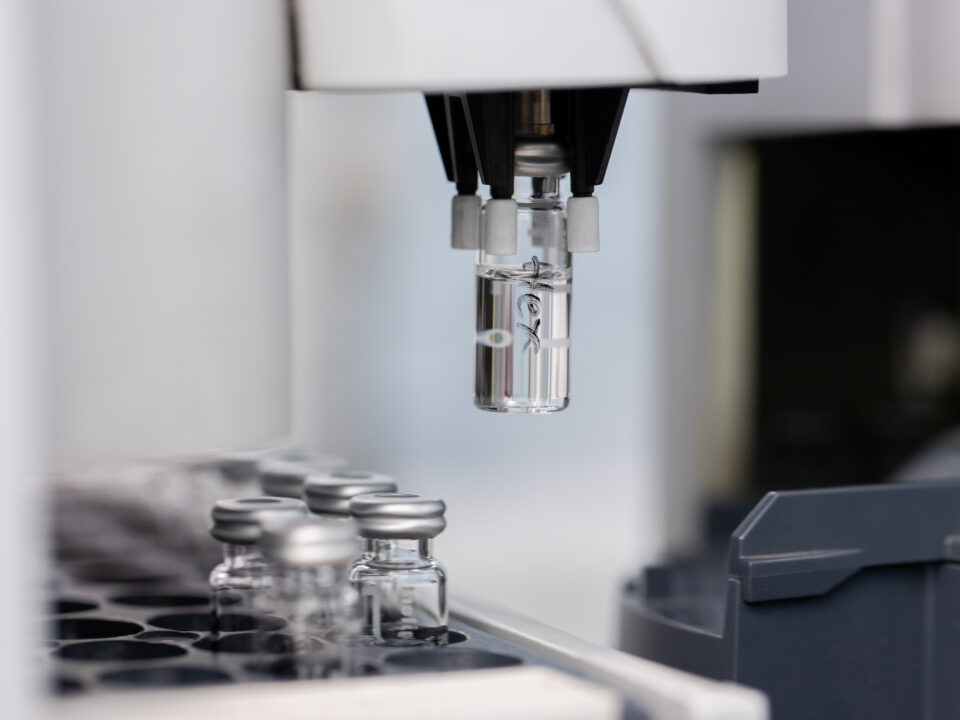
April 24, 2026
Automotive Materials & Environmental Testing | ALS Testing
READ MOREVOC Emissions · Salt Spray Corrosion · Thermal Testing · Interior Air Quality · VDA 278 · ISO 9227
ISO/IEC 17025 Accredited | Full Environmental Simulation Suite | OEM Standard Testing
The materials that make up a modern automobile are subjected to conditions that most materials would never encounter: temperature extremes from −40°C to +120°C and beyond; salt-laden road spray that attacks every exposed metal surface; UV radiation that degrades polymers and fades pigments; humid tropical heat that accelerates corrosion and swells seals; and the constant off-gassing requirements of interior materials that affect the air quality cabin occupants breathe every day.
Automotive materials testing, which encompasses VOC emissions analysis, corrosion testing, environmental simulation, thermal characterisation, and chemical content analysis, validates that materials and components survive these conditions and meet the specifications that OEMs and regulations define. With combined search volumes exceeding 430 searches per month in Malaysia for VOC and salt spray testing alone, this is one of the most commercially active testing categories in the regional automotive market.
ALS Testing is accredited to ISO/IEC 17025:2017 and offers a comprehensive range of automotive materials and environmental testing services, covering the key standards that govern material qualification for Malaysian and global automotive supply chains. Critically, ALS currently has no content covering VOC testing – the highest-volume keyword in our portfolio – making this Pillar Page a priority content investment.
VOC Emissions Testing for Automotive Interior Materials
Volatile organic compound (VOC) emissions from automotive interior materials are a significant concern for both regulatory compliance and consumer experience. Interior materials including instrument panels, headliners, seat foams, carpets, door trim panels, adhesives, and sealants all contribute to the volatile chemical environment inside the vehicle cabin. Elevated VOC concentrations in new vehicles have been associated with health concerns, including irritation, headache, and in extreme cases, sensitisation, and are subject to increasingly stringent OEM specifications and, in some markets, regulatory limits.
Automotive VOC testing is governed by several key standards that specify the test method, temperature conditions, sampling duration, and analytical approach. ALS provides testing to the primary automotive VOC standards required by global OEMs.
VDA 278 – Thermal Desorption Analysis of Automotive Interior Materials
VDA 278 is the German automotive industry standard for analysis of organic emissions from automotive interior components using thermal desorption GC-MS. The standard defines two heating stages: 90°C for VOC determination (volatile organic compounds) and 120°C for FOG determination (semi-volatile high-boiling condensable compounds, applied to a small sample of the material under controlled conditions. The emitted compounds are collected on a Tenax sorbent tube, thermally desorbed, and analysed by gas chromatography-mass spectrometry (GC-MS) to provide a quantitative profile of organic emissions.
VDA 278 is required by German OEMs (BMW, Volkswagen Group, Mercedes-Benz, Audi) and their Tier-1 suppliers, and is widely adopted across the global automotive supply chain. It provides quantitative data for comparison against specified emission limits for individual compounds and compound groups, typically expressed in µg/g of material.
ISO 12219 – Interior Air of Road Vehicles
ISO 12219 is the international standard series covering the measurement of VOC concentrations in vehicle interiors. The standard defines test methods for measuring VOC concentrations in the cabin air of complete vehicles (ISO 12219-1, bag method) and for emissions from individual interior components (ISO 12219-2 to ISO 12219-7, covering various chamber and micro-chamber methods). ALS provides component-level VOC testing to the ISO 12219 chamber methods, enabling material qualification against OEM VOC specifications defined under this standard.
VDA 275 – Formaldehyde Emission Testing
Formaldehyde is a specific VOC of regulatory and health concern, subject to dedicated test methods and specific emission limits in many OEM specifications. VDA 275 specifies a bottle method for determination of formaldehyde emissions from automotive interior non-metallic materials, using photometric analysis of the extracted formaldehyde. ALS provides formaldehyde testing to VDA 275 as part of our VOC testing capability, enabling clients to meet the specific formaldehyde limits defined by German and other OEMs.
ISO 6452 – Fogging Testing
Fogging testing determines the propensity of automotive interior materials to produce condensable vapours that deposit on the vehicle windscreen as a visible fog film. This is both an aesthetic issue (the fog film impairs driver visibility) and an indicator of high-boiling organic emissions from interior materials. ISO 6452 defines both photometric (reflectance-based) and gravimetric (mass deposition) methods for fogging assessment. ALS provides fogging testing to ISO 6452 as part of our interior emissions testing portfolio.
Corrosion & Salt Spray Testing
Corrosion is one of the most persistent and economically significant degradation mechanisms in automotive components and structures. Road salt, humid climates, and the electrochemical environment created by dissimilar metals in contact create conditions that attack metal surfaces, coatings, and plated surfaces continuously throughout a vehicle’s service life. Corrosion testing replicates these conditions in accelerated form, enabling assessment of coating quality, material selection, and corrosion protection effectiveness in a fraction of the real-world timescale.
ISO 9227 – Neutral Salt Spray Testing (NSS)
ISO 9227 is the primary international standard for salt spray (salt fog) corrosion testing, covering three test atmospheres: neutral salt spray (NSS), acetic acid salt spray (AASS), and copper-accelerated acetic acid salt spray (CASS). In the NSS test, the most widely applied, specimens are exposed to a continuously atomised 5% sodium chloride solution at 35°C for defined durations, typically ranging from 96 hours to 1,000 hours or more depending on the OEM specification. The standard defines the test apparatus requirements, solution chemistry, temperature tolerances, and evaluation criteria for assessing corrosion protection performance.
ALS salt spray testing to ISO 9227 is applied to painted and coated metal components, fasteners and fixings, electroplated surfaces, and automotive exterior and underbody components. Results are documented through visual examination of corrosion creep from scribe lines, blister formation, and spot corrosion. The resulting data is then classified according to ISO 10289, allowing manufacturers to verify compliance with their specific OEM requirements.
ASTM B117 – Standard Practice for Operating Salt Spray Apparatus
ASTM B117 is the American equivalent of ISO 9227 for neutral salt spray testing, widely required by American OEMs and their supply chains. The test conditions under ASTM B117 are equivalent to ISO 9227 NSS, with 5% sodium chloride solution at 35°C, but the evaluation criteria and acceptance requirements may differ between specifications. ALS can conduct salt spray testing to ASTM B117 for clients whose OEM specifications reference this standard.
Cyclic Corrosion Testing
While continuous salt spray testing (ISO 9227, ASTM B117) provides a standardised accelerated corrosion environment, cyclic corrosion testing, which alternates between salt spray exposure, humidity, ambient drying, and optional UV exposure phases, which many OEMs consider more representative of real-world corrosion progression. ALS offers cyclic corrosion testing to selected OEM and industry standards, providing a more nuanced assessment of corrosion protection performance for clients whose OEM specifications require this approach.
Thermal & Environmental Simulation Testing
Automotive components experience extreme thermal and environmental conditions during manufacture, assembly, shipping, and service. Environmental simulation testing replicates these conditions in controlled laboratory settings, enabling assessment of component integrity, material stability, and functional performance across the full environmental envelope.
Thermal Shock Testing (IEC 60068-2-14)
Thermal shock testing exposes components to rapid transitions between high and low temperature extremes, replicating the shock experienced by components during engine start-stop cycles, cold weather startup, or transition between heated and cooled environments. IEC 60068-2-14 specifies the thermal shock test method, defining the temperature extremes, transition time, dwell time at each extreme, and number of cycles. Thermal shock testing is applied to automotive electronics, sensors, connectors, and any component where thermal cycling could cause fatigue cracking, delamination, or seal failure.
Thermal Cycling & Temperature Endurance Testing (IEC 60068-2-1 / 2-2)
Thermal cycling testing exposes components to repeated temperature cycles between defined minimum and maximum temperatures, with controlled ramp rates and dwell times. Unlike thermal shock, cycling involves slower temperature transitions that stress materials through differential thermal expansion rather than rapid temperature shock. IEC 60068-2-1 covers cold testing and IEC 60068-2-2 covers dry heat testing. These methods are applied to automotive materials, electronics, and polymer components to assess stability and endurance across the operational temperature range.
Humidity & Damp Heat Testing (IEC 60068-2-78)
Humidity testing exposes components to elevated temperature and relative humidity conditions, assessing resistance to moisture ingress, hydrolytic degradation, corrosion, and swelling. IEC 60068-2-78 specifies the damp heat steady-state test at 40°C and 93% RH, widely applied to automotive electronics and connector systems. ALS humidity testing supports qualification of automotive electronics for tropical and humid climate markets including Southeast Asia, where humidity resistance is a particularly critical performance requirement.
Key Standards Reference – Materials & Environmental Testing
Standard
Test Type
Key Parameters
Typical Application
VDA 278
VOC/FOG Thermal Desorption
90°C VOC / 120°C FOG, GC-MS analysis
Interior trim, plastics, adhesives – German OEM
ISO 12219
Interior Air VOC
Chamber method, µg/m³ results
Interior material VOC qualification
VDA 275
Formaldehyde Emission
Bottle method, photometric
Interior materials – formaldehyde limits
ISO 6452
Fogging
Photometric / gravimetric, 100°C
Interior trim – windscreen fog assessment
ISO 9227 NSS
Salt Spray – Neutral
5% NaCl, 35°C, 96h to 1000h+
Metal components, coatings, fasteners
ISO 9227 AASS
Salt Spray – Acetic Acid
Acetic acid adjusted, 35°C
Aluminium alloys, decorative plating
ISO 9227 CASS
Salt Spray – Copper Accelerated
Copper chloride added, 50°C
Decorative chrome plating assessment
ASTM B117
Salt Spray – US Standard
5% NaCl, 35°C – ASTM method
American OEM supply chain
IEC 60068-2-14
Thermal Shock
Rapid transfer, −40°C to +150°C
Electronics, sensors, connectors
IEC 60068-2-1 / 2-2
Thermal Cycling
Defined ramp and dwell cycles
Automotive materials, electronics
IEC 60068-2-78
Damp Heat
40°C / 93% RH steady state
Automotive electronics – tropical climates
Industries & Applications
Automotive Interior Trim & Materials Suppliers
Suppliers of instrument panels, door trim, headliners, seat foams, floor carpets, and steering wheel covers require VOC emissions testing to VDA 278, ISO 12219, and VDA 275, as well as fogging testing to ISO 6452, to meet OEM interior air quality specifications. ALS provides the complete suite of interior emissions testing required for material qualification at German, Japanese, and American OEMs.
Metal Component & Fastener Manufacturers
Manufacturers of body-in-white components, underbody brackets, suspension parts, engine bay fasteners, and exterior fittings require salt spray testing to ISO 9227 and ASTM B117 to validate corrosion protection performance of coatings, platings, and surface treatments. ALS salt spray testing provides comprehensive performance data that suppliers use to verify compliance against OEM-specified corrosion resistance requirements.
Automotive Electronics & Sensor Manufacturers
ECUs, sensors, connectors, and power electronics components require thermal shock, thermal cycling, and humidity testing to IEC 60068 to demonstrate environmental robustness across the full automotive operating range. ALS environmental simulation testing supports qualification of automotive electronics for both temperate and tropical market applications.
Frequently Asked Questions – Materials & Environmental Testing
Q: What is VDA 278 and which OEMs require it?
VDA 278 is the German automotive industry standard for measuring organic emissions from non-metallic interior materials using thermal desorption gas chromatography-mass spectrometry. It is required by German OEMs including BMW, Volkswagen Group (Volkswagen, Audi, SEAT, SKODA, Porsche), Mercedes-Benz, and their direct suppliers. The standard provides both VOC and FOG (semi-volatile) results, expressed in µg/g of material, enabling material qualification through comparison against OEM-specified emission limits for individual compounds and compound groups.
Q: What is the difference between salt spray testing to ISO 9227 and ASTM B117?
ISO 9227 and ASTM B117 specify equivalent test conditions for neutral salt spray testing, both using 5% sodium chloride solution at 35°C, but they originate from different standards organisations (ISO vs ASTM) and may have different specification requirements in terms of evaluation methods and acceptance criteria. ISO 9227 is the standard required by most European and Asian OEM specifications, while ASTM B117 is required by American OEM specifications. ALS can test to either standard based on your OEM specification requirement.
Q: How long does a salt spray test take?
The duration of a salt spray test is defined by the OEM specification or the standard being tested to, and can range from 96 hours (4 days) for some coating qualification tests to 240, 500, or 1,000 hours for more demanding corrosion resistance requirements. Long-duration tests require advance planning and scheduling. Please contact our team early in your project timeline to allow for test scheduling, and to confirm whether interim inspection requirements are specified.
Q: Can ALS test for both VOC emissions and formaldehyde from the same material sample?
Yes. It is common for OEM specifications to require both general VOC/FOG analysis (by VDA 278) and specific formaldehyde determination (by VDA 275) from the same material. ALS can conduct both tests from a single sample submission, minimising the material required and simplifying the sample preparation and submission process. Please specify both test requirements when making your enquiry.
Request a Materials & Environmental Testing Quote
From VOC emissions qualification for interior trim materials to salt spray certification for exterior components and thermal shock testing for automotive electronics, ALS Testing provides the accredited materials and environmental testing services that automotive suppliers in Malaysia and Southeast Asia require. Contact our specialists to discuss your testing requirements and receive a quotation.
→ Request a Quote: https://www.alstesting.co.th/request-a-quote/
→ Back to Automotive Testing Hub: /automotive-testing/
ISO/IEC 17025 Accredited | VOC + Salt Spray + Thermal Specialist | German & International OEM Standards
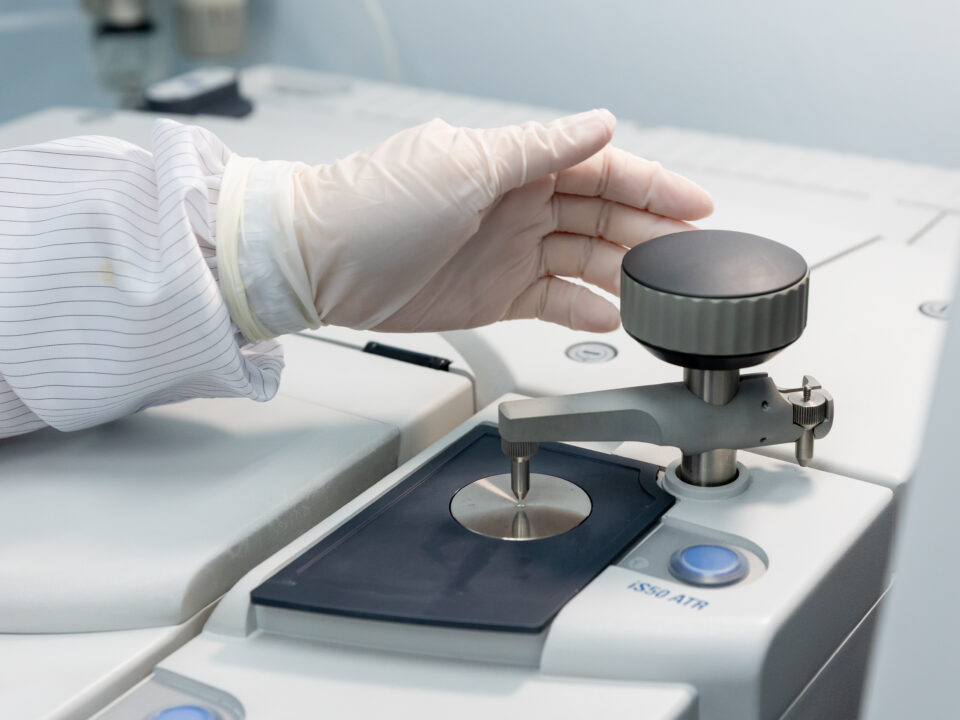
April 24, 2026
Failure Analysis Services | SEM, FTIR & EDX | ALS Testing
READ MORERoot Cause Investigation · Fracture Analysis · Corrosion Analysis · Material Identification · Cross-Section
ISO/IEC 17025 Accredited | SEM + FTIR + EDX + Cross-Section | Automotive Specialist
When a component fails in production, in qualification testing, or in the field, the questions that matter most are not simply ‘what failed’ but ‘why did it fail’ and ‘how do we ensure it does not fail again.’ Failure analysis is the disciplined forensic process that answers these questions, tracing a visible failure mode back to its physical, chemical, or process root cause.
In the automotive industry, failure analysis is a critical tool across the entire product lifecycle. During development, it identifies design or material weaknesses before they reach production. During qualification, it explains unexpected test failures and guides corrective action. During production, it investigates non-conformances and prevents recurrence. After field returns, it determines warranty liability, informs recall decisions, and drives product improvement.
ALS Testing provides specialist automotive failure analysis services using scanning electron microscopy (SEM), FTIR spectroscopy, energy-dispersive X-ray spectroscopy (EDX), optical microscopy, and metallurgical cross-section preparation. With scanning electron microscopy analysis reaching 260 searches per month in the Malaysian market – the highest search volume in our entire keyword set – this is both the most technically demanding and the most commercially significant capability in our laboratory portfolio.
What Is Failure Analysis?
Failure analysis is the systematic investigation of a component or material to determine the cause of an unexpected failure, non-conformance, or performance deficiency. It applies a structured sequence of analytical techniques, starting with non-destructive visual and optical examination, progressing to surface and interface analysis, and culminating in destructive cross-section and microstructural examination where required, to identify the physical, chemical, or mechanical mechanism responsible for the failure.
In automotive applications, failure analysis encompasses a wide range of failure modes and component types. Fracture analysis investigates cracked or broken metal, polymer, or composite components, determining whether the fracture originated from fatigue, overload, corrosion, embrittlement, or manufacturing defects. Corrosion analysis characterises the type and extent of corrosion damage and identifies contributing factors including material composition, coating quality, and environmental exposure. Delamination and adhesion failure analysis investigates separation at material interfaces including bonded joints, coatings, plated surfaces, and polymer-to-metal bonds. Contamination analysis identifies foreign particles or films on component surfaces or in lubrication systems that have caused or contributed to functional failure.
Failure Analysis in the Automotive Supply Chain
The automotive supply chain applies failure analysis at multiple points where the stakes of unresolved failures are highest. Tier-1 suppliers conduct failure analysis on components returned from OEM qualification testing, where a single test failure can delay programme launch. Warranty teams investigate field returns to distinguish design defects from manufacturing escapes, and to determine whether failures within the warranty period are attributable to the supplier, the assembly process, or the OEM’s application conditions. Purchasing and quality teams use failure analysis to assess whether returned components represent genuine supplier non-conformances or misuse and handling damage by the customer. In each case, the failure analysis report provides objective, evidence-based conclusions that carry weight in technical and commercial disputes.
Why Choose an Accredited Independent Laboratory for Failure Analysis?
Failure analysis conducted by an ISO/IEC 17025 accredited independent laboratory carries a level of credibility that in-house analysis cannot replicate. When failure analysis results are used in OEM disputes, insurance claims, product liability proceedings, or regulatory investigations, the independence and accreditation of the laboratory that produced the analysis is routinely scrutinised. ALS provides analysis that is conducted under a formal quality management system, with documented traceability of methods and equipment calibration, and with the objectivity of an organisation that has no stake in any particular outcome.
Our Failure Analysis Techniques
ALS failure analysis employs a suite of complementary analytical techniques, selected based on the nature of the failure, the material types involved, and the level of detail required to reach a defensible root cause conclusion. Our analysts are experienced in applying these techniques in combination; a fracture surface analysis, for example, may combine optical microscopy for initial characterisation, SEM for high-magnification morphological analysis, and EDX for elemental mapping of fracture features.
Scanning Electron Microscopy (SEM) Analysis
Scanning electron microscopy is the central analytical tool for failure analysis at the micro and nano scale. SEM images component surfaces, fracture faces, and cross-section features at magnifications from 20x to 100,000x, with a depth of field and resolution that far exceeds optical microscopy. SEM analysis reveals fracture morphology, the characteristic features that distinguish fatigue striations from intergranular fracture from ductile overload; identifies surface defects, pits, cracks, and corrosion morphology at the micrometre scale; characterises particle morphology in contamination investigations; and provides the imaging foundation for EDX elemental analysis.
All SEM analysis at ALS is conducted in a controlled environment to minimise contamination, with samples prepared using appropriate techniques for the material type, including gold or carbon sputter coating for non-conducting samples. SEM images are documented with scale bars, magnification, and operating conditions for full traceability in the final report.
Energy-Dispersive X-Ray Spectroscopy (EDX) Elemental Analysis
EDX is used in combination with SEM to provide elemental composition data from specific points, areas, or features on a sample surface. By detecting the characteristic X-rays emitted from a sample under electron beam excitation, EDX identifies which elements are present and at what relative concentrations. In failure analysis, EDX is applied to identify corrosion products (for example, distinguishing chloride-induced pitting from sulfate-driven corrosion), to characterise contaminating particles (distinguishing iron from aluminium from silicon-based particles), to verify coating composition, and to detect elemental segregation or depletion at fracture interfaces.
EDX mapping provides a spatial elemental distribution image across an area of interest, enabling visualisation of where specific elements are concentrated; for example, showing the distribution of zinc in a galvanic corrosion zone, or the localisation of chlorine at a corrosion initiation site.
FTIR Spectroscopy (Fourier Transform Infrared)
FTIR spectroscopy is the primary technique for identification of organic materials, polymers, coatings, and surface films in failure analysis. By measuring the infrared absorption spectrum of a material, FTIR produces a molecular fingerprint that can be matched against reference libraries to identify polymer types, adhesive formulations, lubricant residues, and contaminating films. FTIR is routinely applied in automotive failure analysis to identify: the composition of failed gaskets and seals; contaminating films on metal surfaces that inhibit adhesion or coating bonding; degraded or thermally oxidised polymer components; lubricant composition and degradation state; and foreign material contaminants found at failure sites.
ALS operates both standard FTIR for bulk material analysis and ATR (attenuated total reflectance) FTIR for surface film analysis, enabling characterisation of films as thin as a few micrometres without the need for destructive extraction.
Optical Microscopy & Stereo Microscopy
Optical microscopy at magnifications from 10x to 1000x provides the initial visual characterisation stage of failure analysis, identifying fracture locations, corrosion zones, delamination interfaces, and gross defects before higher-resolution SEM analysis is applied. Stereo microscopy at lower magnifications (7x to 50x) provides three-dimensional surface imaging of fracture faces and component surfaces with excellent depth of field, enabling documentation of large-area failure features in context. All optical microscopy images are captured digitally and documented with magnification and scale information.
Metallurgical Cross-Section Preparation & Analysis
Cross-section preparation involves embedding a component in resin, cutting through the area of interest, grinding and polishing to a metallographic finish, and optionally etching to reveal microstructural features, providing access to the internal structure of a component at the site of failure. Cross-section analysis reveals coating thickness and uniformity, interface integrity between layers, crack propagation paths and morphology, grain structure and phase distribution in metals, porosity and inclusion content in castings, and the presence of decarburisation, carburisation, or other surface treatments. Combined with SEM and EDX analysis of the prepared cross-section, this technique provides the most comprehensive internal characterisation of a failed component.
Failure Modes We Investigate
ALS failure analysis services address the full spectrum of failure modes encountered in automotive component manufacturing and service.
Fracture & Fatigue Failure Analysis
Fracture surfaces carry a detailed record of the failure mechanism, encoded in the morphological features of the fractured faces. Fatigue fractures display characteristic features including fatigue crack initiation sites, beach marks (progression marks showing crack growth over cycles), and fatigue striations at high magnification. Overload fractures show ductile features (dimples, shear lips) or brittle features (cleavage facets, intergranular separation) depending on material and loading conditions. ALS fractography, the systematic analysis of fracture surfaces, determines the failure mode, identifies the initiation site, and assesses whether the failure was consistent with design intent, an unexpected overload, or a material or manufacturing defect.
Corrosion & Surface Degradation Analysis
Corrosion failures in automotive components can take many forms: general uniform corrosion, pitting corrosion localised at surface defects or inclusions, galvanic corrosion at bimetallic interfaces, crevice corrosion in confined geometries, stress corrosion cracking in susceptible alloys under mechanical loading, and fretting corrosion at vibrating contacts. ALS corrosion analysis characterises the corrosion morphology by optical and SEM microscopy, identifies corrosion products by EDX elemental analysis and FTIR spectroscopy, and assesses the contribution of material composition, surface treatment quality, and environmental exposure to the observed damage.
Delamination & Adhesion Failure Analysis
Failures at material interfaces, including between coatings and substrates, bonded surfaces, plated layers and base materials, and moulded polymer overmoulds and metal inserts, are among the most common and commercially significant failures in automotive components. ALS investigates delamination failures by cross-section analysis to characterise the interface morphology, SEM and EDX analysis of both separated surfaces to determine the locus of failure (cohesive failure within a layer, or adhesive failure at the interface), and FTIR analysis to identify contaminating films or inadequate surface preparation that may have compromised adhesion.
Contamination & Foreign Material Analysis
Contaminating particles, films, or deposits on component surfaces can cause a range of functional failures from corrosion initiation to electrical resistance increase to mechanical interference. ALS contamination analysis applies the full suite of SEM, EDX, FTIR, and optical microscopy techniques to characterise contaminants and identify their source. This is frequently applied to investigation of corrosion-related warranty failures where a chloride, sulfate, or organic acid contaminant has initiated pitting or crevice corrosion, and to investigation of electrical contact failures where surface films have increased contact resistance.
Our Failure Analysis Process
ALS failure analysis follows a structured investigation process that ensures comprehensive characterisation and defensible conclusions in every case.
Stage
Activity
Output
1. Receipt & Review
Sample receipt, condition documentation, review of client background information
Sample condition record, investigation brief
2. Non-Destructive Examination
Visual, stereo, and optical microscopy – photographic documentation
Overview images, failure site characterisation
3. Surface Analysis
SEM imaging, EDX elemental analysis, FTIR surface film analysis
High-resolution images, elemental data, material identification
4. Destructive Examination
Cross-section preparation, metallographic analysis, SEM/EDX of cross-section
Internal structure characterisation, interface analysis
5. Data Synthesis
Integration of all analytical data, root cause determination, corrective action guidance
Draft failure analysis report
6. Reporting
Final report with images, data, conclusions, and recommendations
Formal failure analysis report – ISO/IEC 17025 accredited
Frequently Asked Questions – Failure Analysis
Q: What information should I provide when submitting a component for failure analysis?
The quality of a failure analysis investigation is directly related to the quality of the background information provided. When submitting a sample, please provide a description of the component and its function, the failure mode observed such as fracture, corrosion, or delamination, and details on when and how the failure was discovered in production, qualification, or the field. It is also helpful to include the operational history of the component if known, any relevant manufacturing information like material specification, heat treatment, surface treatment, and assembly history, and the specific outcome you require from the investigation. This could include root cause identification, technical evidence for specification compliance, or corrective action recommendations. The more context you provide, the more focused and relevant our investigation can be.
Q: How long does a failure analysis investigation take?
Turnaround time depends on the complexity of the investigation, the number of techniques required, and the current workload of our analytical team. A straightforward fracture analysis using SEM and EDX can typically be completed within five to ten business days. More complex investigations involving cross-section preparation, FTIR analysis, and comparative testing of multiple samples may require two to four weeks. For urgent investigations, particularly production-critical failures, please contact our team directly to discuss expedited options.
Q: Can failure analysis results be used in legal or commercial disputes?
Yes. Failure analysis reports produced by ISO/IEC 17025 accredited laboratories are routinely used as technical evidence in commercial disputes, insurance claims, product liability proceedings, and regulatory investigations. The accreditation of ALS Testing means that our reports are produced under a formally audited quality management system, with documented traceability of methods, equipment, and analyst qualifications. If your investigation has a legal or commercial dimension, please advise our team at the outset so that we can ensure the investigation is conducted and documented to the appropriate standard.
Q: What is SEM analysis and why is it important for failure analysis?
Scanning electron microscopy (SEM) is a technique that uses a focused electron beam to image surfaces at very high magnification and resolution. Unlike optical microscopy, SEM can achieve magnifications of 100,000x or higher with a depth of field that makes it ideal for imaging rough fracture surfaces, corroded surfaces, and three-dimensional microstructural features. SEM is important for failure analysis because it reveals the micro-scale morphological evidence that distinguishes one failure mechanism from another: fatigue striations, cleavage facets, corrosion pits, and particle morphology are all characteristic features that guide the analyst’s conclusion about root cause.
Q: Can ALS analyse plastic, rubber, and composite material failures as well as metals?
Yes. ALS failure analysis services cover metals, polymers, rubbers, composites, adhesives, coatings, and electronics materials. FTIR spectroscopy is our primary tool for polymer and organic material characterisation, enabling identification of polymer type, degradation state, and contaminating species. SEM and EDX analysis are applied to polymer fracture surfaces, interface failures, and contaminant identification in non-metallic components. Our analysts have experience with the full range of materials used in automotive manufacturing.
Request a Failure Analysis Investigation
When a component failure requires expert investigation, ALS Testing provides the analytical depth, accredited methodology, and clear reporting that automotive manufacturers require. Contact our team today to discuss your failure analysis requirements and receive guidance on sample submission.
→ Request a Quote: https://www.alstesting.co.th/request-a-quote/
→ Back to Automotive Testing Hub: /automotive-testing/
ISO/IEC 17025 Accredited | SEM + FTIR + EDX + Cross-Section | Fast Turnaround Available
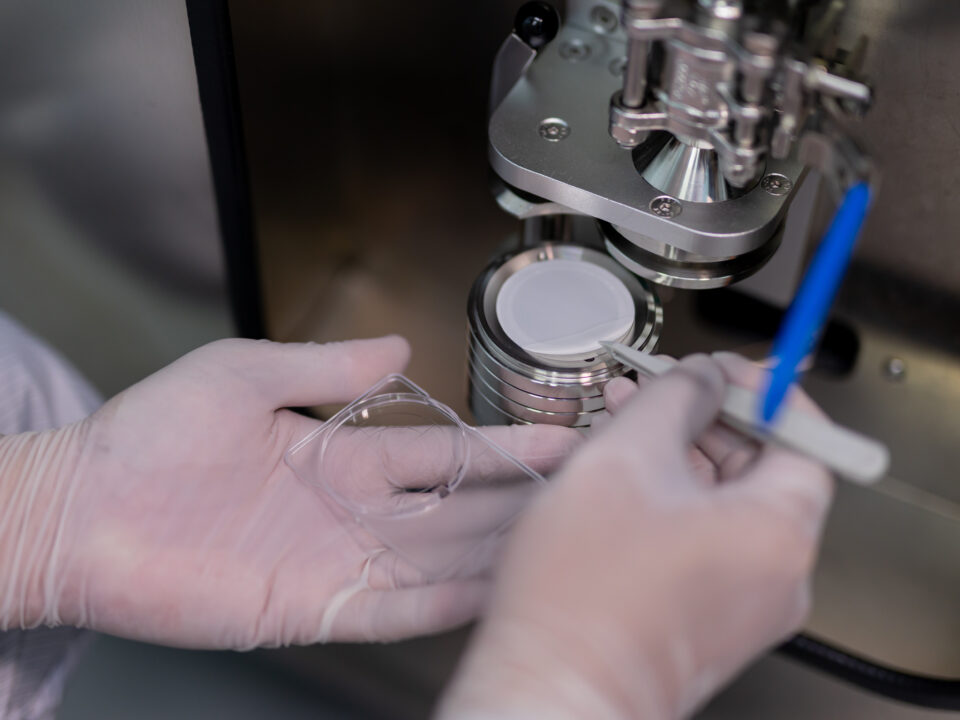
April 24, 2026
Technical Cleanliness Testing | ISO 16232 & VDA 19 | ALS Testing
READ MOREParticle Analysis · LPC Counting · Gravimetric Analysis · SEM Particle Identification
ISO/IEC 17025 Accredited | ISO 16232 & VDA 19 Specialist | SEM Particle ID Available
In precision automotive manufacturing, cleanliness is not a finishing step but a fundamental product specification. A single metallic particle of the wrong size in a hydraulic control valve, or a fibre contaminating a fuel injector channel, can translate into field failures, warranty claims, and production shutdowns that cost orders of magnitude more than the testing that would have prevented them.
Technical cleanliness testing – also known as component cleanliness testing or particle contamination analysis, is the validated process of extracting, quantifying, and characterising particulate contamination from the surfaces and internal channels of automotive components. It is governed by two internationally recognised standards: ISO 16232 (Road Vehicles – Cleanliness of Components) and VDA 19 (Testing of Technical Cleanliness – Particulate Contamination of Functionally Relevant Automotive Parts), the German automotive industry standard that is widely required by European OEMs.
ALS Testing is one of the very few independent laboratories in Malaysia and Southeast Asia offering ISO 16232 and VDA 19 cleanliness testing at specialist level. Our capability in this area represents a genuine competitive differentiator for our clients seeking OEM qualification, and for ALS as a laboratory in the regional market.
What Is Technical Cleanliness Testing?
Technical cleanliness testing is a structured analytical process that determines the type, size, and quantity of solid particulate contamination present in or on automotive components. It is applied to precision components where particle contamination poses a functional risk, primarily components with narrow channels, tight clearances, or surfaces that must maintain sealing integrity.
The process involves three core stages: particle extraction, particle quantification, and particle characterisation. Extraction removes particles from the component using a validated method, typically pressure flushing, ultrasonic agitation, or direct surface rinsing with a filtered solvent. Quantification determines the mass and number distribution of extracted particles. Characterisation identifies the morphology and, where required, the material composition of individual particles using microscopy and analytical techniques.
The output of a cleanliness test is a formal cleanliness class, expressed according to the ISO 16232 or VDA 19 classification system. This data allows manufacturers to verify compliance against their own internal specifications or OEM requirements.
Why Technical Cleanliness Matters for Automotive Manufacturers
The drive toward technical cleanliness in automotive manufacturing has been shaped by decades of field failure data linking particulate contamination to premature component failure. Hydraulic control systems in automatic transmissions, anti-lock braking systems, fuel injection systems, power steering units, and turbocharger oil supply circuits are all highly sensitive to particulate contamination. Even particles invisible to the naked eye (particles of 100 microns or less) can cause valve sticking, orifice blockage, accelerated wear, and seal damage.
For electric vehicle powertrains, the stakes are equally high. Battery thermal management systems, power electronics cooling circuits, and electric motor lubrication and cooling pathways all operate with close tolerances where contamination can cause insulation breakdown, thermal hotspots, or mechanical wear. As EV penetration grows in Southeast Asia, the demand for cleanliness testing of EV-specific components is growing alongside it.
OEM requirements for cleanliness compliance are increasingly contractual rather than advisory. Tier-1 suppliers to major European, Japanese, and American OEMs are routinely required to demonstrate cleanliness compliance using data from ISO/IEC 17025 accredited independent laboratories, not in-house testing. This is where ALS plays a critical role in the supply chain quality process.
ISO 16232 vs VDA 19: What Is the Difference?
ISO 16232 and VDA 19 are closely related standards, both governing the testing of technical cleanliness in automotive components. Understanding the relationship between them is important for specifying the correct test method.
Dimension
ISO 16232
VDA 19
Origin
International (ISO Technical Committee 22)
German Automotive Industry (VDA – Verband der Automobilindustrie)
Structure
10-part standard covering extraction, analysis, and reporting
Single comprehensive document – German and English versions
Adoption
Broadly adopted by global OEMs and regulatory frameworks
Required by German OEMs (BMW, Mercedes-Benz, Volkswagen Group, Bosch)
Particle Classes
Uses ISO cleanliness classes based on particle count per size range
Uses VDA cleanliness classes – more granular size range definition
Relationship
Harmonised – VDA 19 Part 1 and ISO 16232 are technically equivalent for most applications
VDA 19 Part 2 adds requirements for assembly environments
Reporting
ISO 16232 format – required for ISO-referencing OEM submissions
VDA 19 format – required for VDA-referencing OEM submissions
In practice, ALS tests to both standards, and our reports can be formatted to meet either ISO 16232 or VDA 19 reporting requirements depending on the OEM specification being addressed. When in doubt, our technical team will advise on the appropriate standard for your specific application.
Our Cleanliness Testing Services
ALS Testing offers a complete suite of technical cleanliness testing services, covering every stage of the analytical process from particle extraction through to SEM-based particle identification. All testing is conducted within our ISO/IEC 17025 accredited scope, with documented quality controls and traceability throughout.
Particle Extraction – Pressure Flush, Ultrasonic & Rinsing Methods
The foundation of any cleanliness test is the particle extraction method. ISO 16232 and VDA 19 define multiple validated extraction methods, each appropriate for different component geometries and contamination scenarios. ALS offers all primary extraction methods, selected in collaboration with the client based on the component design, functional surfaces of interest, and OEM specification requirements.
Pressure flushing is used for components with internal channels such as hydraulic valves, fittings, and manifolds, where a filtered solvent is flushed through under pressure to carry out particles. Ultrasonic extraction is applied to components where particles adhere to external or complex internal surfaces, using ultrasonic energy to dislodge them into a filtration medium. Rinsing extraction is a simpler method for relatively large components where surface contamination is the primary concern. All extraction solvents used are filtered to a level that ensures blank contamination remains below the defined threshold before component testing begins.
Gravimetric Analysis – Total Particle Mass
Gravimetric analysis determines the total mass of particles extracted from a component, expressed in milligrams. This provides a global contamination index that is compared against the mass-based cleanliness specification. The extracted particles are collected on a pre-weighed filter membrane, dried, and weighed on a calibrated analytical balance with traceability to national mass standards. Gravimetric analysis is a fundamental requirement of both ISO 16232 and VDA 19, and provides a clear quantitative index. This result is used by quality control teams to determine if a component meets the predefined mass-based limits for their specific production line.
Light Obscuration Particle Counting (LPC) – Size Distribution Analysis
Light obscuration particle counting (LPC), also known as automatic optical particle counting, provides a count of extracted particles distributed across defined size ranges, expressed as a particle size distribution. A laser-based instrument counts particles suspended in a clean solvent, recording both the total count and the count in each size class (typically 100–150 µm, 150–200 µm, 200–400 µm, 400–600 µm, 600–1000 µm, and >1000 µm). This data is used to assign an ISO 16232 or VDA 19 cleanliness class and to compare against the OEM-specified cleanliness requirement for the component.
LPC is the standard particle quantification method for ISO 16232 and VDA 19 cleanliness testing, and is required for any cleanliness class determination. It provides far more information than gravimetric analysis alone, enabling detection of large individual particles that may pose functional risk even when total particle mass is low.
Microscopic Particle Analysis & Classification
Following LPC, particles collected on the filter membrane are examined under a calibrated microscope (typically at 50x or 100x magnification) to classify individual particles by type, morphology, and size. ISO 16232 and VDA 19 define particle classification categories: metallic shiny (reflective metallic particles), metallic non-shiny (oxide-coated or corroded metals), fibres, and other non-metallic particles. This classification is important because different particle types carry different risk profiles; a metallic shiny particle of 400 µm in a hydraulic valve is far more concerning than a fibre of the same size.
Microscopic analysis is reported with representative photomicrographs of significant particles, providing visual evidence of the contamination types found. This information supports root cause investigation when cleanliness failures are identified.
SEM-EDX Particle Identification
For cases where the identity of individual particles must be confirmed, particularly in failure investigation, contamination source tracing, or where OEM specifications require elemental identification of particles exceeding a defined size. ALS offers scanning electron microscopy (SEM) with energy-dispersive X-ray spectroscopy (EDX) analysis of individual particles collected from the filter membrane.
SEM imaging provides high-magnification morphological characterisation of individual particles, while EDX provides elemental composition data that enables positive identification of particle material, for example distinguishing iron from aluminium from stainless steel, or identifying ceramic, glass, or polymer particle types. This combined SEM-EDX analysis is the most powerful particle identification tool available and provides definitive evidence for contamination source investigation.
Component Types We Test
ALS cleanliness testing services cover the full range of precision automotive components for which cleanliness specifications are typically defined by OEMs or international standards. Our experience spans hydraulic systems, powertrain components, fuel systems, braking systems, and EV-specific assemblies.
Hydraulic & Fluid Power Components
Hydraulic valves, valve bodies, manifolds, pump housings, cylinders, fittings, and tubing, all of which operate with fluid clearances where particulate contamination can cause sticking, jamming, or accelerated wear of precision-ground surfaces. ALS is experienced in testing components for automatic transmission hydraulic circuits, power steering systems, and industrial hydraulic assemblies to ISO 16232 and VDA 19 specifications.
Fuel System Components
Fuel injectors, fuel rails, fuel pumps, and direct injection components require extremely high cleanliness standards, as contamination can cause injector nozzle blockage, irregular spray patterns, and combustion chamber damage. Cleanliness requirements for high-pressure direct injection fuel systems are among the most stringent in automotive manufacturing, often requiring cleanliness classes that exclude particles above 100–200 µm.
Braking System Components
ABS modulators, brake calipers, master cylinders, and hydraulic brake lines must meet cleanliness specifications that protect the fine orifices and seal surfaces critical to braking system integrity. ALS tests braking components to OEM cleanliness specifications and ISO 16232, with particular attention to metallic particle counts that indicate machining residue or wear debris.
EV & Powertrain Components
Electric motor housings, battery thermal management circuit components, power electronics cooling plate assemblies, and EV gearbox components all require cleanliness verification as EV production scales up across the region. ALS is developing and applying cleanliness testing protocols for EV-specific components, drawing on our ISO 16232 expertise and engaging with emerging OEM specifications for EV powertrain cleanliness.
Standards & Test Methods
Our cleanliness testing is conducted to the following primary standards and test methods, all within our ISO/IEC 17025:2017 accredited scope. For tests outside our accredited scope, we apply validated in-house methods following the principles and protocols established by ISO 16232 and VDA 19.
Standard / Method
Description
Application
ISO 16232
Road Vehicles – Cleanliness of Components (10 parts)
International cleanliness standard for all automotive components
VDA 19 Part 1
Testing of Technical Cleanliness – Particle Contamination Analysis
German OEM requirement – BMW, VW Group, Mercedes-Benz, Bosch
VDA 19 Part 2
Assembly Environment Requirements for Technical Cleanliness
Clean area requirements for assembly processes
Gravimetric Analysis
Total extracted particle mass by calibrated weighing
Quantitative mass measurement for comparison against customer-defined limits.
Light Obscuration Particle Counting (LPC)
Automated particle count by size class using laser obscuration
Particle size distribution – ISO/VDA cleanliness class assignment
Microscopic Particle Classification
Manual classification of particles by type and morphology
Particle type distribution – metallic, fibre, non-metallic
SEM-EDX Particle ID
SEM imaging + elemental analysis of individual particles
Particle source identification, failure investigation, OEM requirement
Why Choose ALS for Cleanliness Testing?
Technical cleanliness testing is a specialised capability that requires more than a particle counter and a filter membrane. It requires experienced analysts who understand automotive manufacturing processes, validated extraction methods appropriate to the component type, calibrated equipment with documented traceability, and a quality management system that ensures the reliability of every result.
One of Very Few Specialists in Malaysia & SEA
ALS is one of very few independent laboratories in Malaysia and Southeast Asia offering ISO 16232 and VDA 19 cleanliness testing at this level of depth. While general testing laboratories may offer particle counting services, the full cleanliness testing process, including validated extraction, gravimetric analysis, LPC, microscopic classification, and SEM-EDX particle identification, which requires specific expertise and investment that ALS has made and maintains.
Full Process Capability from Extraction to SEM-EDX
Unlike laboratories that offer only partial cleanliness testing capability, ALS provides the complete analytical workflow from sample reception and extraction method selection through to final report with SEM-EDX particle identification where required. This full-process capability means that you can manage your entire cleanliness testing requirement through a single laboratory relationship, with consistent methods and results across all your components and platforms.
ISO/IEC 17025 Accredited Results
Our ISO/IEC 17025:2017 accreditation covers cleanliness testing within our accredited scope, meaning that our results carry the formal weight of internationally recognised laboratory accreditation. For OEM submissions and qualification programmes that require accredited test data, ALS test reports satisfy this requirement without question.
Frequently Asked Questions – Cleanliness Testing
Q: What is technical cleanliness testing and why do automotive OEMs require it?
Technical cleanliness testing is the validated process of extracting, quantifying, and characterising particulate contamination from automotive components. OEMs require it because particulate contamination in precision components, particularly hydraulic systems, fuel systems, and braking systems, is a leading cause of field failures and warranty claims. ISO 16232 and VDA 19 provide the standardised framework for cleanliness specification and verification, and OEMs contractually require Tier-1 suppliers to demonstrate compliance using data from accredited independent laboratories.
Q: What is the difference between ISO 16232 and VDA 19?
ISO 16232 is the international standard for automotive component cleanliness testing, developed by ISO Technical Committee 22. VDA 19 is the German automotive industry standard, developed by the VDA (German Association of the Automotive Industry), and is specifically required by German OEMs such as BMW, Volkswagen Group, and Mercedes-Benz, and their major suppliers. The two standards are harmonised: VDA 19 Part 1 is technically aligned with ISO 16232, but the reporting formats and classification systems differ. ALS can test to either standard and can format reports to meet your specific OEM submission requirement.
Q: What types of particles are identified in a cleanliness test?
ISO 16232 and VDA 19 define four primary particle types: metallic shiny particles (highly reflective metals such as machined steel or aluminium), metallic non-shiny particles (oxide-coated or corroded metals, cast particles), fibres (organic or synthetic fibres from wipes, clothing, or seals), and other non-metallic particles (rubber, ceramic, glass, polymer). SEM-EDX analysis can further identify the elemental composition of individual particles for definitive material identification.
Q: How do I prepare my components for cleanliness testing submission?
Component preparation and packaging are important to avoid contamination between manufacturing and laboratory testing. In general, components should be sealed in clean polythene bags immediately after manufacture and kept sealed until sample submission. Do not use paper or cardboard packaging in contact with the component surface. Please contact our team before submission and we will provide specific sample packaging and shipping instructions for your component type.
Q: Can ALS test to OEM-specific cleanliness specifications?
Yes. ALS has experience with a range of OEM-specific cleanliness specifications in addition to the ISO 16232 and VDA 19 standards. Please provide the OEM specification document number and revision when making your enquiry, and our technical team will confirm our capability and advise on the test programme required.
Request a Cleanliness Testing Quote
Whether you are seeking ISO 16232 certification for a new component programme, investigating a cleanliness-related field failure, or establishing a cleanliness testing protocol for a new product line, ALS Testing has the expertise and accreditation to support you. Contact our team today to discuss your requirements and receive a quotation.
→ Request a Quote: https://www.alstesting.co.th/request-a-quote/
→ Back to Automotive Testing Hub: /automotive-testing/
ISO/IEC 17025 Accredited | ISO 16232 & VDA 19 Specialist | SEM-EDX Particle ID Available
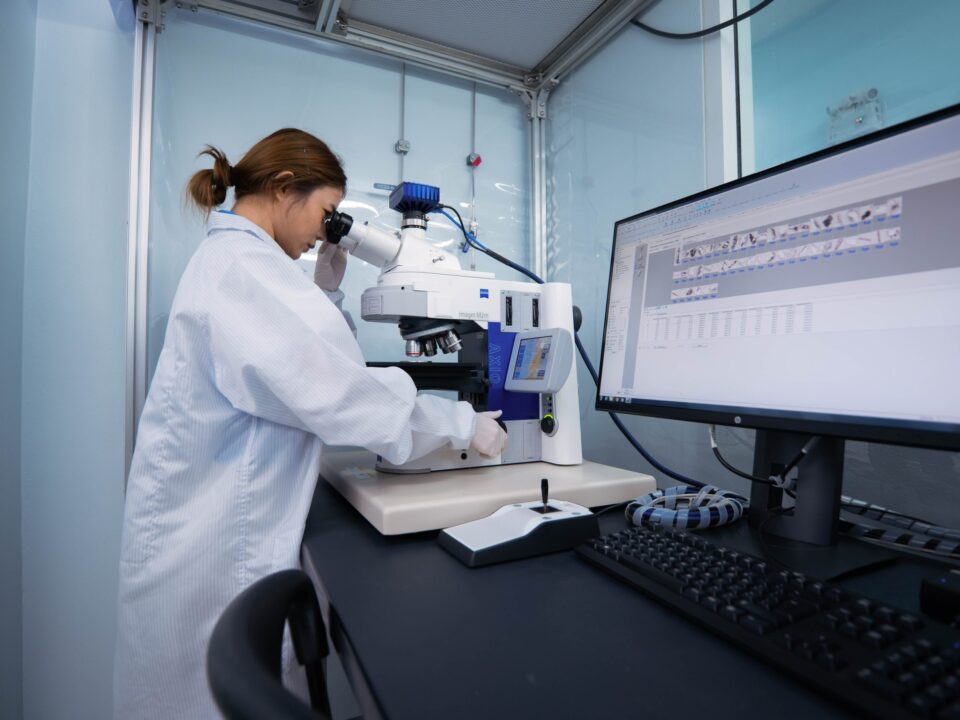
April 17, 2026
Dust analysis in factories
READ MOREDust analysis in factories: testing methods and ISO standards that factories need to know.
The growth of the EV and semiconductor industries has made particle control in manufacturing lines a key global issue, with the particle analysis services market valued at over $1 billion and expected to grow at an average rate of over 8% per year.
Particle analysis is the process of examining the size, quantity, and composition of particulate matter contaminating air, surfaces, or product components. This is done to assess risk and ensure quality control meets industry standards. Many manufacturing industries require strict air cleanliness control according to ISO 14644 standards.
This article will help you understand how dust analysis works, the types of instruments used, and why particle control has become a core part of quality control in modern factories.
Why is the Particle Analysis Market Growing So Rapidly?
Controlling particle contamination is a critical issue in advanced industries, particularly semiconductor and electronics manufacturing, which require cleanrooms with strict particle control.
According to global industry organizations, the particle analysis services market is worth over a billion dollars and is growing at an average rate of 8–9% per year.
This growth is primarily driven by three factors:
Quality and hygiene regulations in industry.
The growth of the EV and semiconductor industries.
Continuously evolving analytical technologies such as AI and real-time monitoring systems.
As production lines become more complex, dust analysis has become an integral part of quality control systems, not just general environmental monitoring.
The Dust Situation in Thailand: From PM2.5 to Production Processes
Thailand faces a recurring PM2.5 dust problem. Data from the Pollution Control Department (PCD) indicates that many areas of the country have annual PM2.5 averages higher than the World Health Organization’s guideline of 5 micrograms per cubic meter, as per WHO Air Quality Guidelines.
The PCD report also states that PM2.5 sources in Thailand come from various sectors, such as:
Transportation
Open burning
Industrial sector
Energy production
While PM2.5 information is often discussed in a health context, in the manufacturing sector, process particles are also a significant risk.
These particles can originate from metal scraps from machining, plastic powder from molding, or dust from machine wear, and can directly affect product quality.
How many types of dust are there in a production line, and how do they differ?
In industry, dust analysis is divided into two main groups based on particle origin: Airborne Particles and Component Cleanliness, which require different testing methods and reference standards.
Airborne Particles
Component Cleanliness
Type
Floating in the air in the production area.
Stuck on a surface or in a part.
Main factors
From the movement of people, machinery, and manufacturing processes.
From metal scraps, plastic powder, and wear and tear dust.
Main industry
Semiconductor, Medical Devices, Cleanroom
Automotive, EV, and Automotive parts
Standard
ISO 14644
VDA 19 / ISO 16232
Testing
LPC, Optical Microscope
SEM/EDX, Optical Microscope, IC
ALS
✓
✓
As manufacturing processes become more complex, dust monitoring has become part of a quality control system, not just an environmental test.
Laboratory Dust Analysis Methods
Laboratory dust analysis uses a variety of instruments depending on the particle characteristics and the context of the manufacturing process, including:
Optical Microscope
SEM/EDX (Scanning Electron Microscope with Energy Dispersive X-ray)
LPC Particle Counter (Liquid Particle Counter)
GC-MS (Gas Chromatography–Mass Spectrometry)
Ion Chromatography (IC)
Standards used in industrial dust analysis
Industrial particulate matter analysis must adhere to internationally recognized standards so that test results can be used in quality control and inspection processes.
Commonly encountered standards include:
Automotive & EV
Semiconductors and Electronics
Medical Devices
Aerospace
Food & Pharmaceutical
How long does dust analysis take?
The timeframe depends on the testing method. For example,
particulate matter measurement using ISO16232/VDA19 may take approximately 7-10 business days.
In an era of increasingly stringent manufacturing standards, the visibility and control of particles in production processes have become an integral part of a factory’s quality management system. Dust analysis is not just a technical test; it’s a crucial tool that helps manufacturers understand production process risks and consistently maintain international product standards.
For dust analysis or particle monitoring in your production process, ALS Testing Services (Thailand) Co., Ltd. offers services with an ISO/IEC 17025 certified laboratory.