
ทดสอบวัสดุ
- โชว์สินค้าทั้งหมด
- No categories
May 13, 2026
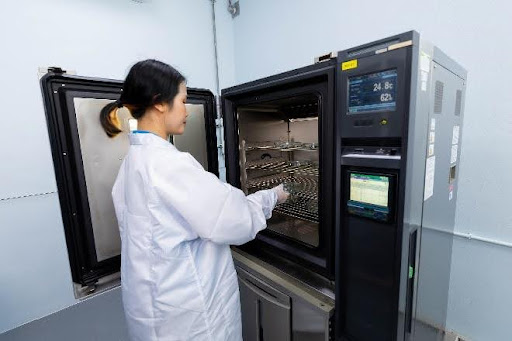
Why Failure Analysis and Reliability Begin with Understanding Your Materials
In manufacturing and engineering, using the wrong material — or not fully understanding the one you’re using — can be catastrophic. Material testing is how industry professionals eliminate that uncertainty. It ensures that every component, structure, and product performs exactly as intended, under real-world conditions.
In today’s industrial landscape, effective material testing doesn’t just improve product quality — it reduces production risks, enhances safety, and prevents costly failures before they happen.
What Is Material Testing?
At its core, material testing is a systematic process for examining and evaluating the properties of a material — how it behaves, what it can withstand, and where its limits lie. These properties fall into three key categories:
⚙️ 1. Mechanical Properties
How does the material respond when force is applied? This covers strength, flexibility, toughness, and resistance to repeated stress — the properties that determine whether a material holds up or breaks down under load.
2. Chemical Properties
How does the material interact with its environment? This includes its composition, reactivity, corrosion resistance, and behavior when exposed to chemicals — critical for products used in harsh or chemically active environments.
3. Physical Properties
What are the material’s inherent physical characteristics? Density, thermal conductivity, and electrical conductivity all fall here — properties that define how a material fits into its intended application.
Together, these three dimensions give engineers and manufacturers a complete picture of a material’s capabilities — and its vulnerabilities — before anything goes into production.
Two Fundamental Approaches to Testing
1. Destructive Testing (DT)
As the name suggests, this approach involves permanently altering or breaking the test specimen to extract precise data about its mechanical properties. It’s the go-to method when you need hard numbers and real-world simulations.
Common Destructive Tests:
Table
Test
What It Measures
Tensile Test
Strength and elasticity under pulling force
Impact Test
Toughness and resistance to sudden shock
Hardness Test
Resistance to surface deformation under pressure
Fatigue Test
Service life under repeated cyclic loading
Why it’s valuable:
Delivers accurate, quantitative data on mechanical behavior
Closely simulates real operating conditions
Backed by internationally recognized standards such as ASTM and ISO
️ 2. Non-Destructive Testing (NDT)
NDT examines materials and components without causing any damage — meaning the tested part can go straight back into service. It’s the preferred choice for quality control, in-service inspection, and detecting hidden defects.
Common Non-Destructive Tests:
Table
Test
What It Detects
Ultrasonic Testing
Internal cracks, voids, and inclusions
Radiographic Testing (X-ray)
Internal structural defects and anomalies
Liquid Penetrant Testing
Surface-breaking cracks and discontinuities
Magnetic Particle Testing
Surface and near-surface defects in ferrous materials
Why it’s valuable:
Zero damage to the component — ready to use immediately after testing
Cost-effective over the long term — no material wastage
Can be applied to structures and machinery already in service, such as bridges, pipelines, and industrial equipment
Chemical Analysis: Looking Deeper into Material Composition
Understanding a material’s physical behavior is only part of the story. Chemical analysis reveals what a material is made of and how it will react in its environment. This is especially critical in industries like hard disk manufacturing and automotive production, where contamination or compositional inconsistencies can cause serious failures.
Key Chemical Analysis Instruments
GC-MS (Gas Chromatography–Mass Spectrometry) The gold standard for detecting organic compounds and contaminants. GC-MS separates and identifies volatile substances with extraordinary precision — down to the parts per million (ppm) or even parts per billion (ppb) level. Ideal for detecting trace impurities in materials.
HPLC (High Performance Liquid Chromatography) Designed for analyzing complex liquid mixtures, particularly compounds that are non-volatile or heat-sensitive. Used to quantify surface coatings, additives, and residual substances in a wide range of materials.
IC (Ion Chromatography) A specialized technique for detecting and measuring ions in solution — particularly those responsible for corrosion. Critical for materials used in humid environments or those in contact with liquid media.
Specialized Chemical Property Testing
Chemical Resistance Testing
Studies how materials degrade when exposed to real-world chemicals
Measures changes in weight, shape, and mechanical properties after chemical exposure
Predicts service life in chemically aggressive environments
Corrosion Testing
Determines corrosion rates of metals across different environments
Investigates corrosion mechanisms and contributing factors
Evaluates the effectiveness of anti-corrosion coatings and treatments
Migration Testing
Checks whether materials release substances into food, packaging, or medical devices
Assesses safety compliance with health and regulatory requirements
Measures the quantity of released substances under simulated use conditions
The Real Business Case for Material Testing
Investing in material testing isn’t just about compliance — it’s about protecting your business at every level:
Table
Benefit
What It Means in Practice
✅ Quality Assurance
Confirms materials meet required specifications before production
Product Development
Provides the data needed to design better, smarter products
Failure Prevention
Identifies weaknesses before they become costly problems
Cost Reduction
Prevents expensive recalls, rework, and liability claims
Regulatory Compliance
Meets legal and industry requirements across sectors
Frequently Asked Questions
Q: How long does material testing take? It depends on the type of test. Basic tests can be completed in a few hours, while complex evaluations — such as fatigue testing — may take several days or even weeks. A good laboratory will give you a clear timeline upfront.
Q: How do I know which testing method is right for my material? The right method depends on your objective, the type of material, and the properties you need to evaluate. Consulting with an experienced testing specialist ensures you choose the most efficient and accurate approach for your needs.
Q: Is material testing necessary for small businesses? Absolutely. Quality failures don’t discriminate by company size. The cost of a product recall, customer complaint, or safety incident will always far exceed the cost of testing. For small businesses especially, one quality failure can be devastating — making proactive testing a smart investment, not an optional extra.
The Bottom Line
Material testing is one of the most powerful tools available to manufacturers and engineers. Whether you’re validating a new material, troubleshooting a production issue, or ensuring compliance with international standards, systematic testing gives you the knowledge to make confident decisions.
The choice between destructive and non-destructive testing, mechanical and chemical analysis, isn’t an either/or — it’s a toolkit. The best results come from selecting the right combination for your specific application.
Investing in quality material testing doesn’t just protect your products — it protects your brand, your customers, and your bottom line.
For organizations that want true confidence in their products, partnering with an ISO/IEC 17025 accredited laboratory ensures that every test is conducted with the precision, reliability, and scientific rigor your industry demands.
Ready to put your materials to the test? Work with certified experts who can guide you from sample preparation to actionable results — and help you build products that genuinely last.
Read moreMay 7, 2026
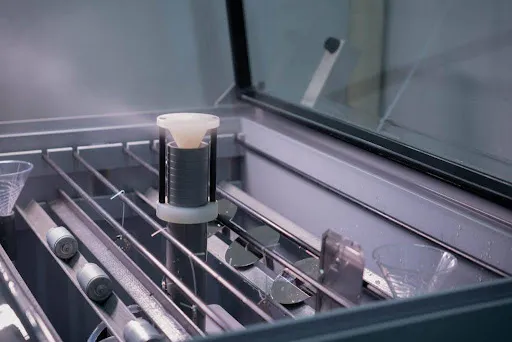
In the manufacturing world, surface quality can make or break a product. Salt Spray Testing — also known as Salt Fog Testing — is one of the most widely used methods for evaluating a product’s resistance to corrosion. From metal components and steel parts to automotive hardware, electronics, and medical devices, this test simulates harsh real-world conditions inside a controlled chamber by continuously spraying a sodium chloride (NaCl) solution as a fine mist onto test samples.
The result? A clear, reliable picture of how long your product can withstand corrosive environments — before it ever leaves the factory.
Which Industries Need Salt Spray Testing?
Salt Spray Testing is versatile enough to serve a wide range of manufacturing sectors:
1. Automotive Industry
Car frames, bumpers, bolts, and screws must be evaluated for long-term durability in high-pollution, high-salt environments. Salt Spray Testing helps confirm that these components can handle real-world conditions throughout their intended service life.
️ 2. Construction Industry
Structural metal components used in buildings and bridges need to demonstrate both strength and corrosion resistance. Salt Spray Testing validates the safety and longevity of these critical materials.
⚡ 3. Electrical & Electronics Industry
Electrical and electronic components installed outdoors or in fluctuating weather conditions are constantly exposed to corrosion risk. Testing ensures they can withstand the elements without performance degradation.
⚓ 4. Marine Industry
Ship components and marine engines operate in one of the most corrosive environments on Earth. Salt Spray Testing closely simulates actual sea conditions, making it the ideal quality check for marine-grade materials.
️ 5. Metal Coating Industry
For coatings such as zinc, chromium, and paint finishes, the test verifies how effectively the coating prevents corrosion — revealing any weaknesses in the protective layer.
6. Outdoor Furniture & Equipment
Products like iron fences, ornamental gates, garden tables, and outdoor chairs face constant exposure to moisture and salt in the air. Salt Spray Testing helps prevent premature rusting and structural failure that can quickly damage a brand’s reputation.
3 Key Benefits of Salt Spray Testing
1. Catch Problems Before Delivery
Salt Spray Testing acts as a final quality checkpoint — revealing corrosion weaknesses before products reach the customer. If a product corrodes faster than expected, the engineering team can use that data to improve coating formulas, material selection, or packaging — preventing field failures in automotive parts, electrical equipment, and industrial tools.
2. Drive Continuous Product Improvement
The data generated by Salt Spray Testing provides actionable insights for ongoing product development — refining coating formulas, switching to more durable materials, or redesigning manufacturing processes — resulting in products with a longer service life that perform reliably in real customer environments.
3. Strengthen Brand Credibility
In today’s competitive market, customers and partners make decisions based on trust and verified quality. Test results from an internationally accredited laboratory demonstrate your commitment to excellence and give your brand a measurable, credible quality advantage.
How ALS Testing Delivers Salt Spray Results You Can Rely On
While some factories have basic in-house testing equipment, only a professional, accredited laboratory can provide results that are internationally recognized, referenceable for export, and accepted by global partners.
Here’s what makes ALS Testing’s approach stand out:
✅ ISO/IEC 17025 Accredited Laboratory
All Salt Spray Testing at ALS is conducted under full ISO/IEC 17025 accreditation, covering two key pillars:
Technical Competence — Tests are performed using calibrated instruments, by trained specialists, following standardized processes — ensuring every result is accurate, consistent, and traceable.
Quality Management System — Unlike general ISO 9001 certification, ISO/IEC 17025 is specifically designed for testing and calibration laboratories, ensuring every step of the workflow is systematic, transparent, and quality-controlled.
️ Strict Parameter Control with Calibrated Equipment
Every parameter in the Salt Spray process — concentration, temperature, spray rate, and duration — is rigorously controlled using calibrated instruments operated by experienced technicians. This ensures results that are scientifically defensible and reproducible.
Clear Reports with Expert Scientific Interpretation
Test reports include detailed records of observations, photographs, and environmental conditions at each testing interval. Results are analyzed and interpreted by qualified scientists, providing a direct pass/fail assessment against industry standards or customer-specific requirements.
Technical Consultation & Root Cause Solutions
When a product fails to meet the standard, our expert scientists don’t just report the result — they investigate the root cause. Whether it’s inadequate surface preparation, inconsistent coating application, or material-related vulnerabilities, we provide clear, actionable recommendations to resolve the issue.
Elevate Your Product Standards with ALS Testing
In an increasingly competitive manufacturing landscape, having internationally accredited, reliable test results is no longer optional — it’s essential for market access and customer confidence.
ALS Testing offers a complete, high-precision Salt Spray Testing service that helps you:
Detect problems before products are delivered
Reduce the risk of market failures and warranty claims
Use test findings to drive product improvement
Build stronger trust with customers and OEM partners
Choose ALS Testing for your Salt Spray needs — and take a confident step toward world-class product quality.
Read moreMay 7, 2026
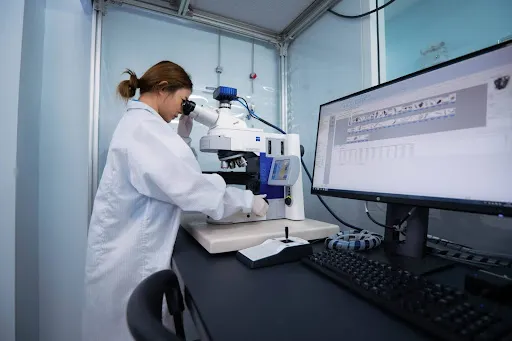
In industries like automotive, electronics, and medical devices, cleanliness is not optional — it’s a fundamental requirement. Even microscopic dust particles can compromise product quality, trigger costly recalls, and damage your brand’s reputation. That’s why Dust Analysis (Particle Analysis) is a critical step that gives manufacturers the confidence their products meet both domestic and international standards.
ALS Testing Services (Thailand), a member of the ALS Global network with over 40 years of testing and quality inspection expertise, offers comprehensive, internationally accredited dust analysis services — helping businesses elevate product quality and reduce production risk.
What Is Dust Analysis?
Dust Analysis is the process of detecting, measuring, and classifying particulate contaminants found in components, finished products, or production environments. Using specialized tools and standards, it evaluates whether contamination levels affect:
✅ Product quality and performance
✅ Safety requirements
✅ International standards such as VDA 19 (Technical Cleanliness of Components) and ISO 16232:2018 (Cleanliness of Components in Automotive Manufacturing)
ALS Testing’s 3-Step Dust Analysis Service
Step 1: Validation of Extraction Parameters
Before analysis begins, we verify that the particle extraction method is appropriate for your specific component. This involves 6 repeated extractions, analyzed through a Particle Analyzer — ensuring accuracy and full compliance with VDA 19 / ISO 16232 criteria.
Step 2: Particle Analysis
Once extraction is validated, the extracted particles are classified into three main categories:
Table
Category
Examples
Metallic
Iron, aluminum, and copper shavings from wear and machining
Non-Metallic
Plastic, rubber, or environmental dust particles
Fiber
Threads from fabric, filters, or packaging materials
Results specify the quantity, size, and type of each particle — enabling manufacturers to assess whether their components meet cleanliness standards and to plan precise maintenance actions.
Step 3: Advanced Analysis
When deeper identification is needed, ALS Testing offers cutting-edge analytical technologies:
SEM/EDX (Scanning Electron Microscopy with Energy-Dispersive X-ray Analysis) — identifies the elemental composition of metallic particles
FTIR (Fourier Transform Infrared Spectroscopy) — identifies non-metallic particles such as plastics, rubber, and natural fibers
4 Business Benefits of Dust Analysis
1. ️ Reduce the Risk of Product Recalls
By detecting contamination before products reach customers, dust analysis helps you catch problems at the source — preventing costly recalls, economic losses, and damage to customer trust.
2. Compete Confidently in Global Markets
International markets — especially automotive, electronics, and medical — enforce strict cleanliness requirements. Standards-compliant dust analysis confirms your products are ready for these markets, opening doors to new trade opportunities.
3. ⚙️ Improve Production Process Efficiency
Particle data reveals contamination rates and their origins — whether from machinery, the work environment, or assembly steps. This actionable intelligence allows manufacturers to eliminate risk points and optimize production for the long term.
4. Build Customer and Partner Confidence
Test results from an ISO/IEC 17025-accredited laboratory provide tangible proof of quality — giving customers and business partners the assurance that your products undergo rigorous quality control. This is a powerful foundation for building lasting business relationships.
Which Industries Benefit from Dust Analysis?
Dust analysis isn’t limited to automotive alone. Here’s how it adds value across multiple sectors:
Food & Beverage
Dust and particles from packaging, machinery, or the environment can contaminate food products and cause failures under safety standards like HACCP, GMP, or ISO 22000. ALS particle analysis pinpoints contaminant types and sources — enabling targeted fixes such as improved packaging steps or upgraded air filtration systems.
Cosmetics & Personal Care
In skincare and cosmetics production, tiny particles — dust, fibers, or material fragments — can cause skin irritation, adverse reactions, or product degradation. Dust analysis helps manufacturers identify and eliminate contamination before products reach consumers.
⛽ Energy & Petrochemical
Dust particles, metal debris, and sediment deposits can cause blockages, accelerated wear, and equipment damage that disrupts operations. Regular particle analysis keeps pipes, hydraulic systems, and process equipment clean — maintaining both safety and operational efficiency.
Elevate Your Quality Standards with ALS Testing Services
In today’s highly competitive industrial landscape, cleanliness standards are not a box to check — they are a strategic quality tool. Neglecting dust analysis risks product defects, regulatory non-compliance, and reputational damage that is far more costly than the test itself.
ALS Testing Services (Thailand) is your trusted partner — backed by 40+ years of ALS Global expertise, world-class analytical standards, advanced technology, and clear, actionable reports designed to help you improve, compete, and grow.
Achieve world-class cleanliness confidence — with ALS Testing Services.
Read more
