Cleanliness Testing Services
- โชว์สินค้าทั้งหมด
- No categories
May 6, 2026
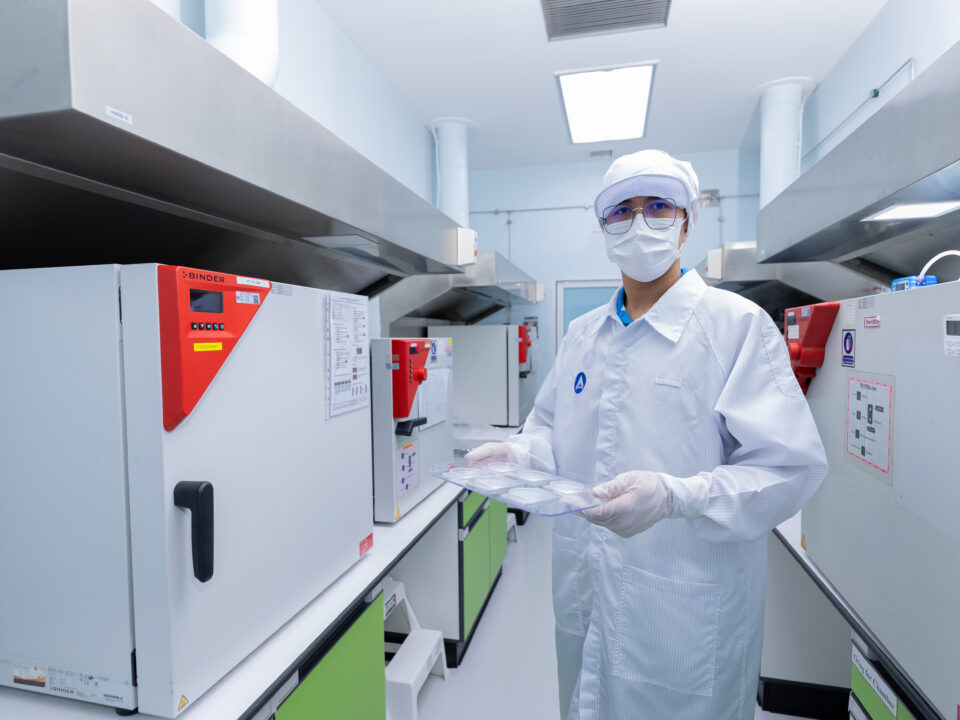
ICE vs. EV: A New Kind of Risk
The shift from combustion engines (ICE) to electric vehicles (EV) changes more than the power source — it changes the entire risk profile.
ICE systems fail through mechanical wear — predictable, repairable.
EV systems fail through electrical faults and thermal instability — sudden, dangerous, and potentially irreversible.
Even a few microns of contamination can trigger a battery short circuit, leading to thermal runaway — and potentially fire or explosion.
Why ISO 16232 Now Matters for Safety
The updated VDA 19.1 (3rd Edition, 2025), developed by 40+ leading automotive companies, elevates ISO 16232 from a quality standard to a functional safety requirement, introducing:
Particle analysis below 50 microns
SEM/EDX inspection techniques
Standardized dry extraction methods
Failure assessment for battery and electronic components
How Contamination Causes EV Failures
In high-voltage EV systems (400–800V), small conductive particles can cause:
Short circuits
Electrical arcing
Insulation breakdown
Leakage currents
These failures occur without warning — making cleanliness a safety-critical design requirement, not just a quality checkpoint.
ICE vs. EV: Quick Comparison
Table
Factor
ICE
EV (High Voltage)
Main Risk
Mechanical wear
Short circuit / Thermal instability
Critical Particle Size
> 100 µm
< 50 µm
Primary Impact
Performance loss
Arcing, insulation failure
ISO 16232 Role
Quality standard
Functional safety standard
ISO 16232 in the EV Supply Chain
ISO 16232 is evolving from a measurement tool into a full process control framework:
Cleanliness limits tied to failure mechanisms
Integrated with PFMEA / DFMEA
Supported by real-time monitoring and traceability
The Road to Zero Contamination
To stay competitive, organizations should:
✅ Embed cleanliness into product design from day one ✅ Invest in SEM/EDX and real-time inspection tools ✅ Build data-driven process controls ✅ Train personnel and foster a quality-first culture
FAQ
Why are small particles more dangerous in EVs? High-voltage systems have lower insulation tolerance. Particles under 50 µm can instantly cause short circuits and trigger thermal runaway.
How does cleanliness relate to Functional Safety? Contamination can initiate electrical bridging and insulation failure — making it a direct concern under ISO 26262.
Where should organizations start? Define cleanliness requirements based on failure mechanisms, then integrate them into design, manufacturing, and inspection — supported by SEM/EDX and traceability systems.
What are the long-term benefits of compliance? Fewer recalls, reduced thermal and electrical failures, longer system lifespan, and stronger trust from OEM customers.
Read moreApril 24, 2026
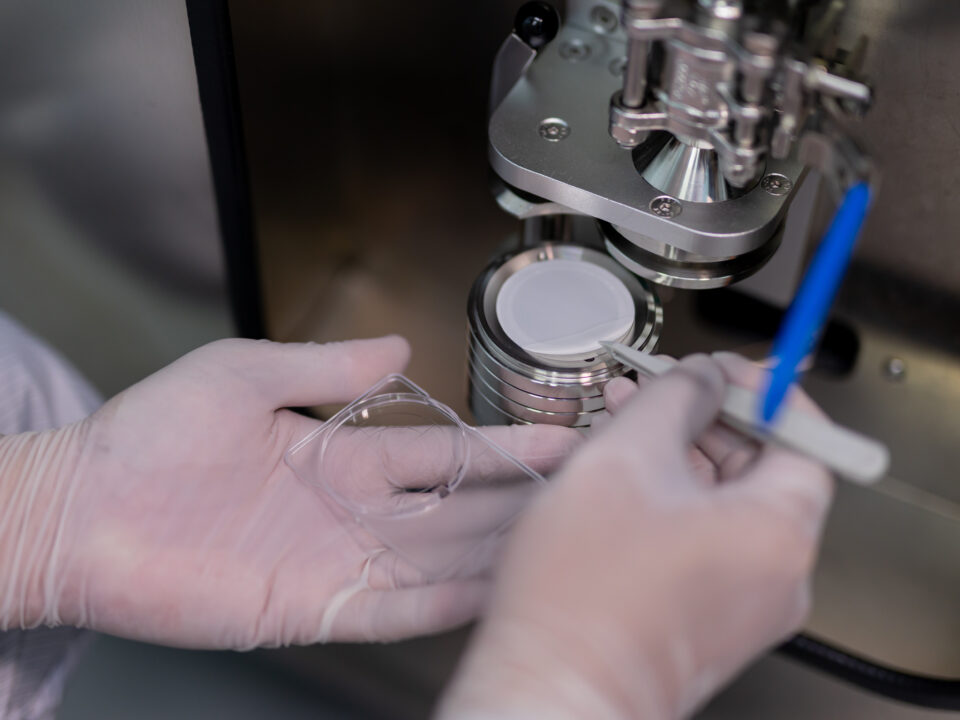
Particle Analysis · LPC Counting · Gravimetric Analysis · SEM Particle Identification
ISO/IEC 17025 Accredited | ISO 16232 & VDA 19 Specialist | SEM Particle ID Available
In precision automotive manufacturing, cleanliness is not a finishing step but a fundamental product specification. A single metallic particle of the wrong size in a hydraulic control valve, or a fibre contaminating a fuel injector channel, can translate into field failures, warranty claims, and production shutdowns that cost orders of magnitude more than the testing that would have prevented them.
Technical cleanliness testing – also known as component cleanliness testing or particle contamination analysis, is the validated process of extracting, quantifying, and characterising particulate contamination from the surfaces and internal channels of automotive components. It is governed by two internationally recognised standards: ISO 16232 (Road Vehicles – Cleanliness of Components) and VDA 19 (Testing of Technical Cleanliness – Particulate Contamination of Functionally Relevant Automotive Parts), the German automotive industry standard that is widely required by European OEMs.
ALS Testing is one of the very few independent laboratories in Malaysia and Southeast Asia offering ISO 16232 and VDA 19 cleanliness testing at specialist level. Our capability in this area represents a genuine competitive differentiator for our clients seeking OEM qualification, and for ALS as a laboratory in the regional market.
What Is Technical Cleanliness Testing?
Technical cleanliness testing is a structured analytical process that determines the type, size, and quantity of solid particulate contamination present in or on automotive components. It is applied to precision components where particle contamination poses a functional risk, primarily components with narrow channels, tight clearances, or surfaces that must maintain sealing integrity.
The process involves three core stages: particle extraction, particle quantification, and particle characterisation. Extraction removes particles from the component using a validated method, typically pressure flushing, ultrasonic agitation, or direct surface rinsing with a filtered solvent. Quantification determines the mass and number distribution of extracted particles. Characterisation identifies the morphology and, where required, the material composition of individual particles using microscopy and analytical techniques.
The output of a cleanliness test is a formal cleanliness class, expressed according to the ISO 16232 or VDA 19 classification system. This data allows manufacturers to verify compliance against their own internal specifications or OEM requirements.
Why Technical Cleanliness Matters for Automotive Manufacturers
The drive toward technical cleanliness in automotive manufacturing has been shaped by decades of field failure data linking particulate contamination to premature component failure. Hydraulic control systems in automatic transmissions, anti-lock braking systems, fuel injection systems, power steering units, and turbocharger oil supply circuits are all highly sensitive to particulate contamination. Even particles invisible to the naked eye (particles of 100 microns or less) can cause valve sticking, orifice blockage, accelerated wear, and seal damage.
For electric vehicle powertrains, the stakes are equally high. Battery thermal management systems, power electronics cooling circuits, and electric motor lubrication and cooling pathways all operate with close tolerances where contamination can cause insulation breakdown, thermal hotspots, or mechanical wear. As EV penetration grows in Southeast Asia, the demand for cleanliness testing of EV-specific components is growing alongside it.
OEM requirements for cleanliness compliance are increasingly contractual rather than advisory. Tier-1 suppliers to major European, Japanese, and American OEMs are routinely required to demonstrate cleanliness compliance using data from ISO/IEC 17025 accredited independent laboratories, not in-house testing. This is where ALS plays a critical role in the supply chain quality process.
ISO 16232 vs VDA 19: What Is the Difference?
ISO 16232 and VDA 19 are closely related standards, both governing the testing of technical cleanliness in automotive components. Understanding the relationship between them is important for specifying the correct test method.
Dimension
ISO 16232
VDA 19
Origin
International (ISO Technical Committee 22)
German Automotive Industry (VDA – Verband der Automobilindustrie)
Structure
10-part standard covering extraction, analysis, and reporting
Single comprehensive document – German and English versions
Adoption
Broadly adopted by global OEMs and regulatory frameworks
Required by German OEMs (BMW, Mercedes-Benz, Volkswagen Group, Bosch)
Particle Classes
Uses ISO cleanliness classes based on particle count per size range
Uses VDA cleanliness classes – more granular size range definition
Relationship
Harmonised – VDA 19 Part 1 and ISO 16232 are technically equivalent for most applications
VDA 19 Part 2 adds requirements for assembly environments
Reporting
ISO 16232 format – required for ISO-referencing OEM submissions
VDA 19 format – required for VDA-referencing OEM submissions
In practice, ALS tests to both standards, and our reports can be formatted to meet either ISO 16232 or VDA 19 reporting requirements depending on the OEM specification being addressed. When in doubt, our technical team will advise on the appropriate standard for your specific application.
Our Cleanliness Testing Services
ALS Testing offers a complete suite of technical cleanliness testing services, covering every stage of the analytical process from particle extraction through to SEM-based particle identification. All testing is conducted within our ISO/IEC 17025 accredited scope, with documented quality controls and traceability throughout.
Particle Extraction – Pressure Flush, Ultrasonic & Rinsing Methods
The foundation of any cleanliness test is the particle extraction method. ISO 16232 and VDA 19 define multiple validated extraction methods, each appropriate for different component geometries and contamination scenarios. ALS offers all primary extraction methods, selected in collaboration with the client based on the component design, functional surfaces of interest, and OEM specification requirements.
Pressure flushing is used for components with internal channels such as hydraulic valves, fittings, and manifolds, where a filtered solvent is flushed through under pressure to carry out particles. Ultrasonic extraction is applied to components where particles adhere to external or complex internal surfaces, using ultrasonic energy to dislodge them into a filtration medium. Rinsing extraction is a simpler method for relatively large components where surface contamination is the primary concern. All extraction solvents used are filtered to a level that ensures blank contamination remains below the defined threshold before component testing begins.
Gravimetric Analysis – Total Particle Mass
Gravimetric analysis determines the total mass of particles extracted from a component, expressed in milligrams. This provides a global contamination index that is compared against the mass-based cleanliness specification. The extracted particles are collected on a pre-weighed filter membrane, dried, and weighed on a calibrated analytical balance with traceability to national mass standards. Gravimetric analysis is a fundamental requirement of both ISO 16232 and VDA 19, and provides a clear quantitative index. This result is used by quality control teams to determine if a component meets the predefined mass-based limits for their specific production line.
Light Obscuration Particle Counting (LPC) – Size Distribution Analysis
Light obscuration particle counting (LPC), also known as automatic optical particle counting, provides a count of extracted particles distributed across defined size ranges, expressed as a particle size distribution. A laser-based instrument counts particles suspended in a clean solvent, recording both the total count and the count in each size class (typically 100–150 µm, 150–200 µm, 200–400 µm, 400–600 µm, 600–1000 µm, and >1000 µm). This data is used to assign an ISO 16232 or VDA 19 cleanliness class and to compare against the OEM-specified cleanliness requirement for the component.
LPC is the standard particle quantification method for ISO 16232 and VDA 19 cleanliness testing, and is required for any cleanliness class determination. It provides far more information than gravimetric analysis alone, enabling detection of large individual particles that may pose functional risk even when total particle mass is low.
Microscopic Particle Analysis & Classification
Following LPC, particles collected on the filter membrane are examined under a calibrated microscope (typically at 50x or 100x magnification) to classify individual particles by type, morphology, and size. ISO 16232 and VDA 19 define particle classification categories: metallic shiny (reflective metallic particles), metallic non-shiny (oxide-coated or corroded metals), fibres, and other non-metallic particles. This classification is important because different particle types carry different risk profiles; a metallic shiny particle of 400 µm in a hydraulic valve is far more concerning than a fibre of the same size.
Microscopic analysis is reported with representative photomicrographs of significant particles, providing visual evidence of the contamination types found. This information supports root cause investigation when cleanliness failures are identified.
SEM-EDX Particle Identification
For cases where the identity of individual particles must be confirmed, particularly in failure investigation, contamination source tracing, or where OEM specifications require elemental identification of particles exceeding a defined size. ALS offers scanning electron microscopy (SEM) with energy-dispersive X-ray spectroscopy (EDX) analysis of individual particles collected from the filter membrane.
SEM imaging provides high-magnification morphological characterisation of individual particles, while EDX provides elemental composition data that enables positive identification of particle material, for example distinguishing iron from aluminium from stainless steel, or identifying ceramic, glass, or polymer particle types. This combined SEM-EDX analysis is the most powerful particle identification tool available and provides definitive evidence for contamination source investigation.
Component Types We Test
ALS cleanliness testing services cover the full range of precision automotive components for which cleanliness specifications are typically defined by OEMs or international standards. Our experience spans hydraulic systems, powertrain components, fuel systems, braking systems, and EV-specific assemblies.
Hydraulic & Fluid Power Components
Hydraulic valves, valve bodies, manifolds, pump housings, cylinders, fittings, and tubing, all of which operate with fluid clearances where particulate contamination can cause sticking, jamming, or accelerated wear of precision-ground surfaces. ALS is experienced in testing components for automatic transmission hydraulic circuits, power steering systems, and industrial hydraulic assemblies to ISO 16232 and VDA 19 specifications.
Fuel System Components
Fuel injectors, fuel rails, fuel pumps, and direct injection components require extremely high cleanliness standards, as contamination can cause injector nozzle blockage, irregular spray patterns, and combustion chamber damage. Cleanliness requirements for high-pressure direct injection fuel systems are among the most stringent in automotive manufacturing, often requiring cleanliness classes that exclude particles above 100–200 µm.
Braking System Components
ABS modulators, brake calipers, master cylinders, and hydraulic brake lines must meet cleanliness specifications that protect the fine orifices and seal surfaces critical to braking system integrity. ALS tests braking components to OEM cleanliness specifications and ISO 16232, with particular attention to metallic particle counts that indicate machining residue or wear debris.
EV & Powertrain Components
Electric motor housings, battery thermal management circuit components, power electronics cooling plate assemblies, and EV gearbox components all require cleanliness verification as EV production scales up across the region. ALS is developing and applying cleanliness testing protocols for EV-specific components, drawing on our ISO 16232 expertise and engaging with emerging OEM specifications for EV powertrain cleanliness.
Standards & Test Methods
Our cleanliness testing is conducted to the following primary standards and test methods, all within our ISO/IEC 17025:2017 accredited scope. For tests outside our accredited scope, we apply validated in-house methods following the principles and protocols established by ISO 16232 and VDA 19.
Standard / Method
Description
Application
ISO 16232
Road Vehicles – Cleanliness of Components (10 parts)
International cleanliness standard for all automotive components
VDA 19 Part 1
Testing of Technical Cleanliness – Particle Contamination Analysis
German OEM requirement – BMW, VW Group, Mercedes-Benz, Bosch
VDA 19 Part 2
Assembly Environment Requirements for Technical Cleanliness
Clean area requirements for assembly processes
Gravimetric Analysis
Total extracted particle mass by calibrated weighing
Quantitative mass measurement for comparison against customer-defined limits.
Light Obscuration Particle Counting (LPC)
Automated particle count by size class using laser obscuration
Particle size distribution – ISO/VDA cleanliness class assignment
Microscopic Particle Classification
Manual classification of particles by type and morphology
Particle type distribution – metallic, fibre, non-metallic
SEM-EDX Particle ID
SEM imaging + elemental analysis of individual particles
Particle source identification, failure investigation, OEM requirement
Why Choose ALS for Cleanliness Testing?
Technical cleanliness testing is a specialised capability that requires more than a particle counter and a filter membrane. It requires experienced analysts who understand automotive manufacturing processes, validated extraction methods appropriate to the component type, calibrated equipment with documented traceability, and a quality management system that ensures the reliability of every result.
One of Very Few Specialists in Malaysia & SEA
ALS is one of very few independent laboratories in Malaysia and Southeast Asia offering ISO 16232 and VDA 19 cleanliness testing at this level of depth. While general testing laboratories may offer particle counting services, the full cleanliness testing process, including validated extraction, gravimetric analysis, LPC, microscopic classification, and SEM-EDX particle identification, which requires specific expertise and investment that ALS has made and maintains.
Full Process Capability from Extraction to SEM-EDX
Unlike laboratories that offer only partial cleanliness testing capability, ALS provides the complete analytical workflow from sample reception and extraction method selection through to final report with SEM-EDX particle identification where required. This full-process capability means that you can manage your entire cleanliness testing requirement through a single laboratory relationship, with consistent methods and results across all your components and platforms.
ISO/IEC 17025 Accredited Results
Our ISO/IEC 17025:2017 accreditation covers cleanliness testing within our accredited scope, meaning that our results carry the formal weight of internationally recognised laboratory accreditation. For OEM submissions and qualification programmes that require accredited test data, ALS test reports satisfy this requirement without question.
Frequently Asked Questions – Cleanliness Testing
Q: What is technical cleanliness testing and why do automotive OEMs require it?
Technical cleanliness testing is the validated process of extracting, quantifying, and characterising particulate contamination from automotive components. OEMs require it because particulate contamination in precision components, particularly hydraulic systems, fuel systems, and braking systems, is a leading cause of field failures and warranty claims. ISO 16232 and VDA 19 provide the standardised framework for cleanliness specification and verification, and OEMs contractually require Tier-1 suppliers to demonstrate compliance using data from accredited independent laboratories.
Q: What is the difference between ISO 16232 and VDA 19?
ISO 16232 is the international standard for automotive component cleanliness testing, developed by ISO Technical Committee 22. VDA 19 is the German automotive industry standard, developed by the VDA (German Association of the Automotive Industry), and is specifically required by German OEMs such as BMW, Volkswagen Group, and Mercedes-Benz, and their major suppliers. The two standards are harmonised: VDA 19 Part 1 is technically aligned with ISO 16232, but the reporting formats and classification systems differ. ALS can test to either standard and can format reports to meet your specific OEM submission requirement.
Q: What types of particles are identified in a cleanliness test?
ISO 16232 and VDA 19 define four primary particle types: metallic shiny particles (highly reflective metals such as machined steel or aluminium), metallic non-shiny particles (oxide-coated or corroded metals, cast particles), fibres (organic or synthetic fibres from wipes, clothing, or seals), and other non-metallic particles (rubber, ceramic, glass, polymer). SEM-EDX analysis can further identify the elemental composition of individual particles for definitive material identification.
Q: How do I prepare my components for cleanliness testing submission?
Component preparation and packaging are important to avoid contamination between manufacturing and laboratory testing. In general, components should be sealed in clean polythene bags immediately after manufacture and kept sealed until sample submission. Do not use paper or cardboard packaging in contact with the component surface. Please contact our team before submission and we will provide specific sample packaging and shipping instructions for your component type.
Q: Can ALS test to OEM-specific cleanliness specifications?
Yes. ALS has experience with a range of OEM-specific cleanliness specifications in addition to the ISO 16232 and VDA 19 standards. Please provide the OEM specification document number and revision when making your enquiry, and our technical team will confirm our capability and advise on the test programme required.
Request a Cleanliness Testing Quote
Whether you are seeking ISO 16232 certification for a new component programme, investigating a cleanliness-related field failure, or establishing a cleanliness testing protocol for a new product line, ALS Testing has the expertise and accreditation to support you. Contact our team today to discuss your requirements and receive a quotation.
→ Request a Quote: https://www.alstesting.co.th/request-a-quote/
→ Back to Automotive Testing Hub: /automotive-testing/
ISO/IEC 17025 Accredited | ISO 16232 & VDA 19 Specialist | SEM-EDX Particle ID Available
Read more