ALS
- โชว์สินค้าทั้งหมด
- No categories
May 13, 2026
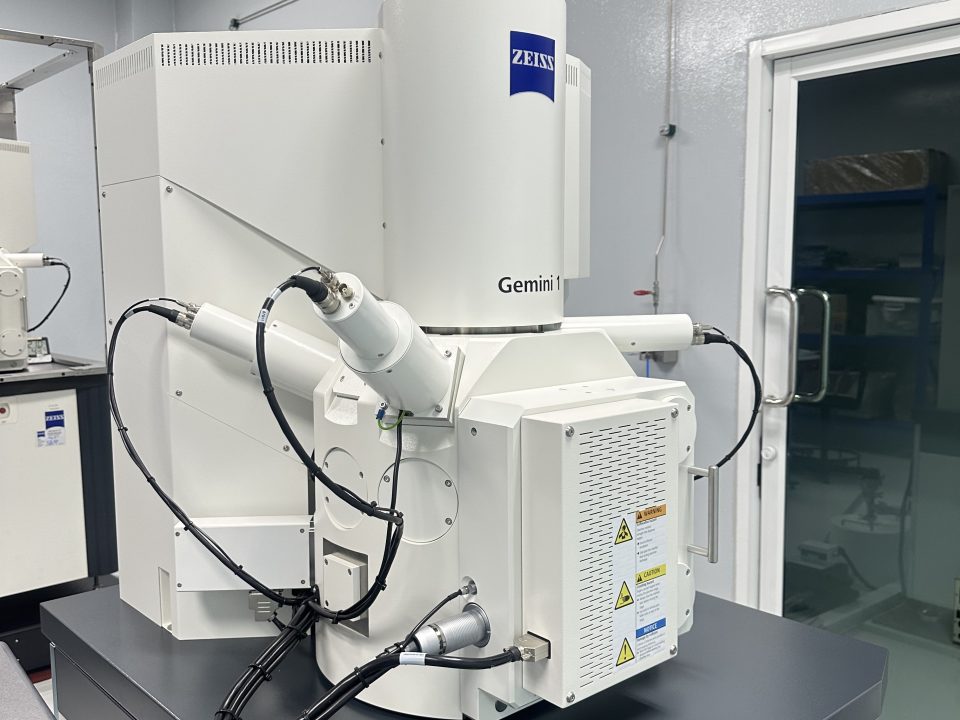
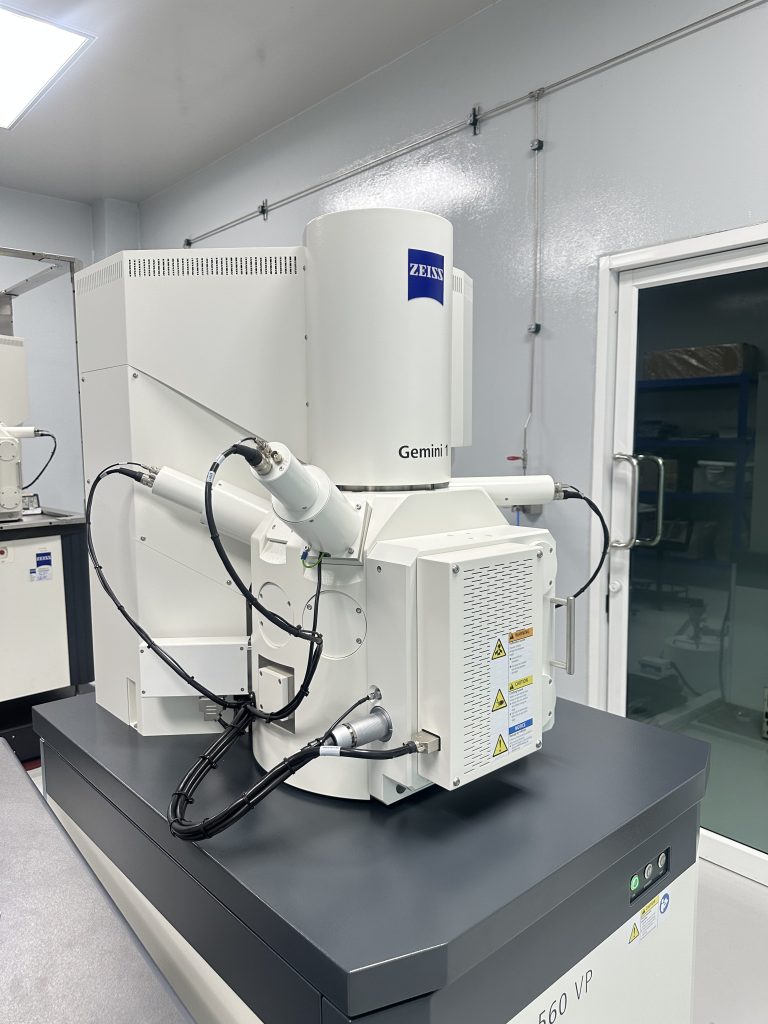
SEM-EDX: The Microscopic Eye That Reveals What Your Materials Are Really Made Of
In engineering, research, and industrial quality control, knowing exactly what your materials are made of isn’t just useful — it’s essential. That’s where SEM-EDX (Scanning Electron Microscopy with Energy Dispersive X-ray Spectroscopy) comes in. This internationally recognized technique gives scientists and engineers an unprecedented look at material composition at the microscopic level, making it one of the most powerful analytical tools available today.
What Exactly Is SEM-EDX?
SEM-EDX combines two complementary technologies into one powerful system:
SEM — Scanning Electron Microscope
Imagine being able to zoom into a material’s surface up to 500,000 times its actual size, with nanometer-level resolution. That’s what SEM does. Instead of light, it uses a focused beam of electrons to generate incredibly detailed images of a material’s surface and internal structure — all in compliance with ISO/TS 24597.
⚡ EDX — Energy Dispersive X-ray Spectroscopy
While SEM shows you what something looks like, EDX tells you what it’s made of. When the electron beam strikes a material, it triggers the emission of X-rays with energy levels unique to each element. By measuring these X-rays, EDX can identify which elements are present and in what quantities — down to a detection limit of approximately 0.1–1% by weight.
Together, these two technologies give you a complete picture: both the physical structure and the chemical composition of a material, simultaneously, in the same location.
How Does It Actually Work?
The science behind SEM-EDX is sophisticated, but the process follows a clear and logical sequence:
Step 1: Sample Preparation
Samples are prepared according to ASTM E1508 standards — typically involving surface polishing, solvent cleaning, and in some cases, coating with a conductive material like gold or carbon to prevent charge buildup on non-conductive samples.
Step 2: SEM Imaging
When the electron beam hits the sample surface, it produces two types of signals:
Secondary electrons → reveal surface topography
Backscattered electrons → highlight compositional contrast
These signals are captured and reconstructed into high-resolution images that show the material’s microstructure in remarkable detail.
Step 3: EDX Elemental Analysis
High-energy electrons knock inner-shell electrons out of atoms, creating vacancies. When outer-shell electrons drop down to fill these gaps, they release X-rays — and crucially, each element releases X-rays at a characteristic energy level. This is essentially the element’s fingerprint.
Step 4: Identification and Quantification
The EDX detector captures these X-ray signals and compares them against reference databases using algorithms based on ISO 22309 and ASTM E1508 standards to identify elements and calculate their relative concentrations.
Typical accuracy:
Major elements: ±1–2%
Trace elements: ±5–10%
Why SEM-EDX Stands Out
Feature
What It Means for You
Micro-level precision
Analyze composition in areas as small as a few micrometers — ideal for examining grain boundaries, inclusions, or localized defects
️ Non-destructive analysis
The core sample structure remains intact, allowing follow-up testing with other techniques
Integrated analysis
Physical and chemical data are captured together, making correlations faster and more reliable
⏱️ Fast turnaround
Preliminary results in minutes; full analysis within 1–2 hours
Versatility
Works on metals, polymers, ceramics, composites, and semiconductors
What Are the Limitations?
No tool is perfect. Here’s what to keep in mind when using SEM-EDX:
Light element detection — EDX struggles with elements lighter than sodium (atomic number < 11). Hydrogen, helium, and lithium cannot be detected at all.
Quantitative precision — While highly capable, SEM-EDX may be less precise than dedicated techniques like XRF or ICP-MS for strict quantitative work.
Sample preparation requirements — Samples must have clean, smooth surfaces, which can occasionally be time-consuming and may alter the sample slightly.
Cost — SEM-EDX instruments are expensive to purchase and maintain, and require trained specialists to operate — making per-analysis costs higher than simpler methods.
Real-World Applications Across Industries
Metals & Materials
Case study: SEM-EDX identified sulfide segregation at crack boundaries in a failed oil pipeline — directly pinpointing the root cause of the failure (Journal of Failure Analysis and Prevention, Vol. 18, 2018)
Alloy composition verification per ASTM E1508
Phase segregation and elemental distribution analysis
Coating interface contamination detection
Electronics
Case study: SEM-EDX revealed silicon contamination in gold bonding layers as the cause of MEMS sensor failure (IEEE Transactions on Device and Materials Reliability, Vol. 20, 2020)
PCB and component defect analysis
Solder joint quality inspection
Semiconductor material characterization per IEC 61249
Automotive & Aerospace
Failure analysis of structural components
Weld quality and dissimilar material joint inspection
Wear and corrosion analysis per SAE J1757
R&D and Advanced Materials
Nanostructure characterization
Particle distribution analysis in composite materials
Thin-film uniformity inspection for electronics and solar cells
How to Choose the Right SEM-EDX Service Provider
Getting accurate, actionable results depends not just on the equipment — but on the expertise behind it. When selecting a laboratory, look for:
✅ ISO/IEC 17025 accreditation — The international gold standard for testing and calibration laboratories
✅ Modern, well-maintained instruments — Precision analysis requires instruments that are regularly calibrated and updated
✅ Experienced scientists and engineers — Skilled interpretation of SEM-EDX data is as important as the data itself
✅ Comprehensive reporting — Reports should include SEM images, EDX spectra, quantitative analysis, and expert interpretation — not just raw numbers
Why ALS?
ALS Testing is an ISO/IEC 17025 accredited laboratory with over 40 years of experience in materials analysis. We serve research institutions, universities, and industrial clients across a wide range of sectors — delivering:
High-precision SEM-EDX analysis using state-of-the-art instruments
Expert consultation and technical guidance
Actionable insights to help you solve problems and improve product quality
Whether you’re investigating a product failure, developing a new material, or verifying a supplier’s specifications, ALS Testing gives you the analytical depth and scientific expertise to make confident, informed decisions.
The Bottom Line
SEM-EDX is one of the most powerful tools available for understanding what materials are made of and why they behave the way they do. By combining high-resolution imaging with precise elemental analysis in a single workflow, it delivers insights that are simply not possible with conventional testing methods.
Choosing an accredited, experienced laboratory partner ensures that those insights are accurate, reliable, and truly useful — whether for quality control, failure investigation, or cutting-edge research.
Contact ALS Testing Services (Thailand) Co., Ltd. today to learn how SEM-EDX analysis can help you build better products with greater confidence.
Read moreMay 7, 2026
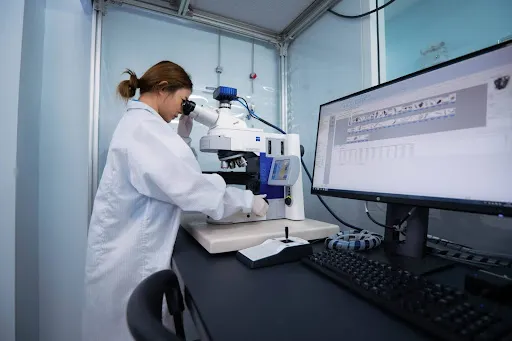
In industries like automotive, electronics, and medical devices, cleanliness is not optional — it’s a fundamental requirement. Even microscopic dust particles can compromise product quality, trigger costly recalls, and damage your brand’s reputation. That’s why Dust Analysis (Particle Analysis) is a critical step that gives manufacturers the confidence their products meet both domestic and international standards.
ALS Testing Services (Thailand), a member of the ALS Global network with over 40 years of testing and quality inspection expertise, offers comprehensive, internationally accredited dust analysis services — helping businesses elevate product quality and reduce production risk.
What Is Dust Analysis?
Dust Analysis is the process of detecting, measuring, and classifying particulate contaminants found in components, finished products, or production environments. Using specialized tools and standards, it evaluates whether contamination levels affect:
✅ Product quality and performance
✅ Safety requirements
✅ International standards such as VDA 19 (Technical Cleanliness of Components) and ISO 16232:2018 (Cleanliness of Components in Automotive Manufacturing)
ALS Testing’s 3-Step Dust Analysis Service
Step 1: Validation of Extraction Parameters
Before analysis begins, we verify that the particle extraction method is appropriate for your specific component. This involves 6 repeated extractions, analyzed through a Particle Analyzer — ensuring accuracy and full compliance with VDA 19 / ISO 16232 criteria.
Step 2: Particle Analysis
Once extraction is validated, the extracted particles are classified into three main categories:
Table
Category
Examples
Metallic
Iron, aluminum, and copper shavings from wear and machining
Non-Metallic
Plastic, rubber, or environmental dust particles
Fiber
Threads from fabric, filters, or packaging materials
Results specify the quantity, size, and type of each particle — enabling manufacturers to assess whether their components meet cleanliness standards and to plan precise maintenance actions.
Step 3: Advanced Analysis
When deeper identification is needed, ALS Testing offers cutting-edge analytical technologies:
SEM/EDX (Scanning Electron Microscopy with Energy-Dispersive X-ray Analysis) — identifies the elemental composition of metallic particles
FTIR (Fourier Transform Infrared Spectroscopy) — identifies non-metallic particles such as plastics, rubber, and natural fibers
4 Business Benefits of Dust Analysis
1. ️ Reduce the Risk of Product Recalls
By detecting contamination before products reach customers, dust analysis helps you catch problems at the source — preventing costly recalls, economic losses, and damage to customer trust.
2. Compete Confidently in Global Markets
International markets — especially automotive, electronics, and medical — enforce strict cleanliness requirements. Standards-compliant dust analysis confirms your products are ready for these markets, opening doors to new trade opportunities.
3. ⚙️ Improve Production Process Efficiency
Particle data reveals contamination rates and their origins — whether from machinery, the work environment, or assembly steps. This actionable intelligence allows manufacturers to eliminate risk points and optimize production for the long term.
4. Build Customer and Partner Confidence
Test results from an ISO/IEC 17025-accredited laboratory provide tangible proof of quality — giving customers and business partners the assurance that your products undergo rigorous quality control. This is a powerful foundation for building lasting business relationships.
Which Industries Benefit from Dust Analysis?
Dust analysis isn’t limited to automotive alone. Here’s how it adds value across multiple sectors:
Food & Beverage
Dust and particles from packaging, machinery, or the environment can contaminate food products and cause failures under safety standards like HACCP, GMP, or ISO 22000. ALS particle analysis pinpoints contaminant types and sources — enabling targeted fixes such as improved packaging steps or upgraded air filtration systems.
Cosmetics & Personal Care
In skincare and cosmetics production, tiny particles — dust, fibers, or material fragments — can cause skin irritation, adverse reactions, or product degradation. Dust analysis helps manufacturers identify and eliminate contamination before products reach consumers.
⛽ Energy & Petrochemical
Dust particles, metal debris, and sediment deposits can cause blockages, accelerated wear, and equipment damage that disrupts operations. Regular particle analysis keeps pipes, hydraulic systems, and process equipment clean — maintaining both safety and operational efficiency.
Elevate Your Quality Standards with ALS Testing Services
In today’s highly competitive industrial landscape, cleanliness standards are not a box to check — they are a strategic quality tool. Neglecting dust analysis risks product defects, regulatory non-compliance, and reputational damage that is far more costly than the test itself.
ALS Testing Services (Thailand) is your trusted partner — backed by 40+ years of ALS Global expertise, world-class analytical standards, advanced technology, and clear, actionable reports designed to help you improve, compete, and grow.
Achieve world-class cleanliness confidence — with ALS Testing Services.
Read moreFebruary 2, 2026