

Understanding Salt Spray Testing

Free Webinar “Cleanliness of Components and Systems for Road Vehicles – VDA 19.1”
October 6, 2026
Product Quality and Safety Through GC-MS Analysis
October 8, 2026Understanding Salt Spray Testing
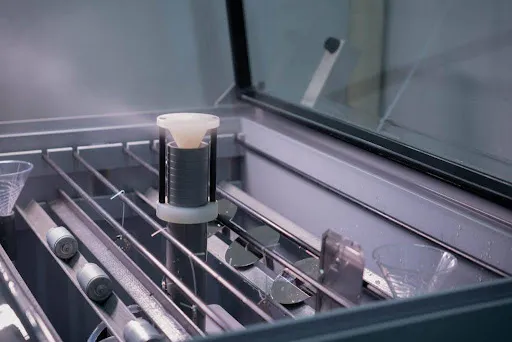
Salt Spray Testing, also known as Salt Fog Testing, is one of the most widely used methods for evaluating the surface quality and corrosion resistance of products in the manufacturing industry. It is particularly suitable for metals, steel products, automotive components, electronic equipment, and medical devices. The test helps determine whether these products meet the required quality standards.
Salt Spray Testing is designed to simulate a harsh, corrosive environment inside a controlled test chamber. During the test, a sodium chloride (NaCl) solution is continuously sprayed onto test specimens as a fine mist.
Which Industries Is Salt Spray Testing Suitable For?
Most industrial manufacturers produce products for specific applications. Maintaining production standards and consistent product quality requires careful control of materials and manufacturing processes. As a comprehensive corrosion-testing method, Salt Spray Testing is suitable for the following industries:
1. Automotive Industry
Vehicle frames, bumpers, nuts, screws, and other automotive components should undergo testing to evaluate their expected service life in highly polluted or corrosive environments, such as areas where the atmosphere contains high concentrations of salt.
2. Construction Industry
Salt Spray Testing is also suitable for evaluating metal materials and components used in buildings, bridges, and other structures. It supports effective construction and helps ensure the safety, strength, and durability of materials used in the industry.
3. Electrical and Electronics Industry
Electrical and electronic components installed outdoors or in locations exposed to changing weather conditions may face an increased risk of corrosion. Salt Spray Testing can help assess whether these components offer adequate corrosion resistance.
4. Marine Industry
Components and engines used in shipbuilding and marine operations are well suited to Salt Spray Testing. The test can simulate conditions similar to actual marine environments, helping manufacturers evaluate the quality and suitability of selected materials.
5. Metal Finishing and Coating Industry
Salt Spray Testing can be used to evaluate the quality of protective coatings, including zinc plating, chrome plating, paint coatings, and other surface treatments, and determine how effectively they protect the underlying material against corrosion.
6. Furniture and Outdoor Equipment Industry
Products in this category are commonly installed or used outdoors, where they are exposed to factors that accelerate corrosion. Examples include metal fences, security grilles, front gates, outdoor tables, and outdoor chairs.
Testing helps prevent products from rusting prematurely or experiencing early structural failure caused by corrosion. Such problems may adversely affect product performance and the manufacturer’s brand image.

Benefits of Salt Spray Testing for Product Quality
1. Detect Problems Before Delivery
Salt Spray Testing serves as a final quality-control checkpoint, helping manufacturers identify product defects or weaknesses before delivery.
If the test shows that a product corrodes faster than expected, the engineering team can use the results to improve processes such as surface treatment, material selection, or packaging. This helps prevent products from becoming damaged before reaching customers or developing rust shortly after entering service.
This is particularly important for automotive components, electrical equipment, and industrial products.
2. Improve Product Quality
Salt Spray Testing is an important tool that provides valuable insights for continuous product development. Manufacturers can use the results to modify coating formulations, select more durable materials, or improve manufacturing processes.
These improvements can extend product service life and enhance its resistance to actual operating conditions in the customer’s environment, ensuring that the materials used are more suitable for their intended applications.
3. Strengthen Confidence in the Brand
Conducting Salt Spray Testing through a laboratory accredited to an internationally recognised standard such as ISO/IEC 17025 demonstrates attention to detail and a commitment to producing high-quality products.
In an era when quality and reliability play an increasingly important role in customers’ purchasing decisions, testing by an internationally accredited laboratory can strengthen confidence in the brand among customers and business partners.
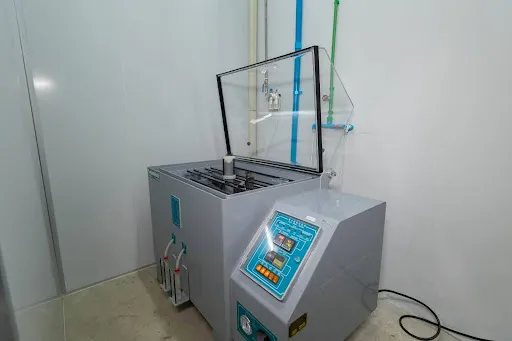
Salt Spray Testing Services from ALS Testing
Although some factories may already have basic Salt Spray Testing equipment, businesses requiring reliable results supported by international standards—and results that can be presented to trading partners or used for export purposes—should consider using a professional laboratory such as ALS.
ALS Testing provides the following services and capabilities:
Testing in an ISO/IEC 17025-Accredited Laboratory
Testing conducted in an ISO/IEC 17025-accredited laboratory helps ensure that the laboratory’s activities comply with internationally recognised requirements and that the results are reliable and technically valid.
ISO/IEC 17025 covers two main areas:
1. Technical Competence
Technical competence refers to a laboratory’s ability to conduct testing correctly and reliably. This includes using calibrated equipment, employing knowledgeable and experienced personnel, and following standardised procedures.
These requirements help ensure that every test result is accurate, consistent, traceable, and verifiable.
2. Quality Management System
A quality management system in an ISO/IEC 17025-accredited laboratory establishes the internal structure and procedures required to ensure that every stage of work is systematic, transparent, traceable, and subject to continuous quality control.
ISO/IEC 17025 focuses specifically on testing and calibration activities, unlike ISO 9001, which applies to general quality management systems across a broader range of organisations.
Control of All Parameters Using Calibrated Equipment and an Experienced Team
Every stage of the Salt Spray Testing process is strictly controlled. The laboratory uses calibrated equipment, while testing is performed by knowledgeable and experienced personnel.
This ensures that the results are accurate, reliable, and scientifically explainable.
Clear Reports with Interpretation by Technical Experts
Test reports contain detailed records of the testing process, including data, photographs, and environmental conditions at different stages of the test.
The results are analysed and interpreted by qualified technical experts, enabling customers to compare the findings directly with industry standards or specific customer requirements. This helps determine whether the product passes or fails the specified quality criteria.
Technical Consultation and Corrective Recommendations
If a tested product fails to meet the required standard, our technical experts can conduct a detailed root-cause analysis to identify the actual source of the problem.
Potential causes may include improper surface preparation, inconsistent coating application, or material-related factors affecting corrosion resistance. The findings can then be used to develop appropriate corrective actions and product improvements.
Raise Product Standards with Salt Spray Testing from ALS
In an era of intense competition in industrial product quality, reliable test results supported by internationally recognised standards are essential. They help ensure that your products can fully meet market requirements and customer expectations.
ALS Testing provides comprehensive and highly accurate Salt Spray Testing services to help you identify problems before product delivery and reduce the risk of product failure after entering the market. Test results can also support product development, improve overall quality, and strengthen confidence among customers and business partners.
Choose Salt Spray Testing from ALS’s professional laboratory today to enhance your product quality and standards.


