

Automotive Testing Standards ISO, VDA, IEC and ASTM Complete Reference Guide

PCB Test Cleanliness Testing & Ion Chromatography, IPC Standards and Ionic Contamination
June 30, 2026
Scanning Electron Microscopy Analysis for Failure Analysis: SEM, FTIR, Cross-Section and Root Cause Investigation
June 30, 2026Automotive Testing Standards ISO, VDA, IEC and ASTM Complete Reference Guide
Cleanliness · Failure Analysis · Materials and Environmental · Chemical and Electronics
ISO/IEC 17025 Accredited Testing Where Applicable | Cross Discipline Testing Support | Automotive Specialist
Automotive testing standards help manufacturers prove that a component meets the requirement written in an OEM drawing, material specification, purchase document or quality agreement. The challenge is that automotive testing does not rely on one standard family. Cleanliness, corrosion, VOC emissions, humidity, PCB contamination and chemical compliance may each use different ISO, VDA, IEC, ASTM, IPC or regulatory references.
This guide brings the key automotive testing standards together by discipline, so engineering, quality and procurement teams can identify what each reference is used for and what information should be confirmed before sending samples to a laboratory.

How to Use This Guide
The standard named in the customer document should always be treated as the controlling requirement. If the drawing says ISO 9227, test to ISO 9227. If it says ASTM B117, test and report against ASTM B117. If it references an OEM method or a specific revision, send that document to the laboratory before testing starts.
For quick screening, use the table below to match the testing need with the standard family.
| Testing need | Common standards or methods | What to confirm before testing |
| Technical cleanliness and particles | ISO 16232, VDA 19.1, VDA 19.2 | Component surfaces, extraction method, cleanliness code and report format |
| Failure investigation | SEM, EDX, FTIR, microscopy, cross-sectioning | Failure mode, sample history, suspected material or process issue |
| Corrosion and environmental exposure | ISO 9227, ASTM B117, IEC 60068 series | Exposure condition, duration, inspection interval and acceptance criteria |
| Interior material emissions | VDA 278, ISO 12219, VDA 275, ISO 6452 | Material type, OEM requirement, VOC or fogging criterion |
| Electronics and chemical testing | IPC-TM-650, J-STD-001, IEC 62321, REACH | Board type, target substances, acceptance limit and required report scope |
Cleanliness and Particle Contamination Standards
Technical cleanliness testing measures particulate contamination on functionally relevant automotive components. It is often used for parts with narrow channels, sealing surfaces, fluid passages or precision clearances.
ISO 16232 specifies requirements for applying and documenting methods used to determine particulate contamination on functionally relevant components and systems of road vehicles. It is commonly used in global automotive supply chains.
VDA 19.1 is the German automotive guideline for inspection of technical cleanliness and particulate contamination on functionally relevant components. VDA 19.2 focuses on technical cleanliness in assembly environments, including the conditions that help prevent new contamination from being introduced during production.
ISO 16232 and VDA 19.1 are closely aligned for many component cleanliness applications, but the required reporting format, cleanliness class notation or customer template may still differ. The laboratory should follow the standard and format named in the customer requirement.
For detailed guidance, link this section to the ISO 16232 vs VDA 19 guide and the Particle Analysis in Automotive Manufacturing article.


Failure Analysis Techniques
Failure analysis usually does not start with one governing automotive test standard. It starts with a problem, such as fracture, corrosion, leakage, delamination, contamination, coating failure or unexpected wear. The laboratory then selects the techniques needed to build evidence around the failure mechanism.
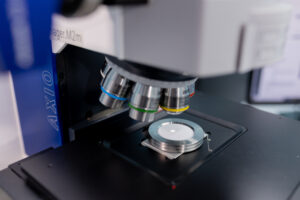
SEM provides high magnification imaging of fracture surfaces, corrosion sites and contamination features. EDX adds elemental composition data from selected points or areas. FTIR can identify organic materials such as polymers, oils, coatings and residues. Cross-sectioning exposes internal structure, coating layers, solder joints, cracks or interfaces for closer examination.
These methods may be performed under accredited or validated laboratory procedures where covered by scope. If the report will be used for customer submission, legal review or supplier dispute, the required method, scope and reporting format should be confirmed before testing begins.
Materials and Environmental Testing Standards
Materials and environmental testing checks how automotive parts respond to heat, humidity, corrosion, emissions and other service related exposure conditions.
VDA 278 is used for thermal desorption analysis of VOC and FOG emissions from automotive interior materials. ISO 12219 covers vehicle interior air and component level VOC measurement methods. VDA 275 is used for formaldehyde emission testing of interior materials. ISO 6452 assesses fogging behaviour of interior trim materials that may deposit condensable films on glass surfaces.
ISO 9227 defines salt spray test atmospheres including neutral salt spray, acetic acid salt spray and copper accelerated acetic acid salt spray. ASTM B117 is a salt spray or salt fog practice commonly referenced in ASTM based or North American specifications and is broadly comparable to the neutral salt spray atmosphere in ISO 9227.
The IEC 60068 series is used for environmental testing of electrotechnical products and components. IEC 60068-2-14 covers change of temperature testing. IEC 60068-2-1 covers cold testing. IEC 60068-2-2 covers dry heat testing. IEC 60068-2-78 covers damp heat steady state testing. The exact severity, duration and acceptance criteria should come from the product or customer specification.
Chemical and Electronics Standards
Chemical and electronics testing covers ionic contamination, soldering cleanliness evidence, restricted substances and material compliance.
IPC-TM-650 2.3.28 is an ion chromatography method for ionic analysis of circuit boards. It can be used to identify and quantify specific anions and cations extracted from printed boards or assemblies.
J-STD-001 is an assembly requirement standard for soldered electrical and electronic assemblies. It should not be described as a universal requirement for ion chromatography on every PCB. Cleanliness compliance may be supported by objective evidence, qualified process data, SIR testing, ionic process monitoring, IC analysis or customer specific requirements.
IEC 62321 is the method series used to determine certain restricted substances in electrotechnical products for RoHS related assessment. REACH SVHC screening is a regulatory compliance activity based on substances of very high concern identified under REACH. The analytical method depends on the substance category and the required reporting scope.
Master Standards Reference
Use this table as the main reference map. It separates formal standards, regulatory references and analytical techniques so they are not treated as the same type of requirement.
| Reference | Discipline | What it covers |
| ISO 16232 | Cleanliness | Particulate contamination inspection for functionally relevant road vehicle components and systems |
| VDA 19.1 | Cleanliness | Technical cleanliness inspection for particulate contamination in automotive components |
| VDA 19.2 | Cleanliness | Technical cleanliness control in assembly environments |
| SEM, EDX, FTIR and cross-sectioning | Failure analysis | Analytical techniques used for root cause investigation, material identification and failure evidence |
| VDA 278 | Materials and environmental | VOC and FOG thermal desorption analysis for automotive interior materials |
| ISO 12219 | Materials and environmental | VOC measurement for vehicle interior air and interior materials |
| VDA 275 | Materials and environmental | Formaldehyde emission testing for automotive interior materials |
| ISO 6452 | Materials and environmental | Fogging behaviour of interior trim materials |
| ISO 9227 | Materials and environmental | Salt spray corrosion testing including NSS, AASS and CASS atmospheres |
| ASTM B117 | Materials and environmental | Salt spray or salt fog apparatus practice, commonly used for neutral salt spray testing |
| IEC 60068-2-14 | Materials and environmental | Change of temperature testing |
| IEC 60068-2-1 | Materials and environmental | Cold testing |
| IEC 60068-2-2 | Materials and environmental | Dry heat testing |
| IEC 60068-2-78 | Materials and environmental | Damp heat steady state testing |
| IPC-TM-650 2.3.28 | Chemical and electronics | Ionic analysis of circuit boards by ion chromatography |
| J-STD-001 | Chemical and electronics | Soldered assembly requirements and cleanliness evidence framework |
| IEC 62321 series | Chemical and electronics | Determination of certain restricted substances in electrotechnical products |
| REACH SVHC | Chemical and electronics | Screening or assessment for substances of very high concern under REACH |
How Accreditation Supports Testing
ISO/IEC 17025 accreditation provides independent recognition that a laboratory is competent to perform specific testing or calibration activities within its accredited scope. It does not automatically mean every method, standard, technique or investigation type listed in a guide is covered.
For formal submissions, supplier qualification or OEM review, confirm three things before testing starts.
- The required standard and revision
- Whether the method is covered by the laboratory’s accredited scope
- The report format or customer template required for submission
ILAC MRA recognition can support international acceptance of accredited results between accreditation bodies and markets, but customer acceptance still depends on the specification, contract requirement and scope of accreditation.
Choosing the Right Standard
The easiest way to avoid retesting is to start from the source document rather than from a general service name. A request that says “automotive testing” or “environmental test” is usually not enough.
| What you have | What it usually tells the laboratory | What may still be missing |
| OEM drawing | Standard name, acceptance criteria and sometimes sample condition | Revision, test duration or report template |
| Material specification | Required test method and performance limit | Sample preparation or inspection intervals |
| Purchase or quality agreement | Required compliance evidence | Exact method variant or accreditation requirement |
| Internal issue report | Failure symptom and suspected cause | Correct analytical method and comparison baseline |
| No standard named | General testing need only | Laboratory must help define a suitable test plan before quotation |
If the standard is unclear, send the full document title, revision, part number, material information, sample quantity and intended use of the report. This helps the laboratory confirm whether the work should be run under cleanliness testing, failure analysis, environmental testing, corrosion testing or chemical and electronics testing.
Frequently Asked Questions
How do I know which automotive testing standard applies
Start with the OEM drawing, material specification, purchase document or quality agreement. That document should name the standard, revision, test condition and acceptance criteria. If it does not, send the document to the laboratory for review before submitting samples.
Are ISO and VDA standards interchangeable
Not always. Some ISO and VDA methods are closely aligned, such as ISO 16232 and VDA 19.1 for technical cleanliness, but report format, notation and customer templates may differ. The report should follow the requirement named by the customer.
Is failure analysis covered by one automotive standard
Usually no. Failure analysis is a structured investigation using techniques such as SEM, EDX, FTIR, microscopy and cross-sectioning. The method depends on the failure mode and the evidence needed.
Does accreditation cover every standard in this guide
No. ISO/IEC 17025 accreditation applies to specific methods within the laboratory’s scope. If accredited results are required, confirm the exact method and scope before testing begins.
What should I send before asking for a quote
Send the standard name, revision, drawing or specification, sample description, material information, required acceptance criteria, report format and whether accredited results are required.
Explore ALS Testing Services by Discipline
ALS Testing supports automotive testing across cleanliness, failure analysis, materials and environmental testing, and chemical and electronics testing for manufacturers, suppliers and engineering teams in Malaysia and Southeast Asia.
Testing under ISO/IEC 17025 accreditation is available where covered by the applicable accredited scope. For standards or OEM methods not listed here, share the full requirement so ALS can confirm capability before samples are submitted.
Next Steps
- Back to Automotive Testing Hub for the full service overview at https://www.alstesting.co.th/automotive-testing-services-als-testing-laboratory/
- Technical Cleanliness Testing at https://www.alstesting.co.th/technical-cleanliness-testing/
- Failure Analysis Services at https://www.alstesting.co.th/failure-analysis-services-sem-ftir-edx-als-testing/
- Materials and Environmental Testing at https://www.alstesting.co.th/automotive-materials-environmental-testing-als-testing/
- Chemical and Electronics Testing at /chemical-electronics-testing/
- Review laboratory accreditation scope at /accreditations/
- Contact our team for guidance on which standard applies to your component at https://www.alstesting.co.th/contact-us/
ISO/IEC 17025 Accredited Testing Where Applicable | Cross Discipline Automotive Testing Support | Standards Based Reporting

