

PCB Test Cleanliness Testing & Ion Chromatography, IPC Standards and Ionic Contamination

Salt Spray Test ISO 9227 vs ASTM B117 Corrosion Testing for Automotive Parts
June 30, 2026
Automotive Testing Standards ISO, VDA, IEC and ASTM Complete Reference Guide
June 30, 2026PCB Test Cleanliness Testing & Ion Chromatography, IPC Standards and Ionic Contamination
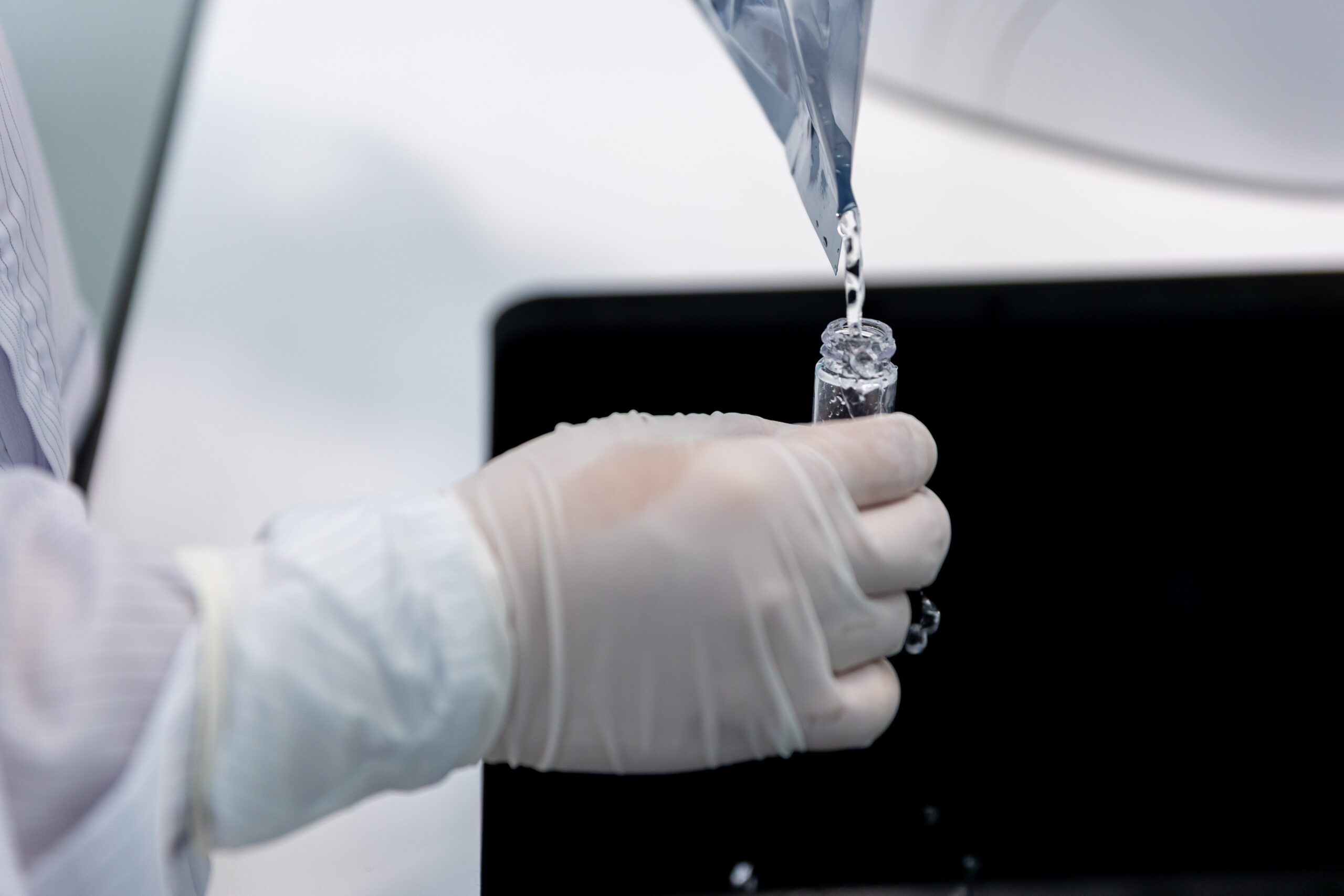
Ion Chromatography · ROSE Screening · IPC-TM-650 2.3.28 · J-STD-001 Cleanliness Evidence
ISO/IEC 17025 Accredited Testing Where Applicable | Anion and Cation Analysis | Electronics Testing Support
A printed circuit board can pass functional testing at the end of production and still fail later in the field. One reason is residual ionic contamination left after soldering, cleaning or handling. These residues may not be visible, but under humidity and voltage bias they can support corrosion, leakage current or electrochemical migration.
A PCB test for ionic contamination helps manufacturers check whether residues on a board or assembly are within the cleanliness requirement defined by a customer, OEM or internal process control plan. For automotive electronics, this matters because control units, sensors, battery management systems and power electronics often operate under heat, vibration and humidity for long service periods.
In practical terms, PCB cleanliness testing does two things. It measures whether ionic residues are present, and it helps identify which ionic species are involved. That distinction is important because a total contamination number alone may not explain the source or risk of the residue.
Why PCB Cleanliness Test Matters
Ionic residues can come from flux activators, soldering chemistry, cleaning process variation, handling, packaging or the production environment. If these residues remain on the board, they may become active when moisture and electrical bias are present.
| Risk area | What may happen | Why it matters in automotive electronics |
| Corrosion | Conductors, solder joints or contacts may corrode | Can reduce long term reliability of assemblies exposed to humidity |
| Electrochemical migration | Dendritic growth may form between biased conductors | Can create intermittent shorts or leakage paths |
| Leakage current | Residues may allow unwanted current flow | Can affect sensitive circuits and signal stability |
| Process variation | Residue levels may change between production lots | Helps identify cleaning, flux or handling issues before field failures |
PCB cleanliness testing is therefore not only a pass or fail check. It is also a process control and root cause tool, especially when a supplier needs to prove that a soldering and cleaning process is stable.
ROSE Testing and Ion Chromatography
ROSE testing, also known as Resistivity of Solvent Extract testing, has long been used as a fast screening method for ionic contamination. It extracts ionisable residues into a solvent and measures the conductivity or resistivity change of that solution.
ROSE is useful for routine monitoring, but it reports contamination as an overall value. It does not identify whether the residue is chloride, sulfate, nitrate, acetate, formate, sodium, potassium, ammonium or another ionic species.
Ion chromatography gives more detail. It separates and measures individual ionic species in the extract. This makes IC more useful when the goal is root cause investigation, customer submission or a detailed cleanliness profile.
| Method | What it shows | Best use | Limitation |
| ROSE testing | Overall ionic contamination response | Fast production screening and process monitoring | Does not identify individual species |
| Ion chromatography | Specific anions and cations in the extract | Detailed cleanliness profile, root cause work and customer evidence | Requires laboratory analysis and clear extraction conditions |
| SIR testing | Electrical insulation behaviour under humidity and bias | Process qualification and reliability evidence | Longer test duration and different purpose from IC |
ROSE and IC should not be treated as interchangeable. ROSE can indicate that a process may need attention. IC can show which residues are present and help guide corrective action.
IPC Methods and Cleanliness Evidence
IPC-TM-650 2.3.28 is the IPC test method commonly associated with ionic analysis of circuit boards by ion chromatography. It is used to measure extractable ionic contamination from printed boards or printed board assemblies and report specific ions in the extract.
J-STD-001 is different. It is an assembly requirement standard for soldered electrical and electronic assemblies. It does not mean every PCB assembly must automatically be tested by IC. Cleanliness compliance depends on the class, product requirement, user agreement and objective evidence supporting the manufacturing process.
| Reference | Role in PCB cleanliness testing | Practical point |
| IPC-TM-650 2.3.28 | Ion chromatography method for extractable ionic contamination | Used when species level ionic data is required |
| J-STD-001 | Assembly requirements including cleaning and residue expectations | Supports process qualification and objective evidence rather than one universal IC limit |
| Customer or OEM specification | Defines acceptance criteria, sample type, method and reporting format | Should be treated as the controlling requirement for submission |
| SIR or other reliability evidence | Shows electrical reliability under defined conditions | Often used alongside chemical cleanliness evidence for process validation |
A key point is that there is no single universal pass or fail limit that applies to every PCB, assembly class and automotive application. The older 1.56 µg NaCl equivalent per cm² value should not be used as a blanket acceptance criterion for all modern PCB cleanliness work. Limits should come from the customer specification, OEM requirement, qualified process data or agreed objective evidence.
What Ion Chromatography Can Identify
Ion chromatography can measure anions such as chloride, fluoride, sulfate, nitrate, phosphate and organic acid residues such as acetate or formate, depending on the method and scope. It can also be used for cations such as sodium, potassium, ammonium and related ionic species where the test programme includes cation analysis.
The value of this species level result is practical. Elevated chloride may point toward corrosive residues or environmental chloride exposure. Organic acid residues may relate to flux chemistry or incomplete process control. Sodium or potassium may suggest handling, cleaning chemistry or environmental sources.
The report should not be read in isolation. A high ion result may indicate a contamination concern, but root cause depends on the board design, process history, flux system, cleaning process, storage condition and failure evidence.
Reading a PCB Cleanliness Test Report
A useful PCB cleanliness report should state the test method, extraction condition, sample area, board or assembly description, ions measured, result units and any customer limit used for comparison.
For IC, results are commonly reported by species, often as mass per unit area. The most useful part of the report is not only whether a limit is exceeded, but which ions dominate the result. That information can help the manufacturer decide whether to review flux residue, wash process, rinsing quality, handling, packaging or environmental exposure.
If the test is being used for formal submission, the report format should follow the customer or OEM requirement. If the test is being used for troubleshooting, the report should be interpreted together with production history and any visual or failure analysis evidence.
When to Pair PCB Cleanliness Testing with Failure Analysis
PCB cleanliness testing is useful for production monitoring and qualification, but field failures often need more than chemistry data. If a returned assembly shows corrosion, dendritic growth, leakage current or intermittent failure, IC can confirm whether ionic residues are present and identify the species involved.
Failure analysis can then examine the affected area directly. SEM-EDX may help characterise corrosion products or elemental composition at a failure site. Cross-sectioning or microscopy may show whether corrosion is linked to a solder joint, conductor spacing, coating defect or trapped residue under a component.
Used together, IC and failure analysis provide stronger evidence than either method alone.
Before Submitting Samples
Before sending a PCB or assembly for cleanliness testing, confirm the purpose of the test. A production screening request, an OEM qualification submission and a field failure investigation may need different sample handling and reporting.
Prepare the following information where available.
- Board or assembly type
- Customer or OEM specification
- Required IPC method or internal method
- Required ions, such as anions only or anions and cations
- Acceptance criteria or objective evidence requirement
- Board area or extraction area
- Flux type and cleaning process
- Production lot or failure background
- Packaging and handling condition
- Required report format
Samples should be handled in a way that avoids adding new contamination before testing. Packaging, gloves, storage and transport conditions can affect the result, especially when the residues of interest are present at low levels.
Frequently Asked Questions
Is ion chromatography always better than ROSE testing
Not always. IC provides more detailed information because it identifies individual ionic species. ROSE is still useful as a faster screening or process monitoring method. IC is more suitable when root cause evidence, species level data or customer submission detail is required.
What ionic species are most concerning on PCB assemblies
Chloride is often treated as a key concern because it can support corrosion at low levels under the right conditions. Sulfate, nitrate, organic acids, sodium, potassium, ammonium and amine related residues may also matter depending on the design, environment and customer specification.
Does J-STD-001 require ion chromatography for every PCB
No. J-STD-001 cleanliness requirements are tied to qualified manufacturing process and objective evidence. IC may be used as part of that evidence, but it is not automatically required for every PCB in every situation.
Is 1.56 µg NaCl equivalent per cm² still a universal pass fail limit
No. It should not be used as a universal cleanliness limit for all PCB assemblies. Modern cleanliness assessment should follow the customer requirement, product class, qualified process data and agreed objective evidence.
Does PCB cleanliness testing also cover RoHS or REACH
No. Ionic contamination testing and RoHS or REACH compliance are different test programmes. PCB cleanliness testing looks at ionic residues that may affect electrical reliability. RoHS and REACH relate to restricted substances and chemical compliance.
Request a PCB Cleanliness Testing Quote
ALS Testing can support PCB cleanliness testing for production checks, process qualification, customer submission and field failure investigation.
Testing under ISO/IEC 17025 accreditation is available where covered by the applicable accredited scope. If accredited results are required, confirm the exact method, ions, sample type and reporting requirement before testing begins.
What to prepare before requesting a quote
- PCB or assembly description
- Required method or customer specification
- Required ion list
- Sample quantity and board area
- Acceptance limit or objective evidence requirement
- Flux and cleaning process information
- Failure background if applicable
- Required report format or OEM template
Providing these details early helps the laboratory confirm the right extraction approach, analysis scope, report format and turnaround time.
Next Steps
- See our full Chemical and Electronics Testing services at /chemical-electronics-testing/
- Read our guide on PCB failure investigation and root cause analysis at https://www.alstesting.co.th/failure-analysis-services-sem-ftir-edx-als-testing/
- Explore Technical Cleanliness Testing services for components beyond electronics at https://www.alstesting.co.th/technical-cleanliness-testing/
- Contact our team for a PCB cleanliness testing quotation or technical discussion at https://www.alstesting.co.th/contact-us/
ISO/IEC 17025 Accredited Testing Where Applicable | Ion Chromatography for PCB Cleanliness | Electronics Testing Support

