

Failure Analysis & Reliability Testing: Building Products That Last

Material Testing: The Foundation of Industrial Excellence
May 13, 2026
Corrosion Testing
May 13, 2026Failure Analysis & Reliability Testing: Building Products That Last

Why Getting to the Root of the Problem Changes Everything
What separates good manufacturers from great ones? It’s not just the ability to build products — it’s the ability to understand why they fail, and prevent it from happening again.
Failure analysis and reliability testing sit at the heart of modern quality engineering. Organizations that invest in these processes consistently achieve lower costs, higher customer satisfaction, and stronger market reputations. The numbers back this up: studies show that 73% of production defects can be prevented when the right failure prevention methods are in place.
Let’s break down exactly what these processes involve — and why they matter to your business.
Part 1: Failure Analysis — Finding the Real Cause, Not Just the Symptom
What Is Failure Analysis?
Failure analysis is the systematic process of tracing a problem back to its true origin — whether in the manufacturing process, the machinery, or the material itself. Think of it as forensic science for your production line.
The goal isn’t just to fix what went wrong. It’s to understand why it went wrong — so it never happens again.
Why It Matters
- ✅ Identifies the root cause of production problems, not just surface symptoms
- Leads to targeted, effective corrective actions
- ⏱️ Reduces wasted time and resources in future production cycles
- Prevents costly product recalls before they ever occur
Does your business have a systematic failure analysis process in place? If not, you may be one production run away from an expensive recall.
ALS offers a range of specialized testing methods to help clients pinpoint the exact cause of damage or defects — whether related to contamination, material inconsistencies, or process-related issues.
Failure Analysis Services at ALS
Optical Microscope Examination The essential first step in any failure investigation. Optical microscopy reveals surface defects, cracks, chips, and structural anomalies that are invisible to the naked eye — providing a rapid, cost-effective overview before more advanced techniques are applied.
Scanning Electron Microscopy (SEM) When optical microscopy isn’t enough, SEM takes you deeper. With magnification capabilities far beyond conventional microscopes — and built-in EDX capability for precise elemental composition analysis — SEM is the go-to technique for detailed failure characterization. It answers not just what failed, but what the material is made of at the point of failure.
Foreign Material Identification Contamination is one of the leading causes of product failures across industries. This service identifies and characterizes unwanted foreign substances in products — critical for food, pharmaceutical, and electronics manufacturing, where even trace contamination can have serious consequences.
Micro-metrological Measurements Precision dimensional analysis at the microscale, including:
- Step height measurement
- Surface flatness measurement
- Surface roughness measurement
These measurements detect dimensional deviations at the micrometer level — catching issues that would otherwise go unnoticed until a product fails in the field.
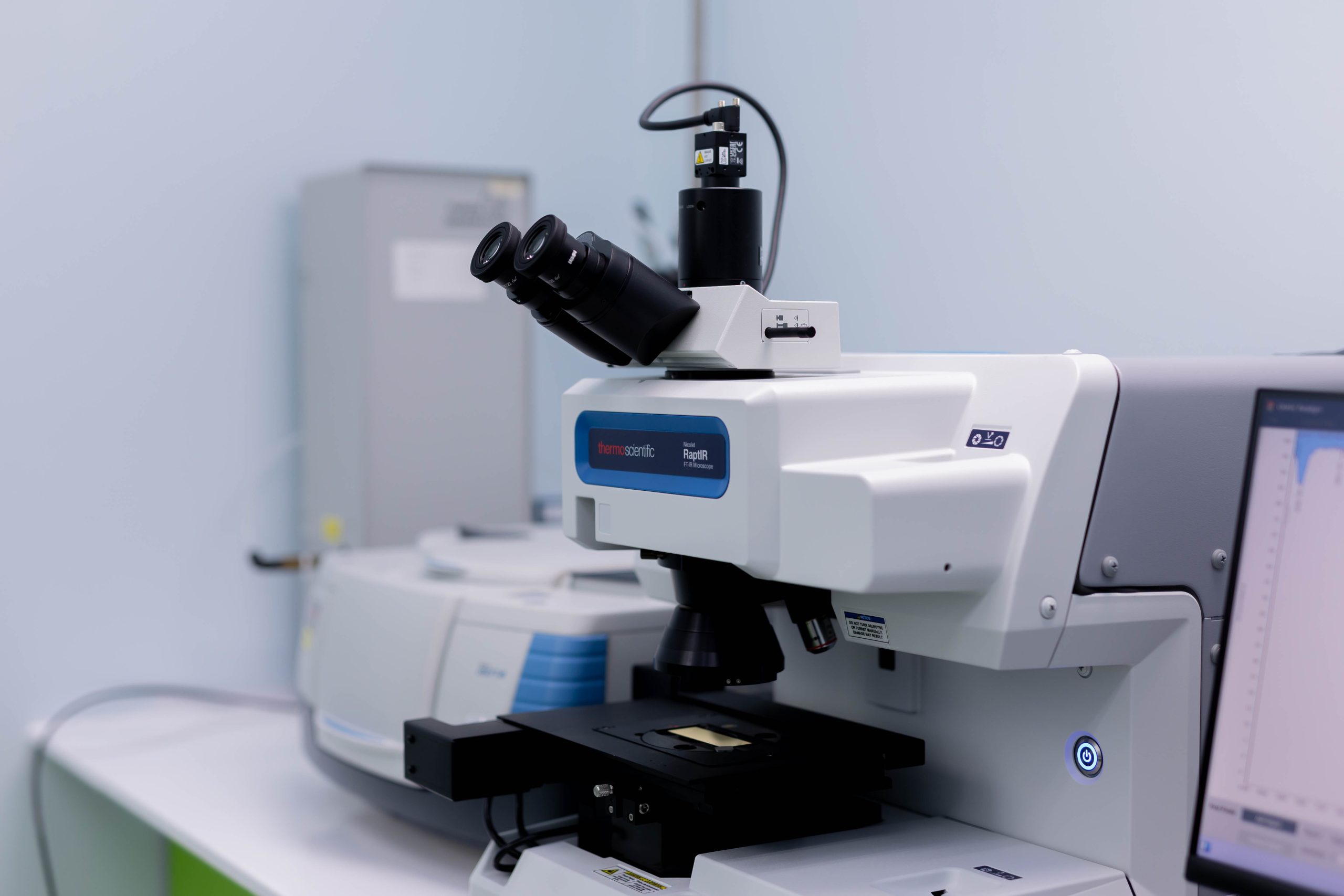
FT-IR Microscopy Analysis Ideal for identifying organic compounds and polymer materials, FT-IR microscopy can accurately characterize materials and contaminants at the microscopic level. It’s an essential tool for the plastics and polymer industries, and widely used in international reliability testing standards.
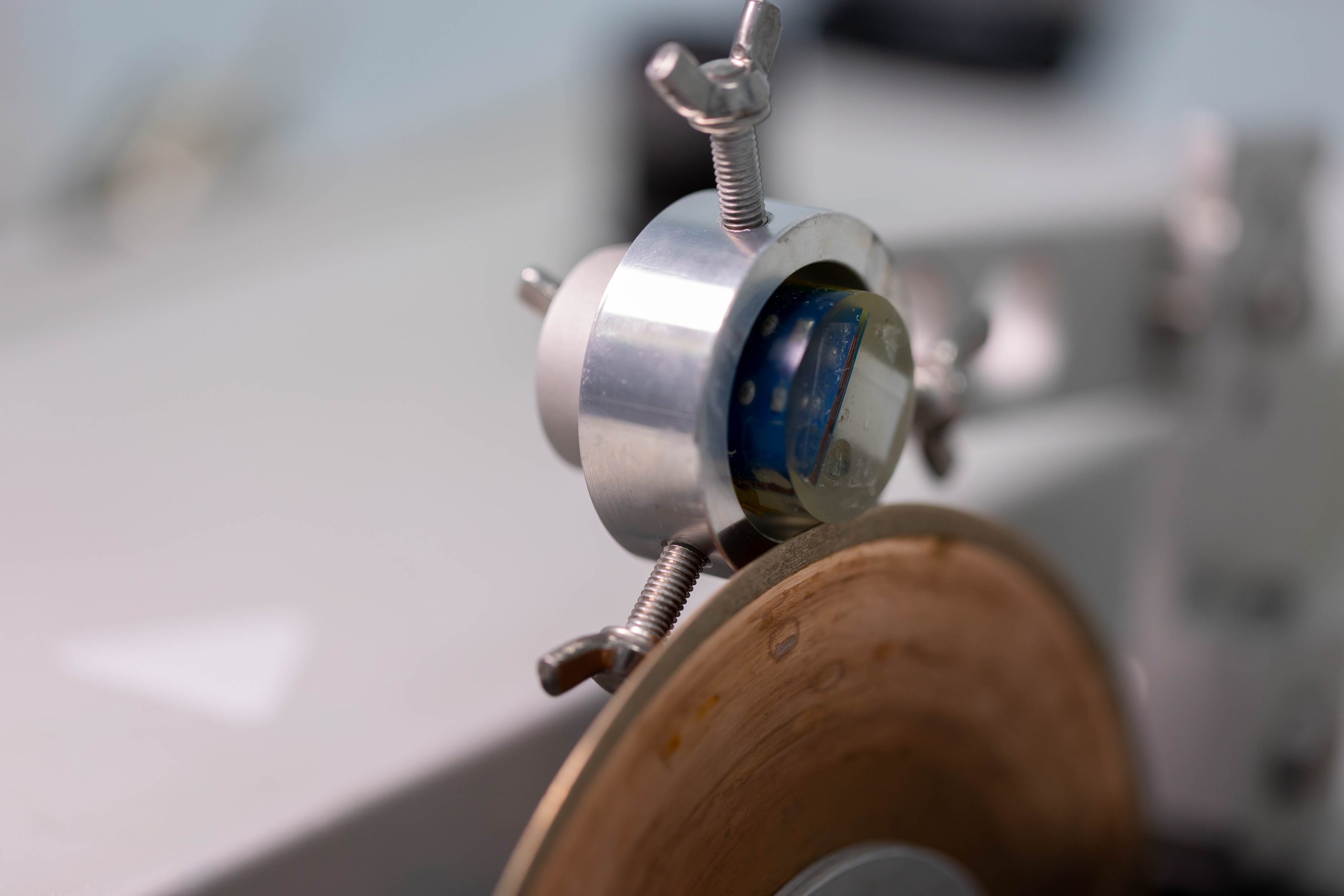
Cross-sectional Analysis Sometimes you need to look inside. Cross-sectional analysis reveals the internal structure of a material or component — making it invaluable for evaluating coating integrity, layer adhesion, and interface quality between dissimilar materials. The insights gained directly inform process improvements and defect prevention strategies.
Part 2: Reliability Testing — Proving Your Product Will Go the Distance
What Is Reliability Testing?
A product might look perfect coming off the production line. But will it still perform six months later, in a humid warehouse in Southeast Asia, or under the hood of a car in the middle of a desert summer?
Reliability testing answers that question — before your customers do.
It’s the process of evaluating whether a product or material will function correctly throughout its expected service life, under realistic operating conditions. By simulating environmental stresses in a controlled laboratory setting, reliability testing compresses years of real-world wear into days or weeks of accelerated testing.
The Business Case for Reliability Testing
Table
| Benefit | Impact |
|---|---|
| ️ Validated product quality and safety | Confidence before market launch |
| Reduced product recalls | Studies show reliability testing can cut recall rates by up to 60% |
| Stronger customer trust | Fewer complaints, higher loyalty |
| International market access | Products certified to global standards open new doors |
| Long-term brand reputation | Consistent quality becomes your competitive advantage |
⚗️ Reliability Testing Methods
Temperature-Humidity Cycling Simulates the natural cycles of temperature and humidity that products encounter in real-world environments. This test is particularly effective at detecting material fatigue caused by repeated expansion and contraction — a common hidden cause of premature failure in electronics and structural components.
Thermal Shock Testing What happens when a product goes from freezing cold to intense heat in seconds? Thermal shock testing finds out. By exposing products to sudden, extreme temperature changes, this test reveals whether materials and joints can withstand the thermal stresses of demanding operating environments.
Chemical Compatibility Studies Not all materials play well with the chemicals around them. This testing evaluates how materials respond to chemical exposure over time — identifying degradation, swelling, or structural breakdown before it causes field failures. For industries ranging from automotive to pharmaceuticals, chemical compatibility is a non-negotiable checkpoint.
Salt Spray Chamber Testing A controlled simulation of salt-laden environments — essential for metal components used in marine, coastal, or high-humidity settings. Salt spray testing predicts corrosion resistance and helps engineers accurately estimate product lifespan under corrosive conditions.
Xenon Arc Testing (UV Weathering) Sunlight is one of the most damaging forces that outdoor products face. Xenon arc testing replicates the full spectrum of solar radiation to evaluate how materials — paints, plastics, coatings — degrade under prolonged UV exposure. Leading manufacturers use this in parallel with broader risk assessments to validate outdoor durability.
Reliability Testing by Industry: Which Tests Matter Most?
Table
| Testing Method | Electronics | Automotive | Food & Pharma | Construction |
|---|---|---|---|---|
| Temperature-Humidity Cycling | ●●●● | ●●● | ●● | ●● |
| Thermal Shock | ●●●● | ●●●● | ● | ●●● |
| Chemical Compatibility | ●● | ●●● | ●●●● | ●●●● |
| Salt Spray Test | ●● | ●●●● | ● | ●●●● |
| Xenon Arc (UV) Test | ●● | ●●● | ●● | ●●●● |
● = Relevance level (more dots = higher importance for that industry)
The Bottom Line: Failure Analysis + Reliability Testing = Competitive Advantage
In a market where quality expectations are rising and the cost of failures is higher than ever, failure analysis and reliability testing are no longer optional — they’re essential.
Together, these two disciplines give manufacturers a complete quality assurance framework:
- Failure analysis tells you what went wrong and why — enabling precise, permanent fixes
- Reliability testing confirms your product will perform as promised — under every condition your customer will encounter
Organizations that embrace both consistently outperform those that don’t — with lower defect rates, fewer recalls, stronger customer relationships, and a brand reputation built on genuine, proven quality.
Ready to strengthen your products with professional failure analysis and reliability testing? Contact our specialists today for a consultation tailored to your specific industry and product needs — and take the first step toward quality that your customers can count on.


