

Salt Spray Test ISO 9227 vs ASTM B117 Corrosion Testing for Automotive Parts

Anion and Cation Testing & How Ion Chromatography Protects Electronics Reliability
June 2, 2026
PCB Test Cleanliness Testing & Ion Chromatography, IPC Standards and Ionic Contamination
June 30, 2026Salt Spray Test ISO 9227 vs ASTM B117 Corrosion Testing for Automotive Parts
Neutral Salt Spray · Acetic Acid Salt Spray · Copper Accelerated Test · Cyclic Corrosion Testing
ISO/IEC 17025 Accredited Testing Where Applicable | Corrosion Testing Capability | Automotive Standard Testing
A vehicle’s underbody, fasteners, brackets, exterior fittings and coated metal parts are exposed to moisture, road salt, temperature changes and surface damage throughout service life. Manufacturers need a controlled way to evaluate whether a coating, plating or corrosion protection system meets the requirement stated in an OEM drawing or material specification.
Salt spray testing provides controlled corrosion exposure inside a test chamber. It should not be treated as a direct conversion from test hours to years of road use. The result is used for comparison, qualification and quality control against a defined standard, exposure duration and acceptance criterion.
For automotive parts, the most commonly referenced standards are ISO 9227 and ASTM B117. ASTM B117 is broadly comparable to the neutral salt spray atmosphere in ISO 9227, while ISO 9227 also includes AASS and CASS atmospheres for specific materials and coating systems.


What Salt Spray Testing Measures
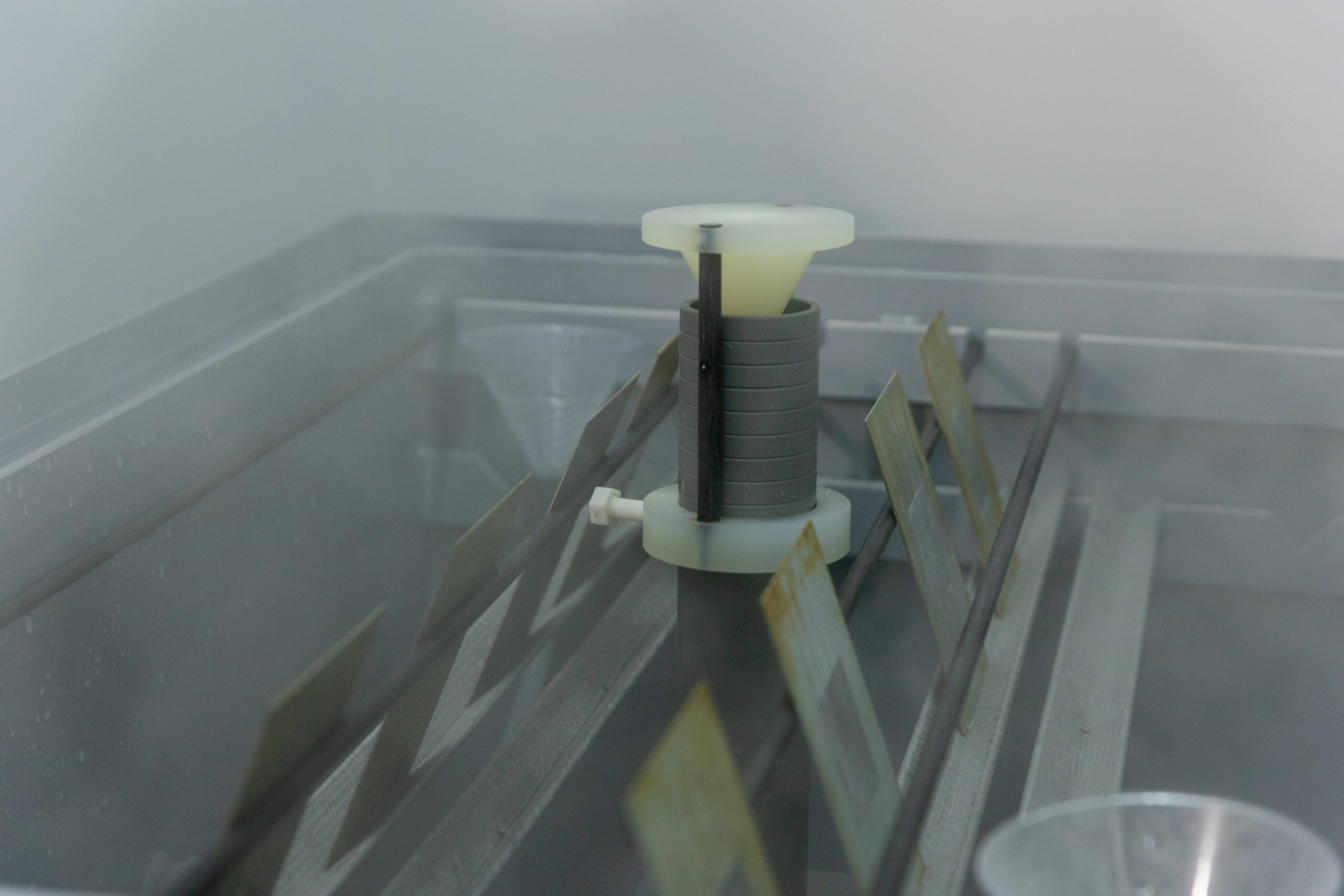
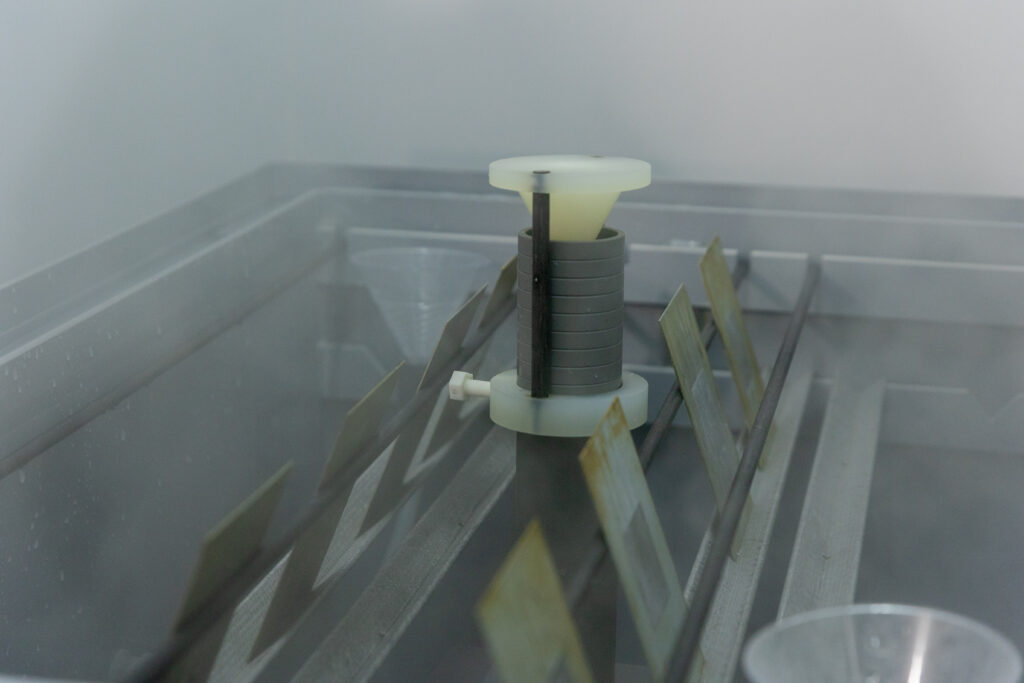
Salt spray testing, also called salt fog testing, exposes a specimen to an atomised salt solution in a controlled chamber. The test is used to assess how a material, coating, plating or corrosion protection system responds under a defined corrosive atmosphere.
For automotive components, the result is usually assessed through visual inspection after a defined exposure period. Depending on the specification, the report may evaluate white corrosion, red rust, blistering, corrosion creep from scribed areas, coating breakdown or another acceptance criterion.
| What the test checks | Why it matters |
| Corrosion formation | Shows whether corrosion appears within the specified exposure period |
| Coating or plating performance | Helps assess whether surface protection meets the requirement |
| Corrosion creep from scribe | Used when the specification requires evaluation from a damaged coating line |
| White corrosion or red rust | Common acceptance criteria for plated or coated metallic parts |
| Visual rating or pass fail result | Supports supplier approval, production validation or OEM submission |
Salt spray testing is useful because it is standardised and repeatable. Its main limitation is that it does not reproduce every real driving condition such as drying cycles, UV exposure, road debris, coating damage or climate variation.
ISO 9227 Test Atmospheres
ISO 9227 defines three main salt spray atmospheres. The correct atmosphere should come from the customer specification, not from general preference.
| ISO 9227 atmosphere | Common name | Typical use |
| NSS | Neutral Salt Spray | General corrosion testing for metallic materials with or without corrosion protection |
| AASS | Acetic Acid Salt Spray | More aggressive testing for selected coatings, aluminium related applications and decorative plating systems where specified |
| CASS | Copper Accelerated Acetic Acid Salt Spray | Highly aggressive testing often used for decorative copper nickel chromium or nickel chromium coating systems where specified |
NSS is the most common route for automotive coated or plated parts. AASS and CASS should only be selected when the product standard, OEM requirement or customer specification calls for those atmospheres.
ASTM B117 and ISO 9227 NSS
ASTM B117 is the American standard practice for operating salt spray or salt fog apparatus. In automotive supply chains, it is often referenced by North American drawings, material standards and customer requirements.
The key point is that ASTM B117 should be compared mainly with ISO 9227 NSS. It should not be treated as identical to ISO 9227 as a whole because ISO 9227 also includes AASS and CASS.
| Dimension | ISO 9227 | ASTM B117 |
| Main scope | Salt spray testing with NSS, AASS and CASS | Salt spray or salt fog apparatus practice |
| Closest overlap | ISO 9227 NSS | ASTM B117 neutral salt fog |
| Additional atmospheres | AASS and CASS included | Not the main focus |
| Typical use | Global, European and Asian OEM specifications | North American and ASTM based specifications |
| Test duration | Set by product, OEM or customer specification | Set by product, OEM or customer specification |
| Acceptance criteria | Defined by the citing specification | Defined by the citing specification |
A chamber capable of running one method may often support the other when properly validated, but the report must follow the exact standard named in the requirement.
Continuous Salt Spray and Cyclic Corrosion Testing
Continuous salt spray testing creates a constant salt fog environment. It is repeatable, but it does not represent every condition that a vehicle experiences in service. Real exposure often includes wet periods, dry periods, humidity changes, temperature variation and surface damage.
Cyclic corrosion testing is used when the specification requires alternating phases instead of constant salt fog.
| Test type | Exposure pattern | When it is used |
| Continuous salt spray | Constant salt fog exposure | When ISO 9227 NSS, AASS, CASS or ASTM B117 is specified |
| Cyclic corrosion testing | Alternating salt, humidity, drying and sometimes other stages | When an OEM protocol requires changing wet and dry exposure |
| OEM corrosion protocol | Defined by manufacturer standard | When the drawing references a specific automotive corrosion method |
If the requirement names a cyclic corrosion method, it should not be replaced with continuous salt spray unless the customer approves the change.
How Long a Salt Spray Test Takes
Test duration is set by the product specification, customer requirement or OEM drawing. The laboratory should not assume one generic duration for every component.
| Example duration | Common use case | Important note |
| 24 to 96 hours | Basic screening or lower severity requirements | Use only when the specification allows it |
| 240 hours | Moderate coating or plating requirements | Acceptance depends on the defined corrosion limit |
| 500 hours | Higher durability or exterior related requirements | Does not equal a fixed number of service years |
| 1,000 hours or more | Demanding corrosion resistance requirements | Requires advance scheduling and chamber planning |
A component can pass a shorter exposure and still fail a longer one. This is why the required duration and acceptance criterion must be confirmed before testing starts.
Choosing the Right Salt Spray Test
The correct test method should always come from the drawing, material specification or customer requirement. A request that only says “salt spray test” is usually not enough.
| Component or finish | Likely test route | What to confirm |
| Painted or coated steel parts | ISO 9227 NSS or ASTM B117 | Exposure duration, scribe requirement and corrosion limit |
| Plated fasteners | ISO 9227 NSS or ASTM B117 | White corrosion, red rust and coating specific criteria |
| Aluminium components | ISO 9227 NSS or AASS where specified | Material grade, coating type and atmosphere |
| Decorative plating systems | AASS or CASS where specified | Plating system and required severity |
| Exterior parts with wet dry exposure | Cyclic corrosion testing where specified | Exact OEM cycle and inspection points |
Before testing, confirm the standard, atmosphere, duration, sample condition, inspection interval and pass fail criteria.
What the Result Tells You
A salt spray test result shows the condition of the specimen after exposure under a defined method. It may report corrosion products, coating blistering, corrosion creep, red rust, white corrosion or another visible change depending on the material and coating.
The result should be interpreted only against the acceptance criteria in the specification. It does not automatically prove long term field performance unless the customer has defined how the result should be used.
A complete report should state the standard used, test atmosphere, exposure duration, chamber conditions, sample description, inspection points and observed result.
Before Submitting Samples
Prepare these details before requesting a salt spray test.
- Required standard such as ISO 9227, ASTM B117 or an OEM method
- Required atmosphere such as NSS, AASS, CASS or cyclic corrosion
- Exposure duration in hours or cycles
- Acceptance criteria
- Coating, plating or material specification
- Drawing number and revision
- Scribe, masking or orientation requirements
- Sample quantity and dimensions
- Interim inspection and photo requirements
- Required report format or OEM template
If these details are missing, the laboratory may need to clarify the requirement before testing can begin.
Frequently Asked Questions
Is ISO 9227 the same as ASTM B117
Not exactly. ASTM B117 is broadly comparable to ISO 9227 NSS. ISO 9227 also includes AASS and CASS, so the two standards should not be treated as identical in every case.
Can salt spray test hours be converted into years of service life
No. Salt spray hours should not be converted directly into years of service life. Real vehicle exposure depends on climate, road salt use, humidity, temperature, coating damage, design and maintenance.
How do I know whether to use NSS, AASS or CASS
The required atmosphere should come from the customer or OEM specification. NSS is the most common neutral salt spray atmosphere. AASS and CASS are more aggressive and should be used only where specified.
What does a salt spray test result show
It shows how the tested specimen performed under a defined corrosive atmosphere for a defined exposure period. The result is compared against the acceptance criteria in the specification.
Can a component pass 96 hours but fail 500 hours
Yes. A coating or plating system can look acceptable after a shorter exposure and still show unacceptable corrosion after a longer exposure.
Request a Salt Spray Testing Quote
ALS Testing can support salt spray and corrosion testing for coated, plated and metallic automotive components where testing is required for qualification, supplier approval, process validation or customer submission.
Testing under ISO/IEC 17025 accreditation is available where covered by the applicable accredited scope. If accredited results are required for submission, confirm the exact method and scope before testing begins.
What to prepare before requesting a quote
- Applicable standard or customer specification
- Required test atmosphere
- Required exposure duration
- Component drawing and revision
- Coating, plating or material specification
- Sample quantity and dimensions
- Scribe, masking or orientation requirements
- Acceptance criteria
- Interim inspection and photo requirements
- Required report format or OEM template
Providing these details at the enquiry stage helps the laboratory confirm the correct method, chamber configuration, schedule and report format before the test begins.
Next Steps
- See our full Materials and Environmental Testing services for automotive at https://www.alstesting.co.th/automotive-testing-services-als-testing-laboratory/
- Read our detailed explainer on accelerated environmental ageing test methods
- Back to Automotive Testing Hub for the full service overview at https://www.alstesting.co.th/automotive-testing-services-als-testing-laboratory/
- Contact our team for a salt spray testing quotation or technical discussion at /contact/
ISO/IEC 17025 Accredited Testing Where Applicable | ISO 9227 and ASTM B117 Capability | Cyclic Corrosion Testing Available

