

VDA 19 Cleanliness Testing, Step-by-Step Process Guide (VDA 19.1 and 19.2)

RoHS and Banned Substance Testing, Automotive Electronics Compliance Guide
August 10, 2026
Why Outsource Automotive Testing? Benefits for OEMs and Tier-1 Suppliers
August 11, 2026VDA 19 Cleanliness Testing, Step-by-Step Process Guide (VDA 19.1 and 19.2)
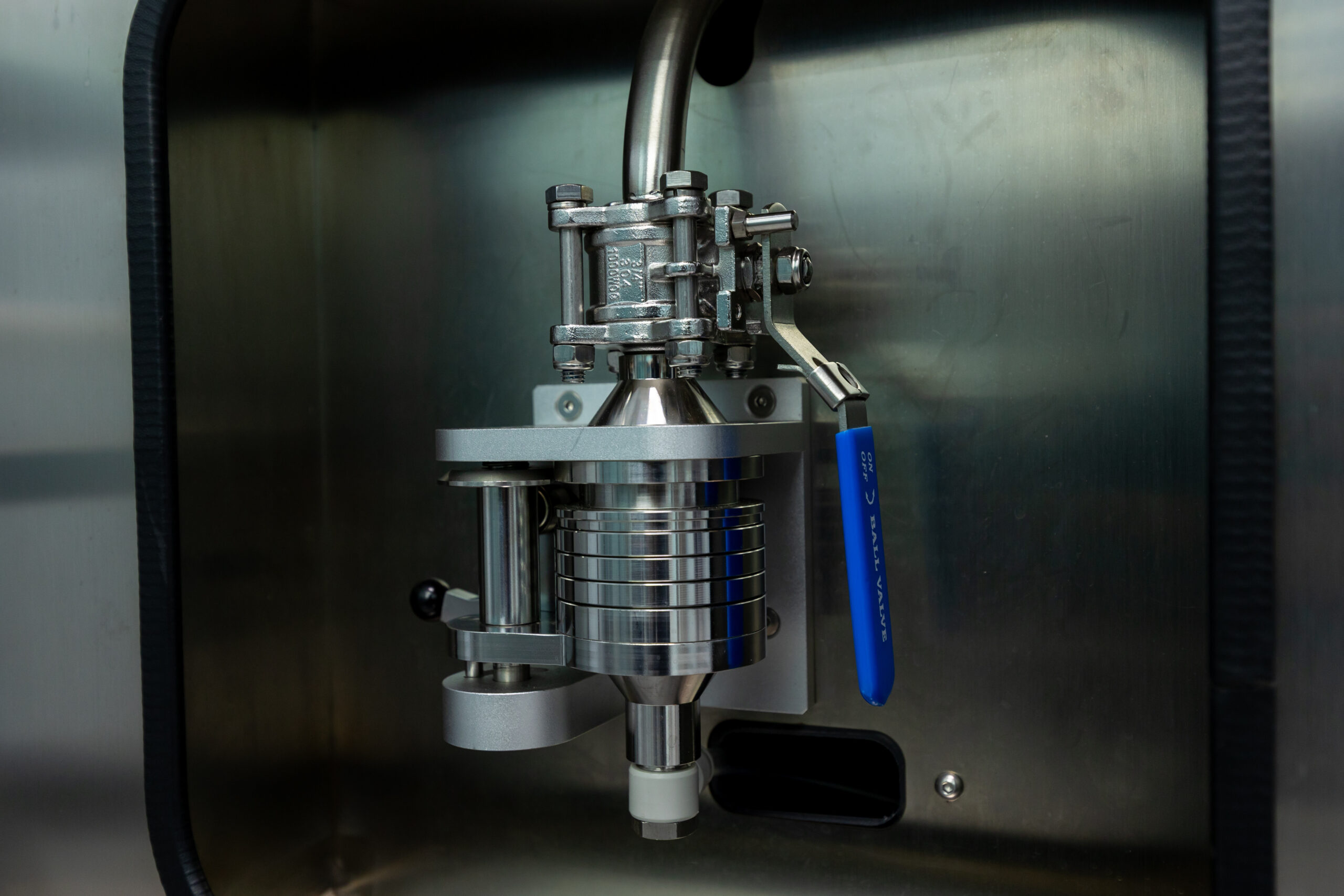
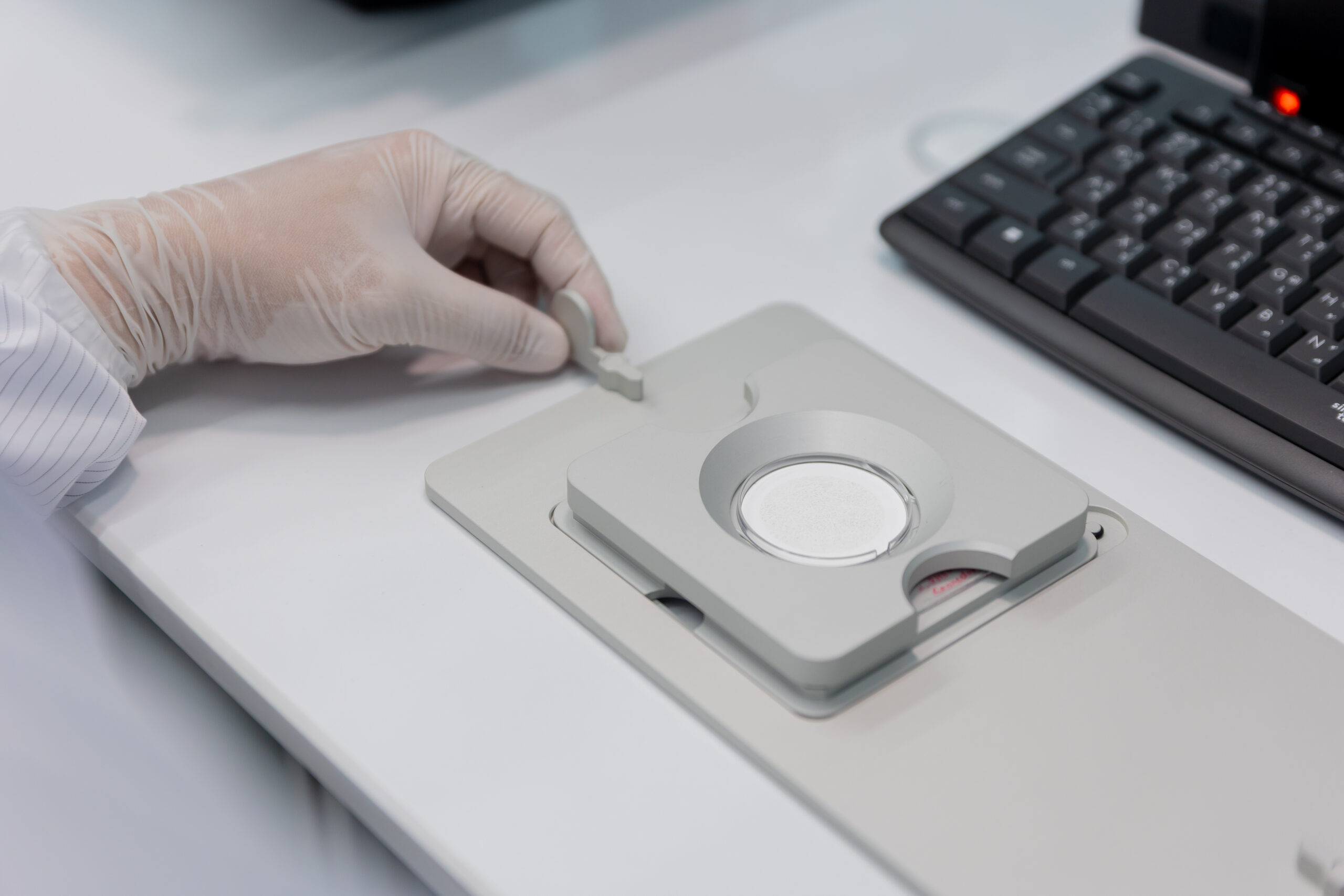
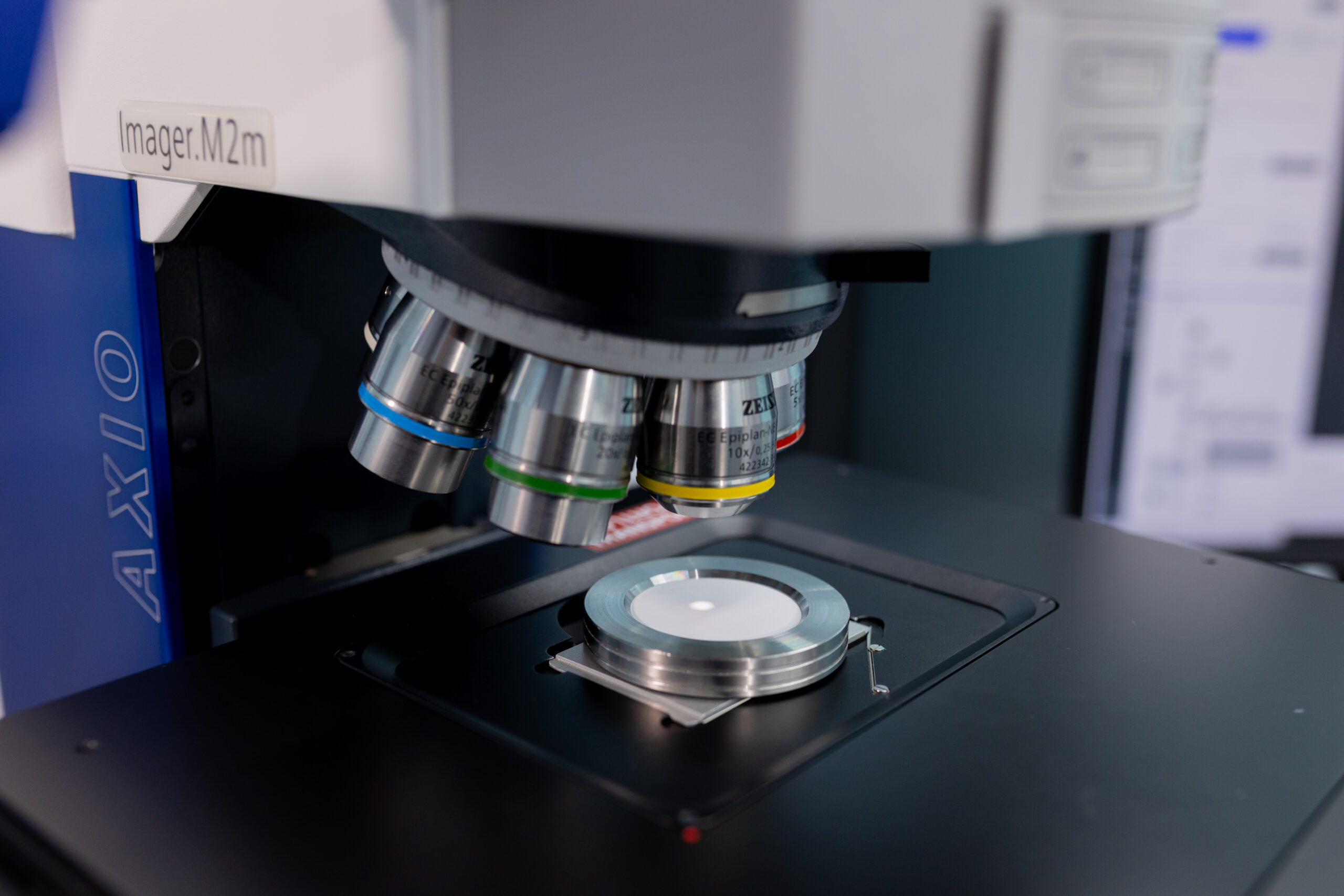
Particle Extraction · Gravimetric Analysis · LPC Counting · Microscopic Classification · SEM-EDX Particle Identification
ISO/IEC 17025 Accredited Testing Where Applicable | VDA 19 and ISO 16232 Capability | Automotive Cleanliness Specialist
An OEM drawing specifies a cleanliness class. A customer’s purchase order references VDA 19. This guide walks through the VDA 19.1 test process step by step, from the first blank test to the final cleanliness report, and explains where VDA 19.2 fits.
VDA 19 and What It Covers
VDA 19 is the German automotive industry standard for technical cleanliness testing, published by the VDA (Verband der Automobilindustrie). It is required by German OEMs including BMW, Volkswagen Group and Mercedes-Benz, and by the Tier-1 suppliers that serve them.
- VDA 19 Part 1 covers particle contamination analysis of automotive components: extraction, counting, classification and reporting. This is the part that applies when a customer or OEM specifies VDA 19 for a laboratory submission.
- VDA 19 Part 2 covers technical cleanliness requirements for assembly environments. It is applied in the production facility, not the testing laboratory.
The step-by-step process in this guide covers VDA 19 Part 1. For a comparison with ISO 16232, which is technically harmonised with VDA 19 Part 1 for most applications, see our guide on ISO 16232 vs VDA 19.
The VDA 19.1 Test Process
- Blank test and environment verification
- Component inspection and documentation
- Extraction method selection and validation
- Filtration onto a membrane
- Gravimetric analysis
- Light obscuration particle counting (LPC)
- Microscopic particle classification
- Cleanliness classification and reporting
Where an OEM specification requires it, SEM-EDX particle identification is applied to specific particles on the membrane before the final report is issued.
Blank Test and Environment Verification
No component is extracted until the test environment and all extraction equipment are verified to be clean.
The blank test runs the complete extraction process, covering solvents, vessels and filtration equipment, without a component present. The result establishes the background contamination level. VDA 19 requires that blank contamination stays below defined limits before component testing proceeds. If the blank level is too high, the contamination source must be identified and eliminated before the test is valid.
Step 1 Component Inspection and Documentation
Before extraction begins, the component is inspected and documented as received. Sample condition, including any visible contamination, damage or packaging concerns, is recorded photographically and in writing.
This provides a baseline if questions arise about whether the result reflects manufacturing cleanliness or contamination introduced during handling or shipping. Samples showing evidence of post-manufacture contamination may require discussion with the client before testing proceeds.
Step 2 Extraction Method Selection and Validation
| Extraction method | How it works |
Best suited for |
| Pressure rinsing | Filtered solvent forced through internal channels under controlled pressure | Bores, galleries and flow paths, such as hydraulic valves and fuel rails |
| Ultrasonic extraction | Component submerged in solvent bath, ultrasonic energy dislodges particles | Complex surfaces and recesses inaccessible by direct rinsing |
| Agitation | Component immersed in solvent and agitated mechanically | Simple geometry with open, accessible internal spaces |
| Air jet extraction | Directed air stream dislodges particles, captured for analysis | Components that must not contact liquid |
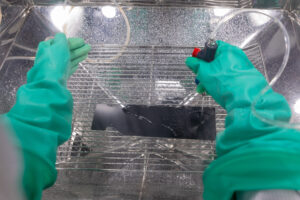
Where the method is not specified, the laboratory selects and documents the most appropriate option. Efficiency is validated by repeated cycles until the particle count confirms a declining curve, demonstrating substantially complete contamination removal.
Step 3 Filtration
After extraction, the solvent carrying the extracted particles passes through a membrane filter with a defined pore size, typically 5 micrometres. Particles are collected on the membrane surface.
The membrane is then conditioned, dried and equilibrated to stable temperature and humidity, in preparation for weighing and optical examination. Membrane type, pore size and filtration conditions are documented as part of the test record.
Step 4 Gravimetric Analysis
The dried membrane is weighed on a calibrated analytical balance before and after filtration. The mass difference is the total gravimetric contamination.
Gravimetric analysis is fast and is a required element of the VDA 19 test programme. Its limitation is functional: a component can carry a single oversized particle posing significant risk while still showing a low gravimetric result. This is why it is used alongside, not instead of, particle counting and classification.
Step 5 Light Obscuration Particle Counting (LPC)
The extracted particles are re-suspended in clean solvent and passed through a laser-based particle counter, which counts and sizes each particle individually.
LPC produces a count distributed across defined size classes, from the lower threshold up through multiple ranges to particles above 1,000 micrometres. LPC is the method that determines whether a component meets its specified cleanliness class. A component with low total particle mass may still exceed the limit in a specific size class if a small number of large particles are present. The size distribution, not just the total count, is what the specification controls.
Step 6 Microscopic Particle Classification
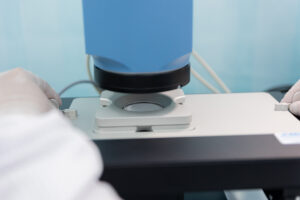
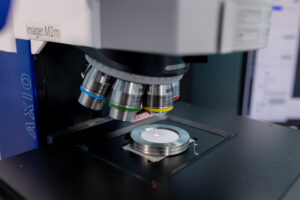
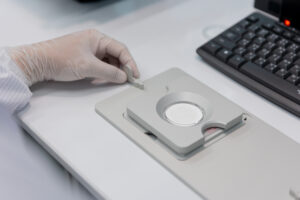
After LPC, particles on the membrane are examined under a calibrated microscope and classified into the categories defined by VDA 19.
| Particle category | Appearance | Typical source |
Why it matters |
| Shiny (metallic) | Reflective under incident light |
|
Highest mechanical damage risk, often a critical specification limit |
| Non-shiny | Not reflective |
|
Risk depends on size, hardness and application |
| Fibres | Elongated, per the standard’s length-to-width criterion |
|
Assessed separately from hard particles |
A shiny metallic particle above a defined size is often a non-conformance regardless of total count, and some OEM specifications subdivide these categories further per the cited edition and specification. Significant particles are recorded with images alongside the count data.
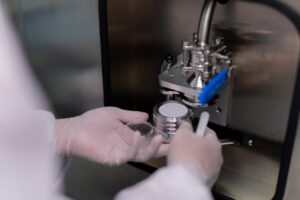
Step 7 SEM-EDX Particle Identification (Where Required)
SEM-EDX identifies specific particles on the membrane when particle identity must be confirmed or an OEM specification requires elemental identification above a defined size. SEM images particle morphology, EDX identifies elemental composition, distinguishing materials such as iron from aluminium, or ceramic, glass and polymer particles.
This supports contamination source investigation and is required by some OEM specifications for certain particle types or sizes. Confirm with your laboratory at the enquiry stage if SEM-EDX is required.
Step 8 Cleanliness Classification and Reporting
Gravimetric, LPC, and microscopic results combine into the Component Cleanliness Code (CCC), VDA 19’s standardised output. The CCC is expressed as letter-number pairs covering size range and count level, with lower numbers indicating fewer particles, and is assessed against OEM or customer limits for pass or fail determination.
Notation and size classes follow the applicable standard, OEM specification, or customer template. The CCC is not universal across all specifications.
The final report documents extraction method, blank test results, gravimetric mass, LPC size distribution, microscopic classification with images, and final cleanliness class.
Where VDA 19 Part 2 Fits
VDA 19 Part 2 covers technical cleanliness in assembly environments, workstations, tooling, fixtures, packaging and handling areas. Its purpose is to prevent new contamination during assembly that would compromise the cleanliness verified by Part 1 testing.
It is applied in the production facility, not the testing laboratory, and is a separate requirement from component cleanliness testing. Confirm the specific requirement with your OEM or customer.
Sample Submission Requirements
- Standard: VDA 19 Part 1 or ISO 16232, and the applicable edition
- Cleanliness class: or the particle count limits that apply
- Controlled surface: the wetted surface defined in the drawing
- Drawing: number and revision
- Extraction method: if specified by the OEM or customer
- SEM-EDX: whether particle identification is required
- Quantity: number of samples to submit
- Report format: required template or OEM format
Package components in clean, sealed polythene bags immediately after manufacture and keep them sealed until laboratory receipt. Avoid paper or cardboard in direct contact with component surfaces, as fibres can transfer and affect the result.
Frequently Asked Questions
What is the difference between VDA 19 and ISO 16232?
VDA 19 Part 1 and ISO 16232 are technically harmonised. The main difference is in reporting format, cleanliness class notation and who requires which standard. German OEMs specify VDA 19, while most other global OEMs reference ISO 16232.
How do I know which extraction method will be used for my component?
The extraction method is selected based on component geometry and surfaces of interest. If your OEM specification defines a required method, that method is applied. If not, the laboratory selects the most appropriate method and documents the rationale.
Do I need SEM-EDX particle identification as part of my VDA 19 test?
Not always. SEM-EDX is required when an OEM specification calls for elemental identification of particles or when a contamination source investigation requires material identification. For standard cleanliness class determination, gravimetric, LPC and microscopic classification are typically sufficient.
How should I package and ship components for VDA 19 testing?
Seal components in clean polythene bags immediately after manufacture and keep them sealed until laboratory receipt. Avoid paper or cardboard packaging in direct contact with component surfaces.
Does VDA 19 Part 2 apply to my laboratory test?
No. Part 2 covers assembly environment cleanliness and is applied in the production facility. Laboratory component testing is covered by Part 1.
Request a VDA 19 Testing Quote
ALS Testing provides technical cleanliness testing to VDA 19 Part 1 and ISO 16232 for automotive components across hydraulic, fuel, braking, transmission and EV powertrain applications. Testing under ISO/IEC 17025 accreditation is available where covered by the applicable accredited scope.
Next Steps
- See our full Technical Cleanliness Testing services
- Read our guide comparing ISO 16232 and VDA 19
- Read our guide on particle extraction methods
- Contact our team for a VDA 19 testing quotation or technical discussion at Contact us – alstesting.co.th
ISO/IEC 17025 Accredited Testing Where Applicable | VDA 19 and ISO 16232 Capability | SEM-EDX Particle Identification Available

