
Automotive Materials & Environmental Testing | ALS Testing

Failure Analysis Services | SEM, FTIR & EDX | ALS Testing
April 24, 2026
Automotive Testing Services | ALS Testing Laboratory
April 24, 2026Automotive Materials & Environmental Testing | ALS Testing



VOC Emissions · Salt Spray Corrosion · Thermal Testing · Interior Air Quality · VDA 278 · ISO 9227
ISO/IEC 17025 Accredited | Full Environmental Simulation Suite | OEM Standard Testing
The materials that make up a modern automobile are subjected to conditions that most materials would never encounter: temperature extremes from −40°C to +120°C and beyond; salt-laden road spray that attacks every exposed metal surface; UV radiation that degrades polymers and fades pigments; humid tropical heat that accelerates corrosion and swells seals; and the constant off-gassing requirements of interior materials that affect the air quality cabin occupants breathe every day.
Automotive materials testing, which encompasses VOC emissions analysis, corrosion testing, environmental simulation, thermal characterisation, and chemical content analysis, validates that materials and components survive these conditions and meet the specifications that OEMs and regulations define. With combined search volumes exceeding 430 searches per month in Malaysia for VOC and salt spray testing alone, this is one of the most commercially active testing categories in the regional automotive market.
ALS Testing is accredited to ISO/IEC 17025:2017 and offers a comprehensive range of automotive materials and environmental testing services, covering the key standards that govern material qualification for Malaysian and global automotive supply chains. Critically, ALS currently has no content covering VOC testing – the highest-volume keyword in our portfolio – making this Pillar Page a priority content investment.





VOC Emissions Testing for Automotive Interior Materials
Volatile organic compound (VOC) emissions from automotive interior materials are a significant concern for both regulatory compliance and consumer experience. Interior materials including instrument panels, headliners, seat foams, carpets, door trim panels, adhesives, and sealants all contribute to the volatile chemical environment inside the vehicle cabin. Elevated VOC concentrations in new vehicles have been associated with health concerns, including irritation, headache, and in extreme cases, sensitisation, and are subject to increasingly stringent OEM specifications and, in some markets, regulatory limits.
Automotive VOC testing is governed by several key standards that specify the test method, temperature conditions, sampling duration, and analytical approach. ALS provides testing to the primary automotive VOC standards required by global OEMs.


VDA 278 – Thermal Desorption Analysis of Automotive Interior Materials
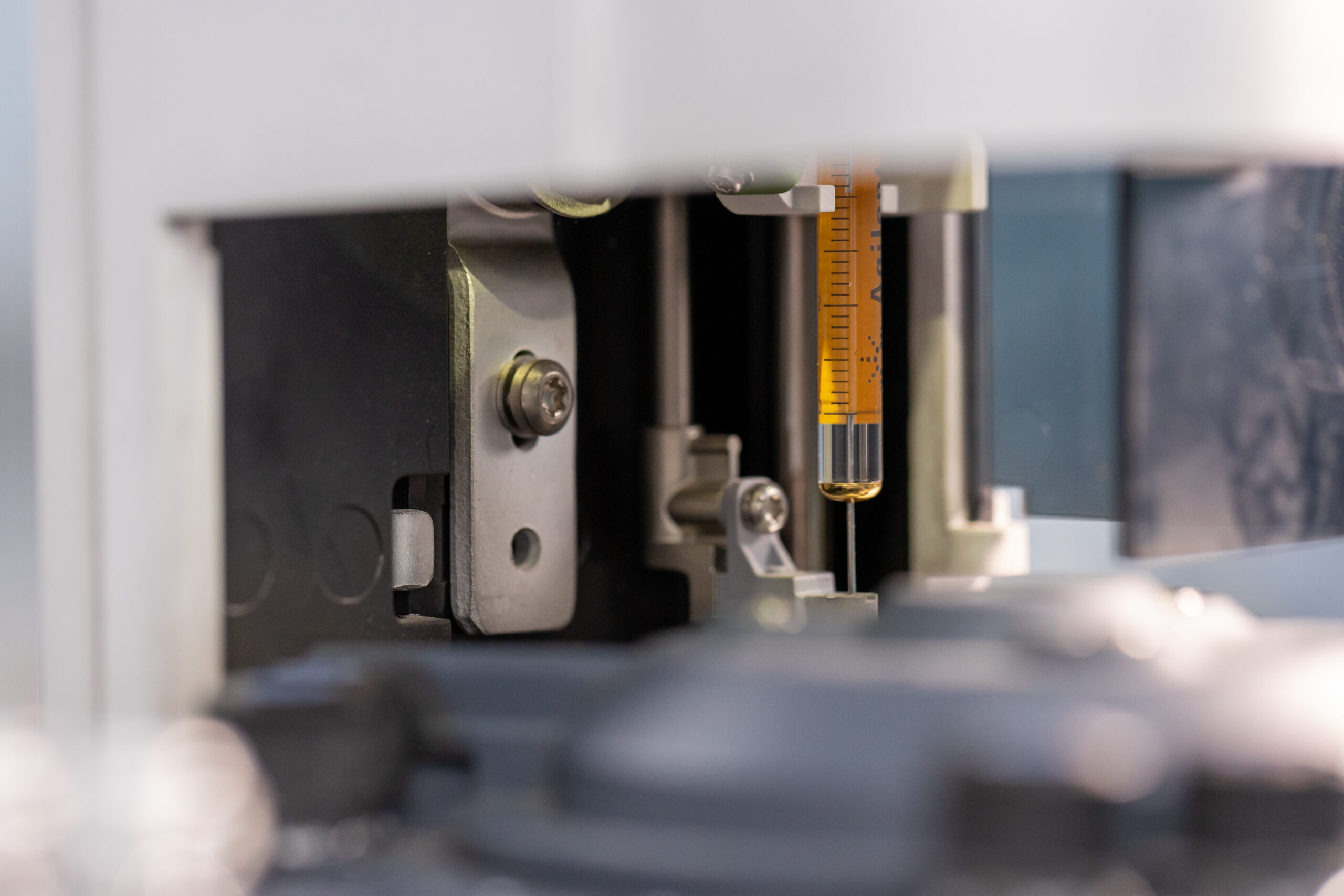
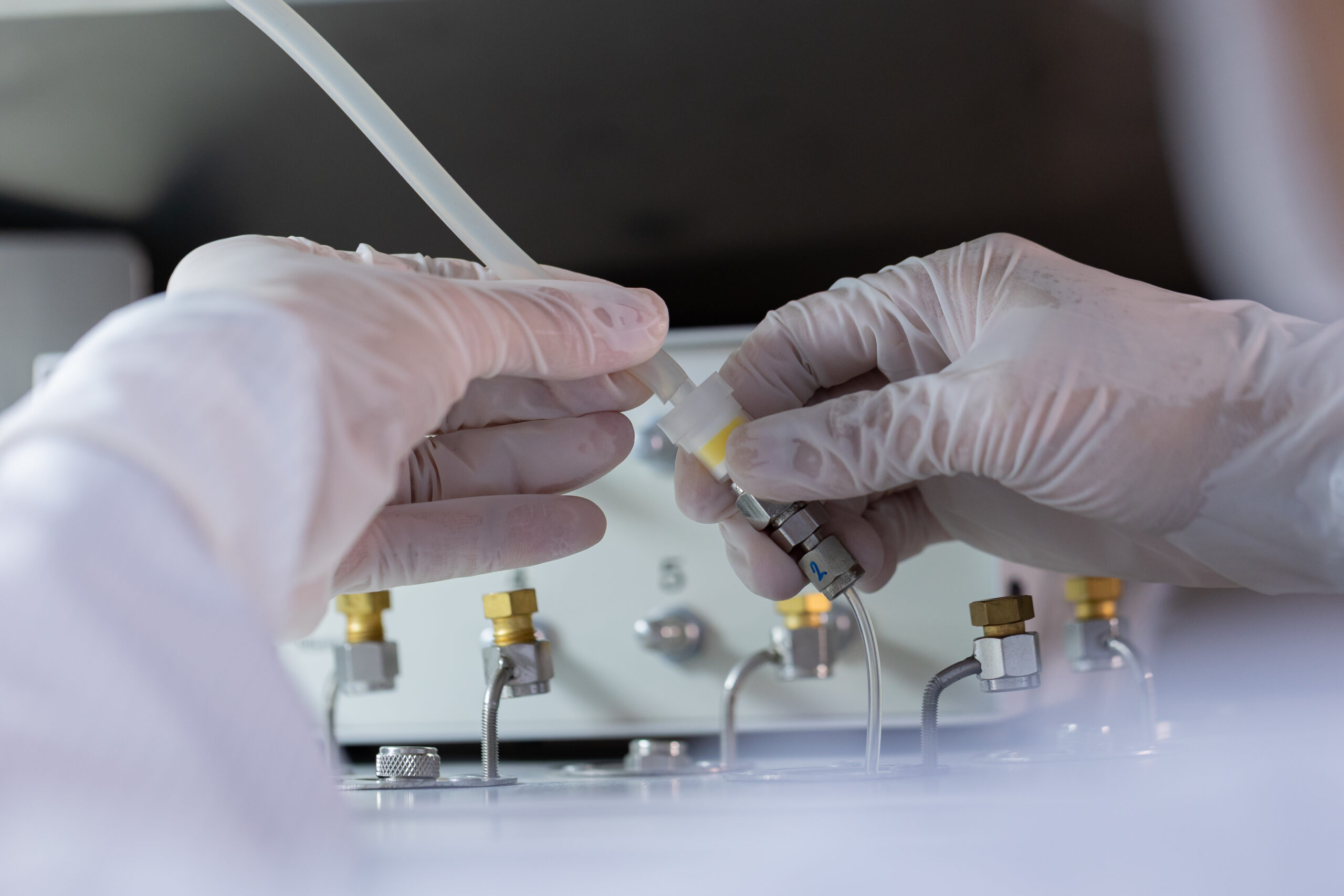
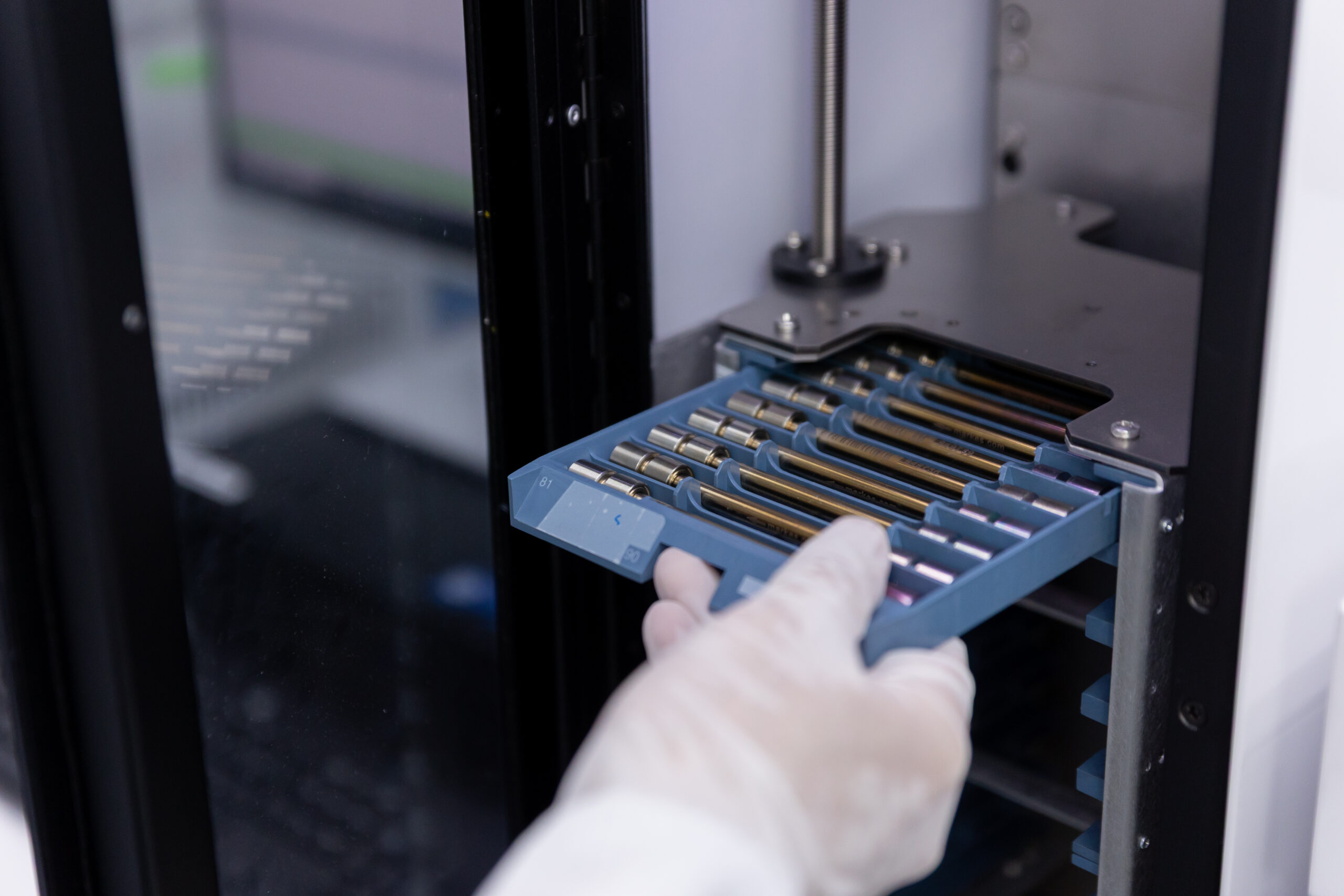
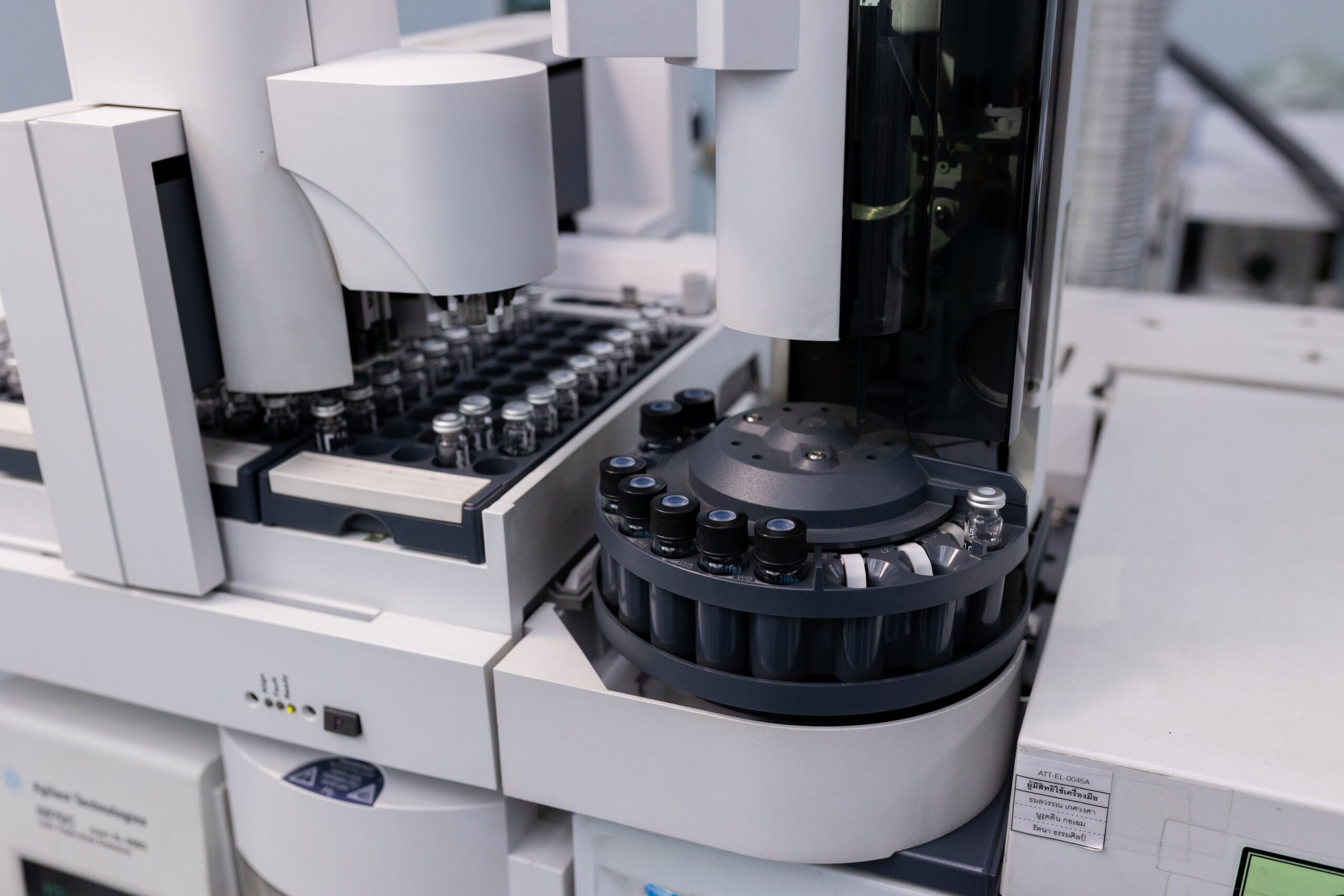
VDA 278 is the German automotive industry standard for analysis of organic emissions from automotive interior components using thermal desorption GC-MS. The standard defines two heating stages: 90°C for VOC determination (volatile organic compounds) and 120°C for FOG determination (semi-volatile high-boiling condensable compounds, applied to a small sample of the material under controlled conditions. The emitted compounds are collected on a Tenax sorbent tube, thermally desorbed, and analysed by gas chromatography-mass spectrometry (GC-MS) to provide a quantitative profile of organic emissions.
VDA 278 is required by German OEMs (BMW, Volkswagen Group, Mercedes-Benz, Audi) and their Tier-1 suppliers, and is widely adopted across the global automotive supply chain. It provides quantitative data for comparison against specified emission limits for individual compounds and compound groups, typically expressed in µg/g of material.
ISO 12219 – Interior Air of Road Vehicles
ISO 12219 is the international standard series covering the measurement of VOC concentrations in vehicle interiors. The standard defines test methods for measuring VOC concentrations in the cabin air of complete vehicles (ISO 12219-1, bag method) and for emissions from individual interior components (ISO 12219-2 to ISO 12219-7, covering various chamber and micro-chamber methods). ALS provides component-level VOC testing to the ISO 12219 chamber methods, enabling material qualification against OEM VOC specifications defined under this standard.
VDA 275 – Formaldehyde Emission Testing
Formaldehyde is a specific VOC of regulatory and health concern, subject to dedicated test methods and specific emission limits in many OEM specifications. VDA 275 specifies a bottle method for determination of formaldehyde emissions from automotive interior non-metallic materials, using photometric analysis of the extracted formaldehyde. ALS provides formaldehyde testing to VDA 275 as part of our VOC testing capability, enabling clients to meet the specific formaldehyde limits defined by German and other OEMs.
ISO 6452 – Fogging Testing
Fogging testing determines the propensity of automotive interior materials to produce condensable vapours that deposit on the vehicle windscreen as a visible fog film. This is both an aesthetic issue (the fog film impairs driver visibility) and an indicator of high-boiling organic emissions from interior materials. ISO 6452 defines both photometric (reflectance-based) and gravimetric (mass deposition) methods for fogging assessment. ALS provides fogging testing to ISO 6452 as part of our interior emissions testing portfolio.
Corrosion & Salt Spray Testing
Corrosion is one of the most persistent and economically significant degradation mechanisms in automotive components and structures. Road salt, humid climates, and the electrochemical environment created by dissimilar metals in contact create conditions that attack metal surfaces, coatings, and plated surfaces continuously throughout a vehicle’s service life. Corrosion testing replicates these conditions in accelerated form, enabling assessment of coating quality, material selection, and corrosion protection effectiveness in a fraction of the real-world timescale.
ISO 9227 – Neutral Salt Spray Testing (NSS)
ISO 9227 is the primary international standard for salt spray (salt fog) corrosion testing, covering three test atmospheres: neutral salt spray (NSS), acetic acid salt spray (AASS), and copper-accelerated acetic acid salt spray (CASS). In the NSS test, the most widely applied, specimens are exposed to a continuously atomised 5% sodium chloride solution at 35°C for defined durations, typically ranging from 96 hours to 1,000 hours or more depending on the OEM specification. The standard defines the test apparatus requirements, solution chemistry, temperature tolerances, and evaluation criteria for assessing corrosion protection performance.
ALS salt spray testing to ISO 9227 is applied to painted and coated metal components, fasteners and fixings, electroplated surfaces, and automotive exterior and underbody components. Results are documented through visual examination of corrosion creep from scribe lines, blister formation, and spot corrosion. The resulting data is then classified according to ISO 10289, allowing manufacturers to verify compliance with their specific OEM requirements.
ASTM B117 – Standard Practice for Operating Salt Spray Apparatus
ASTM B117 is the American equivalent of ISO 9227 for neutral salt spray testing, widely required by American OEMs and their supply chains. The test conditions under ASTM B117 are equivalent to ISO 9227 NSS, with 5% sodium chloride solution at 35°C, but the evaluation criteria and acceptance requirements may differ between specifications. ALS can conduct salt spray testing to ASTM B117 for clients whose OEM specifications reference this standard.
Cyclic Corrosion Testing
While continuous salt spray testing (ISO 9227, ASTM B117) provides a standardised accelerated corrosion environment, cyclic corrosion testing, which alternates between salt spray exposure, humidity, ambient drying, and optional UV exposure phases, which many OEMs consider more representative of real-world corrosion progression. ALS offers cyclic corrosion testing to selected OEM and industry standards, providing a more nuanced assessment of corrosion protection performance for clients whose OEM specifications require this approach.
Thermal & Environmental Simulation Testing
Automotive components experience extreme thermal and environmental conditions during manufacture, assembly, shipping, and service. Environmental simulation testing replicates these conditions in controlled laboratory settings, enabling assessment of component integrity, material stability, and functional performance across the full environmental envelope.
Thermal Shock Testing (IEC 60068-2-14)
Thermal shock testing exposes components to rapid transitions between high and low temperature extremes, replicating the shock experienced by components during engine start-stop cycles, cold weather startup, or transition between heated and cooled environments. IEC 60068-2-14 specifies the thermal shock test method, defining the temperature extremes, transition time, dwell time at each extreme, and number of cycles. Thermal shock testing is applied to automotive electronics, sensors, connectors, and any component where thermal cycling could cause fatigue cracking, delamination, or seal failure.
Thermal Cycling & Temperature Endurance Testing (IEC 60068-2-1 / 2-2)
Thermal cycling testing exposes components to repeated temperature cycles between defined minimum and maximum temperatures, with controlled ramp rates and dwell times. Unlike thermal shock, cycling involves slower temperature transitions that stress materials through differential thermal expansion rather than rapid temperature shock. IEC 60068-2-1 covers cold testing and IEC 60068-2-2 covers dry heat testing. These methods are applied to automotive materials, electronics, and polymer components to assess stability and endurance across the operational temperature range.
Humidity & Damp Heat Testing (IEC 60068-2-78)
Humidity testing exposes components to elevated temperature and relative humidity conditions, assessing resistance to moisture ingress, hydrolytic degradation, corrosion, and swelling. IEC 60068-2-78 specifies the damp heat steady-state test at 40°C and 93% RH, widely applied to automotive electronics and connector systems. ALS humidity testing supports qualification of automotive electronics for tropical and humid climate markets including Southeast Asia, where humidity resistance is a particularly critical performance requirement.
Key Standards Reference – Materials & Environmental Testing
| Standard | Test Type | Key Parameters | Typical Application |
| VDA 278 | VOC/FOG Thermal Desorption | 90°C VOC / 120°C FOG, GC-MS analysis | Interior trim, plastics, adhesives – German OEM |
| ISO 12219 | Interior Air VOC | Chamber method, µg/m³ results | Interior material VOC qualification |
| VDA 275 | Formaldehyde Emission | Bottle method, photometric | Interior materials – formaldehyde limits |
| ISO 6452 | Fogging | Photometric / gravimetric, 100°C | Interior trim – windscreen fog assessment |
| ISO 9227 NSS | Salt Spray – Neutral | 5% NaCl, 35°C, 96h to 1000h+ | Metal components, coatings, fasteners |
| ISO 9227 AASS | Salt Spray – Acetic Acid | Acetic acid adjusted, 35°C | Aluminium alloys, decorative plating |
| ISO 9227 CASS | Salt Spray – Copper Accelerated | Copper chloride added, 50°C | Decorative chrome plating assessment |
| ASTM B117 | Salt Spray – US Standard | 5% NaCl, 35°C – ASTM method | American OEM supply chain |
| IEC 60068-2-14 | Thermal Shock | Rapid transfer, −40°C to +150°C | Electronics, sensors, connectors |
| IEC 60068-2-1 / 2-2 | Thermal Cycling | Defined ramp and dwell cycles | Automotive materials, electronics |
| IEC 60068-2-78 | Damp Heat | 40°C / 93% RH steady state | Automotive electronics – tropical climates |
Industries & Applications
Automotive Interior Trim & Materials Suppliers
Suppliers of instrument panels, door trim, headliners, seat foams, floor carpets, and steering wheel covers require VOC emissions testing to VDA 278, ISO 12219, and VDA 275, as well as fogging testing to ISO 6452, to meet OEM interior air quality specifications. ALS provides the complete suite of interior emissions testing required for material qualification at German, Japanese, and American OEMs.
Metal Component & Fastener Manufacturers
Manufacturers of body-in-white components, underbody brackets, suspension parts, engine bay fasteners, and exterior fittings require salt spray testing to ISO 9227 and ASTM B117 to validate corrosion protection performance of coatings, platings, and surface treatments. ALS salt spray testing provides comprehensive performance data that suppliers use to verify compliance against OEM-specified corrosion resistance requirements.
Automotive Electronics & Sensor Manufacturers
ECUs, sensors, connectors, and power electronics components require thermal shock, thermal cycling, and humidity testing to IEC 60068 to demonstrate environmental robustness across the full automotive operating range. ALS environmental simulation testing supports qualification of automotive electronics for both temperate and tropical market applications.
Frequently Asked Questions – Materials & Environmental Testing
Q: What is VDA 278 and which OEMs require it?
VDA 278 is the German automotive industry standard for measuring organic emissions from non-metallic interior materials using thermal desorption gas chromatography-mass spectrometry. It is required by German OEMs including BMW, Volkswagen Group (Volkswagen, Audi, SEAT, SKODA, Porsche), Mercedes-Benz, and their direct suppliers. The standard provides both VOC and FOG (semi-volatile) results, expressed in µg/g of material, enabling material qualification through comparison against OEM-specified emission limits for individual compounds and compound groups.
Q: What is the difference between salt spray testing to ISO 9227 and ASTM B117?
ISO 9227 and ASTM B117 specify equivalent test conditions for neutral salt spray testing, both using 5% sodium chloride solution at 35°C, but they originate from different standards organisations (ISO vs ASTM) and may have different specification requirements in terms of evaluation methods and acceptance criteria. ISO 9227 is the standard required by most European and Asian OEM specifications, while ASTM B117 is required by American OEM specifications. ALS can test to either standard based on your OEM specification requirement.
Q: How long does a salt spray test take?
The duration of a salt spray test is defined by the OEM specification or the standard being tested to, and can range from 96 hours (4 days) for some coating qualification tests to 240, 500, or 1,000 hours for more demanding corrosion resistance requirements. Long-duration tests require advance planning and scheduling. Please contact our team early in your project timeline to allow for test scheduling, and to confirm whether interim inspection requirements are specified.
Q: Can ALS test for both VOC emissions and formaldehyde from the same material sample?
Yes. It is common for OEM specifications to require both general VOC/FOG analysis (by VDA 278) and specific formaldehyde determination (by VDA 275) from the same material. ALS can conduct both tests from a single sample submission, minimising the material required and simplifying the sample preparation and submission process. Please specify both test requirements when making your enquiry.
Request a Materials & Environmental Testing Quote
From VOC emissions qualification for interior trim materials to salt spray certification for exterior components and thermal shock testing for automotive electronics, ALS Testing provides the accredited materials and environmental testing services that automotive suppliers in Malaysia and Southeast Asia require. Contact our specialists to discuss your testing requirements and receive a quotation.
→ Request a Quote: https://www.alstesting.co.th/request-a-quote/
→ Back to Automotive Testing Hub: /automotive-testing/
ISO/IEC 17025 Accredited | VOC + Salt Spray + Thermal Specialist | German & International OEM Standards