

Material Testing: The Foundation of Quality, Safety, and Global Market Access

Salt Spray Testing: Protecting Your Products Before They Reach the Market
May 7, 2026
SEM-EDX: The Microscopic Eye That Reveals What Your Materials Are Really Made Of
May 13, 2026Material Testing: The Foundation of Quality, Safety, and Global Market Access
In today’s competitive manufacturing landscape, material testing is far more than a routine procedure — it’s a strategic investment that reflects a company’s commitment to quality, safety, and reliability. For many businesses, it’s also an unexpected key to unlocking global market opportunities.
By identifying substandard materials early and establishing credible quality benchmarks, material testing builds the trust that customers and trade partners demand. ALS Testing, part of the ALS Global network operating in over 70 countries including Thailand, brings world-class testing capabilities directly to Thai businesses.
5 Areas of Material Testing Expertise at ALS Testing
1. Metals & Coatings
- Corrosion resistance testing: Salt Spray Test, CASS (accelerated corrosion simulation using specialized chemical agents)
- Mechanical property testing: hardness, tensile, compression, and impact
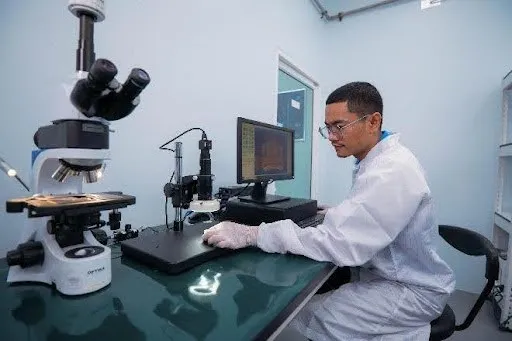
- Microstructural analysis: SEM/EDX, XRD, XRF for crystal structure and elemental composition
2. Plastics, Polymers & Chemical Materials
- Organic compound identification using FT-IR spectroscopy
- Xenon Arc Testing for UV-induced plastic degradation
- Migration testing — detecting chemicals released from packaging or pharmaceutical/food-contact materials
3. Electronics & Semiconductors
- Failure analysis of PCBs, PCBAs, and electronic components (cross-section analysis, failure investigation)
- Component cleanliness and particle testing: LPC, VDA 19 / ISO 16232
- Trace element and foreign substance detection: SEM/EDX, GC-MS, HPLC, IC
️ 4. Construction Materials & Environmental Samples
- Contaminant analysis in construction materials: cement, ceramics, pesticides, and heavy metals
- Waste material and soil testing to international standards
️ 5. Cosmetics, Food & Pharmaceuticals
- Testing for allergens, contaminants, and microbial contamination
- Sterility testing for pharmaceuticals, microbial limits for cosmetics, and pathogen detection in food products
Advanced Testing Instruments at ALS Testing
SEM/EDX — Microstructural & Elemental Analysis
Scanning Electron Microscopy combined with Energy-Dispersive X-ray Analysis provides high-resolution imaging of material surfaces, revealing cracks, defects, and foreign particles — along with precise elemental identification. Ideal for failure analysis and quality control of high-precision parts like electronics and plated metals.
FT-IR / HPLC / GC-MS / IC — Organic & Inorganic Chemical Analysis
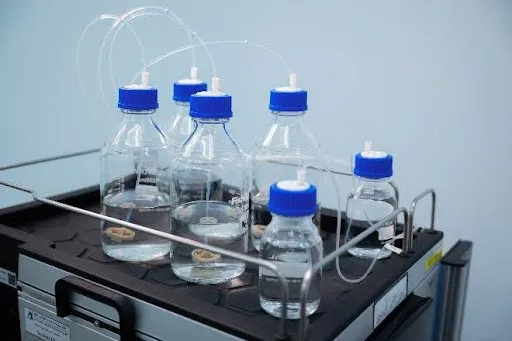
These instruments form the backbone of chemical testing — identifying compounds in materials ranging from coatings, plastics, fragrances, and volatile substances to heavy metals, mineral salts, and ionic species. Used across food, cosmetics, pharmaceutical, electronics, and environmental testing.
XRD / XRF — Crystal Structure & Coating Analysis
Using X-ray technology, XRD identifies crystal phases in materials like minerals, ceramics, and metal coatings — including internal stress and crystal size analysis. XRF rapidly measures elemental composition without damaging the sample. Both are essential for material verification and quality assurance.
⚙️ Mechanical Testing
A comprehensive suite of tests evaluating the physical performance of materials:
Table
| Test | Purpose |
|---|---|
| Tensile Test | Measures resistance to pulling forces and material elasticity |
| Hardness Test | Assesses resistance to scratching and wear |
| Impact Test | Evaluates energy absorption under sudden force without fracturing |
| Compression Test | Measures resistance to crushing and compressive loads |
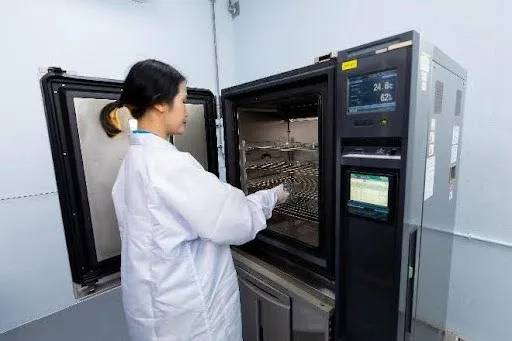
Additionally, environmental simulation tests assess material stability under repeated temperature and humidity cycling — predicting long-term performance in real-world conditions.
️ Environmental Stress Tests
Real-world conditions simulated in the lab:
- Salt Spray Test — Simulates coastal corrosion from salt-laden air
- Thermal Shock Test — Rapid temperature cycling to assess crack and deformation resistance
- UV / Xenon Arc Exposure — Simulates sunlight and outdoor weathering degradation
5 Reasons Material Testing Is Essential for Global Business Growth
1. ✅ Quality Verification
Testing confirms that production materials meet defined specifications. Plastics must have the right tensile strength and flexibility. Metals must withstand loads without becoming brittle or fracturing. Technical testing at this level is the frontline defense against production failures and field defects.
2. ️ Safety Assessment
Before any product reaches the market, material testing evaluates real-world safety risks — from battery components that could overheat and ignite, to wire insulation that must handle current without melting, to medical device components that must withstand mechanical stress without failure. Every test is a layer of protection for the end user.
3. International Certification & Compliance
Exporting to global markets means meeting stringent quality, safety, and environmental regulations. Material testing validates compliance with international standards including ISO, ASTM, RoHS, and REACH — ensuring your products legally qualify for sale in target markets and strengthening brand credibility with international buyers.
4. Failure Analysis & Recall Prevention
When damage occurs — whether on the production line or after market launch — systematic failure analysis identifies the true root cause: material defects, design flaws, or external factors. Acting on these findings prevents recurrence, reduces costly product recalls, and protects long-term brand reputation.
5. Environmental & Health Compliance (ESG)
Material testing plays a vital role in detecting hazardous substances — such as lead, cadmium, and volatile organic compounds (VOCs) — that can accumulate in the body and cause long-term health damage. Rigorous testing from the production stage reduces consumer health risks and aligns your business with the ESG framework (Environmental, Social, Governance), which is increasingly expected by global investors, regulators, and customers alike.
Take Your Products to the World with ALS Testing
Material testing is the key that unlocks quality confidence, regulatory compliance, and global market access. With world-class technology, internationally accredited laboratories, and deep industry expertise across more than 70 countries, ALS Testing is the trusted partner Thai businesses need to:
- Reduce production and quality risks
- Meet international regulatory requirements
- Build confidence with global customers and trade partners
- Expand into international markets with certainty
Choose ALS Testing as your quality partner — and take your business to the global stage with confidence and sustainability.


