
Failure Analysis Services | SEM, FTIR & EDX | ALS Testing

Technical Cleanliness Testing | ISO 16232 & VDA 19 | ALS Testing
April 24, 2026
Automotive Materials & Environmental Testing | ALS Testing
April 24, 2026Failure Analysis Services | SEM, FTIR & EDX | ALS Testing
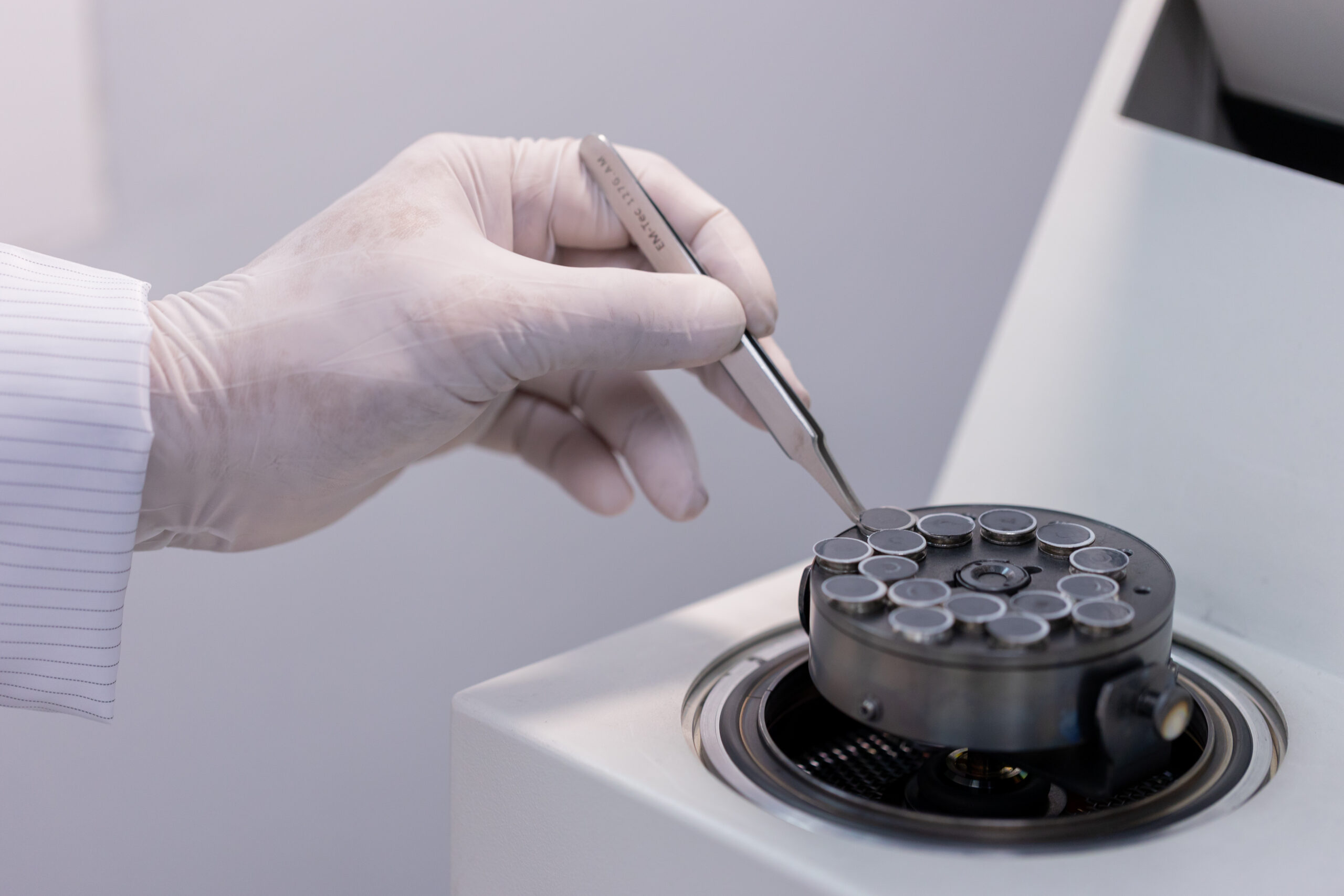
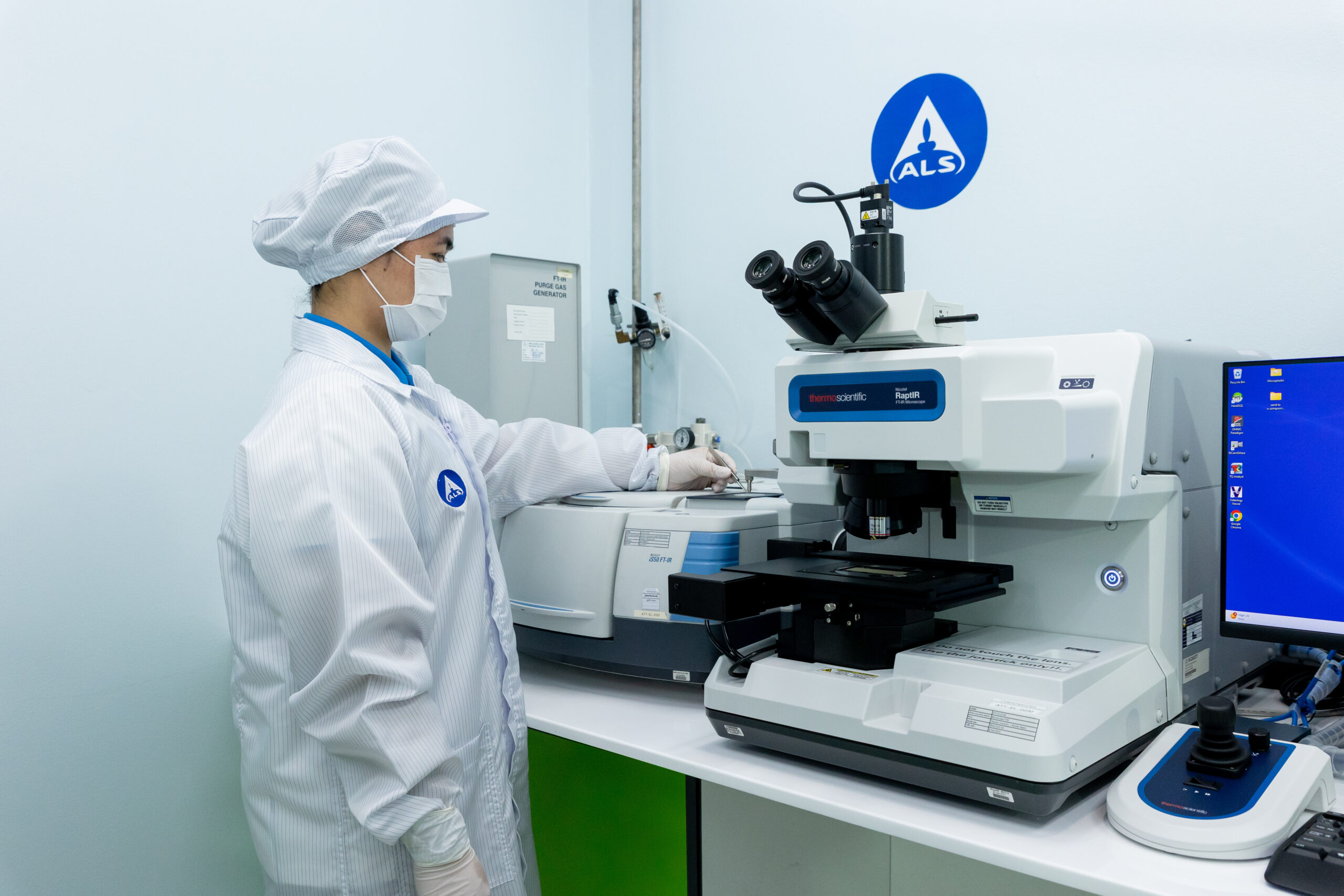
Root Cause Investigation · Fracture Analysis · Corrosion Analysis · Material Identification · Cross-Section
ISO/IEC 17025 Accredited | SEM + FTIR + EDX + Cross-Section | Automotive Specialist
When a component fails in production, in qualification testing, or in the field, the questions that matter most are not simply ‘what failed’ but ‘why did it fail’ and ‘how do we ensure it does not fail again.’ Failure analysis is the disciplined forensic process that answers these questions, tracing a visible failure mode back to its physical, chemical, or process root cause.
In the automotive industry, failure analysis is a critical tool across the entire product lifecycle. During development, it identifies design or material weaknesses before they reach production. During qualification, it explains unexpected test failures and guides corrective action. During production, it investigates non-conformances and prevents recurrence. After field returns, it determines warranty liability, informs recall decisions, and drives product improvement.
ALS Testing provides specialist automotive failure analysis services using scanning electron microscopy (SEM), FTIR spectroscopy, energy-dispersive X-ray spectroscopy (EDX), optical microscopy, and metallurgical cross-section preparation. With scanning electron microscopy analysis reaching 260 searches per month in the Malaysian market – the highest search volume in our entire keyword set – this is both the most technically demanding and the most commercially significant capability in our laboratory portfolio.
What Is Failure Analysis?
Failure analysis is the systematic investigation of a component or material to determine the cause of an unexpected failure, non-conformance, or performance deficiency. It applies a structured sequence of analytical techniques, starting with non-destructive visual and optical examination, progressing to surface and interface analysis, and culminating in destructive cross-section and microstructural examination where required, to identify the physical, chemical, or mechanical mechanism responsible for the failure.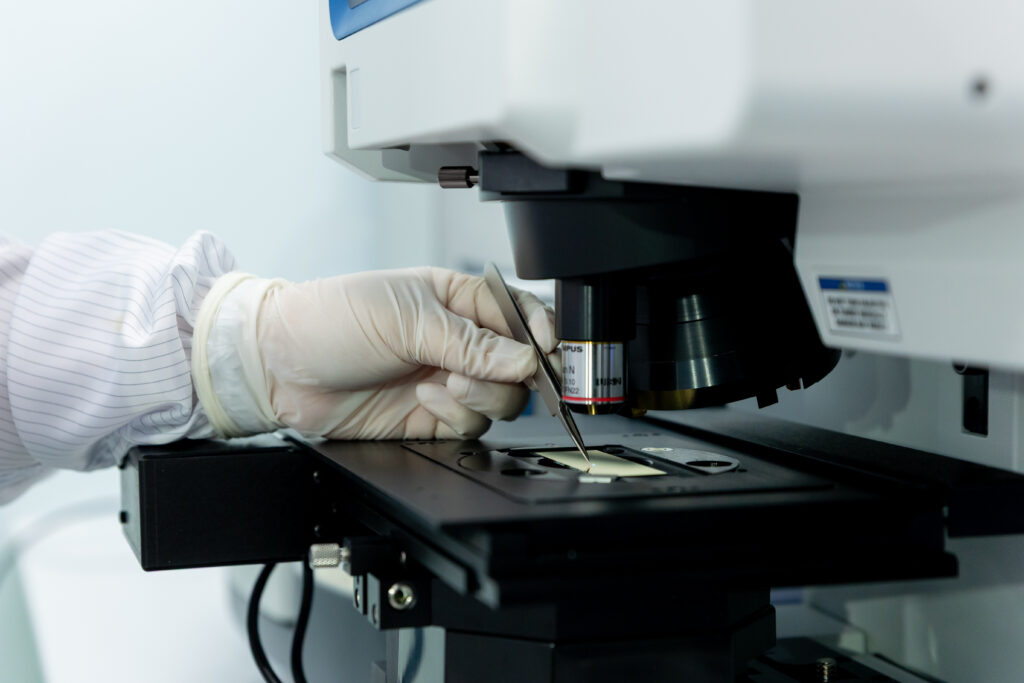
In automotive applications, failure analysis encompasses a wide range of failure modes and component types. Fracture analysis investigates cracked or broken metal, polymer, or composite components, determining whether the fracture originated from fatigue, overload, corrosion, embrittlement, or manufacturing defects. Corrosion analysis characterises the type and extent of corrosion damage and identifies contributing factors including material composition, coating quality, and environmental exposure. Delamination and adhesion failure analysis investigates separation at material interfaces including bonded joints, coatings, plated surfaces, and polymer-to-metal bonds. Contamination analysis identifies foreign particles or films on component surfaces or in lubrication systems that have caused or contributed to functional failure.
Failure Analysis in the Automotive Supply Chain
The automotive supply chain applies failure analysis at multiple points where the stakes of unresolved failures are highest. Tier-1 suppliers conduct failure analysis on components returned from OEM qualification testing, where a single test failure can delay programme launch. Warranty teams investigate field returns to distinguish design defects from manufacturing escapes, and to determine whether failures within the warranty period are attributable to the supplier, the assembly process, or the OEM’s application conditions. Purchasing and quality teams use failure analysis to assess whether returned components represent genuine supplier non-conformances or misuse and handling damage by the customer. In each case, the failure analysis report provides objective, evidence-based conclusions that carry weight in technical and commercial disputes.
Why Choose an Accredited Independent Laboratory for Failure Analysis?
Failure analysis conducted by an ISO/IEC 17025 accredited independent laboratory carries a level of credibility that in-house analysis cannot replicate. When failure analysis results are used in OEM disputes, insurance claims, product liability proceedings, or regulatory investigations, the independence and accreditation of the laboratory that produced the analysis is routinely scrutinised. ALS provides analysis that is conducted under a formal quality management system, with documented traceability of methods and equipment calibration, and with the objectivity of an organisation that has no stake in any particular outcome.
Our Failure Analysis Techniques
ALS failure analysis employs a suite of complementary analytical techniques, selected based on the nature of the failure, the material types involved, and the level of detail required to reach a defensible root cause conclusion. Our analysts are experienced in applying these techniques in combination; a fracture surface analysis, for example, may combine optical microscopy for initial characterisation, SEM for high-magnification morphological analysis, and EDX for elemental mapping of fracture features.
Scanning Electron Microscopy (SEM) Analysis
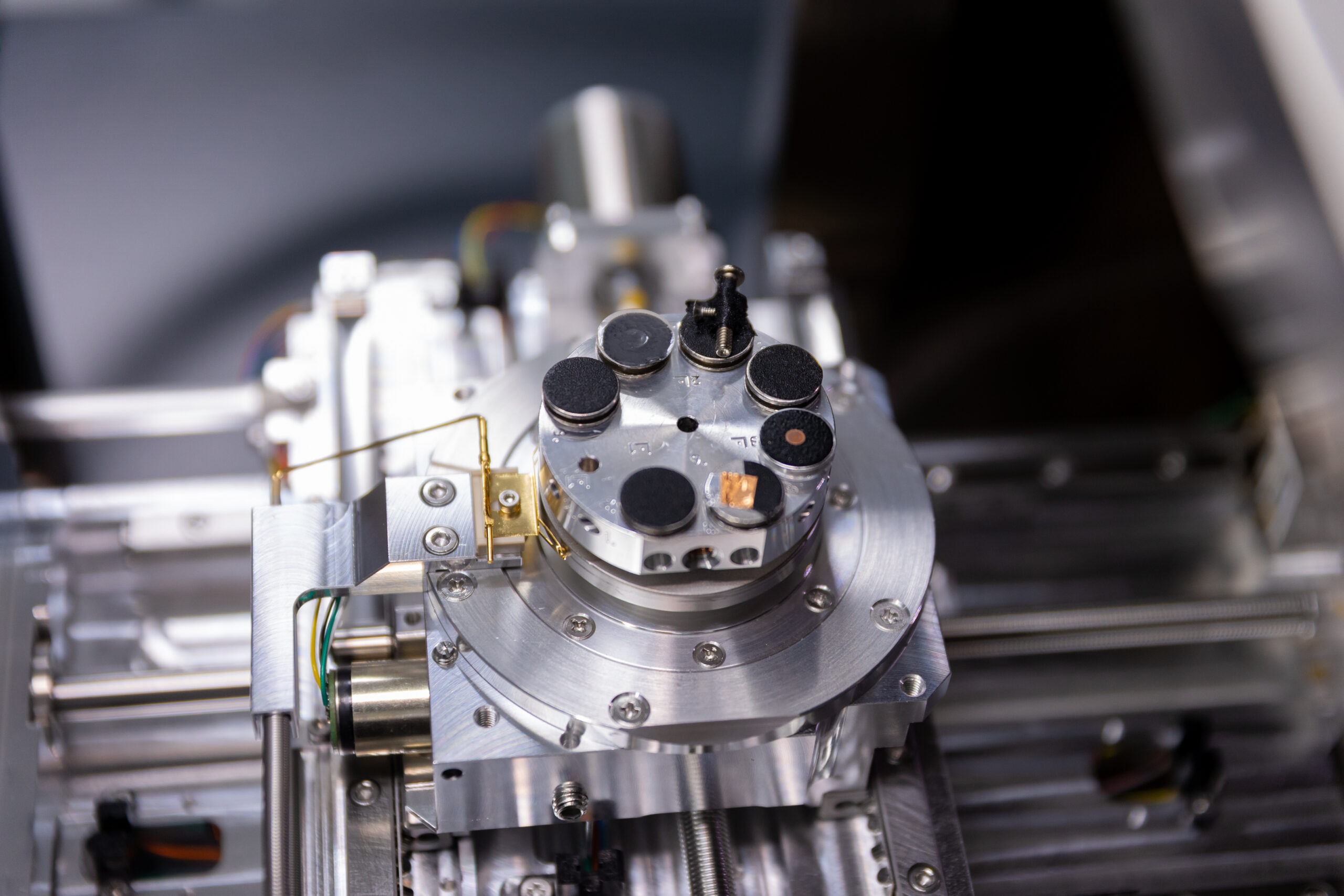
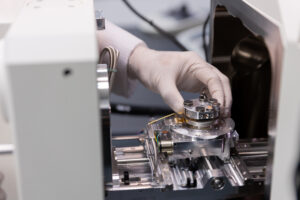
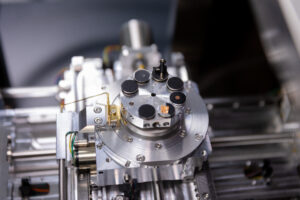
Scanning electron microscopy is the central analytical tool for failure analysis at the micro and nano scale. SEM images component surfaces, fracture faces, and cross-section features at magnifications from 20x to 100,000x, with a depth of field and resolution that far exceeds optical microscopy. SEM analysis reveals fracture morphology, the characteristic features that distinguish fatigue striations from intergranular fracture from ductile overload; identifies surface defects, pits, cracks, and corrosion morphology at the micrometre scale; characterises particle morphology in contamination investigations; and provides the imaging foundation for EDX elemental analysis.
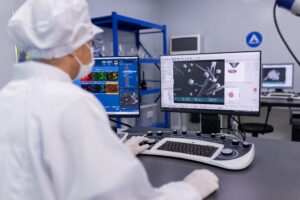
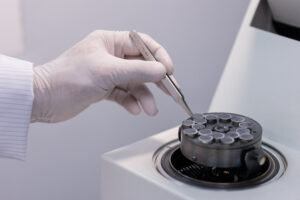
All SEM analysis at ALS is conducted in a controlled environment to minimise contamination, with samples prepared using appropriate techniques for the material type, including gold or carbon sputter coating for non-conducting samples. SEM images are documented with scale bars, magnification, and operating conditions for full traceability in the final report.
Energy-Dispersive X-Ray Spectroscopy (EDX) Elemental Analysis
EDX is used in combination with SEM to provide elemental composition data from specific points, areas, or features on a sample surface. By detecting the characteristic X-rays emitted from a sample under electron beam excitation, EDX identifies which elements are present and at what relative concentrations. In failure analysis, EDX is applied to identify corrosion products (for example, distinguishing chloride-induced pitting from sulfate-driven corrosion), to characterise contaminating particles (distinguishing iron from aluminium from silicon-based particles), to verify coating composition, and to detect elemental segregation or depletion at fracture interfaces.
EDX mapping provides a spatial elemental distribution image across an area of interest, enabling visualisation of where specific elements are concentrated; for example, showing the distribution of zinc in a galvanic corrosion zone, or the localisation of chlorine at a corrosion initiation site.
FTIR Spectroscopy (Fourier Transform Infrared)
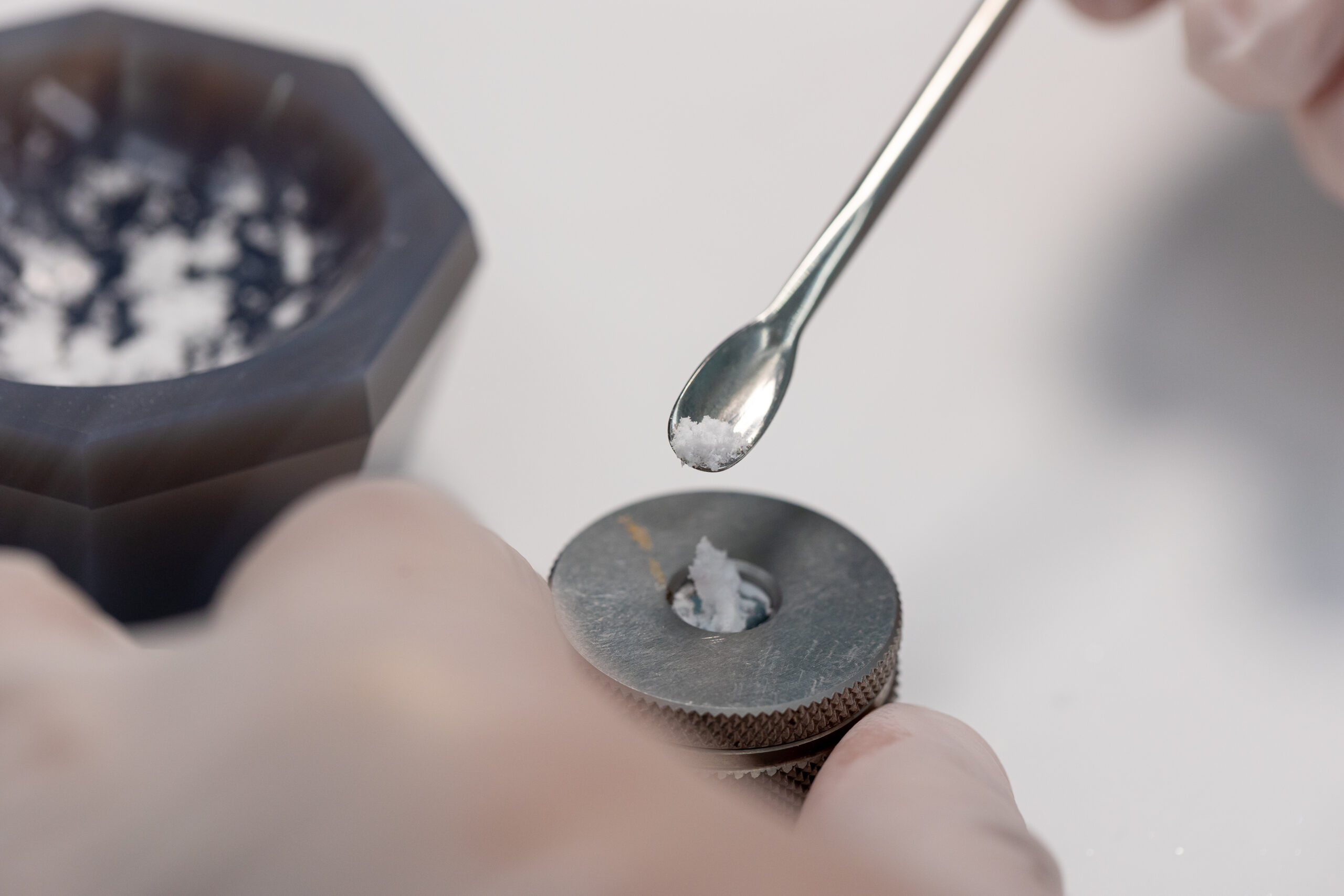
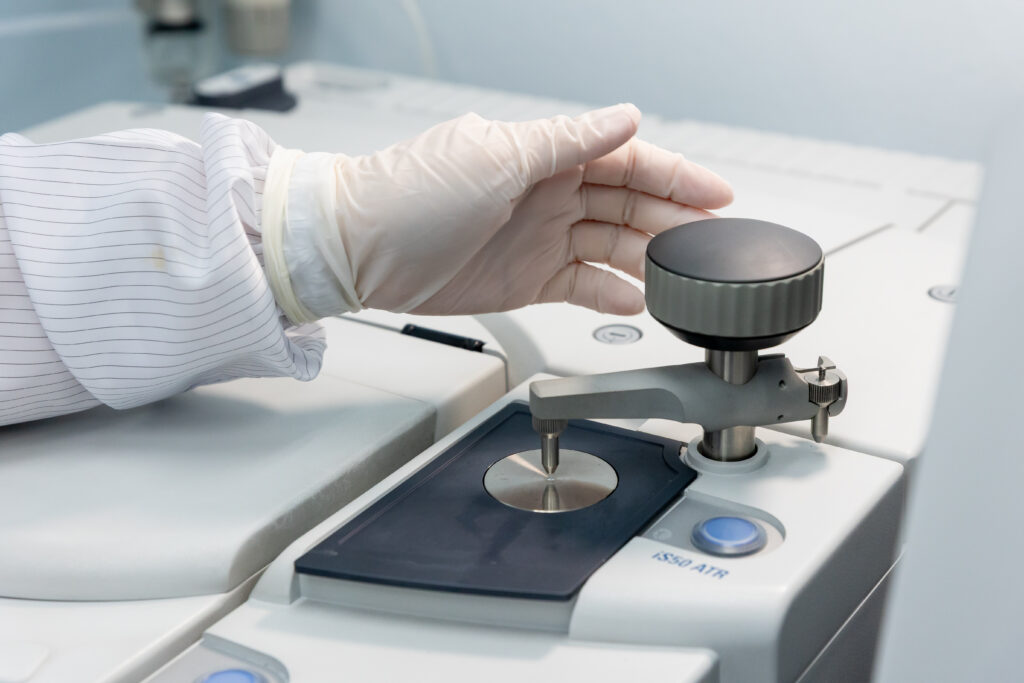
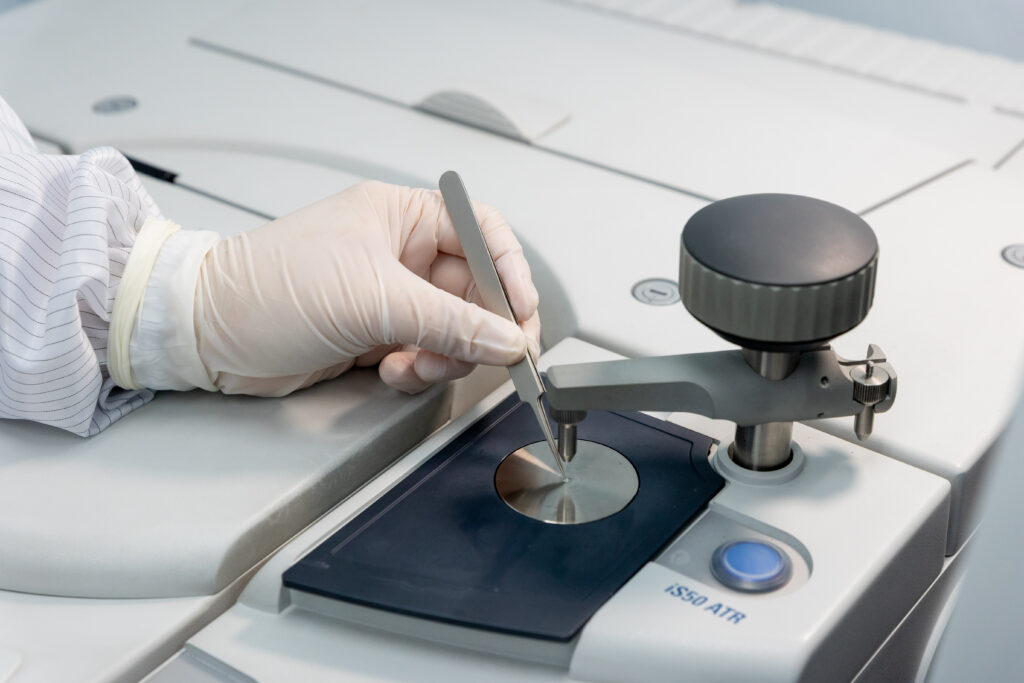
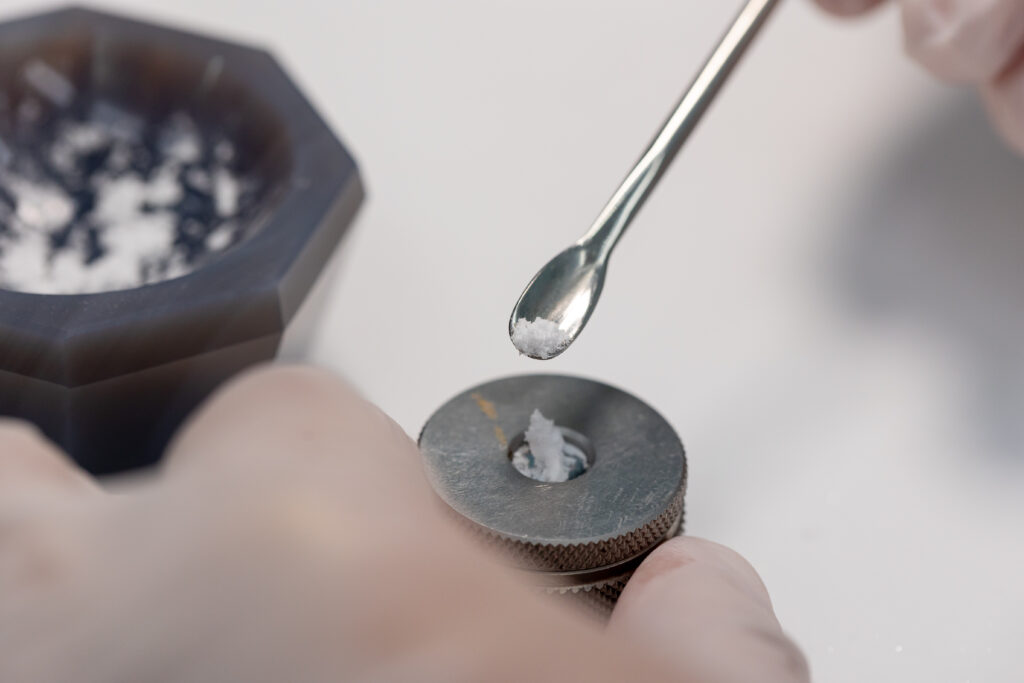
FTIR spectroscopy is the primary technique for identification of organic materials, polymers, coatings, and surface films in failure analysis. By measuring the infrared absorption spectrum of a material, FTIR produces a molecular fingerprint that can be matched against reference libraries to identify polymer types, adhesive formulations, lubricant residues, and contaminating films. FTIR is routinely applied in automotive failure analysis to identify: the composition of failed gaskets and seals; contaminating films on metal surfaces that inhibit adhesion or coating bonding; degraded or thermally oxidised polymer components; lubricant composition and degradation state; and foreign material contaminants found at failure sites.
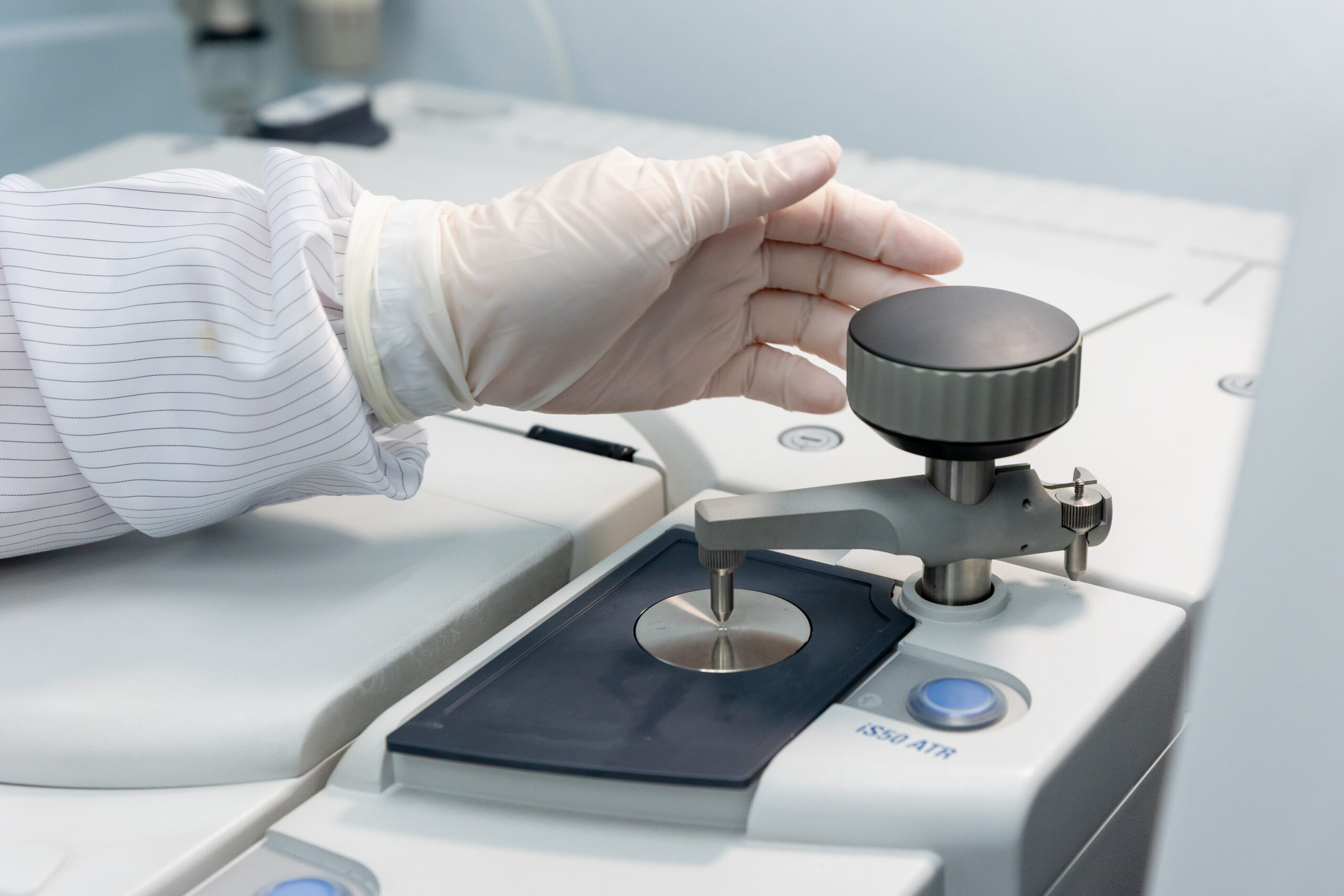
ALS operates both standard FTIR for bulk material analysis and ATR (attenuated total reflectance) FTIR for surface film analysis, enabling characterisation of films as thin as a few micrometres without the need for destructive extraction.
Optical Microscopy & Stereo Microscopy
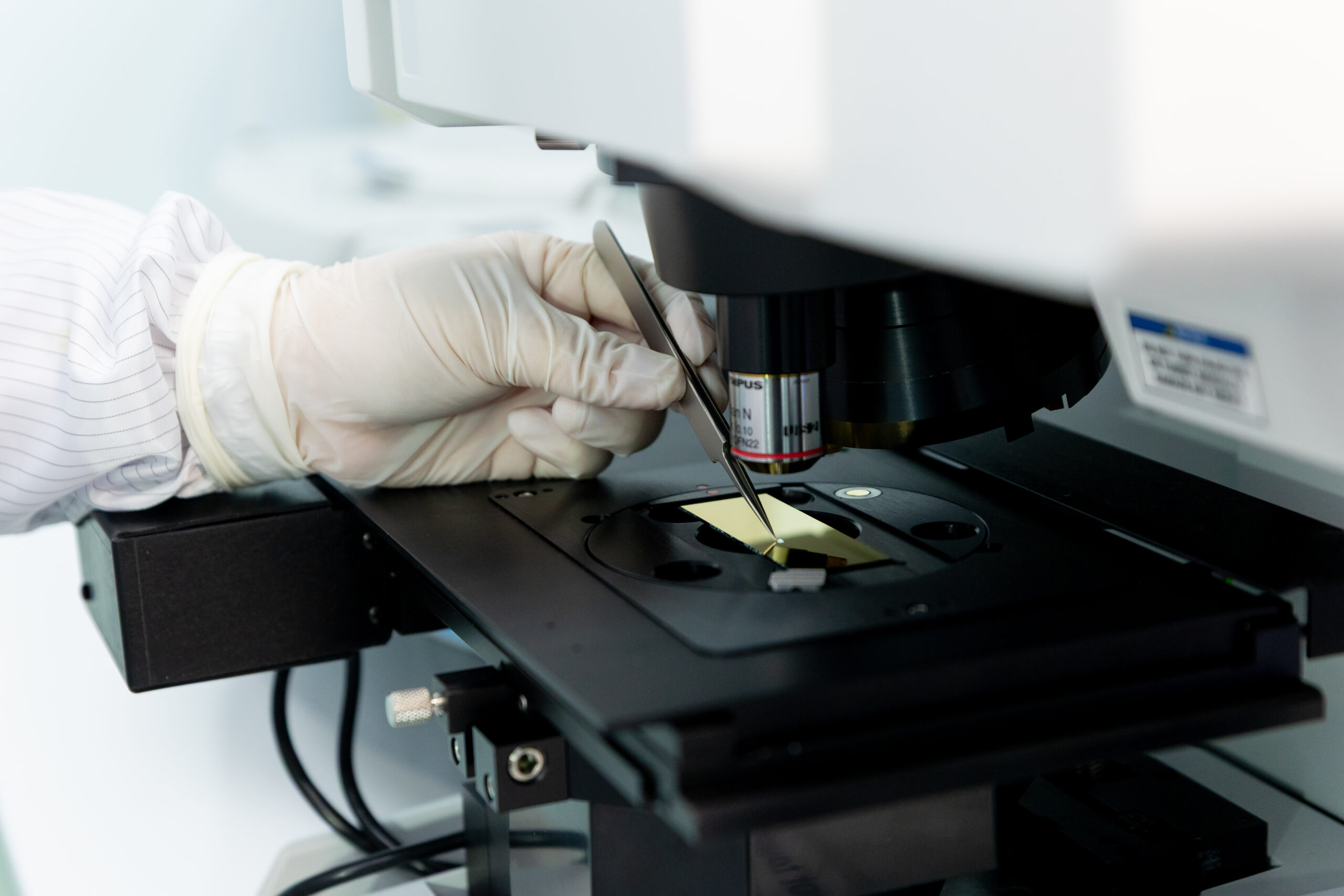
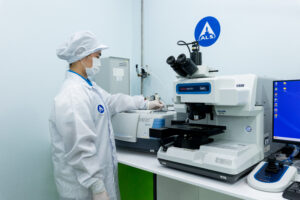
Optical microscopy at magnifications from 10x to 1000x provides the initial visual characterisation stage of failure analysis, identifying fracture locations, corrosion zones, delamination interfaces, and gross defects before higher-resolution SEM analysis is applied. Stereo microscopy at lower magnifications (7x to 50x) provides three-dimensional surface imaging of fracture faces and component surfaces with excellent depth of field, enabling documentation of large-area failure features in context. All optical microscopy images are captured digitally and documented with magnification and scale information.
Metallurgical Cross-Section Preparation & Analysis
Cross-section preparation involves embedding a component in resin, cutting through the area of interest, grinding and polishing to a metallographic finish, and optionally etching to reveal microstructural features, providing access to the internal structure of a component at the site of failure. Cross-section analysis reveals coating thickness and uniformity, interface integrity between layers, crack propagation paths and morphology, grain structure and phase distribution in metals, porosity and inclusion content in castings, and the presence of decarburisation, carburisation, or other surface treatments. Combined with SEM and EDX analysis of the prepared cross-section, this technique provides the most comprehensive internal characterisation of a failed component.
Failure Modes We Investigate
ALS failure analysis services address the full spectrum of failure modes encountered in automotive component manufacturing and service.
Fracture & Fatigue Failure Analysis
Fracture surfaces carry a detailed record of the failure mechanism, encoded in the morphological features of the fractured faces. Fatigue fractures display characteristic features including fatigue crack initiation sites, beach marks (progression marks showing crack growth over cycles), and fatigue striations at high magnification. Overload fractures show ductile features (dimples, shear lips) or brittle features (cleavage facets, intergranular separation) depending on material and loading conditions. ALS fractography, the systematic analysis of fracture surfaces, determines the failure mode, identifies the initiation site, and assesses whether the failure was consistent with design intent, an unexpected overload, or a material or manufacturing defect.
Corrosion & Surface Degradation Analysis
Corrosion failures in automotive components can take many forms: general uniform corrosion, pitting corrosion localised at surface defects or inclusions, galvanic corrosion at bimetallic interfaces, crevice corrosion in confined geometries, stress corrosion cracking in susceptible alloys under mechanical loading, and fretting corrosion at vibrating contacts. ALS corrosion analysis characterises the corrosion morphology by optical and SEM microscopy, identifies corrosion products by EDX elemental analysis and FTIR spectroscopy, and assesses the contribution of material composition, surface treatment quality, and environmental exposure to the observed damage.
Delamination & Adhesion Failure Analysis
Failures at material interfaces, including between coatings and substrates, bonded surfaces, plated layers and base materials, and moulded polymer overmoulds and metal inserts, are among the most common and commercially significant failures in automotive components. ALS investigates delamination failures by cross-section analysis to characterise the interface morphology, SEM and EDX analysis of both separated surfaces to determine the locus of failure (cohesive failure within a layer, or adhesive failure at the interface), and FTIR analysis to identify contaminating films or inadequate surface preparation that may have compromised adhesion.
Contamination & Foreign Material Analysis
Contaminating particles, films, or deposits on component surfaces can cause a range of functional failures from corrosion initiation to electrical resistance increase to mechanical interference. ALS contamination analysis applies the full suite of SEM, EDX, FTIR, and optical microscopy techniques to characterise contaminants and identify their source. This is frequently applied to investigation of corrosion-related warranty failures where a chloride, sulfate, or organic acid contaminant has initiated pitting or crevice corrosion, and to investigation of electrical contact failures where surface films have increased contact resistance.
Our Failure Analysis Process
ALS failure analysis follows a structured investigation process that ensures comprehensive characterisation and defensible conclusions in every case.
| Stage | Activity | Output |
| 1. Receipt & Review | Sample receipt, condition documentation, review of client background information | Sample condition record, investigation brief |
| 2. Non-Destructive Examination | Visual, stereo, and optical microscopy – photographic documentation | Overview images, failure site characterisation |
| 3. Surface Analysis | SEM imaging, EDX elemental analysis, FTIR surface film analysis | High-resolution images, elemental data, material identification |
| 4. Destructive Examination | Cross-section preparation, metallographic analysis, SEM/EDX of cross-section | Internal structure characterisation, interface analysis |
| 5. Data Synthesis | Integration of all analytical data, root cause determination, corrective action guidance | Draft failure analysis report |
| 6. Reporting | Final report with images, data, conclusions, and recommendations | Formal failure analysis report – ISO/IEC 17025 accredited |
Frequently Asked Questions – Failure Analysis
Q: What information should I provide when submitting a component for failure analysis?
The quality of a failure analysis investigation is directly related to the quality of the background information provided. When submitting a sample, please provide a description of the component and its function, the failure mode observed such as fracture, corrosion, or delamination, and details on when and how the failure was discovered in production, qualification, or the field. It is also helpful to include the operational history of the component if known, any relevant manufacturing information like material specification, heat treatment, surface treatment, and assembly history, and the specific outcome you require from the investigation. This could include root cause identification, technical evidence for specification compliance, or corrective action recommendations. The more context you provide, the more focused and relevant our investigation can be.
Q: How long does a failure analysis investigation take?
Turnaround time depends on the complexity of the investigation, the number of techniques required, and the current workload of our analytical team. A straightforward fracture analysis using SEM and EDX can typically be completed within five to ten business days. More complex investigations involving cross-section preparation, FTIR analysis, and comparative testing of multiple samples may require two to four weeks. For urgent investigations, particularly production-critical failures, please contact our team directly to discuss expedited options.
Q: Can failure analysis results be used in legal or commercial disputes?
Yes. Failure analysis reports produced by ISO/IEC 17025 accredited laboratories are routinely used as technical evidence in commercial disputes, insurance claims, product liability proceedings, and regulatory investigations. The accreditation of ALS Testing means that our reports are produced under a formally audited quality management system, with documented traceability of methods, equipment, and analyst qualifications. If your investigation has a legal or commercial dimension, please advise our team at the outset so that we can ensure the investigation is conducted and documented to the appropriate standard.
Q: What is SEM analysis and why is it important for failure analysis?
Scanning electron microscopy (SEM) is a technique that uses a focused electron beam to image surfaces at very high magnification and resolution. Unlike optical microscopy, SEM can achieve magnifications of 100,000x or higher with a depth of field that makes it ideal for imaging rough fracture surfaces, corroded surfaces, and three-dimensional microstructural features. SEM is important for failure analysis because it reveals the micro-scale morphological evidence that distinguishes one failure mechanism from another: fatigue striations, cleavage facets, corrosion pits, and particle morphology are all characteristic features that guide the analyst’s conclusion about root cause.
Q: Can ALS analyse plastic, rubber, and composite material failures as well as metals?
Yes. ALS failure analysis services cover metals, polymers, rubbers, composites, adhesives, coatings, and electronics materials. FTIR spectroscopy is our primary tool for polymer and organic material characterisation, enabling identification of polymer type, degradation state, and contaminating species. SEM and EDX analysis are applied to polymer fracture surfaces, interface failures, and contaminant identification in non-metallic components. Our analysts have experience with the full range of materials used in automotive manufacturing.
Request a Failure Analysis Investigation
When a component failure requires expert investigation, ALS Testing provides the analytical depth, accredited methodology, and clear reporting that automotive manufacturers require. Contact our team today to discuss your failure analysis requirements and receive guidance on sample submission.
→ Request a Quote: https://www.alstesting.co.th/request-a-quote/
→ Back to Automotive Testing Hub: /automotive-testing/
ISO/IEC 17025 Accredited | SEM + FTIR + EDX + Cross-Section | Fast Turnaround Available