Marketing
- โชว์สินค้าทั้งหมด
- No categories
April 17, 2026
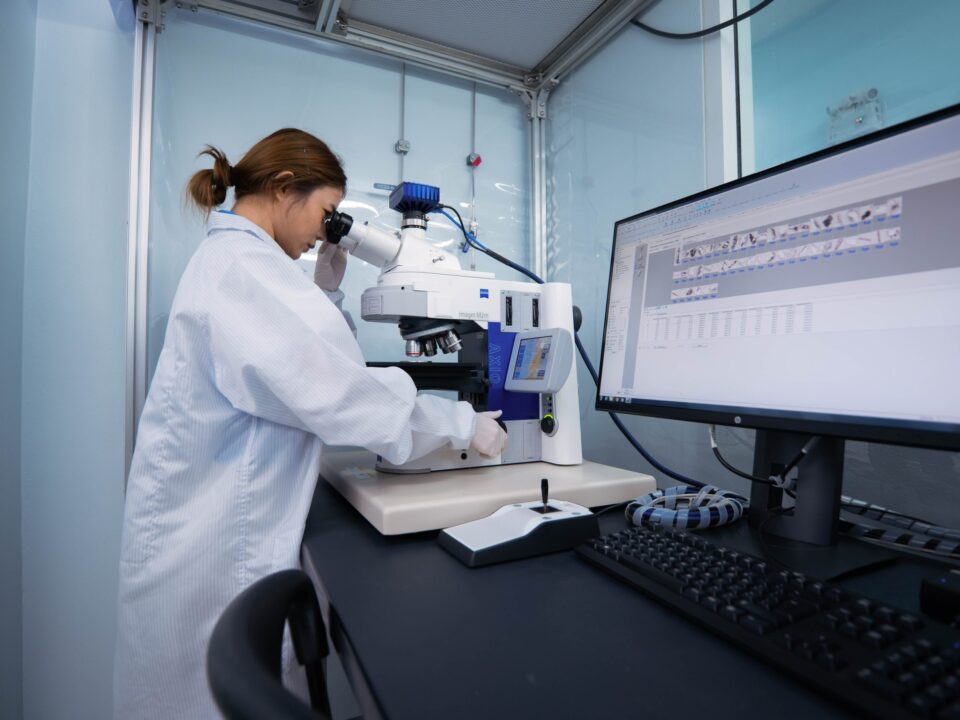
Dust analysis in factories: testing methods and ISO standards that factories need to know.
The growth of the EV and semiconductor industries has made particle control in manufacturing lines a key global issue, with the particle analysis services market valued at over $1 billion and expected to grow at an average rate of over 8% per year.
Particle analysis is the process of examining the size, quantity, and composition of particulate matter contaminating air, surfaces, or product components. This is done to assess risk and ensure quality control meets industry standards. Many manufacturing industries require strict air cleanliness control according to ISO 14644 standards.
This article will help you understand how dust analysis works, the types of instruments used, and why particle control has become a core part of quality control in modern factories.
Why is the Particle Analysis Market Growing So Rapidly?
Controlling particle contamination is a critical issue in advanced industries, particularly semiconductor and electronics manufacturing, which require cleanrooms with strict particle control.
According to global industry organizations, the particle analysis services market is worth over a billion dollars and is growing at an average rate of 8–9% per year.
This growth is primarily driven by three factors:
Quality and hygiene regulations in industry.
The growth of the EV and semiconductor industries.
Continuously evolving analytical technologies such as AI and real-time monitoring systems.
As production lines become more complex, dust analysis has become an integral part of quality control systems, not just general environmental monitoring.
The Dust Situation in Thailand: From PM2.5 to Production Processes
Thailand faces a recurring PM2.5 dust problem. Data from the Pollution Control Department (PCD) indicates that many areas of the country have annual PM2.5 averages higher than the World Health Organization’s guideline of 5 micrograms per cubic meter, as per WHO Air Quality Guidelines.
The PCD report also states that PM2.5 sources in Thailand come from various sectors, such as:
Transportation
Open burning
Industrial sector
Energy production
While PM2.5 information is often discussed in a health context, in the manufacturing sector, process particles are also a significant risk.
These particles can originate from metal scraps from machining, plastic powder from molding, or dust from machine wear, and can directly affect product quality.
How many types of dust are there in a production line, and how do they differ?
In industry, dust analysis is divided into two main groups based on particle origin: Airborne Particles and Component Cleanliness, which require different testing methods and reference standards.
Airborne Particles
Component Cleanliness
Type
Floating in the air in the production area.
Stuck on a surface or in a part.
Main factors
From the movement of people, machinery, and manufacturing processes.
From metal scraps, plastic powder, and wear and tear dust.
Main industry
Semiconductor, Medical Devices, Cleanroom
Automotive, EV, and Automotive parts
Standard
ISO 14644
VDA 19 / ISO 16232
Testing
LPC, Optical Microscope
SEM/EDX, Optical Microscope, IC
ALS
✓
✓
As manufacturing processes become more complex, dust monitoring has become part of a quality control system, not just an environmental test.
Laboratory Dust Analysis Methods
Laboratory dust analysis uses a variety of instruments depending on the particle characteristics and the context of the manufacturing process, including:
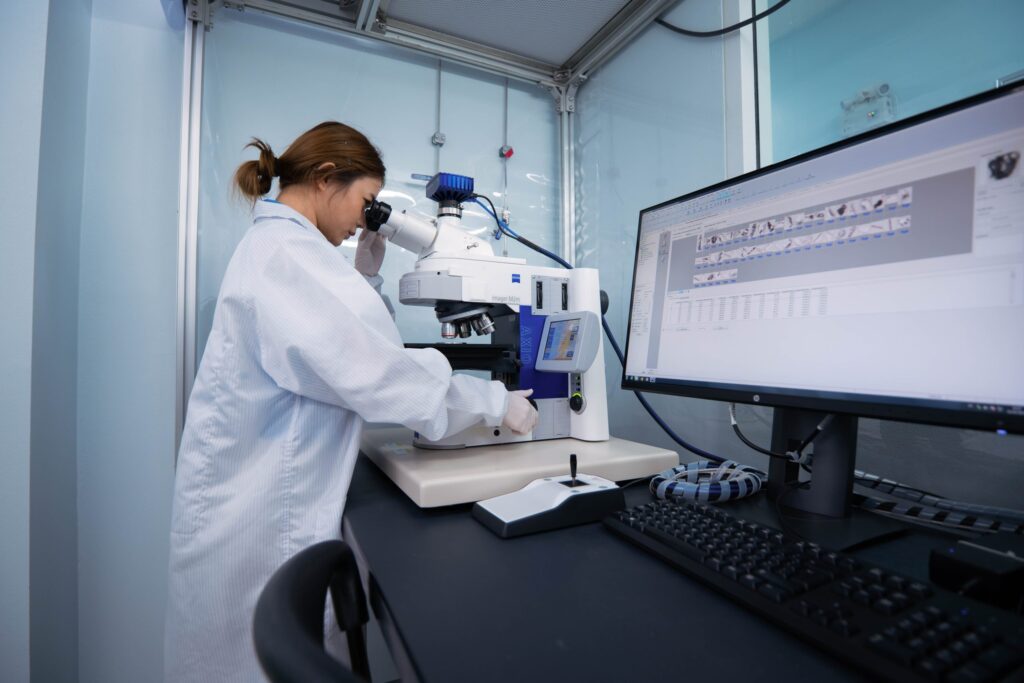
Optical Microscope
SEM/EDX (Scanning Electron Microscope with Energy Dispersive X-ray)
LPC Particle Counter (Liquid Particle Counter)
GC-MS (Gas Chromatography–Mass Spectrometry)
Ion Chromatography (IC)
Standards used in industrial dust analysis
Industrial particulate matter analysis must adhere to internationally recognized standards so that test results can be used in quality control and inspection processes.
Commonly encountered standards include:
Automotive & EV
Semiconductors and Electronics
Medical Devices
Aerospace
Food & Pharmaceutical
How long does dust analysis take?
The timeframe depends on the testing method. For example,
particulate matter measurement using ISO16232/VDA19 may take approximately 7-10 business days.
In an era of increasingly stringent manufacturing standards, the visibility and control of particles in production processes have become an integral part of a factory’s quality management system. Dust analysis is not just a technical test; it’s a crucial tool that helps manufacturers understand production process risks and consistently maintain international product standards.
For dust analysis or particle monitoring in your production process, ALS Testing Services (Thailand) Co., Ltd. offers services with an ISO/IEC 17025 certified laboratory.
Read more
February 23, 2026

February 16, 2026

February 2, 2026

January 30, 2026

ALS Testing Services (Thailand) Co., Ltd. organized the event “ALS Outing 2026 @ Ananta Riverhills Resort, Kanchanaburi” for relaxation. It is an activity that takes all employees out to find inspiration and reignite their passion for work, in order to enhance their own abilities.
1. Allow employees to showcase hidden skills and abilities that are not often expressed in the office, as well as increase communication among them.
2. Encourage employees to have shared work goals, motivate them to change the atmosphere, and create fun.
3. Employees get rest for good mental health. When employees rest, it benefits themselves, their work performance, and the team.
4. Increase good quality productivity within the organization.
5. Create a good environment for teamwork, with strength, enthusiasm, and cooperation in work.
Read moreJanuary 29, 2026
November 25, 2025

October 24, 2025

August 28, 2024
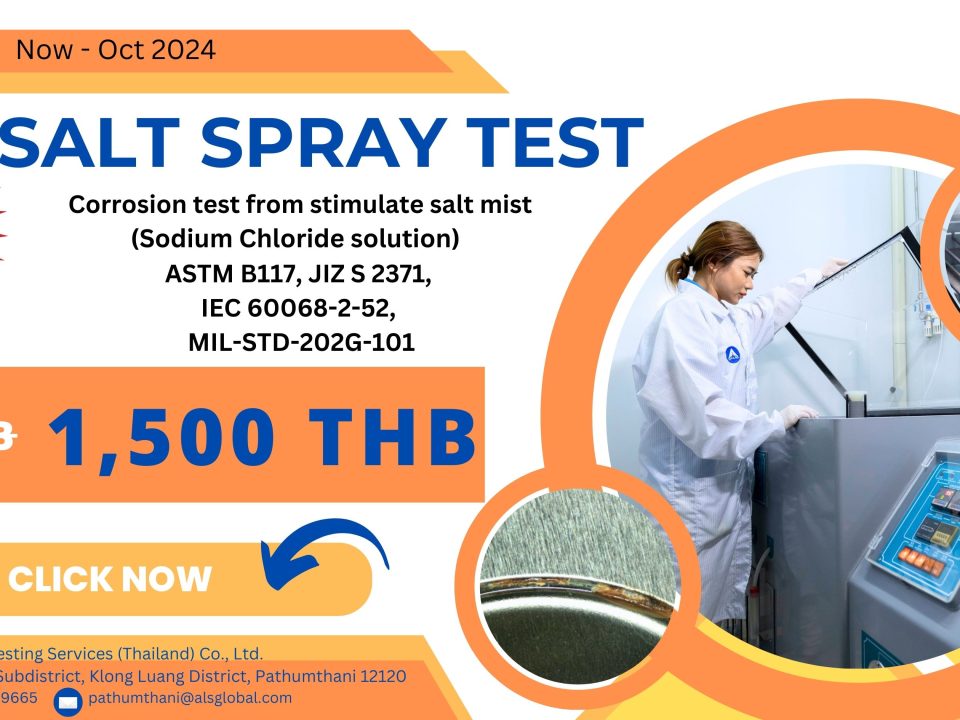
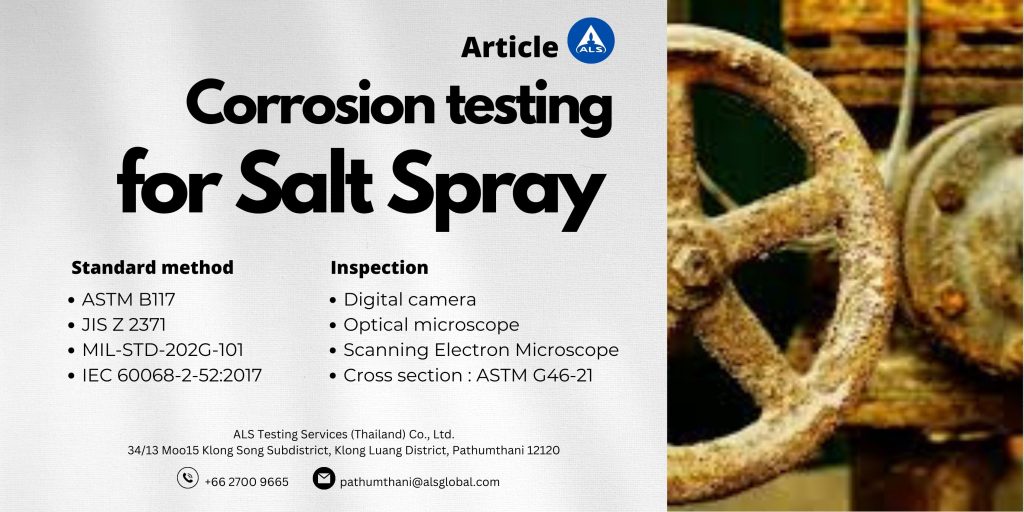
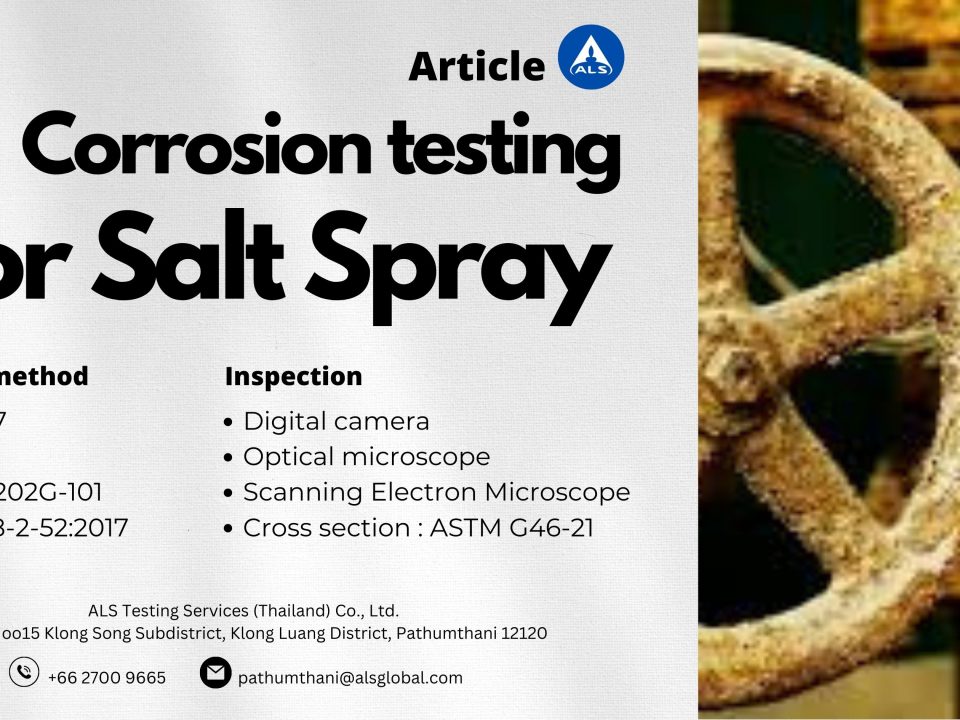
Corrosion and Corrosion testing
For environmental testing for salt spray (Sodium chloride solution)
for check the metallic or nonmetallic part tolerance to salt solution refer standard method of
ASTM B 117, JIZ Z 2371
MIL-STD-202G-101
Salt mist cyclic test refer IEC 60068-2-52:2017
or client requirement
Read moreAugust 21, 2024

August 13, 2024
July 2, 2024